
Workout Tracker App Decision Framework: Which App Actually Drives Your Progress?
A structured comparison of the top workout tracker apps for intermediate to advanced lifters, ranked by logging speed, analytics depth, AI planning, and pricing. Includes a decision matrix to help you choose the right app based on your primary training goal.
Why Tracking Matters: The Progressive Overload Principle
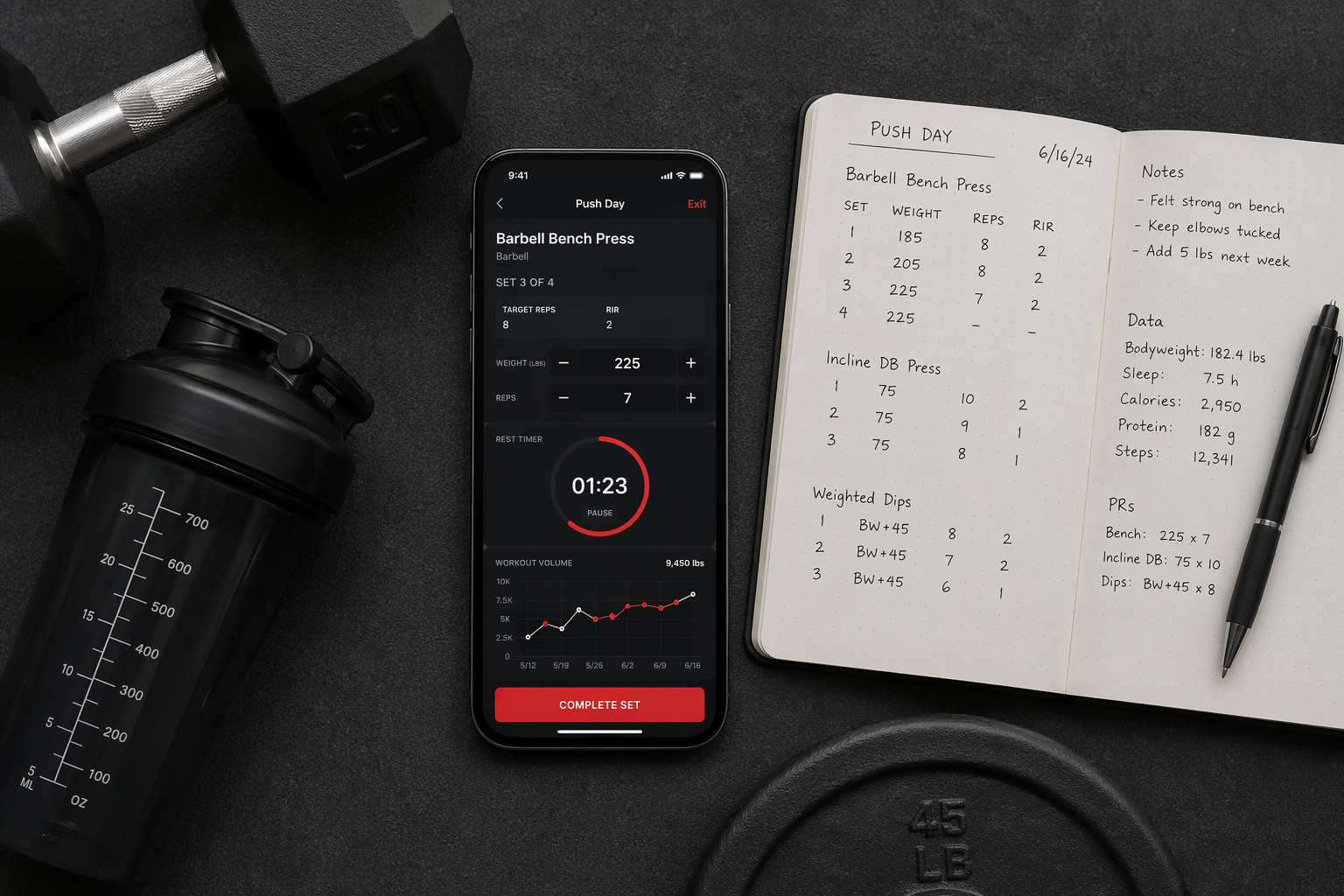
Progressive overload is the single non-negotiable driver of muscle growth and strength gain. Without a systematic way to increase tension, volume, or frequency over time, your body has no reason to adapt. A workout tracker app is not a luxury — it is the tool that makes progressive overload measurable, repeatable, and auditable.
The problem is that most apps are designed to keep you subscribed, not to make you stronger. Flashy video libraries, social feeds, and AI-generated workouts can distract from the core task: logging what you did last session and doing slightly more this session. This article strips away the noise and evaluates eight major workout tracker apps on the dimensions that actually drive progress — logging speed, analytics depth, AI planning capability, free tier generosity, wearable integration, and honest pricing.
Key Evaluation Dimensions for a Workout Tracker App
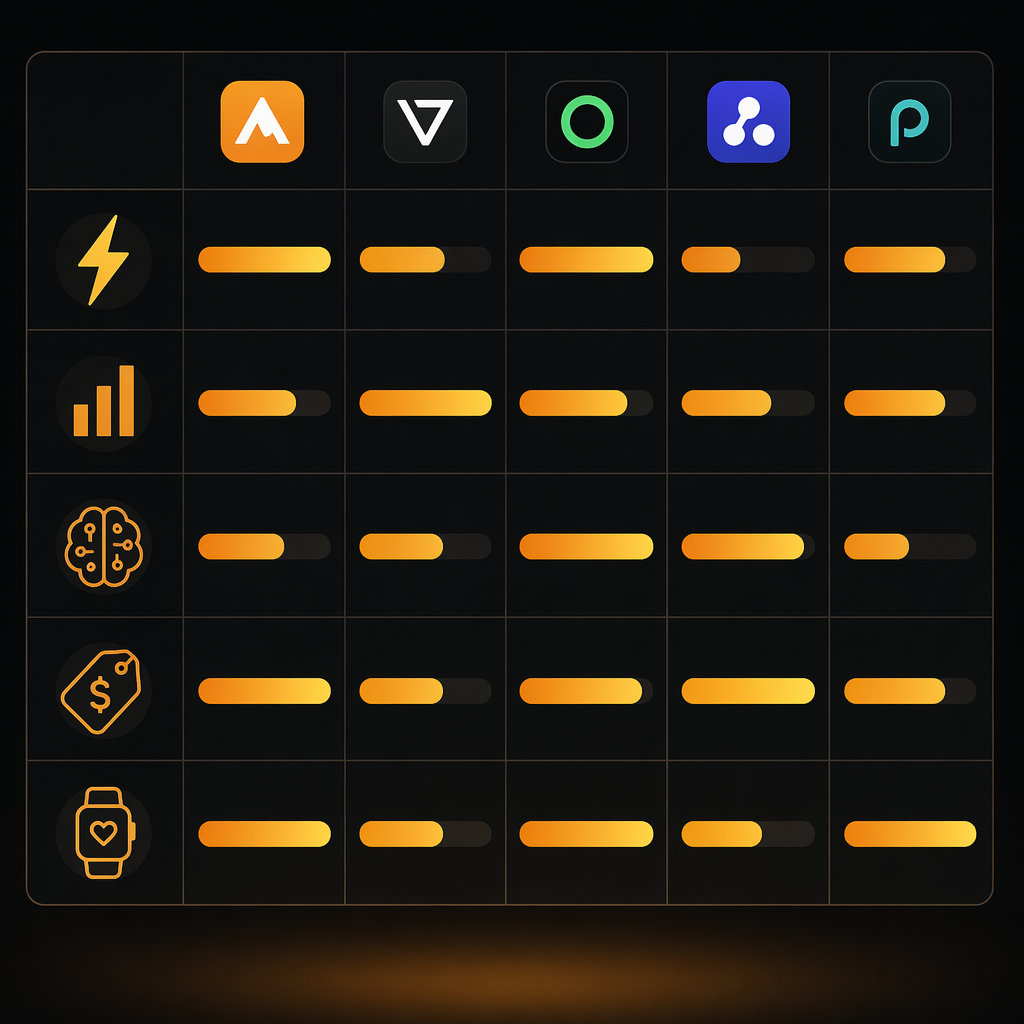
Before diving into the comparison table, it helps to understand the seven criteria that separate a useful training tool from a subscription you will cancel in three months. Every app in this review was assessed against these dimensions:
- Logging speed: How quickly can you enter a set and move to the next? Apps with tap-to-log interfaces, rest timers, and auto-incrementing weights save minutes per session — and those minutes compound into better adherence.
- Exercise library size and quality: A larger library is not always better if the exercises lack video demos or proper categorization. But a library under 200 exercises will frustrate anyone who does specialty movements or uses unconventional equipment.
- Analytics depth: Does the app track volume, estimated one-rep max (e1RM), personal records, and strength scores by muscle group? Basic logging apps show you what you did; analytics-driven apps show you what is working.
- AI planning capability: Can the app generate or adjust a program based on your past performance, or does it only log what you manually enter? AI planning is valuable for lifters who want auto-regulation but can feel restrictive for those who prefer their own programming.
- Free tier generosity: Many apps offer a free version that is deliberately crippled — limited to three routines, no history, or plastered with ads. A genuinely useful free tier can save you $400+ per year.
- Wearable integration: Does the app sync with Apple Watch, Garmin, Fitbit, or Wear OS for automatic rep counting, heart rate logging, or workout start/stop? This matters more for cardio and circuit training than for straight strength work.
- Pricing transparency: What is the actual monthly or annual cost, and are there hidden fees for features like advanced analytics, custom programs, or coach access? Garage Gym Reviews tested over 70 apps and found the average workout app pricing is about $34 per month — a figure that includes premium coaching platforms that most lifters do not need.
Deep-Dive Comparison: 8 Major Workout Tracker Apps
The following table compares eight apps across the dimensions that matter most for intermediate to advanced lifters. Pricing and library sizes were sourced from multiple third-party reviews published between January and June 2026. Where sources disagree on a figure, the most frequently cited number is used.
| App | Monthly Price | Annual Price | Free Tier | Exercise Library | Key Analytics | AI Planning | Wearable Sync |
|---|---|---|---|---|---|---|---|
| Strong | $4.99 | $29.99 | Limited (3 custom routines) | 200+ exercises | Volume tracking, PRs | No | Apple Watch |
| Hevy | $9.99 | $59.99 | Unlimited logging, history, social | 400+ exercises | Volume graphs, PRs, progress charts | No | Apple Watch, Wear OS |
| JEFIT | $6.99–$12.99 | $69.99 | 1,400+ exercises with ads | 1,400+ exercises | Volume, body measurements, graphs | No | Apple Watch, Fitbit, Garmin |
| Fitbod | $15.99 | $79.99 | Trial only | 600+ exercises | Volume, muscle recovery score, PRs | Yes (AI adjusts by recovery) | Apple Watch |
| Caliber | Free / Premium $200+/mo | N/A | 500+ exercises, ad-free, program creation | 500+ exercises | Volume, PRs, strength score | No (free); 1-on-1 coaching (premium) | Apple Watch |
| Boostcamp | $14.99 | N/A | Limited programs, community features | Varies by program | Program-specific tracking | Yes (pre-built programs by coaches) | Apple Watch |
| Nike Training Club | $0 | $0 | Full access (100% free) | 300+ workouts (video-led) | Workout history, basic tracking | No | Apple Watch |
| Stronger | $9.99 | $59.99 | Limited routines | 400+ exercises | Strength Score (12 muscle groups), volume, PRs | No | Apple Watch |
A few observations stand out from the table. Strong remains the fastest logger in the category — its tap-to-log interface is nearly frictionless — but its free tier is aggressively limited to three custom routines, and its 200-exercise library is the smallest of the group. Hevy offers the most generous free tier in the pure-tracking space: unlimited workout history, progress graphs, routine management, and social features at no cost. JEFIT boasts the largest exercise library at 1,400+ movements, but multiple reviewers note its interface feels dated compared to newer competitors. Nike Training Club is the only major app that is 100% free with no paid tier, but it is a video-led workout library, not a strength logging tool — you cannot track progressive overload the same way.
Use-Case Recommendations: Which App for Your Goal?
The table above gives you the raw data. The following recommendations translate that data into a decision based on your primary training goal. This section adds the analytics depth and pricing context that a training-style matching guide alone cannot provide.
- Fastest logger — Strong. If your priority is getting in and out of the gym with minimal screen time, Strong's tap-to-log interface is unmatched. The trade-off is a small exercise library and a restrictive free tier. At $4.99 per month, it is also the cheapest premium option.
- Best free tier — Hevy. Hevy's free version includes unlimited workout history, progress graphs, routine management, and social features. No other pure tracking app comes close to this level of free functionality. If you are not ready to commit to a subscription, start here.
- Largest exercise library — JEFIT. With 1,400+ exercises, JEFIT is the go-to for lifters who use specialty movements, unusual equipment, or rehabilitation exercises. The trade-off is an older interface and ads on the free tier.
- Best AI programming — Fitbod or Boostcamp. Fitbod uses AI to adjust volume and exercise selection based on your muscle recovery scores. Boostcamp offers pre-built programs designed by coaches, which is a different flavor of AI guidance. Both cost more than basic loggers — Fitbod at $15.99 per month and Boostcamp Pro at $14.99 per month.
- Best analytics — Stronger. Stronger's Strength Score rates your strength across 12 muscle groups on a scale from Beginner to World Class. This level of muscle-group-level analytics is absent from basic loggers like Strong and Hevy. At $9.99 per month, it is mid-range in pricing.
- Best free video content — Nike Training Club. NTC is completely free with over 300 instructor-led workouts. It is excellent for guided sessions, circuit training, and bodyweight work, but it is not a strength logging tool. You cannot track progressive overload the way you can in Strong or Hevy.
The Decision Framework: How to Choose Your App
If you are still unsure which app fits your situation, work through the following decision tree. Each question eliminates apps that do not match your primary need.
- Question 1: What is your primary goal? If you want to follow guided workout videos, choose Nike Training Club (free) or Fitbod (AI-driven). If you want to log your own strength program with maximum control, move to Question 2.
- Question 2: How much are you willing to pay? If your budget is $0, choose Hevy (best free tier) or Caliber (500+ exercises, ad-free, free). If you are willing to pay $5–$10 per month, move to Question 3. If you are willing to pay $15+ per month, consider Fitbod or Boostcamp for AI programming.
- Question 3: Do you need AI programming or just logging? If you follow your own program and only need logging, choose Strong (fastest) or Hevy (best free tier). If you want the app to generate or adjust your program, choose Fitbod or Boostcamp.
- Question 4: Do you want social features? Hevy has the strongest social features among pure tracking apps — you can follow friends, share workouts, and see their progress. JEFIT also has a community component. Strong and Stronger are more solitary experiences.
- Question 5: Do you need wearable integration? All eight apps support Apple Watch. For Garmin or Fitbit users, JEFIT is the most compatible option. If wearable sync is critical, see the wearable integration section below.
Free vs. Paid: When Is It Worth Upgrading?
The average workout app costs about $34 per month, according to Garage Gym Reviews' testing of over 70 apps. That figure is skewed upward by premium coaching platforms like Future ($199/month) and Caliber Premium ($200+/month) that include one-on-one coach access. For the vast majority of lifters who only need a logging tool, paying $34 per month is unnecessary.
The real question is whether a paid tier adds value beyond what the free version offers. The table below breaks down what you actually get at each price tier across the apps that offer both free and paid versions.
| App | Free Tier Value | Paid Tier Adds | Paid Price | Worth Upgrading? |
|---|---|---|---|---|
| Hevy | Unlimited logging, history, graphs, social | Custom graphs, advanced analytics, themes | $9.99/mo | Only if you want advanced analytics |
| Caliber | 500+ exercises, ad-free, program creation | 1-on-1 coaching, custom programming | $200+/mo | No (free tier is already excellent) |
| Strong | 3 custom routines, limited history | Unlimited routines, history, rest timer | $4.99/mo | Yes, if you use Strong (free tier is very limited) |
| JEFIT | 1,400+ exercises with ads | Ad-free, advanced analytics, body measurement tracking | $6.99–$12.99/mo | Yes, if you use JEFIT (ads are intrusive) |
| Fitbod | Trial only | Full AI programming, recovery tracking | $15.99/mo | Only if you want AI programming |
| Boostcamp | Limited programs | Full program library, community features | $14.99/mo | Only if you want coach-designed programs |
| Stronger | Limited routines | Strength Score, advanced analytics, unlimited routines | $9.99/mo | Yes, if you want muscle-group-level analytics |
The key takeaway: Hevy and Caliber offer free tiers that are genuinely useful for serious training. Strong's free tier is deliberately limited — you will almost certainly need to pay $4.99 per month if you choose Strong. JEFIT's free tier is usable but ad-supported, and the premium upgrade is reasonably priced at $6.99 per month. Fitbod and Boostcamp are only worth the subscription if you specifically want AI-generated or coach-designed programming.
Wearable Integration: Syncing Your Tracker with Your App
Wearable integration matters most for two scenarios: automatic workout logging during cardio or circuit training, and heart rate data for recovery tracking. For straight strength work, the value is lower — you still need to manually log sets and reps, and optical heart rate sensors on wearables are less accurate during resistance training.
Here is how the eight apps compare on wearable compatibility:
- Apple Watch: Supported by all eight apps. Strong, Hevy, and Stronger offer native watch apps for logging sets from your wrist. Fitbod and JEFIT use the watch primarily for heart rate and workout start/stop.
- Wear OS (Google): Supported by Hevy and JEFIT. Strong and Stronger do not have native Wear OS apps.
- Garmin: Supported by JEFIT. Most other apps in this comparison do not sync directly with Garmin Connect.
- Fitbit: Supported by JEFIT. Fitbit's app ecosystem is more closed than Garmin's, so compatibility is limited.
If wearable integration is a deciding factor, JEFIT is the most platform-agnostic option. For Apple Watch users, Strong, Hevy, and Stronger all offer solid native experiences. For a deeper look at whether you need both a tracker app and a wearable, see our Workout Tracker App vs. Wearable: Do You Need Both for Home Fitness? guide.
Final Verdict: The Best App Depends on Your Primary Need
There is no single "best" workout tracker app. The app that drives progress for a powerlifter following a rigid program is different from the app that works for a home gym enthusiast who wants AI-generated variety. The core thesis of this comparison is that serious lifters should prioritize progressive overload tracking and strength analytics over production-value workout videos. An app with a 200-exercise library and a fast logger will do more for your strength gains than an app with 1,000 video workouts and no way to track volume over time.
Here is the bottom line for each major reader profile:
- Budget-conscious lifter who wants a full-featured free app: Hevy. Unlimited logging, history, and social features at no cost.
- Lifter who wants the fastest possible logging experience: Strong. Pay $4.99 per month for the most frictionless interface in the category.
- Lifter who wants AI-generated programming: Fitbod ($15.99/mo) for recovery-based auto-regulation, or Boostcamp ($14.99/mo) for coach-designed programs.
- Lifter who wants the deepest analytics: Stronger ($9.99/mo) for Strength Score across 12 muscle groups.
- Lifter who needs the largest exercise library: JEFIT (free with ads, or $6.99/mo for premium) with 1,400+ exercises.
- Lifter who wants guided video workouts at no cost: Nike Training Club. Just do not expect to track progressive overload.
This result comes from one real apartment under the stated conditions — it is a strong signal, not a guarantee your space will measure identically.
Builds this evidence supports
8-Week Compact Home Gym Strength Program: Build Muscle with Adjustable Dumbbells, Bands, and a Cable Tower
If you own a compact home gym setup—adjustable dumbbells, resistance bands, and a cable tower—this eight-week strength program shows how to program each resistance type for progressive overload without unlimited weight stacks.
Spot something off?
If this result didn't match your own space, let us know — floor-damage and noise claims carry real deposit-risk consequences if we get them wrong.