
Best Workout Tracker Accuracy: A Metric-by-Metric Deep Dive Into What the Data Actually Shows
This article provides a transparent, evidence-based breakdown of fitness tracker accuracy for step count, heart rate, GPS, calorie burn, and sleep tracking. It is written for data-oriented buyers who want published testing data and systematic review findings, not marketing claims.
Why Accuracy Claims Vary — and Why This Article Exists
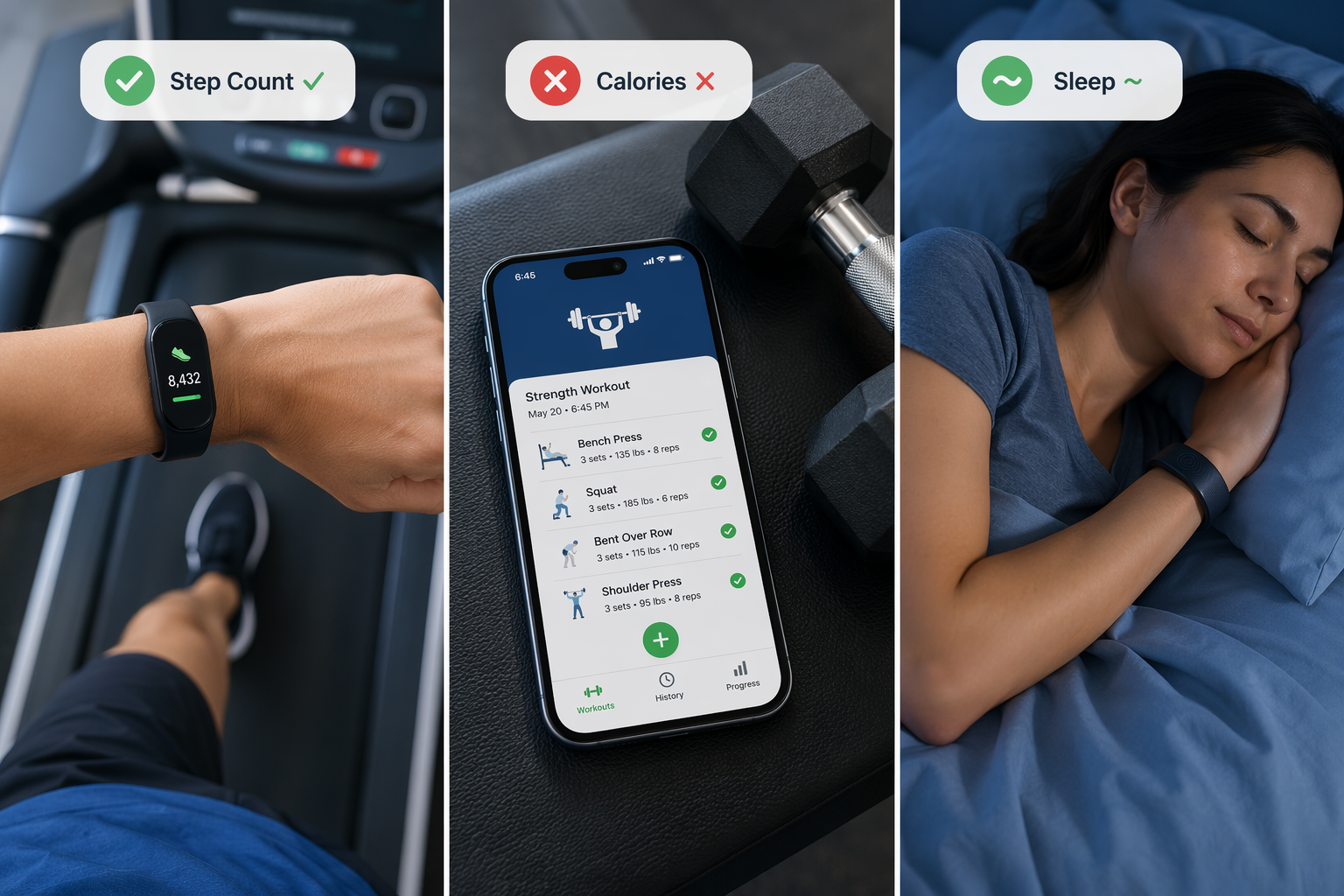
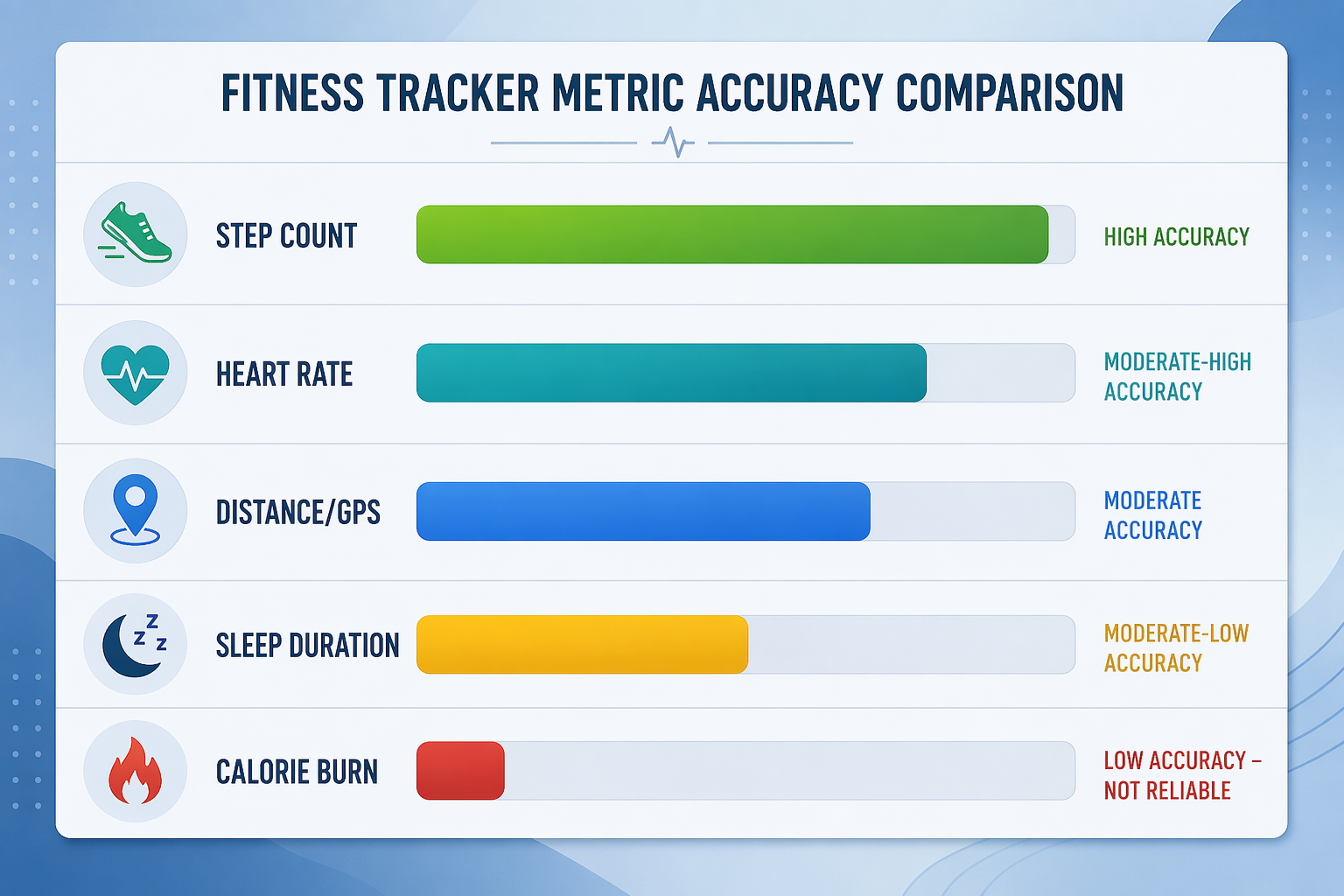
If you have spent any time reading fitness tracker marketing, you have seen phrases like "lab-grade accuracy" and "clinical-grade heart rate monitoring." The reality is more complicated. A single device can be excellent at counting steps, mediocre at measuring heart rate during weightlifting, and essentially useless for estimating how many calories you burned. Most buying guides gloss over this variation, presenting a single overall score that masks where a tracker shines and where it falls short.
This article takes a different approach. Instead of ranking devices by an arbitrary composite score, we break down accuracy metric by metric — step count, heart rate, distance and GPS, calorie burn, and sleep tracking — using published testing data from sources that have done the controlled work. We draw on Wirecutter's systematic testing of 52 trackers since 2015, Forbes Vetted's trainer-verified heart rate comparisons against a Polar H10 chest strap, and a 2022 systematic review published in the Journal of Medical Internet Research (Germini et al.) that reviewed 65 studies on wrist-wearable accuracy. The goal is to give you a transparent, evidence-based picture of what to trust and what to ignore.
Step Count Accuracy: The One Metric Most Trackers Get Right
Step counting is the most mature metric in consumer wearables, and the data reflects that. Across the devices Wirecutter tested, step count accuracy was consistently high — far higher than any other metric. The standout performer was the Fitbit Inspire 3, which recorded just 0.32% error compared to a validated research-grade pedometer over a two-day period. The Fitbit Charge 6 also performed well, with a 1.3% error rate in the same test.
The 2022 JMIR systematic review by Germini et al. supports these findings at a broader level. Across 20 studies, the Fitbit Charge (or Fitbit Charge HR) had a mean absolute percentage error (MAPE) of less than 25% for step counts — a wide range, but the best performance of any metric measured in the review. The key takeaway is that step count is the one area where even budget-friendly trackers deliver usable data.
| Device | Step Count Error | Test Method | Source |
|---|---|---|---|
| Fitbit Inspire 3 | 0.32% | 2-day test vs. validated pedometer | Wirecutter (2026) |
| Fitbit Charge 6 | 1.3% | 2-day test vs. validated pedometer | Wirecutter (2026) |
| Fitbit Charge / Charge HR (meta-analysis) | <25% MAPE | Across 20 studies | Germini et al., JMIR (2022) |
Accuracy can still be affected by how you wear the device. Wirecutter notes that placement, gait pattern, and whether the tracker is worn on the dominant or non-dominant wrist all influence step detection. For the most consistent results, wear the tracker on your non-dominant wrist and ensure it is snug but not tight.
Heart Rate Accuracy: Where the Gap Between Trackers Widens
Heart rate is where the performance gap between devices becomes significant. Unlike step counting, which relies on a simple accelerometer algorithm, optical heart rate (HR) sensors must filter out motion artifacts, ambient light, and individual physiological differences. The result is that some trackers handle certain activities well and others poorly.
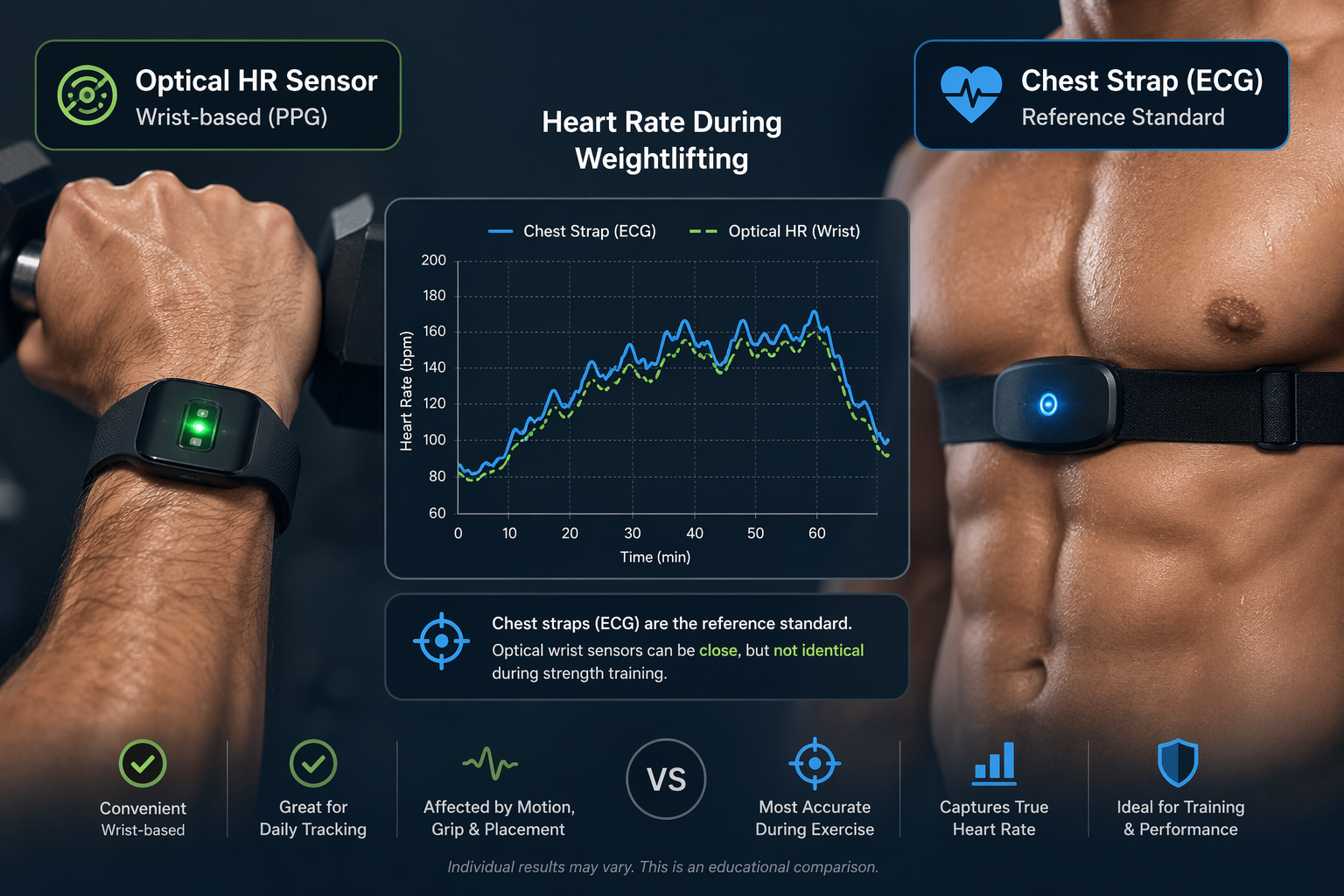
Forbes Vetted's testing, conducted by a personal trainer over several months, compared 16 trackers against a Polar H10 chest strap — widely regarded as one of the most accurate consumer HR monitors. The Garmin Venu 3 came closest to the Polar H10 during strength training, a notoriously difficult activity for optical sensors due to the rapid changes in blood flow and muscle contraction. The Fitbit Charge 6 performed well during high-intensity intervals, matching the Polar H10 within expected variation during sets that dropped from 160 BPM to 120 BPM over 30 to 60 seconds.
For resting heart rate, the accuracy bar is lower and more devices clear it. Wirecutter found the Fitbit Inspire 3 was off by only 1 beat per minute (BPM) compared to a reference device. That level of error is negligible for most users tracking resting trends over time.
| Device | Activity Type | Accuracy vs. Polar H10 | Source |
|---|---|---|---|
| Garmin Venu 3 | Strength training | Closest match of 16 trackers tested | Forbes Vetted (2026) |
| Fitbit Charge 6 | High-intensity intervals | Matched within expected variation (160→120 BPM) | Forbes Vetted (2026) |
| Fitbit Inspire 3 | Resting heart rate | Off by 1 BPM | Wirecutter (2026) |
| Apple Watch (meta-analysis) | General / mixed activity | <10% MAPE across 2 studies | Germini et al., JMIR (2022) |
Several factors degrade optical HR accuracy. Wirecutter interviewed cardiologists and researchers who identified skin tone, body hair, tattoos (especially dark ink over the sensor area), and band tightness as variables that can introduce error. If you rely on heart rate data for training zone management, consider a chest strap for sessions where precision matters most. For a deeper look at how HR accuracy changes across different workout types, see our dedicated article on heart rate accuracy by workout type.
Distance and GPS Accuracy: Reliable for Outdoor Steady-State, Less So for Intervals
GPS accuracy on wrist-worn devices has improved substantially over the past decade, but it still has meaningful limitations. Wirecutter tested distance accuracy on a measured 1-mile outdoor course. The Fitbit Inspire 3 overestimated by only 0.03 mile, and the Fitbit Charge 6 was off by -0.02 miles — both results well within the margin of error for most runners.
| Device | Distance Error (1-mile test) | Source |
|---|---|---|
| Fitbit Inspire 3 | +0.03 miles | Wirecutter (2026) |
| Fitbit Charge 6 | -0.02 miles | Wirecutter (2026) |
These results reflect steady-state outdoor running with a clear view of the sky. Accuracy degrades in urban canyons (tall buildings that block satellite signals), under heavy tree cover, and during activities with rapid direction changes like HIIT or agility drills. For indoor track running or treadmill use, GPS is irrelevant — the device relies on accelerometer-based stride counting, which is less accurate than GPS for distance.
Calorie Burn: The Metric No Tracker Gets Right
This is the most important finding in this article, and it is one that most buying guides downplay or omit entirely: no wrist-wearable device accurately tracks energy expenditure. The evidence is clear and comes from multiple independent sources.
The 2022 JMIR systematic review by Germini et al. examined 65 studies on wrist-wearable accuracy. For energy expenditure, the mean absolute percentage error (MAPE) was greater than 30% for all brands tested. The review's conclusion was unambiguous: "None of the tested devices proved to be accurate in measuring energy expenditure." Forbes Vetted's testing team independently confirmed this finding, stating that "for energy expenditure, the MAPE was >30% for all the brands, showing poor accuracy across devices."
None of the tested devices proved to be accurate in measuring energy expenditure.
Why is calorie burn so difficult? Andrew Jagim, PhD, of the Mayo Clinic, notes in Wirecutter's reporting that each company uses its own proprietary algorithm to estimate calorie burn, and these algorithms are built on generalized population models that do not account for individual differences in metabolism, muscle mass, or exercise efficiency. A wrist-worn device cannot measure the oxygen exchange that defines actual energy expenditure — it can only estimate based on heart rate and movement, which are indirect and noisy proxies.
Sleep Tracking: Good for Total Time, Poor for Sleep Stages
Sleep tracking is a mixed bag. The consensus among sleep researchers is that consumer wearables are reasonably accurate at estimating total sleep time — how long you were actually asleep versus lying in bed — but significantly less reliable when it comes to sleep architecture, meaning the breakdown of light, deep, and REM stages.
Aric A. Prather, PhD, a professor at the University of California, San Francisco, who studies sleep and wearable accuracy, told Wirecutter that most wearables can accurately estimate total sleep time but are less accurate for sleep architecture. The reason is that consumer devices rely on movement (actigraphy) and heart rate variability to infer sleep stages, whereas clinical polysomnography uses brain wave activity (EEG), eye movement, and muscle tone. The gap between these methods is substantial for stage classification.
| Sleep Metric | Accuracy Level | Key Limitation |
|---|---|---|
| Total sleep time | Good | May miss brief wake periods during the night |
| Sleep onset latency | Moderate | Can confuse quiet wakefulness with light sleep |
| Deep / Light / REM stage breakdown | Poor | Does not measure brain wave activity; uses proxy signals only |
| Wake time after sleep onset | Moderate | Less accurate for short wake periods |
Form factor plays a role in sleep tracking quality. Ring-form trackers like the Oura Ring are often considered more accurate for sleep than wrist-worn devices because the finger placement provides a cleaner photoplethysmography (PPG) signal with less motion artifact. If sleep tracking is your primary use case, a ring may be a better fit than a watch. Our rings vs. wrist trackers comparison covers this in detail.
Methodology Transparency: How the Testing Was Done
Accuracy figures from different sources are not directly comparable because each source uses different control devices, test conditions, and sample sizes. The table below summarizes the methodologies behind the key data points cited in this article, so you can judge the evidence for yourself.
| Source | Control Device | Test Conditions | Sample Size / Duration | Key Limitation |
|---|---|---|---|---|
| Wirecutter (2026) | Validated research-grade pedometer (step count); Polar H10 chest strap (HR); measured 1-mile course (GPS) | 2-day wear for step count; 5-min steady-state run + 6-min walk-jog-run for HR; outdoor 1-mile run for GPS | 52 trackers tested since 2015; individual tests on current models | Small sample per device; lab conditions may not reflect real-world variability |
| Forbes Vetted (2026) | Polar H10 chest strap | Months of real-world testing by a personal trainer; strength training and high-intensity intervals | 16 trackers tested | Single tester; results may not generalize across all users |
| Germini et al., JMIR (2022) | Various (varies by study included in review) | Systematic review of 65 published studies on wrist-wearable accuracy | 65 studies; meta-analysis of step count, HR, and energy expenditure data | Review published in 2022; newer devices may have improved since publication |
Practical Guidance: Which Metrics to Trust and Which to Ignore
Based on the published data, here is a clear framework for what you can rely on from a wrist-worn fitness tracker and what you should treat with skepticism.
| Metric | Trust Level | Practical Recommendation |
|---|---|---|
| Step count | High | Trust it. Even budget trackers deliver usable accuracy. |
| Resting heart rate | High | Trust it. Most devices are within 1-2 BPM of reference. |
| Heart rate (steady-state cardio) | Moderate-High | Use with confidence for steady-state runs or bike rides. |
| Heart rate (strength training / HIIT) | Moderate | Results vary by device. Garmin Venu 3 performed best in testing. |
| Distance / GPS (outdoor) | Moderate | Reliable for steady-state outdoor activities. Degrades in urban canyons and tree cover. |
| Total sleep time | Moderate | Useful for tracking trends over time. Do not treat single-night data as precise. |
| Sleep stage breakdown | Low | Ignore. Wearables cannot measure brain wave activity. |
| Calorie burn | Very Low | Ignore entirely. No wrist-wearable is accurate for energy expenditure. |
If you are a home gym user looking for a tracker that works well with strength training, cardio machines, and recovery tracking, our guide on best fitness trackers for home gym users provides tiered recommendations based on your equipment and space. For a broader look at the best devices across all categories, see our best fitness trackers for home workouts buying guide.
- Trust step count and resting heart rate. These are the most mature and accurate metrics across all devices.
- Use heart rate during steady-state cardio with caution. Results are generally reliable but can vary by device and individual physiology.
- Ignore calorie burn entirely. The error margin is too large for the data to be actionable.
- Use sleep duration data for trend tracking, but do not rely on sleep stage breakdowns for decision-making.
- If you need precise heart rate data for training zone management, invest in a chest strap as a supplement to your wrist-worn device.
This result comes from one real apartment under the stated conditions — it is a strong signal, not a guarantee your space will measure identically.
Builds this evidence supports
No build currently links to this specific test. Browse all builds with a matching tag.
Spot something off?
If this result didn't match your own space, let us know — floor-damage and noise claims carry real deposit-risk consequences if we get them wrong.