
Should You Pick a Ring or a Watch?
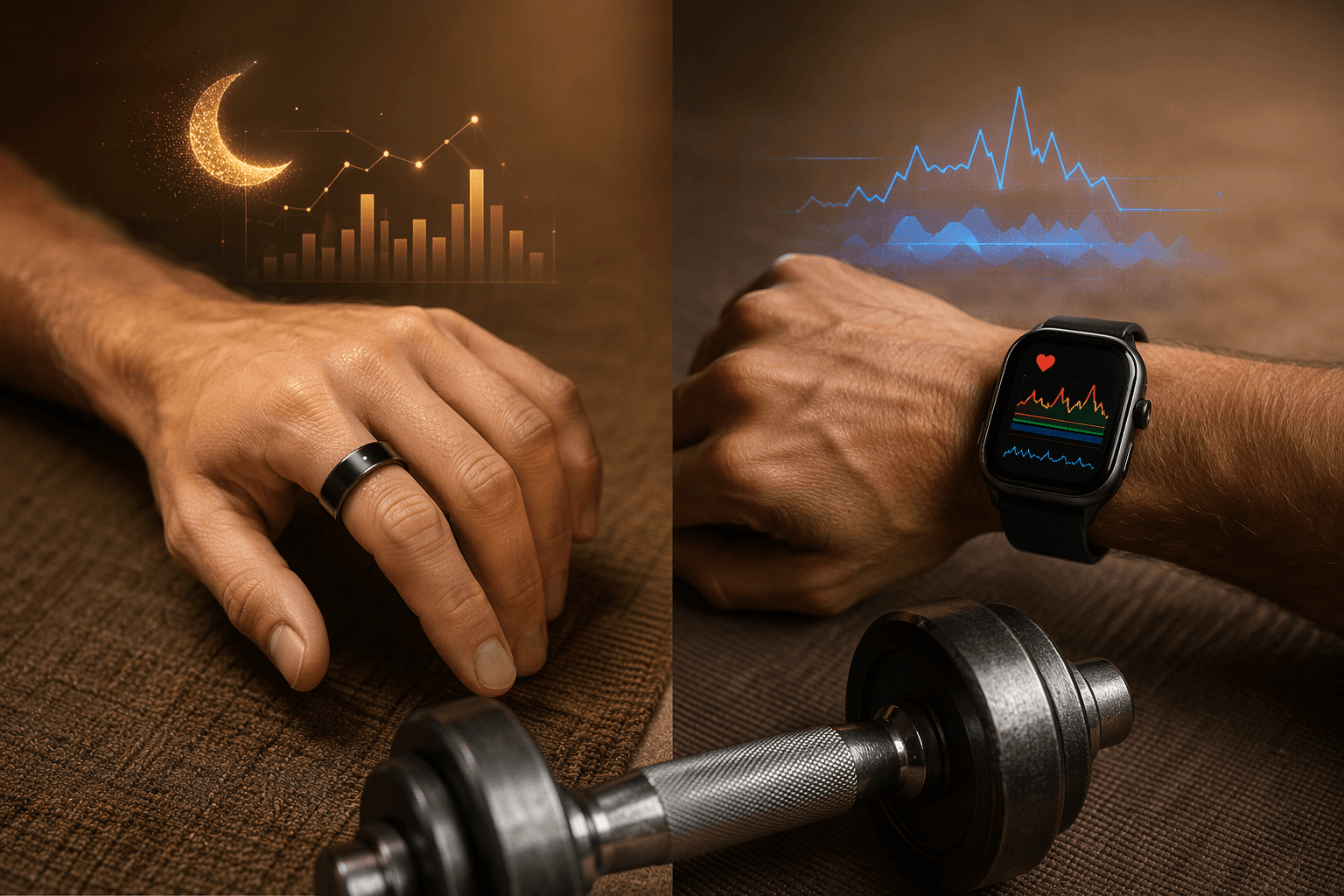
That is the wrong question. I have been wearing a smart ring and a fitness band together for about a year, and here is what I have learned: neither device alone covers the full picture for a home gym. The ring nails sleep and recovery; the watch handles workouts. Together they give you data that no single wearable can match — and the combo often costs less than a premium sport watch.
This is not the conclusion I expected when I started. I figured one device would win. But after scratching two rings on a barbell and missing recovery data with just a watch, I changed my mind. Let me walk through how I got there.
There are three real strategies: wear a ring only, wear a watch or band only, or pair them. Each has a clear use case, and the table below shows how they score across common home-gym activities.
| Scenario | Ring Only | Watch/Band Only | Pairing |
|---|---|---|---|
| Sleep tracking | ★★★★★ | ★★★☆☆ | ★★★★★ |
| Overnight wear compliance | ★★★★★ | ★★☆☆☆ | ★★★★★ |
| HR during HIIT | ★★☆☆☆ | ★★★★★ | ★★★★★ |
| HR during weightlifting | ★☆☆☆☆ | ★★★★☆ | ★★★★☆ |
| Step counting | ★★★☆☆ | ★★★★★ | ★★★★★ |
| GPS for outdoor runs | ☆☆☆☆☆ | ★★★★★ | ★★★★★ |
| 24/7 passive health | ★★★★★ | ★★★★☆ | ★★★★★ |
| Grip comfort with barbell | ★☆☆☆☆ | ★★★★★ | ★★★★★ |
Take sleep tracking. A ring is comfortable enough to wear all night — one manufacturer (Jointcorp) claims 98% overnight wear compliance. I’d take that number with a grain of salt, because it’s self-reported, but the convenience is real. A chunky smartwatch on your wrist all night? Many people take it off. The ring wins here by staying out of the way.
Heart rate during a workout is a different story. Android Central ran a test — a single athlete, five workouts — comparing rings and watches. The pattern is clear enough: Amazfit’s Helio ring came closest to a chest strap, while Oura and RingConn lagged noticeably once intensity jumped. That is one person’s data, so do not treat it as gospel. But it matches my experience: a ring on my finger cannot keep up during burpees or deadlifts. A wrist-based optical sensor is better there, and a chest strap is best of all if you care about precision.
The strongest argument for pairing is the total cost. A good smart ring with no subscription (like Oura’s or Amazfit’s) plus a solid fitness band (say a Garmin Vivosmart or a Xiaomi Band) costs around $400–500 combined. A premium watch like the Apple Watch Ultra or Garmin Fenix runs $600–900, and often still misses the sleep detail a ring provides. Over three years, the pairing route saves you money — but only if you skip a ring with a mandatory subscription. Factor that in honestly.
What about the scratches? I have gouged two rings on a knurled barbell. The fix is simple: use a silicone ring protector (cheap on Amazon) or just take the ring off for the heavy sets. It adds thirty seconds. Not a big deal. The watch is fine on the wrist — no grip issues there.
If you only do yoga and walks, a ring alone is fine. If you do heavy lifting, you need a watch or band for rep tracking and reliable HR. But if you want sleep, recovery, and workout accuracy without shelling out for a top-end watch, the pairing is the smartest move. That is what I use, and I have stopped wishing for a single device to do it all.
Comments
Join the discussion with an anonymous comment.