
The hardest part of shopping for the best fitness tracker watch for women is not finding enough options. It is deciding which impressive-looking features will still matter after the first week, when the watch has to survive sleep, workouts, errands, showers, meetings, charging, app notifications, and whatever subscription screen appears after setup.
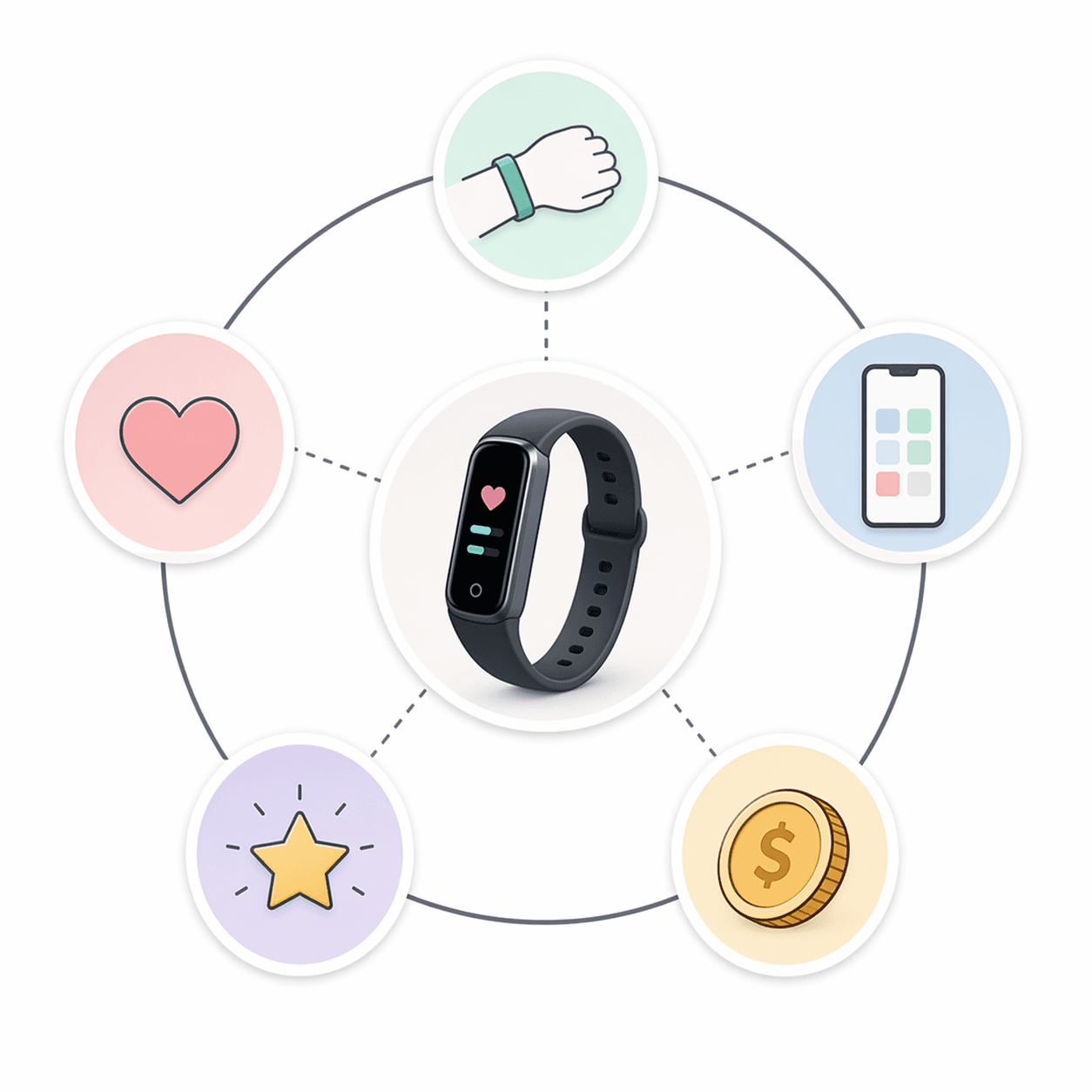
A better starting point is simple: choose the tracker you can wear consistently. That means judging every watch through five filters before getting attached to a model name.
| Decision filter | The question that matters |
|---|---|
| Fit | Will it sit securely and comfortably on your wrist during sleep, workouts, and normal life? |
| Phone ecosystem | Will it work fully with the phone you actually use? |
| Total cost | What will it cost after two years, including required or useful subscriptions? |
| Feature priority | What is the main job: workouts, recovery, smartwatch features, budget basics, or women’s health tracking? |
| Style and form factor | Will you still want it on your body six months from now? |
Start with fit, because a great tracker you remove at night is already failing
Fit is not a styling footnote. It changes data quality, sleep comfort, workout usefulness, and whether the watch becomes drawer clutter. A tracker that slides during intervals, presses into the wrist bone at night, or needs to be worn too loosely to feel tolerable is not a good tracker for that person, no matter how strong the spec sheet looks.
One commonly cited wrist-size reference puts average female wrist circumference around 5.7 to 6.2 inches, while also noting that band starting sizes vary meaningfully: the Garmin Lily 2 band starts at 4.3 inches, Fitbit Inspire 3 around 5.5 inches, and Apple Watch bands around 5.1 inches depending on the band style.[1][2] Treat that range as a useful shopping prompt, not a universal rule. The source chain is limited, and wrists vary by body size, frame, age, population, and personal comfort preference.
The practical move is to measure your wrist before comparing watches. Wrap a soft tape measure around the spot where you would normally wear a watch. If you are between band sizes, think about how you wear devices at night. A band that is fine for a one-hour workout can feel much worse under a pillow or when your wrist swells slightly after heat, travel, or a salty meal.
- If your wrist is small, check the band’s minimum circumference before checking the sensor list.
- If you plan to track sleep, pay attention to case thickness, edges, clasp placement, and whether the watch digs in when your wrist bends.
- If you do high-sweat workouts, make sure the band can tighten securely without pinching.
- If you dislike sleeping in a screen, consider whether a ring or screenless band may be more realistic than another smartwatch.
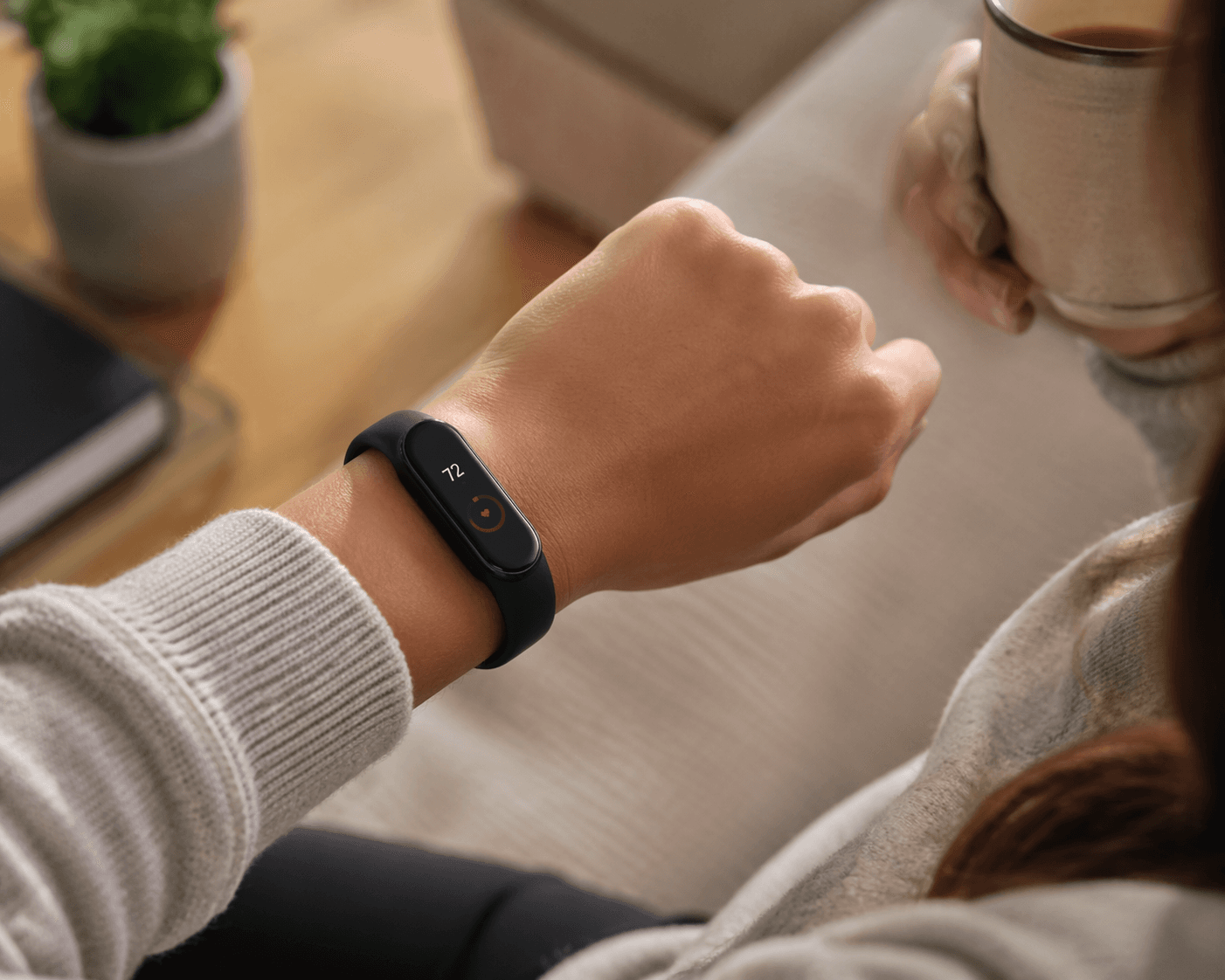
This is where some “best for women” labels get lazy. A smaller watch can still be a compromised watch. The Garmin Lily 2, for example, is often appealing for small wrists, but its grayscale LCD display and lack of onboard GPS are real tradeoffs, not tiny details to hide under a feminine design angle.[3][4] If you run outdoors without carrying your phone, that missing onboard GPS matters. If you want a bright color display, the screen matters. A pretty fit is still a fit with consequences.
Eliminate anything that does not work with your phone
Compatibility is not exciting, but it is decisive. Apple Watch is for iPhone users. Samsung Galaxy Watch and Google Pixel Watch are Android choices. Garmin, Fitbit, Oura, and Whoop work more broadly across iOS and Android, though individual features and setup experiences can still vary by phone and app version.[3][4]
This filter should come early because it prevents a common shopping mistake: falling in love with a device that is excellent for someone else’s phone. If you use an iPhone and want the deepest smartwatch integration, Apple Watch is the obvious lane. If you use Android and want a true smartwatch, Samsung or Pixel may make more sense. If you want fitness tracking more than phone-extension features, Garmin, Fitbit, Oura, and Whoop keep more doors open.
Price the tracker like you will own it for two years
The sticker price is only the beginning. Fitness trackers now split into very different cost models: some sell you the hardware and include most features; some make the hardware feel cheaper but depend on a subscription; some sit in the middle, with a useful free tier and optional paid insights.
As of the June 2026 research window, Fitbit Charge 6 was listed around $100 to $160 with no required ongoing subscription for basic use, while Garmin Venu 3S was around $400 to $450 with no mandatory subscription for its core Garmin features. Whoop 5.0 required a $199-per-year membership. Oura Ring 4/5 was listed around $349 to $449 upfront plus $5.99 per month, putting a lower-end two-year ownership estimate near $489 before taxes, discounts, or accessory changes.[5][6]
| Device type or example | Upfront cost cited in research | Ongoing cost cited in research | Two-year buying implication |
|---|---|---|---|
| Fitbit Charge 6 | $100–$160 | $0 required for basic use | Lower upfront path if you want basics without a mandatory membership |
| Garmin Venu 3S | $400–$450 | $0 mandatory for core features | Higher upfront cost, but many fitness features remain available without a required subscription |
| Whoop 5.0 | Membership-centered model | $199/year mandatory membership | Recovery-first design, but the ongoing cost is central to the purchase |
| Oura Ring 4/5 | $349–$449 | $5.99/month | Discreet form factor, but the subscription changes the long-term comparison |
Subscription math can change quickly, so check the current checkout page before buying. Garmin also deserves precise wording now: Garmin is not simply “subscription-free” in every possible sense, because Garmin Connect+ is a newer $70-per-year subscription that paywalls some advanced insights, while many core Garmin Connect features remain available without that added plan. If that distinction affects your choice, read a dedicated breakdown such as Garmin Connect+ Reviewed: Is the $70/Year Subscription Worth It in 2026? before treating any Garmin model as a one-and-done purchase.
A lower-priced tracker can be the better buy. So can a more expensive one. The question is whether the features you need are available at the level you are willing to pay for over time. For a deeper cost comparison, see Best Fitness Tracker for Women: The Hidden Subscription Costs That Change Which One to Buy.
Choose by the main job, not by the longest feature list
After fit, phone, and cost, the next question is purpose. Most buyers do not need the tracker that does the most things. They need the one that does their main thing well enough, in a form they will tolerate.
| Your main goal | Category to look at first | Examples from current buyer guides |
|---|---|---|
| Recovery, sleep, readiness, HRV trends | Recovery-first wearables | Whoop 5.0, Oura Ring 4/5, Hume Band |
| Notifications, apps, health alerts, workouts in one device | All-in-one smartwatches | Apple Watch Series 11, Samsung Galaxy Watch 8 |
| Training depth, fitness metrics, longer battery life | Fitness-first watches | Garmin Venu 3S and related Garmin models |
| Steps, activity minutes, sleep basics, lower cost | Budget basics | Fitbit Inspire 3, Amazfit-style options |
Current 2026 roundups commonly separate devices along those lines: recovery-first options such as Whoop and Oura, all-in-one watches such as Apple Watch and Samsung Galaxy Watch, fitness-depth choices such as Garmin, and simpler budget trackers such as Fitbit Inspire or Amazfit models.[7][8][9] That does not mean those examples are the only valid buys. It means your use case should decide which shelf you shop from.
If recovery is the reason you are buying
Recovery-first shoppers usually care less about a colorful app grid and more about sleep regularity, resting heart rate patterns, HRV trends, and readiness-style scores. Whoop and Oura are built around that daily interpretation layer. That can be useful if you are trying to understand why you feel flat after hard training, poor sleep, travel, perimenopause symptoms, or a stressful week.
Do not treat a recovery score as a medical verdict or a command. It is a consumer interpretation of wearable signals, and different brands calculate those signals differently. If recovery is your main priority, it is worth reading more narrowly on recovery, HRV, and metabolic health for women over 35 or on why recovery scores need validation.
If you want one device for health, workouts, and daily life
An all-in-one smartwatch makes sense when the watch is also your notification screen, timer, map prompt, payment device, call handler, and workout log. Apple Watch Series 11 is cited in current guides for features such as ECG, FDA-cleared hypertension detection, and sleep apnea detection, while Samsung Galaxy Watch 8 sits in the Android smartwatch lane.[7][8][9]
The tradeoff is that smartwatch convenience often comes with more charging attention and more screen presence. If you already know you hate another glowing device on your wrist, a smartwatch may be technically excellent and personally wrong.
If workouts are the main reason
For training depth, Garmin is usually the brand people end up comparing. The Garmin Venu 3S, for example, appears in current women-focused and general wearable guides as a 41 mm fitness-forward watch with Body Battery, roughly two-week battery life, and no mandatory subscription for its core platform features.[5][7][8] That combination matters if you want more workout detail without managing a daily charge.
Strength training deserves its own caution. Many trackers are cleaner at counting runs, steps, and sleep than they are at understanding loaded sets, rest timing, progressive overload, and mixed gym sessions. If lifting is the main use case, jump to The Best Fitness Trackers for Women Who Lift Weights rather than choosing from a running-heavy comparison.
If women’s health tracking is the draw
Cycle tracking can be useful, but it is one of the easiest areas for marketing language to outrun what the device is actually doing. Many watch-based cycle tools are symptom logs, calendar predictions, temperature trend views, or reminders. Those can help you notice patterns. They are not the same as clinical ovulation monitoring.
Among consumer wearables, Oura’s Natural Cycles integration has the strongest published validation case for fertility-window detection in the research reviewed here, but even that should not be read as a replacement for clinical methods, and accuracy can vary with menstrual regularity.[6] If this is your deciding feature, compare the actual method, not just the presence of a “women’s health” tile. A more focused comparison is here: Which Fitness Tracker Watch Has the Best Women’s Health Tracking?.
Battery life is part of comfort
Battery life often gets discussed like a spec-sheet contest, but the real question is when the device asks you to remove it. If you want sleep tracking and the watch needs frequent evening charging, you have a conflict. If you mostly want workout tracking and can charge during your shower, that same battery routine may be fine.
Think about your existing habits. Do you charge your phone on a nightstand, at your desk, or in the car? Do you shower at a predictable time? Do you travel often? Do you become annoyed when another device needs a proprietary charger? Battery life is not just how long a watch lasts. It is whether charging fits into your day without stealing the data you bought the tracker to collect.
Let style be the final filter, not the first excuse
Style matters because visibility matters. A tracker is not a blender that sits in a cabinet. It is on your body at work, at dinner, in bed, during a run, and possibly with clothes that have nothing to do with fitness. Pretending that aesthetics are superficial is one reason people buy technically strong watches they quietly stop wearing.
The useful way to think about style is as a form-factor continuum. Sport watches such as Garmin Forerunner 265S are visibly athletic. All-purpose smartwatches such as Garmin Venu 3S or Apple Watch SE 41 mm blend more easily into daily life. Hybrid or jewelry-discreet options such as Withings ScanWatch and Oura Ring reduce the “fitness device” look.[8][6]
Oura also stands out in the research for having an approximately 60% female user base, described as the highest of any consumer wearable in the cited guide.[6] That does not automatically make a ring the best choice for women. It does suggest that many women respond to a tracker that does not look like another rectangular screen.
There are tradeoffs. A ring may be easier to sleep in but less useful for glancing at pace during a run. A screenless band may reduce distraction but require more app-checking. A smartwatch may be convenient but visually louder. If you are stuck between categories, use a form-factor comparison such as Fitness Tracker vs Smart Ring vs Screenless Band: Which Form Factor Is Best for Women? before forcing yourself into a watch just because that is the default shopping category.
A simple way to narrow the field
Use the filters in order. Do not start with twenty tabs of reviews and try to reason your way out.
- Measure your wrist and remove watches or bands that are unlikely to fit comfortably.
- Remove devices that do not work properly with your phone.
- Calculate the two-year cost, including mandatory memberships and optional subscriptions you would realistically want.
- Pick your primary goal: recovery, smartwatch convenience, training depth, budget basics, women’s health tracking, or a mix with one clear priority.
- Choose the form factor and style you will actually keep wearing.
If the process points you toward Garmin but you are unsure which model fits your use case, use a brand-specific guide such as Which Garmin Fitness Tracker Should You Buy in 2026?. If you still need help separating health-first and fitness-first devices, start with Health Tracking vs Fitness Tracking: What to Look for in a 2026 Wearable or the broader companion guide How to Choose an Exercise Tracking Watch.
The best fitness tracker watch for women is not a universal winner. It is the one that passes your five tests: it fits, works with your phone, has a cost you accept, serves your main goal, and looks or feels right enough to stay on your body. If a tracker fails one of those tests, the missing piece will probably annoy you more than the extra features impress you.
References
- Fitness trackers for small wrists — La Petite Poire
- Best Fitness Tracker For Small Wrists — Total Shape
- The Best Fitness Trackers — PCMag
- The Best Fitness Trackers and Watches for Everyone — WIRED
- Best Fitness Trackers — Forbes Vetted
- Best Fitness Watch for Women — Heal Nourish Grow
- The Best Fitness Trackers, According To Experts And Fitness Editors — Women’s Health
- Best smartwatch for women — Wareable
- The best fitness trackers for 2026 — The Verge
Comments
Join the discussion with an anonymous comment.