
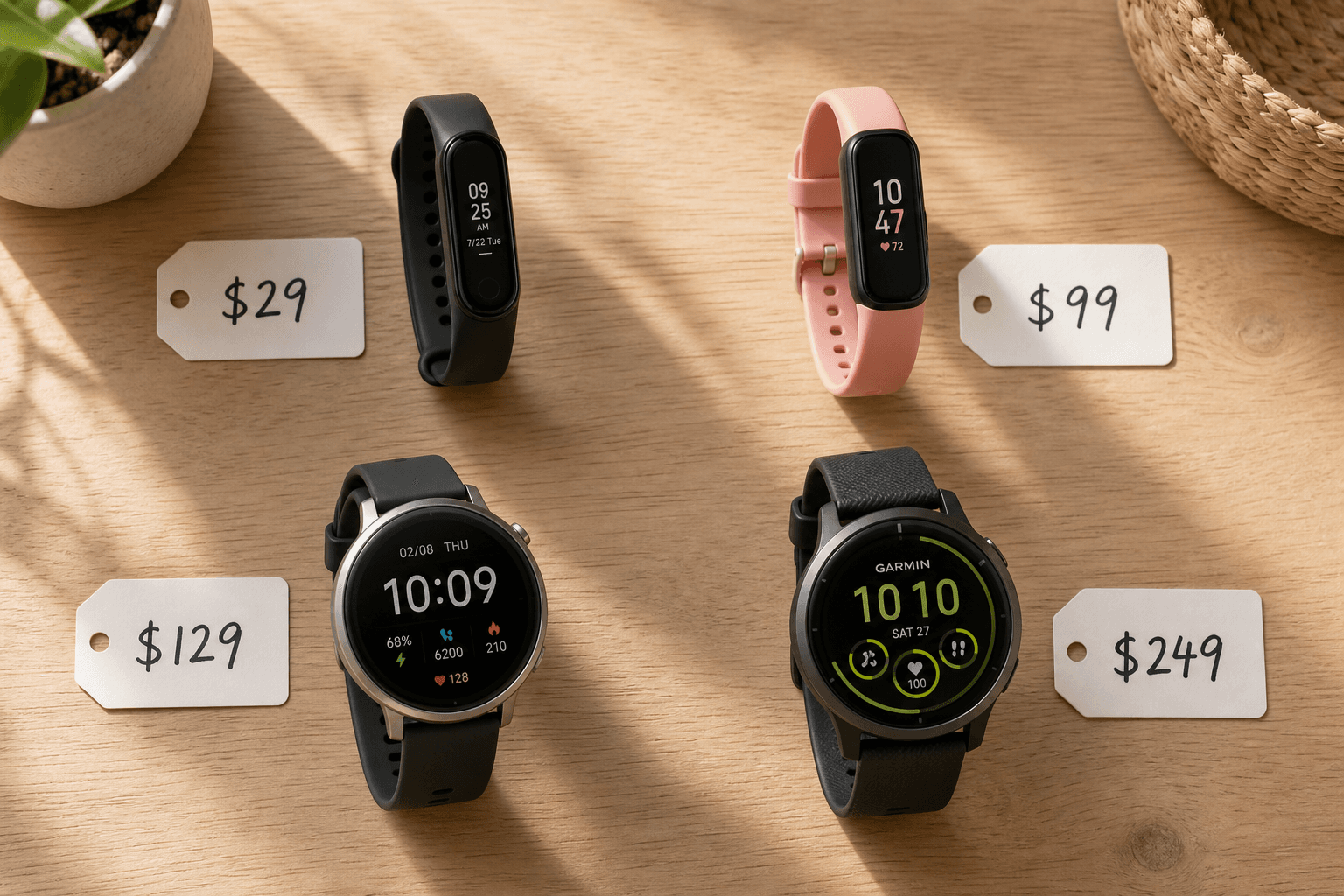
The Accuracy Myth: Why Budget Trackers Deserve a Second Look
Walk into any electronics store or scroll through a wearable roundup, and you'll encounter a persistent assumption: you need to spend at least $250 to get fitness data you can trust. Premium brands like Garmin and Apple have built their pricing on this premise, and for years, it held true. But the landscape has shifted. The optical sensors, algorithms, and processing power that once justified a $300 price tag have trickled down to devices costing a fraction of that amount.
The reality in mid-2026 is more nuanced than a simple "you get what you pay for" rule. For some metrics — step count and steady-state heart rate, specifically — sub-$100 trackers have closed the gap to within a few percentage points of their premium counterparts. For others — GPS distance during runs, heart rate during high-intensity intervals, and strength training rep counting — the gap remains wide enough to matter for specific users.
This article breaks down exactly where budget trackers have caught up, where they still fall short, and — most importantly — which type of buyer can safely save money and which type needs to invest more. The goal is not to declare a single "best" tracker, but to help you match your spending to your actual training needs.
Step Count Accuracy: Where Budget Trackers Shine
Step counting is the most basic metric a fitness tracker can measure, and it is also the one where budget devices have achieved near-parity with premium models. The reason is straightforward: modern optical accelerometers and pedometer algorithms are mature technology. A $50 band and a $500 watch are often using the same MEMS accelerometer components from suppliers like Bosch or STMicroelectronics. The difference comes down to firmware tuning, and the gap has all but disappeared.
The strongest evidence comes from Wirecutter's testing, which found that the Fitbit Inspire 3 — a $99.95 band that regularly sells for $79–$89 — had the best step-count accuracy of any tracker they tested. Over a two-day period, it registered a 0.32% error rate compared to a validated research-grade pedometer. In a one-mile distance test, the Inspire 3 was over by only 0.03 mile. That is not just "good for the price." It is objectively excellent by any standard.
| Tracker | Price (Approx.) | Step Count Error | Source |
|---|---|---|---|
| Fitbit Inspire 3 | $80–$100 | 0.32% (vs. validated pedometer) | Wirecutter |
| Xiaomi Smart Band 10 | $53 | Within 2–3% (estimated) | Wareable / Live Science |
| Amazfit Active 2 | $65 | Within 2–3% (estimated) | Wareable |
| Redmi Watch 5 | Under $100 | "Largely accurate" step count | Live Science |
Comments
Join the discussion with an anonymous comment.