
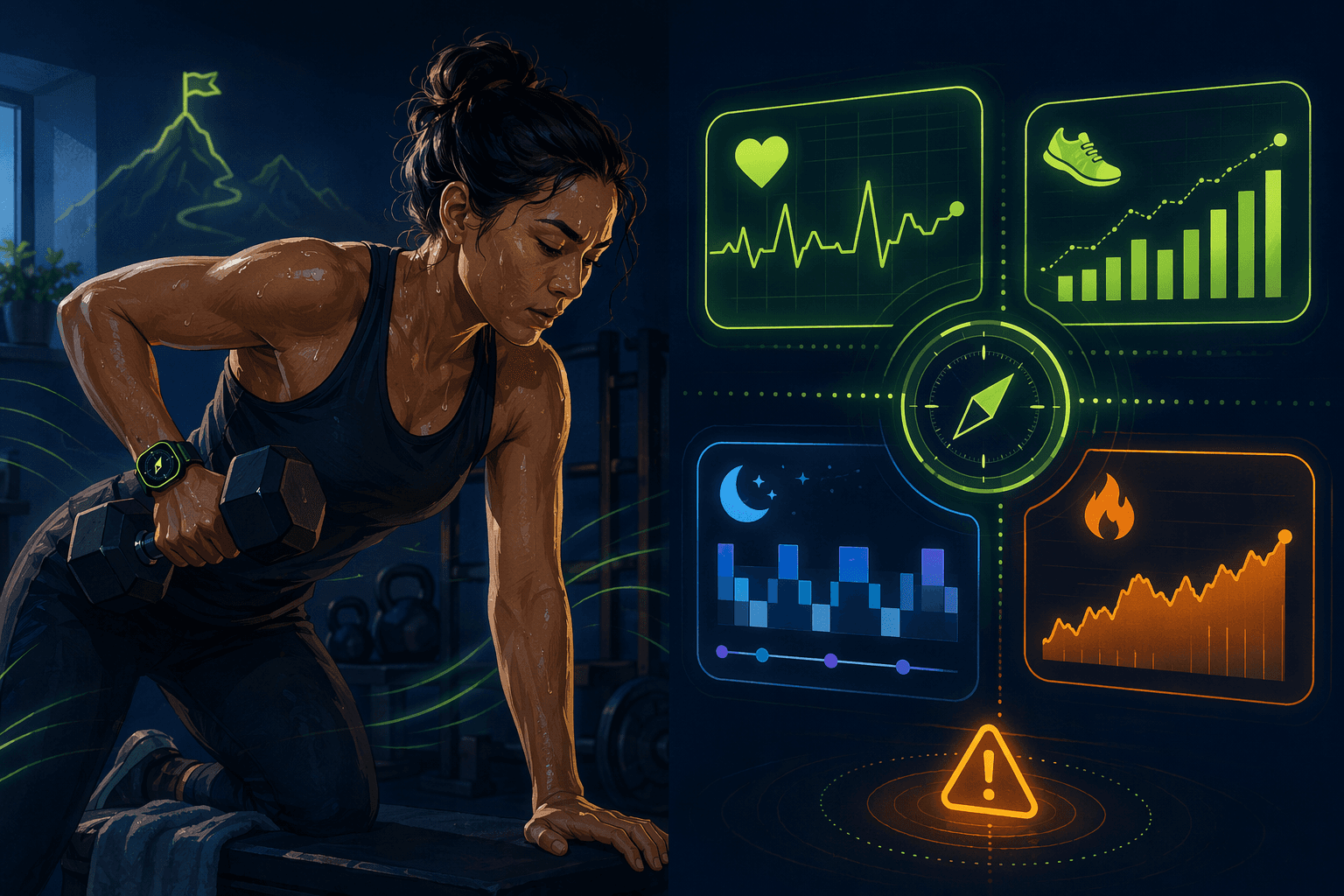
The Convergence and Divergence of Smartwatches and Fitness Trackers
Walk into any electronics store and the wall of wearables looks like a spectrum, not a set of neat categories. On one end sits the Apple Watch Ultra 3 with its cellular antenna, satellite SOS, and full app store. On the other sits the Whoop 5.0 — a screenless band that tracks strain and sleep but can't tell you the time. In between, devices like the Fitbit Charge 6 and Garmin Venu X1 blur the lines further.
This convergence is real, but it masks a divergence that matters more to home fitness practitioners than any spec sheet suggests. The right device for a runner who logs 30 miles a week on trails is not the same as the right device for someone doing bodyweight circuits in a 10x10 living room. A one-size-fits-all recommendation — "buy the best smartwatch" — fails both users because it ignores the primary variable: your workout type.
To make this decision clearer, we need to stop thinking in two buckets (smartwatch vs. tracker) and start thinking in three: smartwatches, GPS training watches, and screenless recovery trackers. Each category makes different trade-offs in battery life, activity-specific metrics, and subscription cost. Matching those trade-offs to your actual routine is the difference between a device you wear every day and one that ends up in a drawer.
The Three Device Categories: What Each Actually Does
Before comparing pros and cons, it helps to define the three categories clearly. The table below summarizes the key specs and trade-offs for each group, based on data from GearJunkie's 2026 testing and CNET's 2026 lab evaluations.
| Category | Examples | Battery Life | Key Strengths | Key Limitations |
|---|---|---|---|---|
| Smartwatches | Apple Watch Series 11, Samsung Galaxy Watch 8, Google Pixel Watch 3 | 18–42 hours (Apple Watch Ultra 3: 36–42 hrs) | Full app ecosystem, ECG/health alerts, phone replacement, seamless iOS/Android integration | Daily charging required, weaker sport-specific metrics, higher price point |
| GPS Training Watches | Garmin fenix 8, COROS Pace 4, Garmin Enduro 3, Garmin Forerunner 970 | 6–15 days (Enduro 3: 320 hrs GPS with solar) | Multi-day battery, 112+ activity profiles, offline maps, robust GPS tracking | Bulkier design, steeper learning curve, fewer smart features |
| Screenless Recovery Trackers | Whoop 5.0, Oura Ring 4, Fitbit Charge 6 (hybrid) | 5–16 days (Whoop 5.0: 14–16 days tested) | Deep sleep/strain analytics, no screen distraction, long battery, lower upfront cost | No app store, limited or no standalone GPS, ongoing subscription costs |
Comments
Join the discussion with an anonymous comment.