
Healthy MAHA Recipes for Post-Workout Recovery
Discover how to fuel your home workout recovery with real, whole foods — no protein powders or engineered sports drinks required. This guide provides practical MAHA-aligned meal templates that meet the 2025–2030 Dietary Guidelines, cost under $5 per serving, and require only small-kitchen prep.
- Citation source
- NASM, AHA, 2025-2030 Dietary Guidelines
- Evidence level
- Formal position stand and general guideline
The moment after a home workout is when sports nutrition gets expensive fast. You are sweaty, hungry, maybe a little foggy, and the easiest story to believe is that recovery has to come from a tub, packet, or bottled shake. For most generally healthy home exercisers, the simpler rule works: protein + whole carb + vegetable or fruit + healthy fat.
That is the useful overlap behind healthy MAHA recipes for home workout nutrition. The 2025–2030 Dietary Guidelines’ Eat Real Food framework emphasizes protein, healthy fats, vegetables, fruits, whole grains, and avoiding highly processed foods; it also sets a protein range of 1.2–1.6 grams per kilogram of body weight per day.[1] Harvard’s Nutrition Source notes that this new range is substantially higher than the prior RDA and raises questions about protein source quality and individual needs, so it is best treated as official guidance rather than a one-size-fits-all prescription.[2]
Post-workout fueling guidance points in the same practical direction. NASM describes a post-exercise carbohydrate target of 1.0–1.5 grams per kilogram within about 30 minutes after training, while American Heart Association guidance places protein around 15–25 grams within an hour after exercise.[3][4] That does not require a supplement by default. It requires a meal or snack that gets protein and carbohydrate into the same window without turning recovery into another subscription.
The Recovery Window, Translated Into Food
The useful version of nutrient timing is not complicated. After a strength session, circuit, rowing workout, or hard bike ride at home, carbohydrate helps replace the fuel you used, while protein supplies amino acids for muscle repair. The Academy of Nutrition and Dietetics also frames the recovery period around pairing carbohydrate with protein after exercise, especially when the next workout or daily activity is not far away.[5]
Christine Marquette, an RD writing for TrainingPeaks, gives a slightly narrower but compatible target: 10–20 grams of protein with high-GI carbohydrate within 30–60 minutes after a workout, and she specifically points to whole-food ingredients as workable recovery choices.[6] For a home-gym regular, that leaves a wide lane: eggs and sweet potato, yogurt and oats, beans and rice, cottage cheese and fruit, or canned fish over a grain.
| Recovery job | Whole-food way to do it |
|---|---|
| Protein | Eggs, Greek yogurt, cottage cheese, canned salmon, black beans |
| Carbohydrate | Sweet potato, oats, quinoa, whole-wheat crackers, brown rice, fruit |
| Produce | Greens, berries, apple, salsa, frozen vegetables |
| Healthy fat | Avocado, olive oil, peanut butter, salmon |
The under-$5-per-serving line is not magic, but it is a good reality check. The HHS Real Food Show has used meals under $5 per serving as a public benchmark for home cooking, and that is the standard these templates are built around.[7] Prices move by store, city, and season, so the point is not to promise a universal receipt total. It is to keep recovery food in the same world as a normal grocery basket.
Five Whole-Food Recovery Meals That Do the Job
Each template uses the same decision rule: choose a protein, add a whole-food carbohydrate, include produce, and finish with a fat source if the meal needs it. The portions should be adjusted to body size, workout intensity, appetite, and the rest of the day’s food. If you train lightly, the bowl can be smaller. If the workout was long or leg-heavy, the carb portion probably matters more.
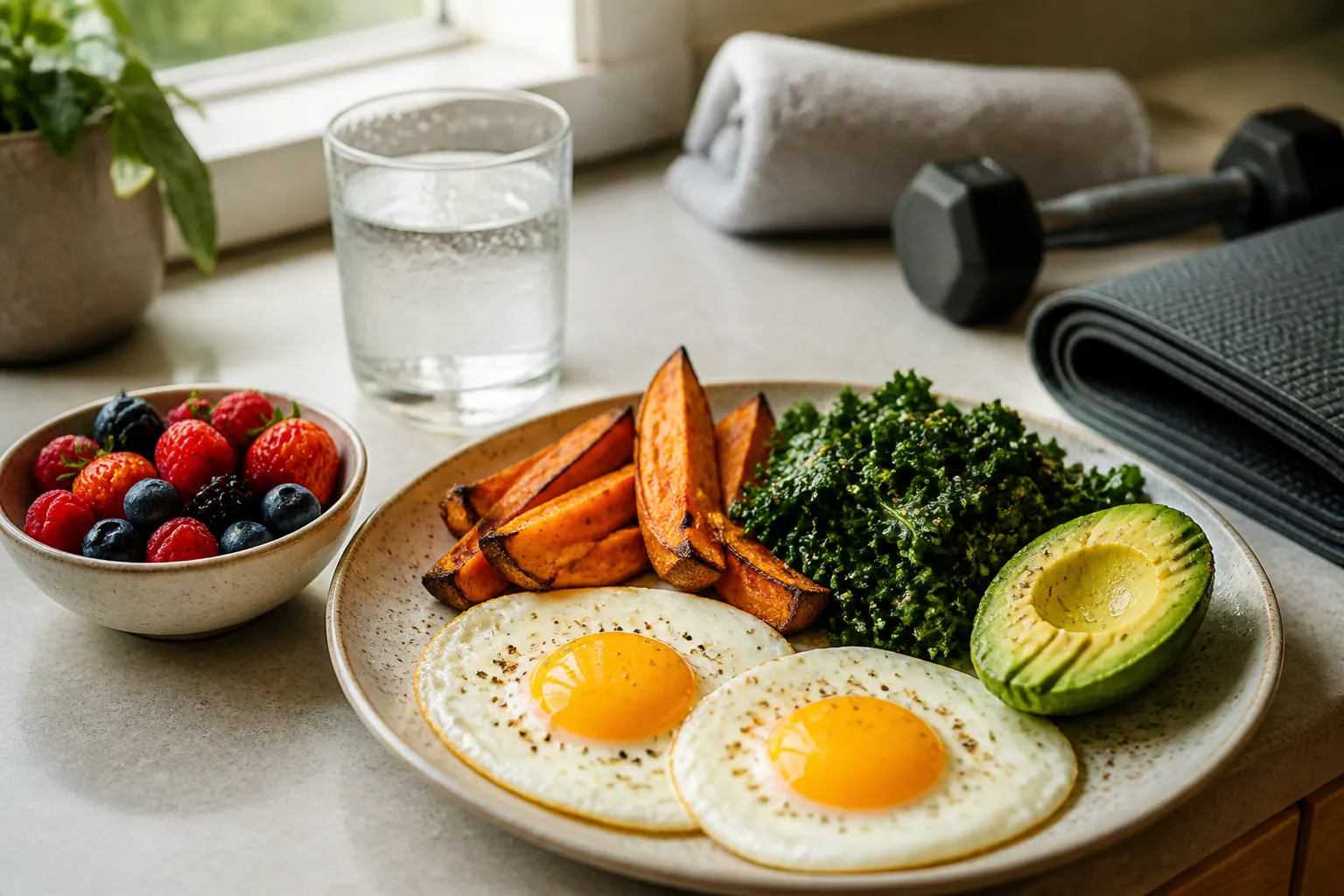
Eggs, Sweet Potato, Greens, and Avocado
This is the recovery plate for the person who wants breakfast food at any hour. Eggs handle the protein slot, sweet potato handles the carbohydrate slot, greens add produce, and avocado or olive oil brings fat. It fits the post-workout window because the components cook quickly if the sweet potato is already baked or microwaved ahead of time.
Small-kitchen workflow: microwave one sweet potato until soft, split it, and heat a skillet for eggs and greens. If counter space is tight, cook the greens first, slide them onto the plate, then use the same pan for the eggs. Frozen chopped kale or spinach works well because it does not demand washing, chopping, or a large crisper drawer.
Budget move: buy sweet potatoes loose, use frozen greens, and treat avocado as the flexible part. If avocado pushes the serving above your grocery target, use a smaller amount or cook the greens with olive oil instead. The recovery job still gets done.
Greek Yogurt, Berries, and Oats
This one is for the workout that ends before a meeting, school pickup, or a shower you are already late for. Greek yogurt supplies protein, oats and berries supply carbohydrate, and the berries bring produce without prep. It is also one of the easiest ways to eat within the 30–60 minute recovery window because there is no cooking unless you want warm oats.
Make it in a bowl or jar: scoop yogurt, stir in oats, add berries, and let it sit while you cool down. Frozen berries are fine here; they thaw into the yogurt and usually cost less than fresh berries out of season. If the workout was harder, increase the oats before adding extras. If it was a short mobility or light strength session, keep the portion modest.
This is also the easiest template to keep visible. A tub of yogurt, a bag of oats, and frozen berries are not glamorous, but they prevent the expensive emergency shake purchase after an ordinary dumbbell session.
Canned Salmon, Quinoa, and Avocado
Canned salmon is useful because it behaves like a no-cook protein. Put it over cooked quinoa, add avocado, and use whatever vegetable is already available: greens, cucumber, leftover roasted vegetables, or salsa. The quinoa contributes carbohydrate and some protein; the salmon carries the main protein load and fat.
The small-kitchen trick is to batch-cook the quinoa once, not every time. Cook a pot, cool it, and portion it into containers. After a workout, the meal becomes assembly: grain, fish, vegetable, fat, acid. Lemon juice, vinegar, or salsa keeps it from tasting like pantry punishment.
Cost depends heavily on the salmon. Store brands, multi-packs, and alternating with canned tuna or beans can keep the meal closer to the under-$5 target. If fish is expensive where you shop, use this as a rotation meal rather than the daily default.
Cottage Cheese, Whole-Wheat Crackers, and Apple
This is the no-stove recovery plate. Cottage cheese covers protein, whole-wheat crackers bring carbohydrate, and an apple adds fruit and more carbs. It is not a full dinner unless you build it out, but it is a strong post-workout snack when the alternative is skipping food until you are ravenous.
It works especially well after shorter home workouts: a 30-minute strength session, a kettlebell circuit, or a brisk treadmill walk. Keep the ingredients together in the fridge and pantry so the plate is easier to make than opening a delivery app. Add cinnamon, pepper, hot sauce, or sliced cucumber depending on whether you want sweet or savory.
The budget control is simple: buy cottage cheese in a larger tub instead of single-serve cups, choose a basic whole-wheat cracker, and use whatever fruit is in season. No blender, shaker bottle, or counter appliance required.
Black Bean and Brown Rice Bowl with Avocado and Salsa
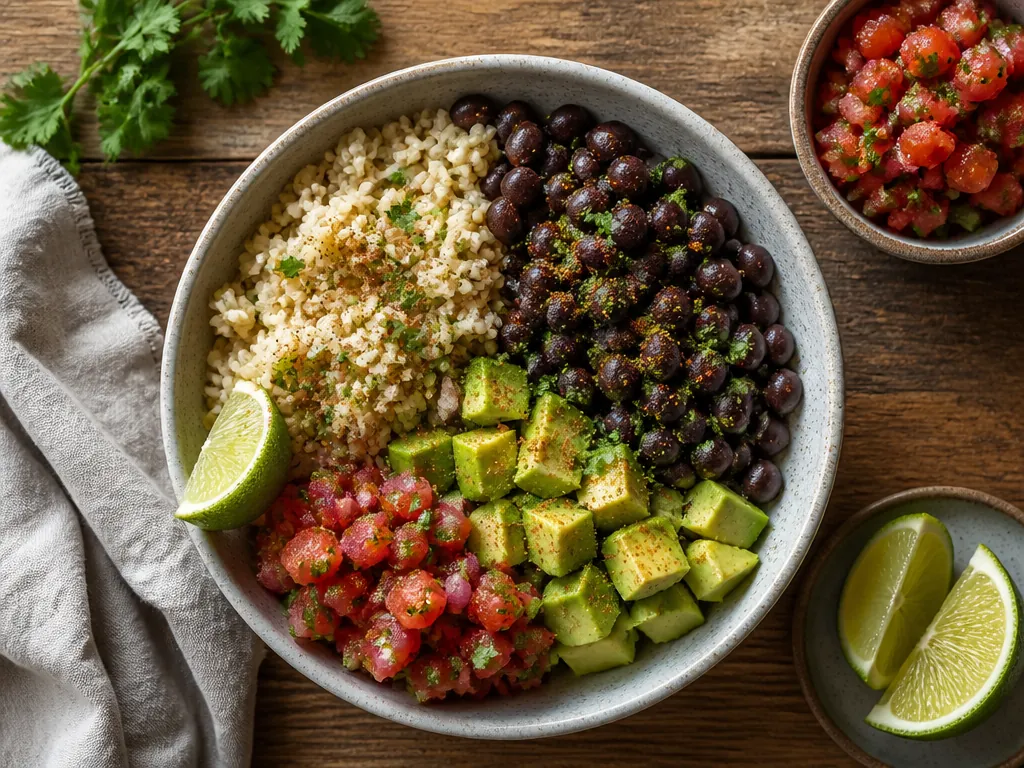
Beans and rice are not a consolation prize. They are one of the most repeatable recovery bases for a small apartment kitchen: brown rice for carbohydrate, black beans for plant protein and carbohydrate, salsa for produce, and avocado for fat. If you want more protein, add eggs, Greek yogurt on the side, cottage cheese, or leftover chicken if you eat it.
This bowl is also the best batch-prep candidate. Cook rice once, rinse canned beans, portion both into containers, and add salsa after reheating. For a more built-out example of the same real-food logic, the batch-prep copycat burrito is a practical next recipe to keep in rotation.
For budget, canned beans are the easy win. Dry beans are cheaper if you already cook them, but they are not required. A microwave rice pouch costs more but may still be reasonable for a renter who has one burner, no storage, and a workout ending in ten minutes of real hunger.
What About Before the Workout?
The pre-workout version follows the same plain logic, just lighter. A banana and coffee, oatmeal and eggs, or an apple with peanut butter can cover the need for accessible carbohydrate, a little protein or fat, and enough comfort that you can train without feeling heavy. This does not need to become a second supplement category in the pantry.
If your main issue after training is mental drag rather than muscle soreness, the companion guide on post-workout brain fog food goes deeper on the mental-clarity side of recovery.
How to Make This Repeatable in a Small Kitchen
The meal matters, but the setup matters more. Recovery food has to be easier to reach than the product you are trying not to depend on. That means doing a few boring things before the workout ever starts.
- Batch-cook one grain: brown rice, quinoa, or oats gives you the carbohydrate base for several meals.
- Keep two fast proteins ready: eggs plus Greek yogurt, cottage cheese plus canned fish, or beans plus leftovers.
- Use frozen vegetables without apology: they reduce chopping, spoilage, and the need for fridge space.
- Put recovery food where you can see it: yogurt at eye level, fruit on the counter, cooked grains in front of the fridge.
- Treat avocado, nuts, olive oil, and peanut butter as adjustable fats, not mandatory decorations.
Supplements still have a place for some people. If you have very high training volume, limited appetite, travel constraints, medical nutrition needs, or specific performance goals, a powder or drink may be useful. The narrower point is that an ordinary home workout does not automatically create a supplement requirement.
Use the numbers as guardrails, not a private diagnosis. The official protein range, the 15–25 gram recovery target, and the carbohydrate-per-kilogram guidance can help you build a plate, but an RD or healthcare professional is the right person to personalize fueling if you are managing a condition, changing weight intentionally, training for competition, pregnant, recovering from injury, or unsure how much you need.
For most home workout recovery, whole foods can do the carb-protein job of sports supplements while adding fiber, produce, and budget control. The practical test is simple: can you make it in your kitchen, eat it within the recovery window often enough to matter, and afford to repeat it next week?
References
- Eat Real Food — Official 2025–2030 Dietary Guidelines, realfood.gov
- Dietary Guidelines for Americans 2025-2030, Harvard Nutrition Source
- Nutrient Timing: What to Eat Before and After a Workout, NASM
- Food as Fuel Before, During and After Workouts, American Heart Association
- Timing Your Pre- and Post-Workout Nutrition, Academy of Nutrition and Dietetics / EatRight
- Five Whole Foods Ingredients for Post-Workout Recovery, TrainingPeaks
- RFK Jr. hosting a new cooking show with celebrity chefs, USA Today, July 30, 2026
This is general fitness education, not medical advice. For diagnosis or treatment of pain or injury, consult a qualified clinician.
Pick your next session
A 4-Week Home Workout Plan for Busy Parents (No Gym Required)
This structured four-week progressive workout plan is built for parents with limited time and no gym equipment. Each 15–25 minute full-body session fits around family life and builds consistency before intensity.
Spot something off?
This content sits adjacent to health guidance — tell us if a citation or figure needs a correction.