
How to Eat for Brain Recovery After Home Workouts
Post-workout brain fog is not just exhaustion — it is often a nutritional gap. This guide explains the three-component meal that restores both mental clarity and physical recovery, and why the standard protein-shake-only approach misses the mark.
- Citation source
- Gatorade Sports Science Institute
- Evidence level
- General guideline
- Recommended frequency
- Within 60 minutes post-workout
The workout is over before the problem starts. The mat is rolled up, the dumbbells are back against the wall, the sweat has cooled, and somehow the next email looks like it was written in another language. That post-workout fog is easy to label as being tired, but for many home exercisers it is more specific than fatigue. The body has stopped working; the brain has not been refueled.
The useful dietary changes for post-workout brain fog are not exotic. They start with a better recovery meal: protein, carbohydrates, and a choline-rich food within about 60 minutes, with sodium, potassium, and magnesium handled through real food and fluids. That matters most when you trained fasted, trained after a long gap since your last meal, sweated heavily, or tried to go straight from squats to work without a real transition.

The Protein Shake Is Usually Only One-Third of the Fix
A protein shake can be useful. It gives amino acids your muscles can use for repair. The problem is what it does not necessarily give: enough carbohydrate to stabilize blood glucose, enough electrolytes to replace sweat losses, or much choline to support acetylcholine production. If the symptom is that your legs feel done but your attention is gone, muscle repair is not the whole story.
Post-exercise brain fog is commonly discussed as a mix of blood-sugar dips, electrolyte loss, and acetylcholine demand during exercise. Sweaty sessions can also cost roughly 300–600 mg of sodium, and replacing only water may not correct that loss well enough for someone who feels dull, headachy, or mentally slow afterward.[1]
The practical target is simple enough to use on a workday: about 20–30 g of protein with 30–60 g of carbohydrate within 60 minutes after training. That frame is used in exercise-nutrition discussions because it supports muscle repair and glycogen restoration, and it is also relevant to cognitive function after exercise rather than only soreness the next day.[2][3]
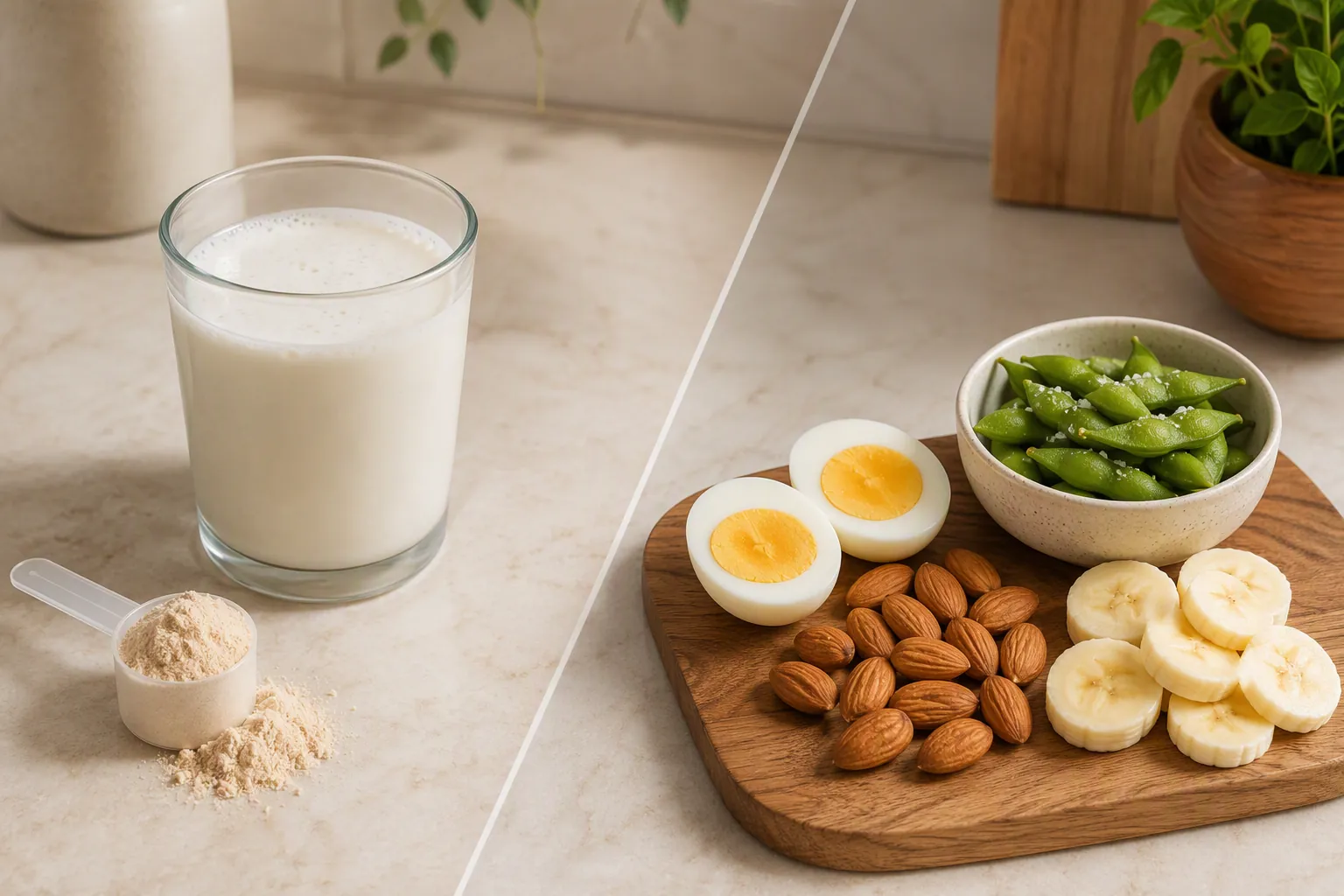
If you already use shakes, this does not mean throwing them out. It means treating the shake as a base, not the whole meal. A whey shake plus a banana and salted eggs is different from whey in water. Chocolate milk or higher-protein milk can also sit closer to a complete recovery option because it brings carbohydrate along with protein; the comparison in Fairlife Milk vs Chocolate Milk vs Whey for Post-Workout Recovery is a useful bridge if you want a drinkable option instead of a plate.
Build the Recovery Plate Around What the Brain Actually Used
A good post-workout plate does not need to look like a supplement ad. It needs to answer three questions: did you give your muscles amino acids, did you give your brain glucose, and did you provide the raw materials and minerals your nervous system depends on after effort?
| Component | What it helps replace | Easy home options |
|---|---|---|
| 20–30 g protein | Amino acids for muscle repair | Eggs, Greek yogurt, chicken, tuna, tofu, whey or milk |
| 30–60 g carbohydrate | Glucose and muscle glycogen | Potatoes, rice, oats, fruit, toast, tortillas, chocolate milk |
| Choline-rich food | Support for acetylcholine production | Egg yolks, salmon, sardines, leafy greens |
| Electrolyte foods | Sodium, potassium, and magnesium lost or used during training | Salted meals, potatoes, bananas, leafy greens, beans, nuts, edamame |
Carbohydrate Is the Brain-Fuel Piece People Skip
Carbs are often treated as optional after a short home workout because the session was not a two-hour run or a heavy gym day. But the brain relies heavily on glucose as an energy source, and nutrition research on brain function repeatedly identifies glucose availability as central to mental performance.[4] If you trained before breakfast, after a light lunch, or after a long meeting stretch with only coffee, the post-workout dip may be less mysterious than it feels.
This is where the standard protein-only recovery habit falls short. Protein can help repair the tissue you stressed. It does not automatically refill the carbohydrate gap that leaves you staring at the same sentence for five minutes. A banana, a bowl of oats, rice with eggs, potatoes with salmon, or toast with Greek yogurt can change the after-workout hour more than adding another half scoop of protein powder.
Electrolytes Are Not Just a Water Problem
“I drank water” is not always the same as “I rehydrated.” During sweaty workouts, sodium losses can be meaningful, and mild dehydration of about 1–2% of body mass has been linked with impaired cognitive function and concentration during and after exercise.[2] That does not mean every apartment workout needs a neon sports drink. It means plain water may be incomplete when the session was hot, long, humid, or unusually sweaty.
A salted meal is often the most ordinary fix. Eggs with salted potatoes, rice with tofu and soy sauce, soup with chicken and vegetables, or a tuna sandwich with fruit can replace sodium while also bringing carbohydrate and protein. Potassium-rich foods such as potatoes, bananas, beans, and leafy greens help round out the picture. Magnesium-containing foods like nuts, beans, leafy greens, and edamame are useful additions, especially when the meal is otherwise just powder and water.
The important distinction is between electrolyte replacement and electrolyte theater. More salt is not automatically better, and specialty salt is not a shortcut around an underbuilt meal. If the appeal of pink salt is starting to sound like a recovery strategy, the more useful read is Why Pink Salt Won't Help Your Home Workout Weight Loss Goals. For hydration basics during training, How Much Water to Drink During Home Workouts for Blood Pressure is the better place to sort out fluid timing.
Choline Deserves a Place on the Plate, Not a Starring Supplement Role
Choline matters because it is a precursor to acetylcholine, a neurotransmitter involved in both attention and muscle contraction. Egg yolks, fatty fish such as salmon and sardines, and leafy greens are practical food sources; without enough choline availability, the nervous-system side of movement and focus can become the limiting factor rather than muscle size or effort.[5]
That does not turn recovery into a nootropic protocol. Alpha-GPC and tyrosine discussions can be interesting, but they are not the first fix for someone who trained fasted and then had whey in water. Start with eggs, fish, greens, beans, dairy, potatoes, rice, fruit, and salt where it belongs. Supplements make more sense only after the obvious meal gaps are already covered, and even then they should be treated cautiously rather than as a default stack.
Meal Patterns That Work After a Living-Room Workout
The best recovery meal is the one you can make while your laptop is still open and the resistance band is still on the floor. These are patterns, not prescriptions:
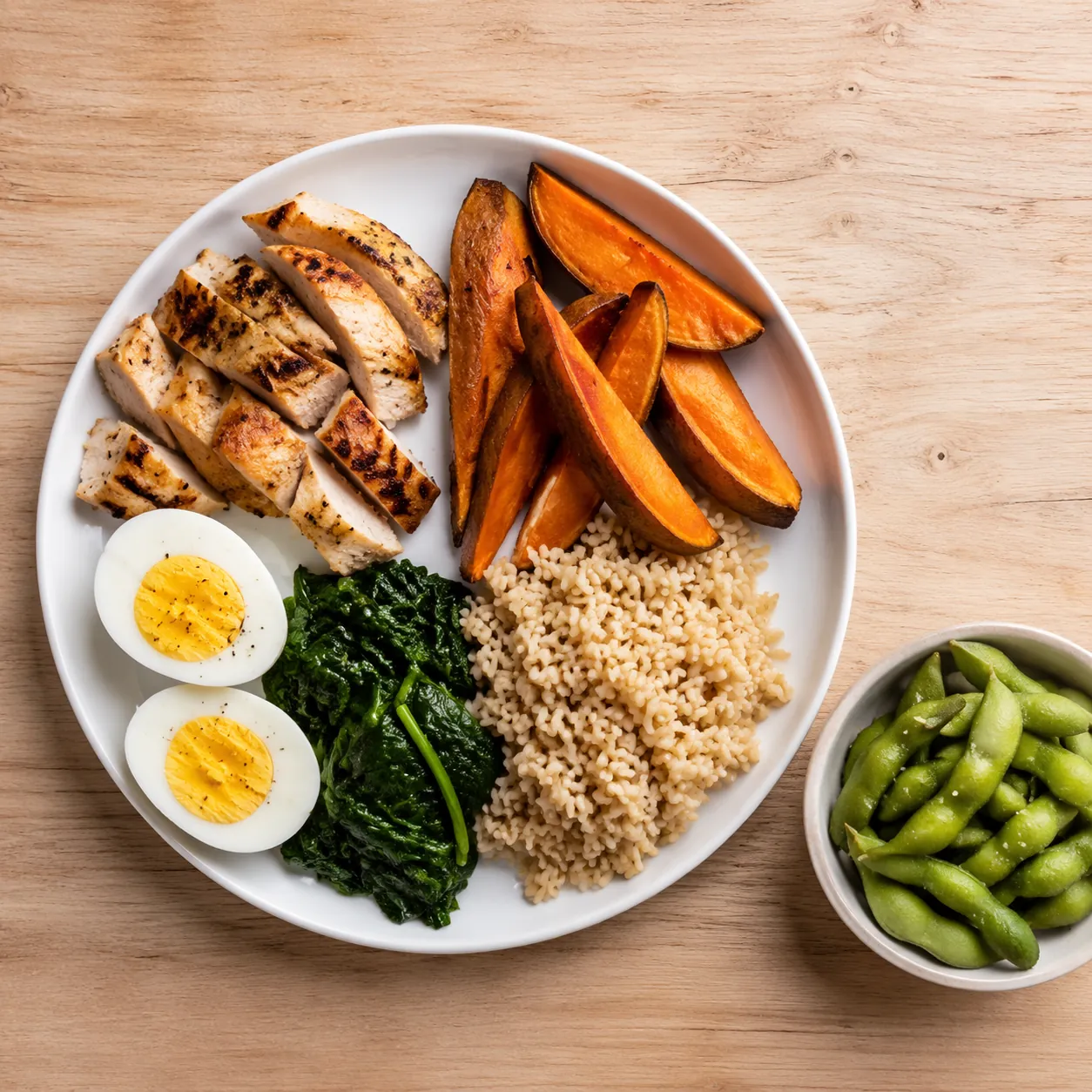
- Eggs, roasted potatoes, spinach, and fruit: protein from eggs, carbs and potassium from potatoes and fruit, choline from yolks, sodium from seasoning.
- Greek yogurt, oats, banana, nuts, and a pinch of salt if the session was sweaty: fast, quiet, and easy before work.
- Salmon or sardines with rice and greens: useful when you want a real meal after strength training and have leftovers ready.
- Whey blended with milk plus toast, fruit, and boiled eggs: still convenient, but no longer protein-only.
- Tofu or chicken bowl with rice, beans, leafy greens, and a salted sauce: a good option when dinner is also the recovery meal.
Coffee can fit, but it should not be asked to do the job of food. If caffeine is the only thing between the workout and the next block of work, it may temporarily sharpen the feeling while leaving the fuel problem intact. The carbohydrate-plus-caffeine question is covered more directly in Coffee's Role in Post-Workout Recovery and Heart Health.
Where Long-Term Brain-Healthy Eating Fits
Exercise is good for the brain over time. In older adults, aerobic exercise training has been shown to increase hippocampal size and improve memory, which is one reason the exercise-and-brain conversation is worth taking seriously.[6] But that long-term adaptation is a different question from why you cannot focus 20 minutes after a home workout.
The MIND diet literature also supports a broader pattern of nutrient-dense eating for brain health, but the major study cited in this area was conducted in adults aged 65 and older.[7] It is reasonable to like the pattern: leafy greens, berries, beans, fish, nuts, whole grains, and olive oil are hardly bad recovery foods. It is not reasonable to use that evidence as a direct explanation for immediate post-workout fog in a younger person doing dumbbell circuits before work.
For the hour after training, the question is more immediate. Did you replace glucose? Did you replace sodium and other minerals if you sweated? Did you include choline-rich food instead of treating protein powder as a complete meal?
How to Read Your Own Fog
If the fog improves after a balanced recovery meal, under-fueling was probably part of the problem. That does not require a dramatic diagnosis; it means your workout and your next responsibility were competing for fuel, and the plate finally caught up.
If the fog appears mostly after hot, sweaty, or longer sessions, look harder at fluids and electrolytes. Water still matters, but the meal around it may need sodium and potassium-rich foods, not just another bottle at your desk.
If the fog persists despite eating enough protein and carbs, replacing electrolytes, sleeping reasonably, and not leaning on coffee as a meal, look beyond the plate. Poor sleep quality, sleep apnea, medication effects, illness, low overall calorie intake, and other medical issues can all make training feel cognitively expensive. How Sleep Apnea Sabotages Home Workout Recovery is a sensible next stop when brain fog is not responding to the obvious nutrition fixes.
References
- Brain Fog After Exercise, Vitals Vault
- Exercise, Nutrition and the Brain, PMC, 2014
- SSE #112: Exercise, Nutrition and the Brain, Gatorade Sports Science Institute
- Brain foods: the effects of nutrients on brain function, PMC, 2008
- Fueling the Brain for Movement: Nutrition for Neuro-Drive, YouFit Gyms
- Exercise training increases size of hippocampus and improves memory, PNAS, 2011
- MIND diet associated with reduced incidence of Alzheimer's disease, PMC, 2015
This is general fitness education, not medical advice. For diagnosis or treatment of pain or injury, consult a qualified clinician.
Pick your next session
Browse all routines to find an appropriately-spaced next session.
Spot something off?
This content sits adjacent to health guidance — tell us if a citation or figure needs a correction.