
Do You Need a Post-Workout Protein Shake at Home?
Not sure a post-workout protein shake is worth it when you train at home? Here's what the evidence says about timing versus total daily protein — and how to make a budget-friendly shake without a blender.
- Citation source
- International Society of Sports Nutrition (ISSN) position stand
- Evidence level
- Formal position stand
- Recommended frequency
- Protein intake every 3-4 hours
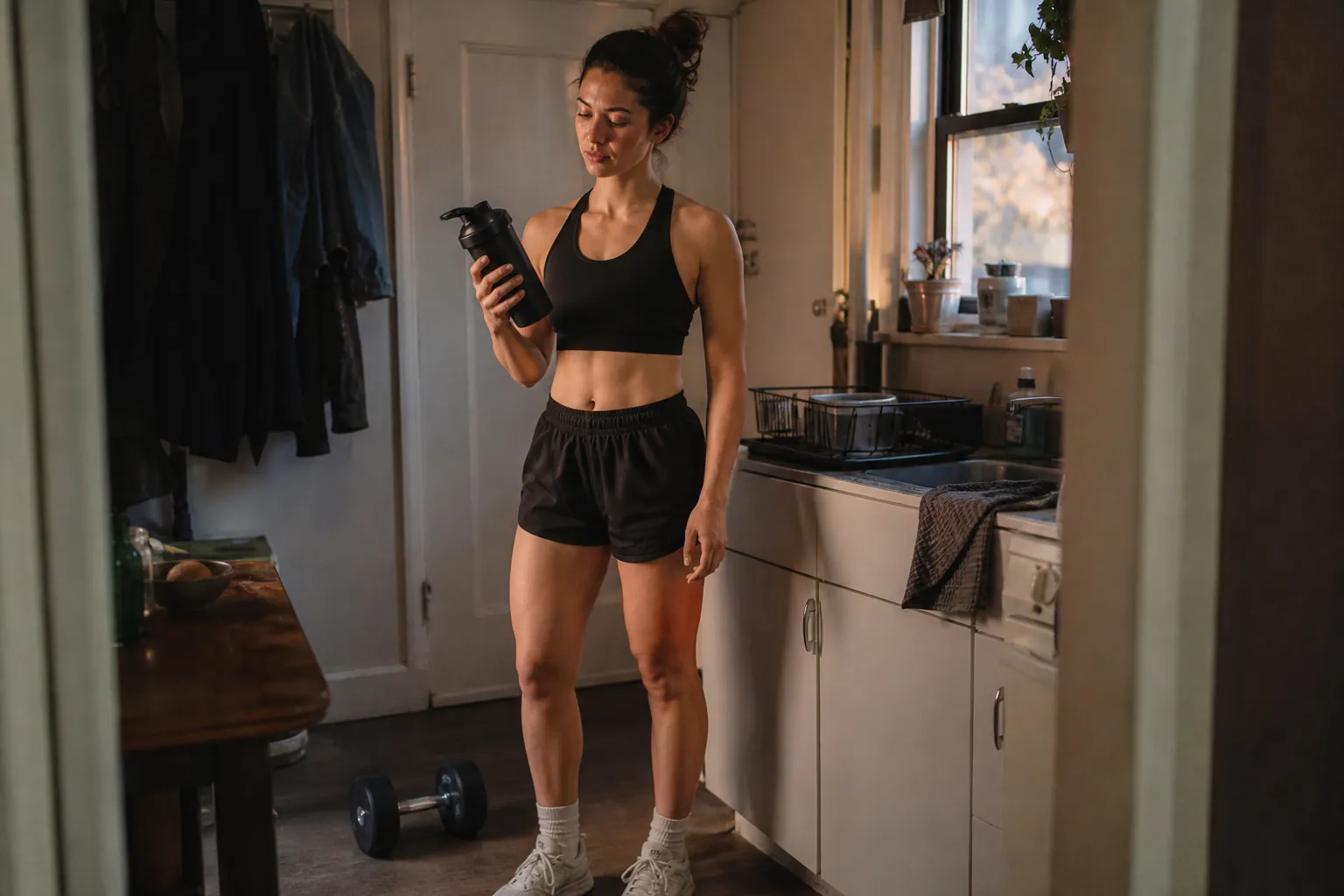
You finished a home workout, you are standing in the kitchen, and the question is whether skipping the shake means you missed the point. It does not. For most home exercisers, a post-workout protein shake is a convenience tool, not a requirement.
The anabolic window is wider than the slogan
Muscle remains sensitized to protein for at least 24 hours after exercise, so the real window is much wider than the old 30-minute script. [1]
Schoenfeld's timing meta-analysis is the best antidote to the marketing version of that story: later reviews summarize it as showing that, once total daily protein is controlled, the timing edge mostly fades. [2]
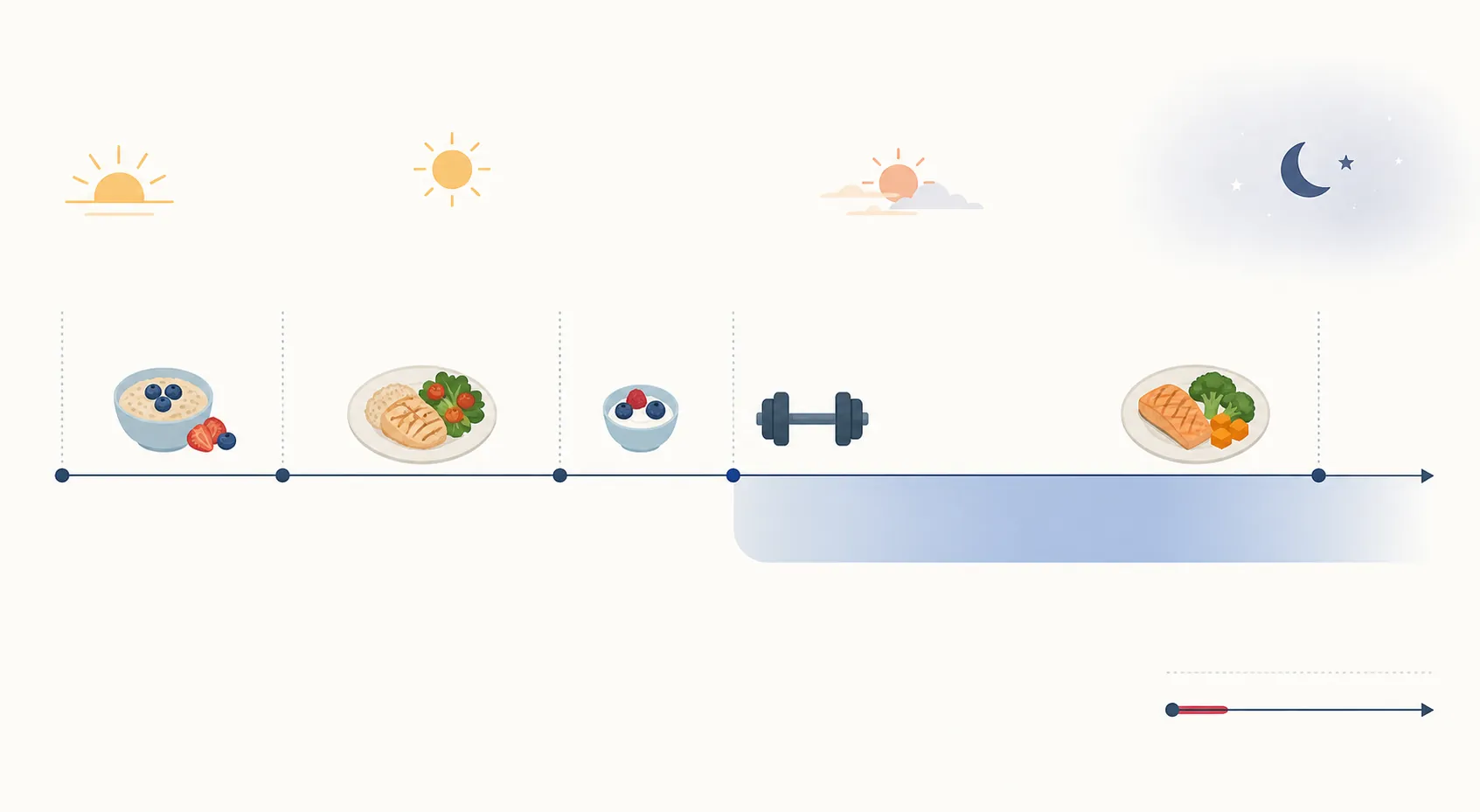
That is why the more useful question is not whether the shake happened immediately, but whether the day as a whole is on target. For active people, the ISSN position stand puts total protein around 1.4-2.0 g per kg of body weight per day. [1]
What that means at home
A practical post-workout dose is usually 20-40 g of protein, which is enough to make a shake worth the cleanup. Spreading protein across the day, roughly every 3-4 hours, is a better habit than trying to win recovery with one perfectly timed drink. [1]
Timing matters a little more if you trained fasted or if your last protein meal was hours ago. In those cases, a shake after training is doing real work. If dinner is already close, the shake is optional. [1][2]
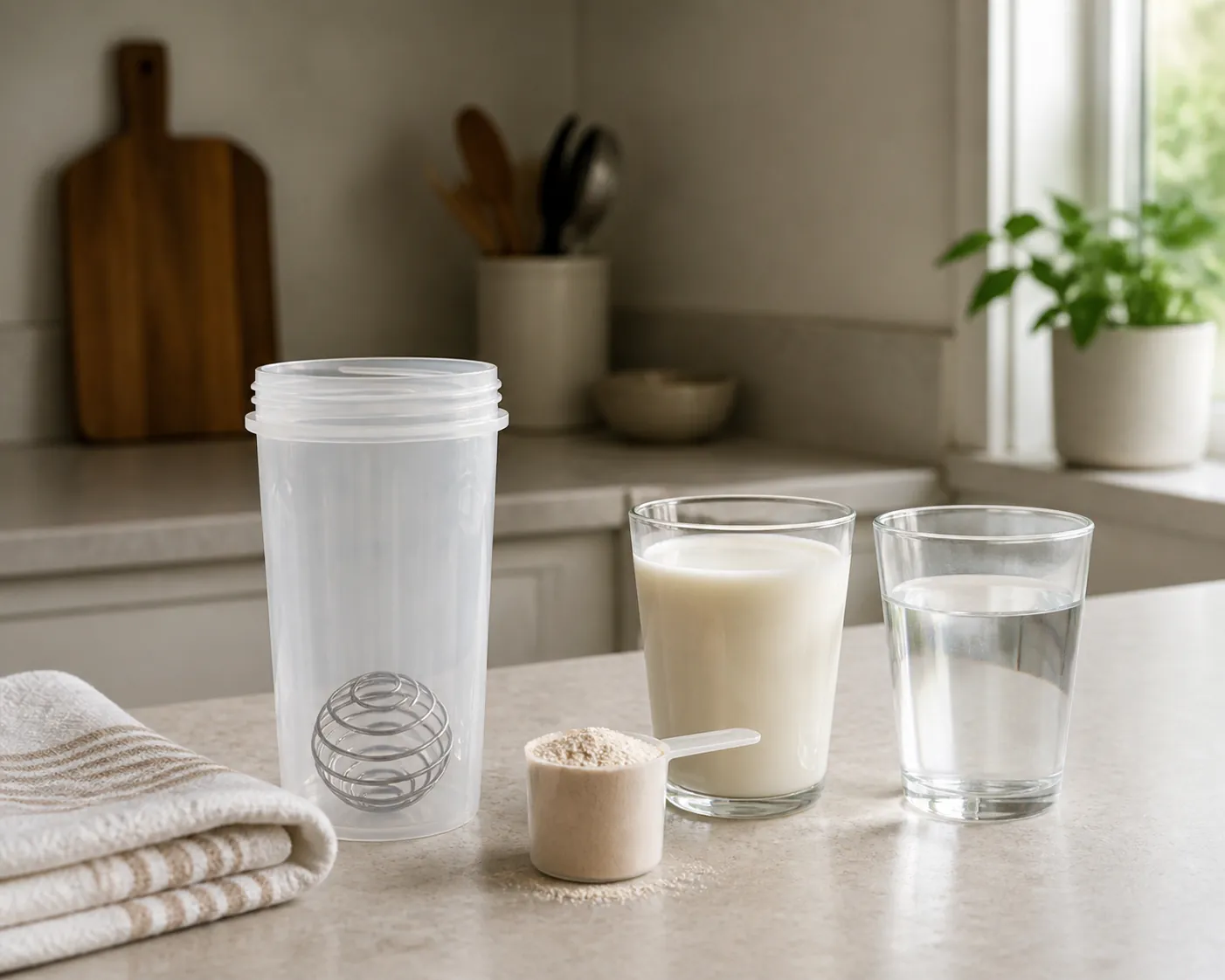
At home, the easiest version is also the least fussy one: powder plus water or milk in a shaker bottle. Whey is the default because it is leucine-rich, digests quickly, and tends to stimulate muscle protein synthesis more than casein in the research literature, which helps explain why it works so well as a post-workout option. [2]
That does not make the setup fancy. A cheap shaker bottle and a scoop are enough, and no-blender recipes can carry you just fine if texture matters. Omnivore's Cookbook has a whole set of no-blender shake ideas if you want options without turning recovery into a project. [3]
Whey concentrate is usually the budget baseline, isolate is the pricier lower-lactose option, and ready-to-drink bottles buy convenience at the highest cost. The right choice is the one you will actually keep using.
What protein drinks do not do
It is worth separating recovery from soreness. Harvard's writeup of a small study with 30 men found that 32 g of protein did little to reduce muscle soreness compared with carbohydrate, which is a reminder that a shake is not a painkiller. That result does not cancel the case for adequate protein; it just says soreness is a poor way to judge whether your training is working. [4]
If you already hit your daily protein through meals, skip the shake and move on. If you usually fall short, a 20-40 g shaker-bottle drink after a home workout is one of the cheapest, easiest ways to close the gap. If you want the broader recovery sequence, start with Your Complete Post-Workout Recovery Routine at Home, compare Fairlife Milk vs Chocolate Milk vs Whey for Post-Workout Recovery, or take the whole-food counterpoint in Can Quick Spicy Rigatoni Be a Real Post-Workout Meal Prep?. If you are building the training side at the same time, A Home Gym Exercise Routine Built for the Equipment You Own keeps the setup aligned.
References
- International Society of Sports Nutrition Position Stand: protein and exercise — PMC
- Effects of Protein Supplementation on Performance and Recovery — PMC
- 10 Easy Protein Shake Recipes Without a Blender — Omnivore's Cookbook
- Feeding your fitness — Harvard Health Publishing
This is general fitness education, not medical advice. For diagnosis or treatment of pain or injury, consult a qualified clinician.
Pick your next session
Browse all routines to find an appropriately-spaced next session.
Spot something off?
This content sits adjacent to health guidance — tell us if a citation or figure needs a correction.