
Can Quick Spicy Rigatoni Be a Real Post-Workout Meal Prep?
This spicy rigatoni — ground chicken in a tomato-cream sauce over rigatoni — is built as a batchable post-workout recovery meal, not a cheat-day pasta. It covers the protein-and-carb targets recovery research prioritizes, per-serving macros for 4–5 servings, and the USDA-based storage rules that keep it safe through the week.
- Citation source
- International Society of Sports Nutrition (ISSN) and USDA FSIS
- Evidence level
- Formal position stand and federal guideline
- Recommended frequency
- Protein doses every 3–4 hours
Yes: a quick spicy rigatoni can count as post-workout meal prep if the batch is built on purpose. The plate needs a real protein dose, not a decorative spoonful of ground meat; it needs enough carbohydrate to make the rigatoni useful after training; and it needs leftover rules strict enough that Wednesday’s container is still food, not a dare. The International Society of Sports Nutrition points to 20–40 g of high-quality protein per dose and notes that post-exercise carbohydrate plus protein can support glycogen resynthesis, especially when carbohydrate intake is not already maximal [1].
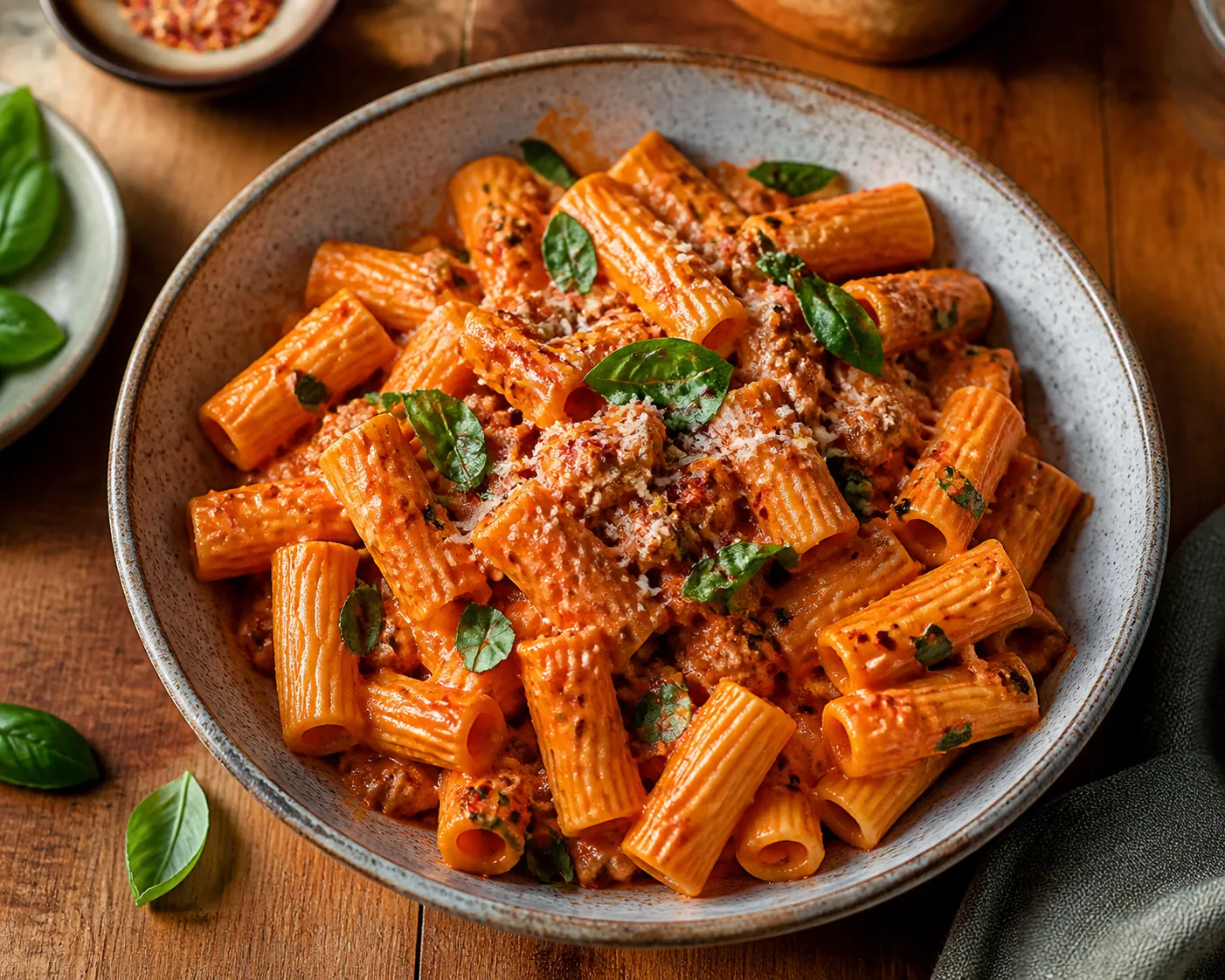
The working version below is a 4–5 serving batch: lean ground chicken or turkey, rigatoni, a spicy tomato-cream sauce, and enough sauce looseness to survive reheating. It is not built around the usual internet claim that a spicy rigatoni container magically has “435 calories and 48 g protein.” That number may be possible with certain brands and portions, but it is not a fact until the ingredients are entered and divided by the number of containers.
| Batch plan | Best use | Rigatoni per serving | What the pasta contributes before meat or sauce | Protein target to verify |
|---|---|---|---|---|
| 5 containers | Most balanced weekly prep | 2 oz dry rigatoni | About 200 kcal, 42 g carbs, and 7 g protein | Build the full container to roughly the 20–40 g post-workout protein dose |
| 4 containers | Bigger post-leg-day or higher-carb serving | 2.5 oz dry rigatoni | About 250 kcal, 53 g carbs, and 9 g protein, scaled from the 2 oz label | Expect a larger meal; recalculate from your poultry and sauce labels |
The 20–25 minute spicy rigatoni batch
Use 10 oz dry rigatoni if you want five standard pasta servings. Divide into four containers only if you intentionally want larger portions. That one decision changes the carb load, the calories, and the way the week’s containers fit into the rest of your day.
Ingredients
- 10 oz dry rigatoni
- 1.5 lb lean ground chicken or lean ground turkey
- 1 tbsp olive oil, or just enough to coat the pan if your poultry is very lean
- 3–4 garlic cloves, minced
- 1 small onion or shallot, finely chopped
- 2 tbsp tomato paste
- 1.5 cups crushed tomatoes, passata, or a lower-sugar marinara you already track
- 1–2 tbsp Calabrian chili paste, or 1–2 tsp red pepper flakes if that is what is in the cabinet
- 1/2 cup half-and-half, light cream, evaporated milk, or an unsweetened dairy-free option
- 1/2–1 cup reserved pasta water for loosening the sauce
- Salt, black pepper, Italian seasoning, and optional grated parmesan
- Fresh basil or parsley, optional
Cooking order
- Boil the rigatoni in salted water, but stop it 1–2 minutes before the box’s full cook time. Pasta that is perfect on Sunday often turns soft after two reheats; slightly undercooking is a practical meal-prep move used in spicy rigatoni prep guidance [6].
- Before draining, reserve at least 1 cup of pasta water. Drain the pasta and do not rinse it.
- While the pasta cooks, heat a large skillet or Dutch oven. Add the oil if needed, then cook the onion until softened.
- Add the ground chicken or turkey. Break it up aggressively so the meat distributes through every container instead of forming one protein-heavy corner and three tomato noodles.
- When the poultry is cooked through, stir in garlic, tomato paste, chili paste or flakes, pepper, and Italian seasoning. Let the tomato paste darken for a minute so the sauce tastes cooked, not metallic.
- Add crushed tomatoes or marinara. Simmer briefly, then lower the heat and stir in the half-and-half, light cream, evaporated milk, or dairy-free option.
- Fold in the rigatoni. Add reserved pasta water a splash at a time until the sauce looks slightly looser than you would serve fresh. The extra moisture matters because rigatoni keeps absorbing sauce in the fridge.
- Taste for salt and heat. Add parmesan if you are using it, then portion immediately into four or five containers.
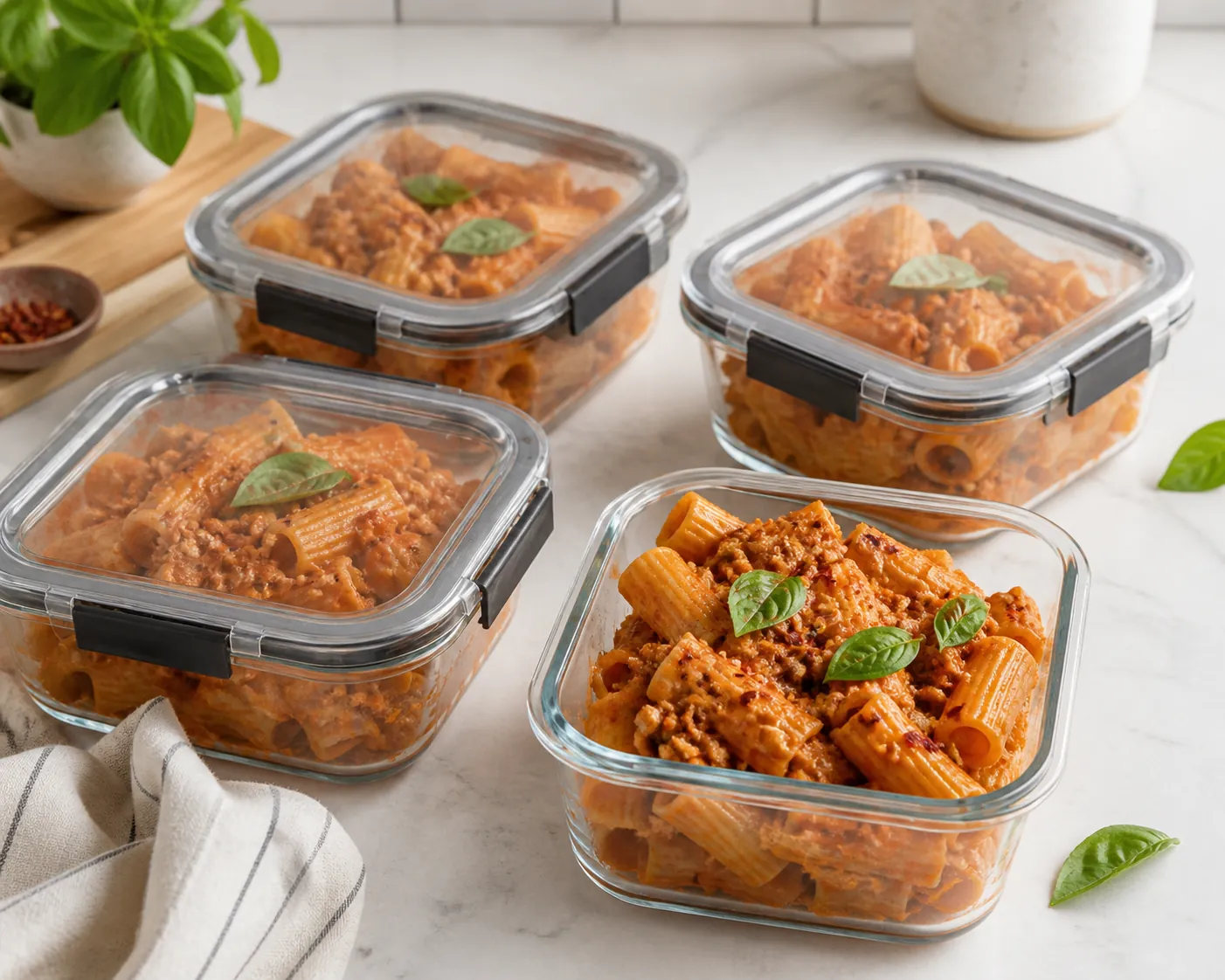
Macro math: do not borrow someone else’s container numbers
The pasta number is the easy part. Ten ounces of dry rigatoni equals five standard 2 oz servings, so the whole pasta component contributes about 1,000 kcal, 210 g carbohydrate, and 35 g protein before poultry, sauce, dairy, oil, or cheese enter the pan [2]. Divide that by five containers and the pasta is doing exactly what pasta is supposed to do after training: supplying a meaningful carbohydrate base, plus a small amount of protein.
The poultry and sauce are where accuracy is won or lost. Ground chicken and ground turkey labels vary by leanness; cream, half-and-half, evaporated milk, dairy-free milk, parmesan, and oil can move the calorie count quickly. Comparable high-protein pasta meal preps show that containers in the neighborhood of about 38–58 g protein and 430–540 kcal are attainable, but those are recipe-specific results, not a universal promise for every rigatoni batch [3][4][5].
| Ingredient group | What to enter in your tracker | Why it matters |
|---|---|---|
| Rigatoni | 10 oz dry rigatoni, then divide by 4 or 5 | Sets the carbohydrate base and contributes some protein |
| Ground chicken or turkey | Exact package weight and label macros | Carries most of the recovery protein load |
| Tomato base | Crushed tomatoes, passata, or marinara by brand | Adds sauce volume; marinara labels vary |
| Creamy ingredient | Half-and-half, cream, evaporated milk, or dairy-free milk | Changes calories, fat, texture, and freezer behavior |
| Oil, parmesan, extras | Measure instead of free-pouring | Small additions can explain why a copied macro claim does not match your batch |
If the final five-container batch does not reach a meaningful protein dose, the fix is usually not mystical. Use a leaner poultry with more protein per calorie, increase the meat, reduce added oil or cheese, or make four larger containers. Protein pasta can help, but it is not mandatory; chickpea and legume pastas often advertise higher protein per serving, while standard wheat pasta still sits closer to specialty versions than the guilt-heavy pasta discourse suggests [2].
Why this works after a home workout
The recovery logic is straightforward. Resistance training makes the protein dose matter; hard intervals, circuits, and longer sessions make carbohydrate useful for glycogen replenishment. ISSN’s nutrient timing position stand recommends total daily protein of 1.4–2.0 g/kg/day for many exercising individuals, with 20–40 g high-quality protein doses every 3–4 hours, and it describes post-exercise protein ingestion from immediately to 2 hours after training as a period that stimulates muscle protein synthesis [1]. That makes the container useful, but it also lowers the drama: the whole day’s protein still matters more than panicking because the microwave line took 12 minutes.
The timing guidance is not one clean commandment. EatRight suggests refueling within roughly 60 minutes after exercise [7]. NASM recommends 15–25 g protein within about an hour and lists whole-grain pasta with a tomato-based sauce among post-workout meal options [8]. Healthline summarizes the evidence more broadly, noting that the older idea of a narrow 45–60 minute protein window is probably too strict for many people and that the useful window can extend for several hours depending on the situation [9].
So the container plan is simple: eat it when it fits the post-training part of your day, especially if your previous meal was hours earlier. If you already ate a protein-rich meal shortly before training, the rigatoni does not become useless because it lands later. If you trained fasted or finished a long session hungry, do not make the recovery meal wait behind an elaborate sauce garnish.
For more protein-forward recovery meals that are easier to eat cold, the same protein-timing framework applies to high-protein tuna salad for post-workout recovery. If you are sorting this around eating windows, pair the recipe planning with time-restricted eating for home workouts rather than treating the rigatoni container as a separate universe.
Storage and reheating decide whether this is actually meal prep
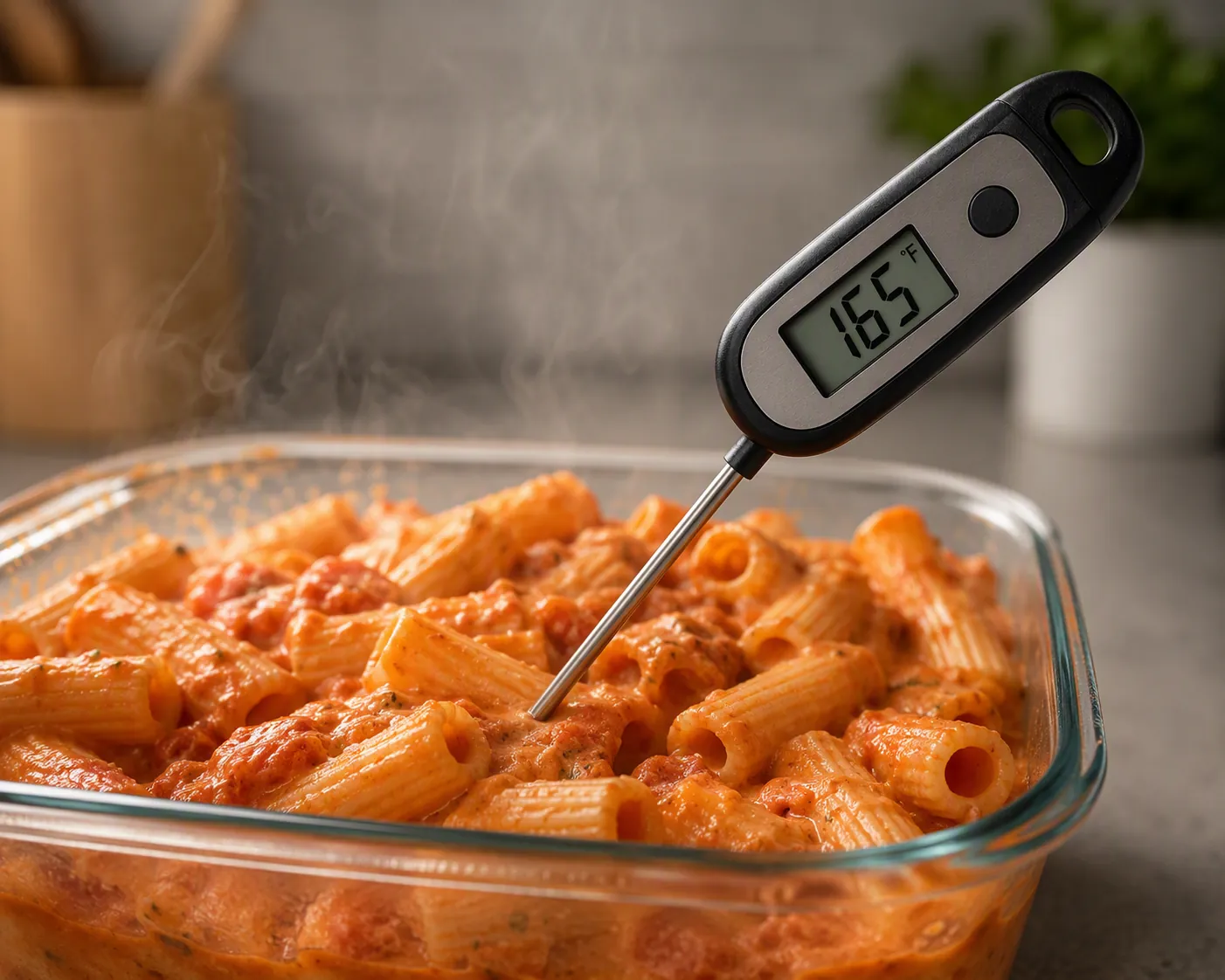
A recipe that tracks well but sits warm on the counter for half the afternoon is not a recovery plan. USDA FSIS says leftovers should be refrigerated within 2 hours, kept in the refrigerator for 3–4 days, frozen for 3–4 months if held longer, and reheated to 165°F as measured with a food thermometer [10].
- Portion the rigatoni while it is still hot so it cools faster in shallow containers.
- Leave lids slightly vented while the containers cool, then seal and refrigerate within the 2-hour window.
- Keep Monday through Thursday portions in the fridge if they will be eaten within 3–4 days.
- Freeze any portion meant for later in the week unless your schedule genuinely puts it inside the safe refrigerator window.
- Reheat with a splash of water, milk, broth, or extra tomato sauce, then stir and check the center with a thermometer for 165°F.
There is a texture reason to think about fridge versus freezer, too. RD-reviewed meal-prep guidance puts pasta dishes at about 3–4 days refrigerated, notes that tomato-based pastas generally freeze better, and warns that creamy sauces can separate after thawing [11]. For this recipe, that means the cleanest plan is four refrigerated containers if you train early in the week, or a more tomato-forward sauce for portions you intend to freeze.
| Container | Best storage choice | Reheat note |
|---|---|---|
| Day 1–3 | Refrigerator | Microwave with a splash of liquid; stir halfway |
| Day 4 | Refrigerator if cooled promptly and still inside the 3–4 day leftover window | Reheat to 165°F and do not judge doneness by steam alone |
| Day 5 or later | Freezer | Expect some cream separation; a tomato-heavier sauce handles thawing better |
Controlled variations that do not wreck the point
Dairy-free spicy rigatoni
Use unsweetened oat milk or another unsweetened dairy-free milk and keep the sauce slightly tomato-forward. RD-developed dairy-free spicy rigatoni examples show oat milk can work in this style of sauce [12]. The tradeoff is macro and texture variance, so enter the actual carton, not the idea of oat milk.
Protein pasta
Chickpea or legume rigatoni can raise the protein count, but it also changes texture, price, and sometimes reheating behavior. Use it if you like it and your tracker benefits from it. Do not use it because someone convinced you wheat rigatoni has no place after training; the standard 2 oz serving already supplies about 42 g carbohydrate and 7 g protein [2].
More heat, less heat
For a hotter batch, increase the chili paste in the sauce rather than dumping flakes on each finished container. For a milder batch, start with the lower chili amount and add heat only to the servings that need it. That keeps the base batch edible for four days, which is more useful than proving something with lunch.
Creamier without turning it into a calorie ambush
A lightened vodka-sauce approach can keep the glossy tomato-cream feel while staying more trackable than a heavy cream pour, but the same rule applies: measure the creamy ingredient and divide the whole batch [13]. If the sauce thickens in the refrigerator, fix it at reheating with liquid instead of adding more fat to every container on prep day.
For a blood-sugar-conscious setup, you can also think about what you eat before or alongside the container; the broader strategy is covered in food sequencing for better blood sugar control in home fitness. That is a separate lever from pretending the pasta itself has to disappear.
The container plan
Make the 10 oz rigatoni batch, portion it into five containers for standard post-workout servings or four for larger higher-carb meals, and calculate the macros from the poultry, sauce, dairy, oil, and cheese you actually used. Refrigerate within 2 hours, eat refrigerated portions within 3–4 days, freeze anything held longer, and reheat each serving to 165°F. That is the difference between a quick spicy rigatoni recipe for post workout meal prep and a comforting pasta batch with optimistic labels.
References
- International society of sports nutrition position stand: nutrient timing
- High Protein Pasta Recipes — MasonFit
- Marry Me Chicken Pasta — Oh Snap Macros
- High Protein Shells With Ground Chicken — Jenn Eats Goood
- Creamy Cajun Chicken Pasta High Protein Meal Prep — Myprotein
- Easy Spicy Rigatoni — Dished by Kate
- Timing Your Pre- and Post-Workout Nutrition — EatRight
- Workout and Nutrition Timing — NASM
- What to Eat After a Workout — Healthline
- Leftovers and Food Safety — USDA FSIS
- How Long Does Meal Prep Last? — Berry Street
- Dairy-Free Spicy Rigatoni — Something Nutritious
- Healthy Rigatoni with Vodka Sauce — Food By The Gram
This is general fitness education, not medical advice. For diagnosis or treatment of pain or injury, consult a qualified clinician.
Pick your next session
Browse all routines to find an appropriately-spaced next session.
Spot something off?
This content sits adjacent to health guidance — tell us if a citation or figure needs a correction.