
Indoor Cycling Training for Time Trials on a Budget
Learn how to build a compact indoor time trial training setup for under $300 to $550 that fits in a small apartment, and discover the four essential TT workouts you can do at any budget tier.
Before you start
- Equipment required
- Road bike, indoor trainer, speed sensor or power meter, floor fan, mat
- Assumes build tier
- No specific tier required
- Noise level
- Quiet
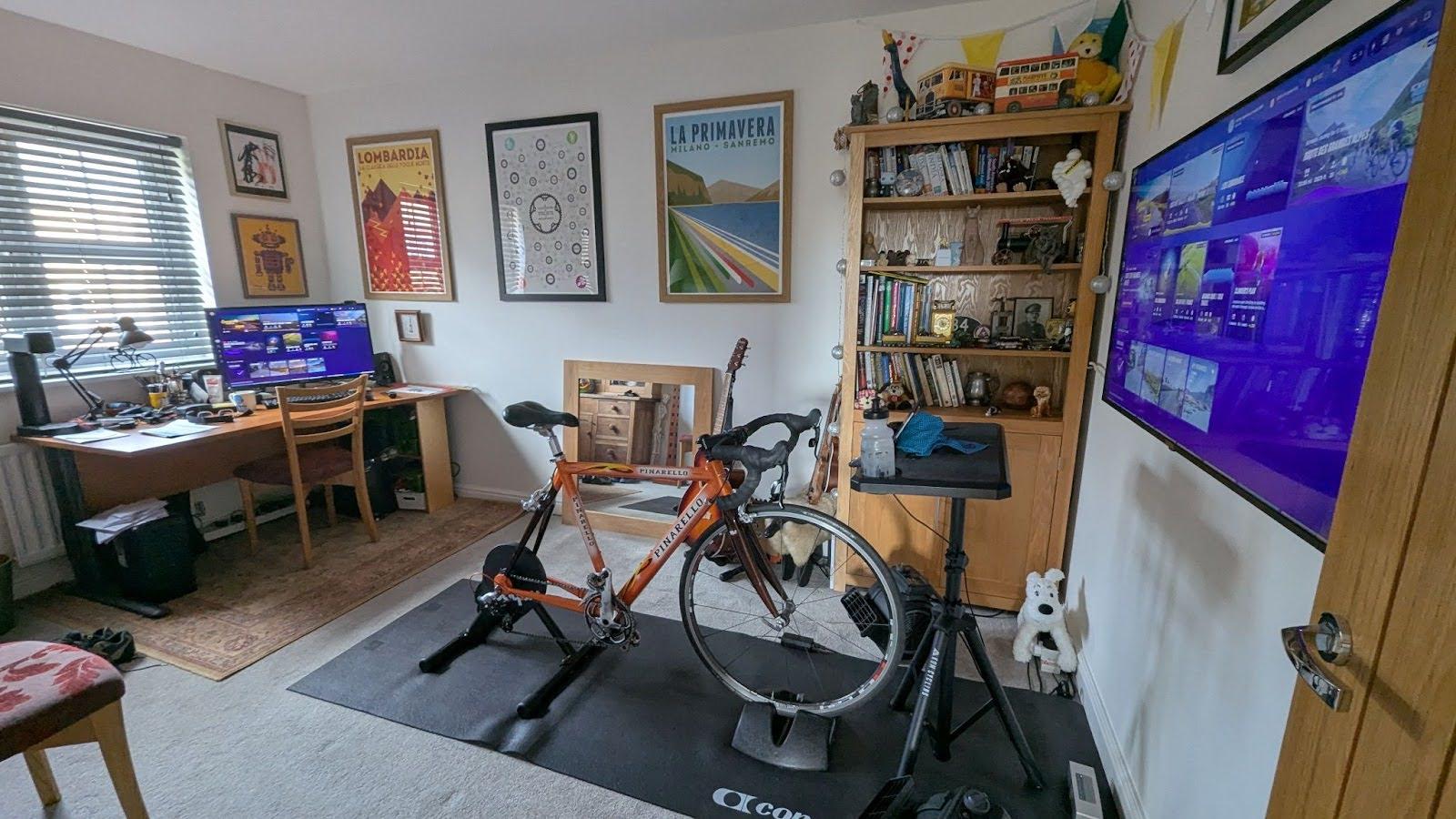
The first question is not which trainer looks serious. It is whether the whole setup fits in a 4x8 ft patch of floor, which is the practical minimum for an indoor trainer corner and only a little larger than a twin bed. If your apartment can spare that, you can build a real indoor time trial training setup without turning the living room into a permanent shop bench. [1][2]
If you do not already own a road bike, start elsewhere; our compact home gym systems guide is the better first stop. For everyone else, a floor fan belongs in the budget before a fancier trainer, because poor cooling can cut power output by roughly 15-20% versus outdoor efforts. [2]
Three Budget Tiers
The useful split is simpler than the marketing noise makes it sound: a cheap wheel-on setup, an entry direct-drive smart trainer, and a mid-range direct-drive trainer. What changes across those tiers is mostly noise, precision, and convenience, not whether you can do the work. [3][4]
| Tier | Typical spend | What it changes | What you give up |
|---|---|---|---|
| Wheel-on trainer + speed sensor + VirtualPower | Under $300 if you already own the bike [3] | Lets you do structured power-based training without a power meter [3] | Less precise power, more noise, and more vibration for neighbors [3][4] |
| Entry direct-drive smart trainer | About $260-$300, such as the Van Rysel D100 as tested in early 2026 [4] | Quieter, cleaner to live with, and easier to trust for resistance control [4] | Still a budget trainer, but the main compromise is value rather than capability [4] |
| Mid-range direct-drive smart trainer | About $400-$550, such as the Wahoo Kickr Core 2 or JetBlack Victory [4] | Best value-to-performance balance and the easiest day-to-day living [4] | Costs more, but the money goes into measurement and convenience [4] |
If noise is the real constraint, the direct-drive jump matters more than any glossy spec sheet. BikeRadar measured direct-drive trainers around 58-65 dB, which is quiet enough for a lot of apartments, while wheel-on trainers are louder and need more vibration control. A mat helps, but it does not replace a quieter trainer. [4]
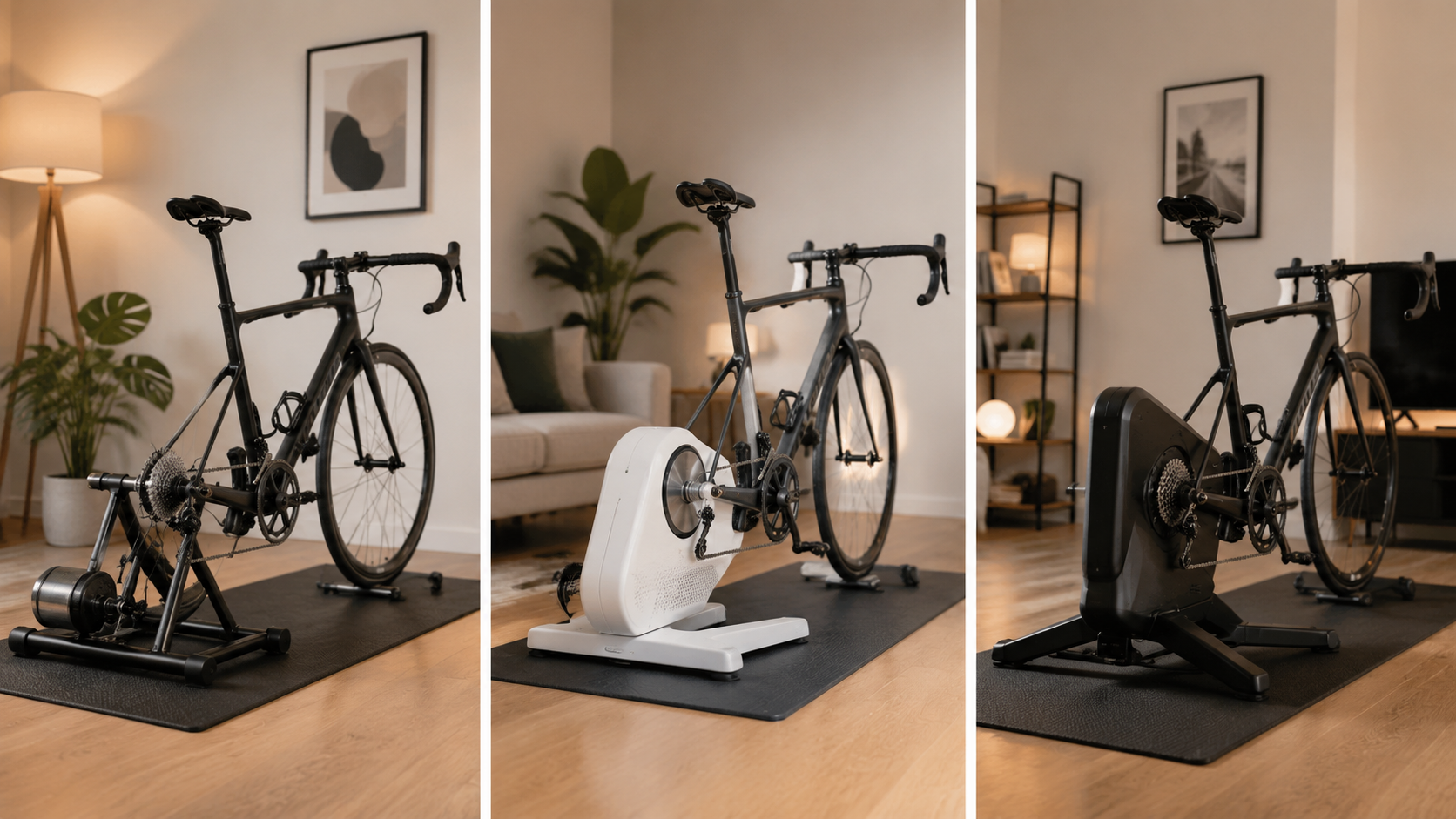
The trainer is not the whole system. The fan is the first performance upgrade, and the mat is the first neighbor upgrade. Once those are in place, the budget argument gets narrower fast.
The Four Workouts That Carry The Whole Thing
Once the setup is stable, the workouts are the point. Every tier can handle the same four sessions; the cheaper rigs mainly make power a little less exact and the room a little less pleasant. Keep the aero position inside the work, because power on aero bars is typically 5-15% lower than on the hoods. [2][8]

- Threshold 2x20: 2 x 20 minutes at 95-100% FTP in aero position. This is the straightest line to TT specificity and the session worth repeating when time is tight. [5][8]
- Sweet-spot 3x15: 3 x 15 minutes at 88-93% FTP. Slightly easier than threshold, still hard enough to lift FTP without burying you. [5]
- VO2max intervals: 5-6 x 3 minutes at 110-120% FTP with equal or slightly longer recovery. This is the sharpener, not the base builder. [6]
- Race-pace simulation: ride at target event power for the race duration or a meaningful chunk of it. This is where position, pacing, and boredom resistance get tested together. [7]
If you only have 4-6 hours a week, keep these same session types and trim duration or reps rather than inventing a different plan. With 4x8 ft, a fan, and one of these three tiers, you can still do the same core TT work; better hardware buys cleaner numbers and easier living, not a different training ceiling.
References
- Create an Efficient Indoor Cycling Space — TrainingPeaks
- 5 Tips for Setting Up an Effective Indoor Cycling Space — CTS
- Best Indoor Cycling Setup For Your Budget — TrainerRoad Blog
- Best smart trainers 2026: 8 top-rated turbo trainers for all budgets — BikeRadar — February 2026
- 5 Workouts to Improve Your Time Trialing — TrainingPeaks
- 3 Best Indoor Cycling Workouts Under 60 Minutes — CTS
- Cycling Time Trial Training Plan — ROUVY
- Time Trial Training: How To Be a Faster Time Trialist — TrainerRoad Blog
Don't have the gear this routine assumes? Find the build that covers it.
Wondering how much rest you need after this? Read our ACSM-cited recovery reference.
Questions about form, substitutions, or a correction? Leave it below.
Comments
Join the discussion with an anonymous comment.