
Sophie Cunningham-Inspired Dumbbell-and-Bodyweight Circuit
Replicate Sophie Cunningham's WNBA-caliber strength-and-conditioning routine at home with only a pair of dumbbells and bodyweight. This full-body circuit adapts her publicly documented compound movements into a compact, apartment-friendly workout.
Before you start
- Equipment required
- dumbbells
- Assumes build tier
- No specific tier required
- Difficulty
- intermediate
- Noise level
- quiet
Sophie Cunningham's public training pattern is less mysterious than the branding around it suggests: squats, lunges, presses, hinging work, and short conditioning bursts. Marca has shown her doing combinations of squats, lunges, and kettlebell exercises in prep work, and another report on her rehab described single-leg stabilization, controlled squats and lunges, plus ball-handling drills to rebuild coordination [1][2]. That is enough to build from without pretending anyone outside her camp has the exact offseason sheet.
What the public record shows
The useful part is the repetition of movement patterns, not a leaked set-and-rep scheme. Across the public material, the same compound lower-body and upper-body slots keep appearing: squats, lunges, kettlebell work, and controlled unilateral stability work [1][2]. That is a very small exercise family, and it is exactly why the routine translates to a living room.
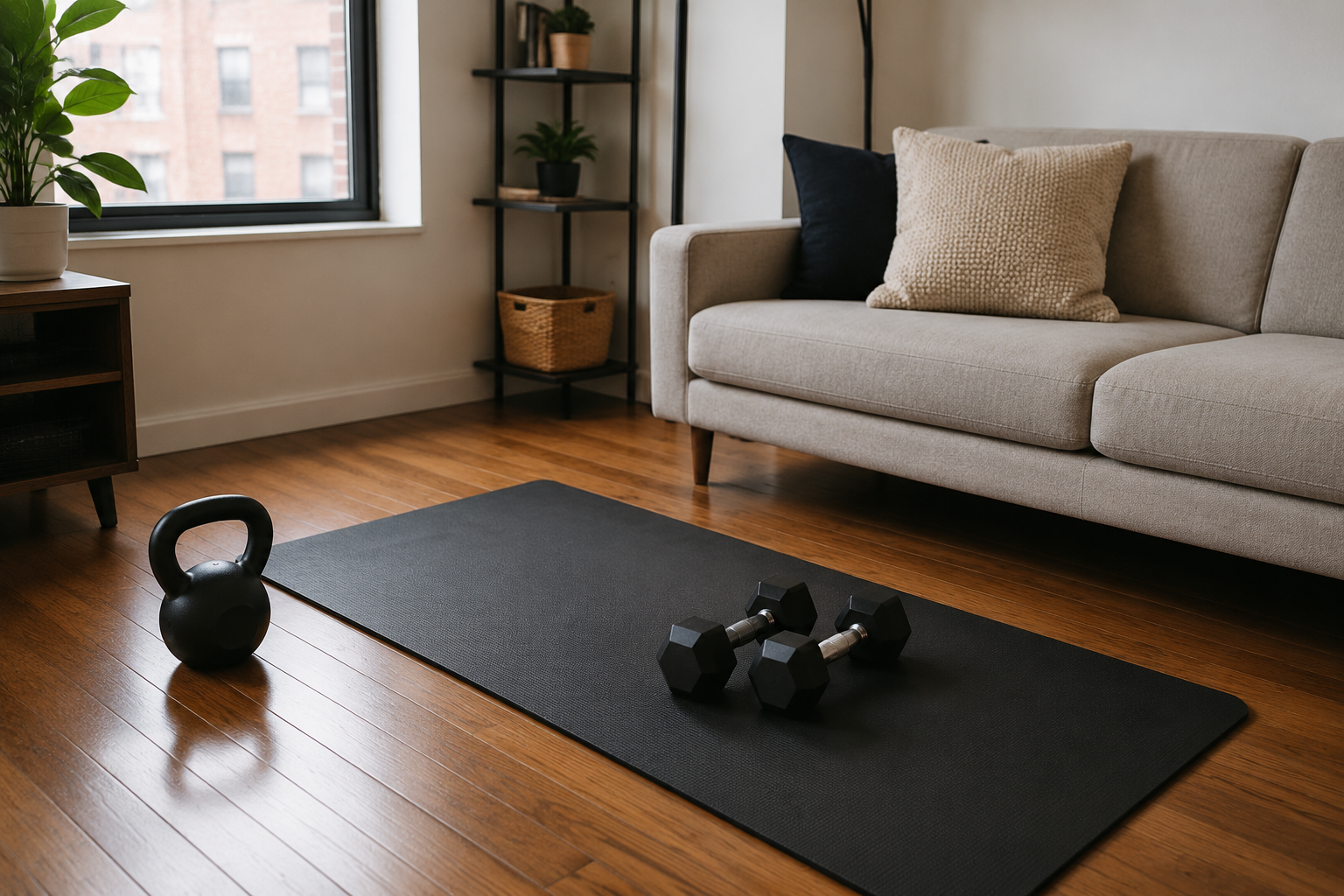
For a renter, the equipment floor is refreshingly low: one pair of dumbbells, optional kettlebell, a mat, and a timer. If the room is tight, the workout still works because none of the core movements need a rack, bench, sled, or long runway.
The 3-round circuit
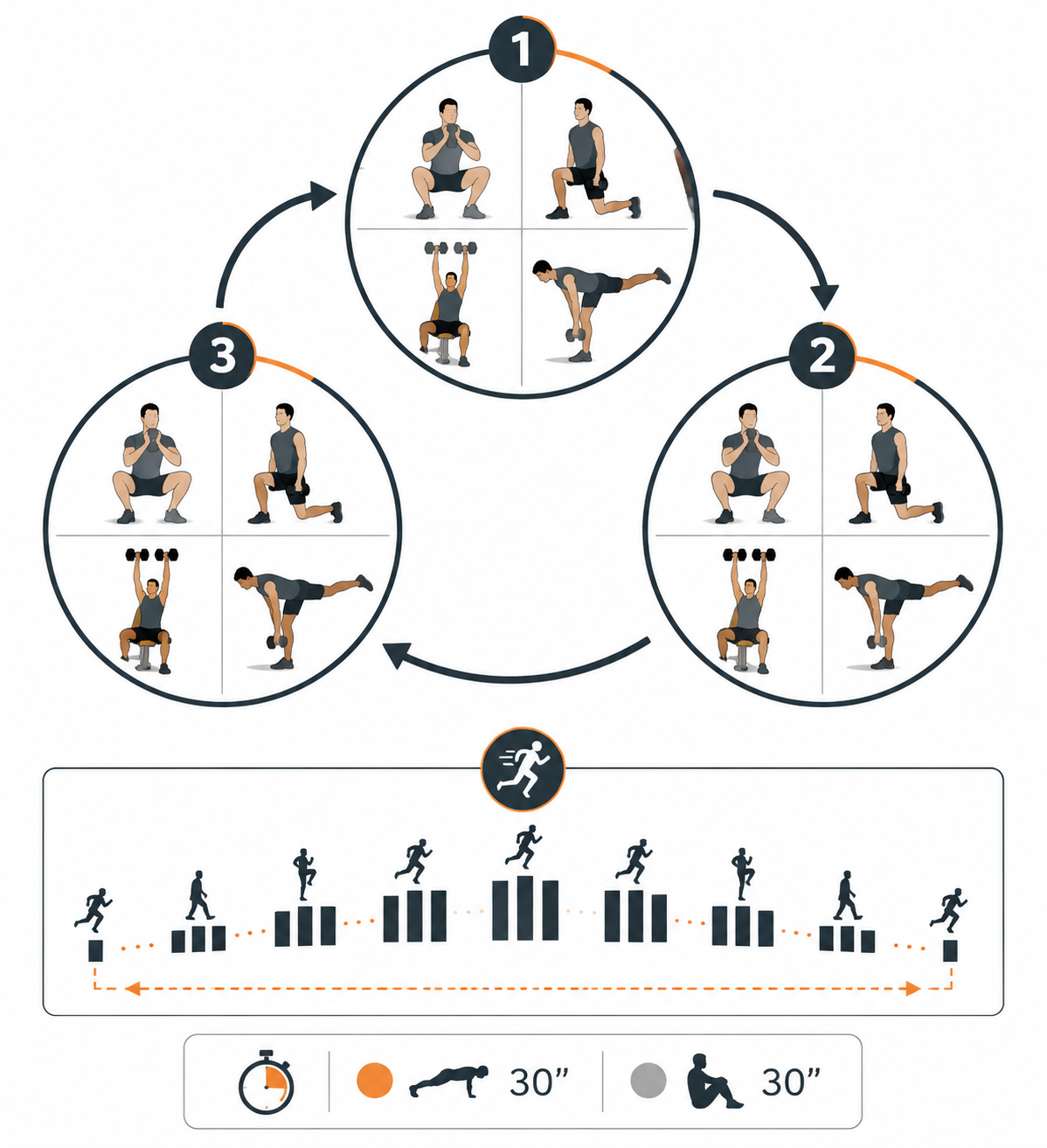
Run the four moves below for 30 seconds each, rest 30 seconds between moves, and repeat the full circuit for 3 rounds. That keeps the athlete feel without asking for more space than a mat and room to turn around.
| Exercise | How to do it | Why it stays close |
|---|---|---|
| Goblet squat | Hold one dumbbell or kettlebell at the chest and keep the reps controlled. | It matches the squat pattern that shows up repeatedly in public coverage. |
| Reverse lunge | Step back, stay tall, and switch legs halfway through the interval. | It preserves the unilateral lower-body work that appears in her rehab and training footage. |
| Dumbbell press | Press from standing or from the floor, whichever feels better in your space. | It keeps the upper-body press slot without adding machinery or a bench. |
| Single-leg RDL | Hinge on one leg with a soft knee and a long spine; use the free hand for balance if needed. | It fits the hinge-and-stability theme while staying compact enough for a small room. |
Keep the load honest rather than dramatic. A reasonable starting point for many intermediate home lifters is roughly 15-30 lb per dumbbell on upper-body pressing work and 25-45 lb per dumbbell on lower-body work, but those are estimates, not published Cunningham numbers. The right weight is the one that makes the last few reps look like work without turning the room into a survival exercise.
If you only own a kettlebell, the structure still holds. Use it for the goblet squat or the hinge slot and keep the rest of the circuit unchanged. The point is the movement pattern, not the exact implement.
The conditioning finisher
The public conditioning signal is short, repeatable bursts, including ladder-style sprints and other timed work, so the home version should stay compact. In a small room, turn the sprint idea into a stationary ladder: high knees, mountain climbers, or fast feet in place, climbing the effort for a few rounds and then backing down if you want a longer finish. If you like cleaner structure, make it a timed block instead of a distance goal; that keeps the shape of the work without needing a hallway.
Some public sessions are clearly high-rep and timed, but those snapshots read like one-off challenges, not a weekly prescription. Treat them as evidence that her training tolerates volume and short clocks, then pick a version you can repeat three or four days a week without dreading the cleanup.
That makes the circuit easy to run in a small apartment: a single pair of dumbbells or a kettlebell, a short finisher, and no need for a runway. It is an adaptation from public material, not Cunningham's exact offseason plan.
References
Don't have the gear this routine assumes? Find the build that covers it.
Wondering how much rest you need after this? Read our ACSM-cited recovery reference.
Questions about form, substitutions, or a correction? Leave it below.
Comments
Join the discussion with an anonymous comment.