
How to Train for Tour de France Distances at Home
The Tour de France demands 3,333 km, 54,450 m of climbing, and 5,000–7,000 calories per day. This article explains how to build that aerobic engine at home using a smart trainer in a small space with a structured indoor training plan based on Zone 2 and sweet-spot intervals.
Before you start
- Equipment required
- Road bike, direct-drive smart trainer, mat, fan
- Assumes build tier
- No specific tier required
- Duration
- 90 minutes
- Difficulty
- Intermediate
The 2026 Tour de France asks riders to cover 3,333 km over 21 stages, with an average stage length of about 158.7 km and 54,450 m of total climbing. A rider trying to survive that workload can burn roughly 5,000–7,000 calories per day during the race window.[1] Those numbers are intentionally absurd from an apartment-training point of view. They are also useful, because they make the target clear: Tour de France distance training is not mainly about one heroic workout. It is about repeatedly producing aerobic power, absorbing climbing-style muscular fatigue, and coming back the next day.
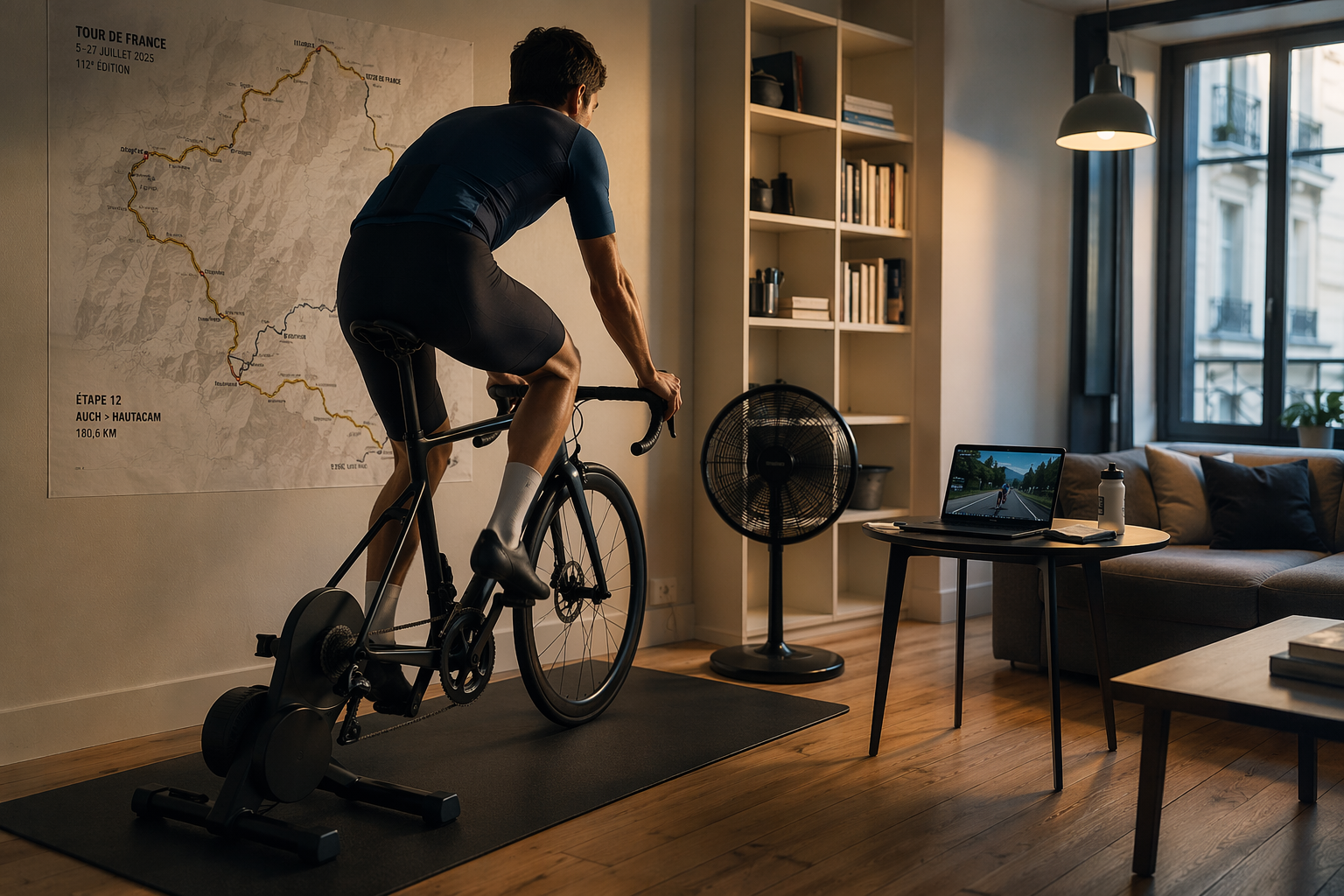
At home, the equipment that starts training those same energy systems can be surprisingly small: a road bike, a direct-drive smart trainer, a floor mat, a strong fan, and enough clearance to get on and off safely. That does not turn a spare room into the Alps. It does give you a controlled way to build the aerobic engine behind long-distance cycling without needing a garage, a private pain cave, or perfect weather.
What the Tour Numbers Actually Mean for Home Training
A Tour de France distance training plan at home has to separate race scale from training logic. You are not trying to recreate descents, bunch tactics, heat stress, altitude, or the psychological load of racing for three weeks. The usable part is narrower and more practical: long aerobic work, sustainable tempo under fatigue, climbing-specific strength endurance, fueling discipline, and recovery habits that let the next ride happen.
The pro benchmark is not just more suffering. A 2022 Strava-linked sample of 36 professional athletes reported pre-race preparation in the range of 9,300–10,500 miles and 400–600 training hours, with roughly 70% of training time in Zone 1–2 and only about 10–15% above threshold.[2] Exact numbers will vary by rider, season, role, and team, but the pattern matters more than the bragging rights: even elite Grand Tour preparation is dominated by relatively easy aerobic volume.
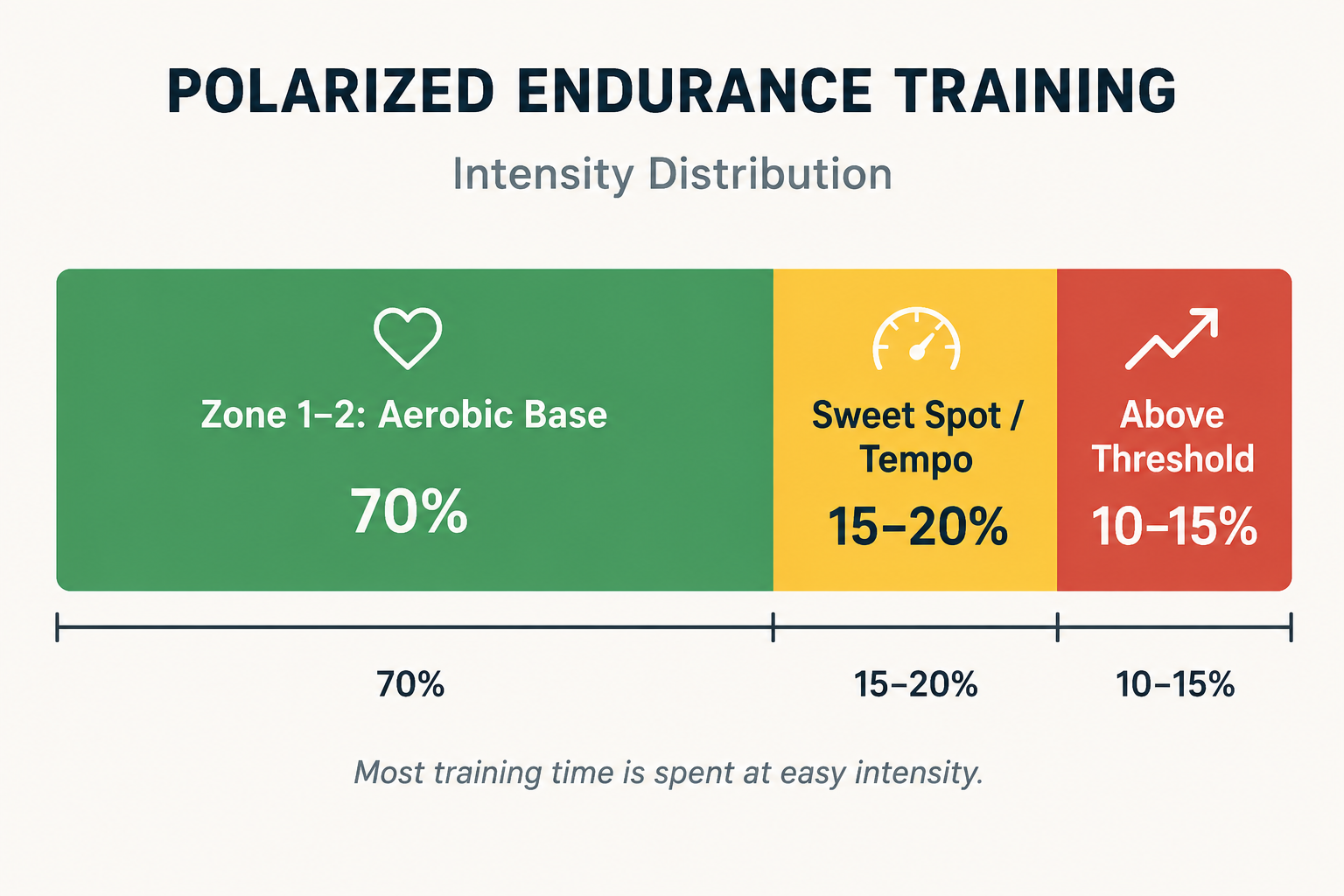
That is the first adjustment most indoor riders have to make. The smart trainer makes intensity easy to find, so it is tempting to turn every ride into a test. The Tour-scale lesson points the other direction. If the goal is century-plus endurance, Zone 2 is not filler. It is the place where you accumulate durable aerobic work without turning every session into a recovery problem.
The Small-Space Setup Has to Be Boring Enough to Use
The minimum viable setup is not glamorous, but it is exact: your own bike, a direct-drive smart trainer, a trainer mat, a fan, a towel, and a screen or head unit for workout control. Reviews and space reports commonly place a smart trainer plus bike footprint around 140 cm by 60 cm, smaller than many home gym machines and not far from the footprint of a yoga mat once the front wheel and handlebars are considered.[3]
Noise deserves more attention than most training plans give it. Direct-drive trainers reviewed in recent buyer guides can sit around 45–55 dB, but the useful caveat is that the trainer is not the only sound source.[3][4] A dirty drivetrain, a hollow floor, a rocking front wheel, and vibration through an apartment structure can matter more to a neighbor than the published decibel figure. A thick mat, a clean and lubricated chain, reasonable ride hours, and a stable setup are part of the training system.
| Setup Item | Why It Matters |
|---|---|
| Direct-drive smart trainer | Controls resistance precisely for Zone 2, sweet spot, and climbing-style intervals. |
| Bike that fits you | Poor fit turns volume into knee, hip, back, or hand irritation. |
| Trainer mat | Reduces vibration, protects flooring, and keeps sweat off the room. |
| Large fan | Indoor riding removes outdoor airflow, so heat becomes a limiter before fitness does. |
| Clean drivetrain | Cuts mechanical noise and makes power delivery smoother. |
| Workout app or head unit | Keeps intensity controlled instead of guessed. |
A subscription is optional but common. TrainerRoad, ROUVY, Zwift, Wahoo, Garmin, and other platforms can control workouts, record power, and make long sessions less mentally empty. The tradeoff is recurring cost. If the budget is tight, the non-negotiable feature is not a virtual world; it is reliable resistance control and a way to follow power or heart-rate zones consistently.
The Training Translation: From Grand Tour Load to Apartment Workouts
Indoor training is efficient because the dead time disappears. TrainerRoad describes structured indoor cycling as producing 20–30% of the physiological adaptation in 40–50% of the time compared with unstructured outdoor riding, mainly because there is no coasting, no traffic stops, and no soft-pedaling through town.[5] That is a useful argument for structure, not a permission slip to believe half the hours equal pro fitness.
The plan below uses four workout types. They are simple on purpose. Complexity is not what makes this work; repetition at the right intensity does.
- Zone 2 endurance rides: 60–120 minutes at a pace where breathing is steady and conversation would be possible in short sentences. ROUVY describes Zone 2 as the low-intensity aerobic range used to build endurance capacity.[6]
- Sweet-spot intervals: commonly 2×20 minutes at a hard but sustainable effort below threshold, useful for muscular endurance without the cost of all-out threshold work.
- Low-cadence tempo: 3×10 minutes around 75–80 rpm at tempo intensity to mimic the muscular demand of climbing while staying seated and controlled.
- Recovery spins and easy aerobic work: short, intentionally easy rides that add movement without pretending to be key sessions.
- Bodyweight strength: two short circuits per week using planks, squats, lunges, push-ups, and supermans to support the joints and trunk that hold cycling posture.
CTS endurance workout guidance emphasizes aerobic-development sessions that extend steady work and use controlled intervals rather than constant maximal efforts.[7] Canyon’s long-distance cycling guidance also places strength and off-bike conditioning inside the endurance plan rather than treating them as unrelated extras.[8] For an indoor rider, that matters because the trainer fixes the bike in place. Your legs can get strong while your hips, trunk, neck, and back quietly run out of tolerance.
A 12-Week Indoor Plan for Tour-Scale Endurance Logic
This is a general training framework, not individualized medical or coaching prescription. Start from your current capacity. If you have a medical condition, injury history, chest pain, unexplained dizziness, or any reason exercise may be unsafe, consult a qualified professional before beginning.
Use power zones if you have a recent functional threshold estimate. Use heart rate and perceived exertion if you do not. For the first time through, it is better to finish slightly undercooked than to turn week two into a negotiation with your knees.
| Weeks | Weekly Riding | Main Work | Strength |
|---|---|---|---|
| 1–4 Base | 3 rides, about 3–4 hours total | Zone 2 endurance, cadence comfort, one short tempo touch | 2 short bodyweight sessions |
| 5–8 Build | 4 rides, about 4–6 hours total | Longer Zone 2, 2×20 sweet spot, low-cadence tempo | 2 short bodyweight sessions |
| 9–11 Peak | 4 rides, volume scaled to tolerance | Back-to-back aerobic load, longer endurance rides, controlled intensity | 1–2 maintenance sessions |
| 12 Absorb | 2–3 easier rides | Reduced volume, short openers, no fitness test heroics | Mobility and light core only |
Weeks 1–4: Build the Floor
The base phase is where most people discover whether their home setup is actually livable. Three rides per week is enough to establish rhythm without making every evening smell like laundry and chain lube. A typical week can include one 60-minute Zone 2 ride, one 75–90 minute Zone 2 ride, and one ride with 2–3 short tempo blocks inside an otherwise easy session.
| Day | Session |
|---|---|
| Monday | Rest or 20-minute bodyweight strength |
| Tuesday | 60 minutes Zone 2 |
| Wednesday | Rest or mobility |
| Thursday | 45–60 minutes with 2×8 minutes tempo |
| Friday | 20-minute bodyweight strength |
| Saturday | 75–90 minutes Zone 2 |
| Sunday | Rest or easy walk |
Keep the fan on from the start, not after you are already soaked. Indoor heat drift can make a true Zone 2 ride feel harder than it should. If heart rate keeps climbing while power stays stable, lower the effort, improve airflow, or shorten the ride. The purpose of this phase is to make aerobic work repeatable.
Weeks 5–8: Add Sustainable Pressure
The build phase moves from “I can ride indoors” to “I can hold meaningful work without detonating.” Four rides per week is the practical ceiling for many apartment riders with jobs, neighbors, and laundry racks sharing the room. The key workout is the 2×20 sweet-spot session: long enough to teach patience, controlled enough that it should not wreck the rest of the week.
| Session | How to Ride It |
|---|---|
| Zone 2 endurance | 90–120 minutes steady; keep the first half almost boring. |
| 2×20 sweet spot | Warm up well, ride two 20-minute blocks below threshold, recover 5–10 minutes between. |
| Low-cadence tempo | 3×10 minutes at 75–80 rpm, seated, smooth, with no grinding through knee pain. |
| Recovery spin | 30–45 minutes easy enough that it feels almost too light. |
This is also where climbing-specific work belongs. A smart trainer can raise resistance for low-cadence tempo and make the legs produce force without requiring an actual mountain. What it cannot reproduce is bike handling on descents, out-of-saddle road variability, altitude, or the accumulated violence of a Tour stage. Treat the trainer as a controlled strength-endurance tool, not a simulator of the whole race.
Weeks 9–11: Practice Back-to-Back Load
The peak phase borrows one idea from stage racing: the body has to work again before it feels completely fresh. That does not mean copying a professional rider’s 20–31 hour training week. It means placing two controlled days near each other, then watching how sleep, fueling, legs, and motivation respond.
| Day | Session |
|---|---|
| Tuesday | 2×20 sweet spot or 3×12 sweet spot if fatigue is high |
| Thursday | 60–75 minutes Zone 2 |
| Saturday | 120 minutes Zone 2 with steady fueling |
| Sunday | 60–90 minutes easy Zone 2 or recovery endurance |
If Saturday’s long ride requires unusual willpower and Sunday becomes a grim march, the plan is too big right now. Reduce the Sunday ride first. The value of the back-to-back structure is learning to absorb aerobic work, not proving you can finish a bad idea.
Week 12: Absorb the Work
The final week cuts volume. Keep two or three easy rides, include a few short efforts only if your legs feel flat, and leave the trainer without needing to collapse onto the mat. Fitness consolidates when the body has enough recovery to adapt. That is less theatrical than another monster ride, and usually more useful.
Strength Work That Protects the Riding
The strength layer should be short enough that you actually do it. Twice per week during base and build, use a simple bodyweight circuit after an easy day or on a separate non-riding day. The goal is not gym fatigue. It is enough trunk, hip, and posterior-chain support that longer trainer rides do not route every weakness into the knees and lower back.
| Exercise | Dose |
|---|---|
| Plank | 2–3 holds of 20–45 seconds |
| Bodyweight squat | 2–3 sets of 8–12 controlled reps |
| Reverse lunge | 2 sets of 6–10 reps per side |
| Push-up | 2 sets, leaving 2–3 reps in reserve |
| Superman or prone back extension | 2 sets of 8–12 controlled reps |
If soreness from strength work compromises the key rides, reduce the sets. The bike work is the main course. Strength is the frame that helps you tolerate it.
Fueling and Recovery Are Part of the Plan
Tour riders burning 5,000–7,000 calories per day make nutrition look extreme because their race is extreme.[1] The home version is simpler: do not start quality sessions underfueled, fuel rides longer than 90 minutes, and eat a protein-and-carbohydrate meal or snack after longer or harder workouts. You do not need pro-team precision to avoid the most common mistake, which is treating indoor training as “just a workout” and then wondering why the next ride feels empty.
For 60-minute easy rides, normal meals may be enough. For 90–120 minutes, put carbohydrate and fluids within reach before you clip in. The apartment advantage is that the kitchen is close. The apartment trap is that people still forget to drink because they are staring at a screen in a hot room.
Sleep is the recovery tool with the least marketing around it and the highest penalty when ignored. If resting heart rate is unusually elevated, legs feel heavy for several sessions, irritability rises, or easy power feels strangely expensive, cut volume before adding supplements, gadgets, or another intensity day.
How to Scale the Plan Without Losing the Point
The right starting volume is the amount you can repeat next week. If 3–4 hours already feels ambitious, begin with two rides and one strength session. If you already ride consistently, start at the base-phase structure but increase the long ride gradually rather than jumping straight to two-hour indoor sessions. Two hours of Zone 2 on a trainer is mentally different from two hours outdoors, even when the physiology is familiar.
- Increase only one major variable at a time: duration, frequency, or intensity.
- Keep most weekly riding easy enough to support the next ride.
- Use sweet spot sparingly if work stress or poor sleep is already high.
- Stop low-cadence work if it creates joint pain rather than muscular fatigue.
- Deload early if motivation, sleep, or normal daily energy drops for several days.
A rider with more experience can extend the long Zone 2 ride, add a fourth endurance session earlier, or repeat the build block before peaking. A newer rider should protect consistency first. The polarized pro model is still useful, but only when scaled: mostly easy, some sustained pressure, very little maximal work.
What This Can and Cannot Replicate
A smart trainer can replicate controlled aerobic load. It can hold you in Zone 2 when ego wants more, and it can make sweet-spot work brutally honest because there is nowhere to coast. It can imitate the force demand of climbing through resistance and cadence. It can make progress measurable in a space smaller than many strength machines.
It cannot replicate the Tour de France as an event. It does not teach descending in a group, cornering under fatigue, feeding from a team car, handling crosswinds, or racing after repeated mountain stages. The home plan is therefore not “train like a Tour pro” in the fantasy sense. It is a way to train the same broad endurance qualities at a humane amateur scale.
That is still a practical gain for a small apartment. With a smart trainer, a fan, a mat, and a plan built around Zone 2, sweet spot, low-cadence tempo, strength work, fueling, and sleep, you can build repeatable endurance without turning your home into a gear warehouse. The point is not pretending the living room is the peloton. It is making long-distance cycling work measurable enough, quiet enough, and restrained enough that you can keep doing it after these 12 weeks end.
References
- Tour de France 2026 route, LeTour.fr
- How Do Tour de France Riders Train? Strava Data Shows Huge Miles, Massive Climbing, and Lots of Z2, Bikerumor / Strava Stories
- The Best Indoor Bike Trainers, Bicycling
- Smart trainer group test 2026, Cycling Weekly
- Beginner’s Guide to Indoor Cycling Training, TrainerRoad
- Zone 2 Training for Cyclists, ROUVY
- Best Cycling Workouts for Building Aerobic Endurance, CTS
- Long Distance Cycling Training, Canyon
Don't have the gear this routine assumes? Find the build that covers it.
Wondering how much rest you need after this? Read our ACSM-cited recovery reference.
Questions about form, substitutions, or a correction? Leave it below.
Comments
Join the discussion with an anonymous comment.