
Under Armour Training Shoes Tested for Apartment Workouts
An apartment-floor test of four Under Armour training shoes — TriBase Reign 6, Reign XT, Charged Commit 3, and HOVR Rise 4 — judged on neighbor noise, grip, floor protection, and price rather than spec sheets. It shows which models earn a place in a small home gym and which carries the most hard-floor risk for renters.
- Test space profile
- Small living-room workout area; light oak hardwood floor; thin black rubber mat.
- Floor damage risk
- Low
- No-drill compatible
- ✓
- Test date
The apartment test: what counted and what did not
This is an apartment-floor test of Under Armour training shoes for home workouts, not a gym-floor ranking in disguise. The question was simple: if you move the coffee table, roll out a thin mat, and train above or beside other people, which shoes help—and which ones make the room harder to live with?
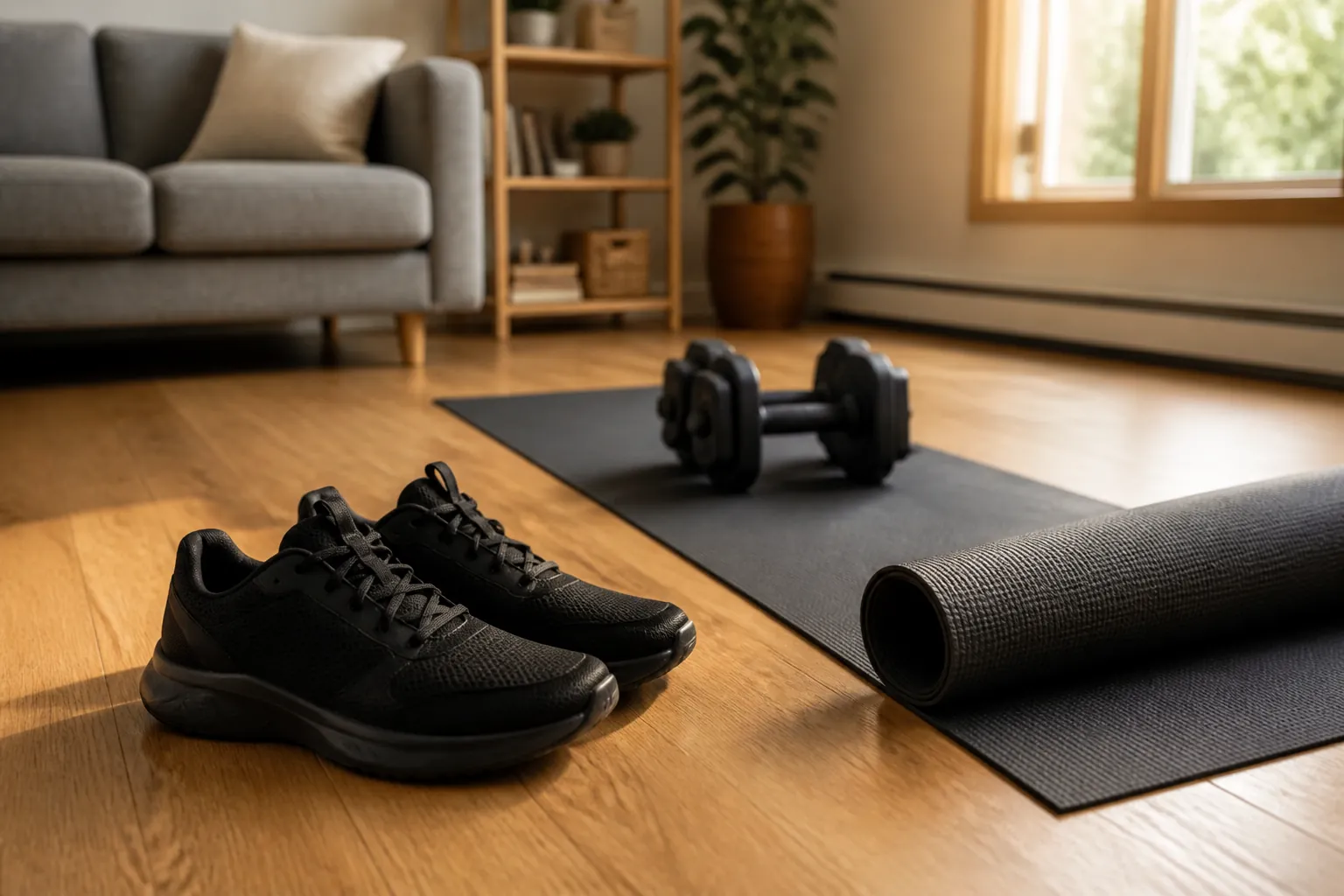
Test date: August 25, 2026. Test space: a small living-room workout area with light oak hardwood and a thin black rubber mat. The movements were the ones that usually expose apartment problems: reverse lunges, split squats, dumbbell Romanian deadlifts, bent-over rows, push-ups, plank walkouts, lateral hops, burpee step-backs, and short transition sequences where the shoe moves from hardwood to mat and back again.
I did not treat barbell max strength as the whole story. Heavy gym tests are useful because they reveal platform stability, but a renter also needs to know whether the outsole chirps on sealed wood, whether the shoe catches the mat edge, whether jumping feels slap-heavy, and whether the sole leaves the kind of mark that turns a workout into a security-deposit problem.
- Hard-floor pass: walking, lunges, lateral shuffles, plank entries, and quiet burpee step-backs directly on hardwood.
- Mat pass: the same movements on a thin rubber mat, paying attention to edge catch, sliding, and shoe-to-mat noise.
- Strength pass: dumbbell hinges, rows, split squats, goblet squats, and slow tempo work where foot pressure stays planted.
- Inspection pass: outsole check after hard-floor work for visible scuffing, rubber transfer, or grit pickup that could scratch wood later.
For the outside baseline, I used two anchors. NBC Select quotes podiatrist Dr. Alicia Canzanese saying training shoes should be flat, firm, and true-to-size, with a typical training-shoe offset in the 0-8mm range; that is a useful frame for home strength work because soft, tall shoes can feel fine until a lunge or hinge asks the foot to stay level [1]. RunRepeat’s average training-shoe price of roughly $116 gives the budget discussion a reality check: an $80 trainer is not merely “cheaper,” and a $130 trainer has to earn the extra room in the budget [2].
Quick verdict for small rooms
| Under Armour model | Best apartment use case | Main renter risk | Budget tier |
|---|---|---|---|
| TriBase Reign 6 | Stationary strength, heavy dumbbell work, slow lunges, rows, hinges, and lifting-first home sessions | Stable but heavy; less pleasant for jump-heavy HIIT in a small room. Published specs and reviews put it at a 2mm drop and about 13.7-14.15 oz depending on size/source [3]. | $100-$150 tier; price-checked August 25, 2026 because sources differ around the $130-$140 range [3] |
| Reign XT | Mixed workouts, athletic movement, lateral work, burpees, and short conditioning blocks | Gives up some of the planted, lifting-first feel of the TriBase Reign 6. That tradeoff is the point. | $100-$150 tier; listed at $130 in the cited review [4] |
| Charged Commit 3 | Tight-budget strength-biased training, especially if a wide/4E option matters | Can feel heavy or clunky for faster HIIT even though it has credible lifting evidence [5]. | $0-$100 tier; around $80 in the cited review [5] |
| HOVR Rise 4 | Only if the fit and price are compelling and you can test it on your own floor before committing | Repeated Zappos customer reports mention squeaking on hard surfaces and durability complaints; those are customer reports, not controlled lab data [6]. | Variable; treat discount pricing carefully |
The table is deliberately not a spec sheet. In a living room, specs matter only when they predict behavior: low drop for planted stability, weight for jump fatigue and floor slap, outsole grip for mat transitions, and customer squeak complaints for hard-floor tolerance.
TriBase Reign 6: the stability pick, if your workout mostly stays planted
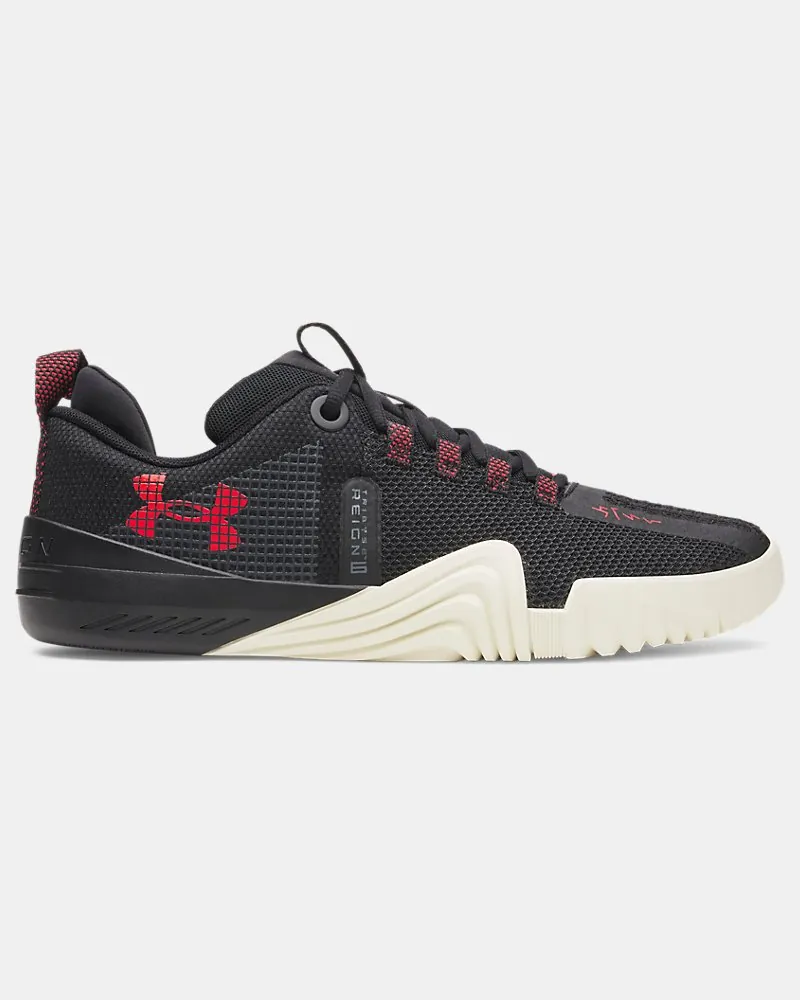
The TriBase Reign 6 is the Under Armour shoe that makes the strongest case on pure stability. That Fit Friend’s Jake Boly, CSCS, lists it with a 2mm heel-to-toe drop and a weight around 13.7 oz in his tested size, while also reporting 405-pound deadlifts for 11 reps and 415-pound Hatfield squat triples in the shoe [3]. NBC Select also names it a strong choice for stationary activities and describes it as having one of the flattest platforms on the market [1].
That kind of evidence matters even if your apartment workout never sees a barbell. A shoe that stays calm under that much load is less likely to feel mushy during a slow split squat, a heavy dumbbell hinge, or a bent-over row where your feet are the base of the whole exercise. On hardwood, the Reign 6 felt most convincing when the movement had a clear start and stop: step back, plant, lower, drive up, reset.
The low drop is the important part, not because 2mm is automatically better for every body, but because it keeps the shoe from pitching the heel up during stationary strength work. In a small room, that helped most during lunges and hinges. The shoe did not ask for much correction once the foot was placed. On the thin mat, the outsole felt secure without turning every reposition into a sticky tug.
The apartment tradeoff is weight and agility. A heavier, flatter trainer can be excellent for strength and still be less pleasant once the workout turns into lateral hops, burpees, or quick floor-to-stand transitions. The Reign 6 was the shoe I trusted most when the dumbbells got heavier, but it was not the shoe I wanted most for repeated jump patterns on hardwood. The floor heard more shoe than it needed to hear.
That is not a defect; it is a use-case boundary. If your home workouts are mostly dumbbell strength, kettlebell-style hinges, push-pull supersets, slow unilateral work, and the occasional low-impact finisher, the TriBase Reign 6 earns its price better than it would in a jump-first living-room routine. If the workout regularly includes skaters, burpees, and fast lateral changes, the stability advantage starts to feel like more shoe than the room needs.
Reign XT: the better crossover for HIIT and mixed movement
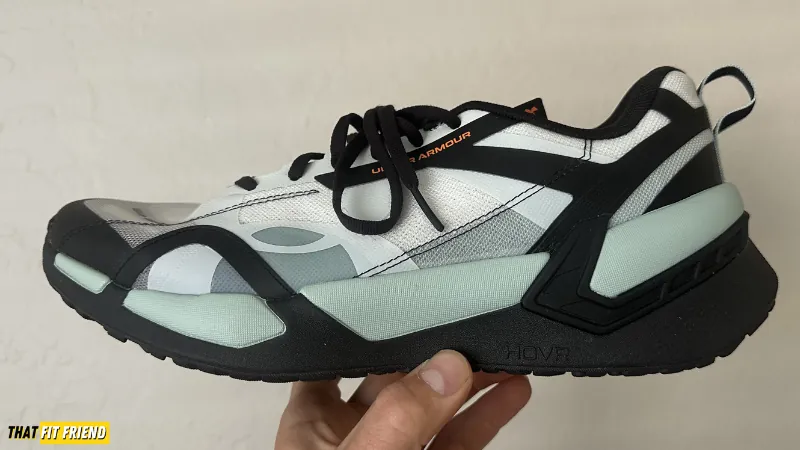
The Reign XT is the easier shoe to understand once the living-room workout stops being a lifting session and becomes a mix of strength, bodyweight, and short conditioning. That Fit Friend lists it with an 8mm drop, an 11.7 oz weight, a $130 price, a lifting threshold around 365 pounds, and testing that included a 385-pound deadlift; the same review frames its running comfort around short 1-3 mile efforts rather than serious running volume [4].
For apartment use, the lighter and more athletic feel is not a luxury detail. It changes how annoying the shoe is during transitions. Moving from push-ups to dumbbell rows, from a lateral hop to a reverse lunge, or from the mat back onto hardwood felt less blocky than it did in the Reign 6. The Reign XT gave up some of that locked-in lifting personality, but it made the workout flow better in the tight parts of the room.
The 8mm drop also sits at the top end of the training-shoe offset range Canzanese describes, which helps explain why the Reign XT feels more general-purpose than the TriBase Reign 6 [1]. It is still a training shoe, not a plush running shoe, but the platform feels less severe when the workout includes hops, step-backs, and short bursts where the foot is not planted for long.
On hardwood, the Reign XT was the more apartment-friendly choice for mixed HIIT as long as the workout stayed controlled. Lateral hops were easier to soften. Burpee step-backs felt less like dragging a lifting shoe around the room. On the mat, it had enough grip for ordinary bodyweight and dumbbell circuits without feeling as if the outsole was fighting the mat.
The limitation is exactly where the TriBase Reign 6 is strongest. If your home training is built around heavy strength blocks and you care most about a flat, planted base, the Reign XT feels like a compromise. For the renter doing mixed circuits, though, it is the compromise that makes the most sense: enough stability to lift, less punishment during the parts of the workout that move.
Charged Commit 3: the budget pick that should stay strength-biased
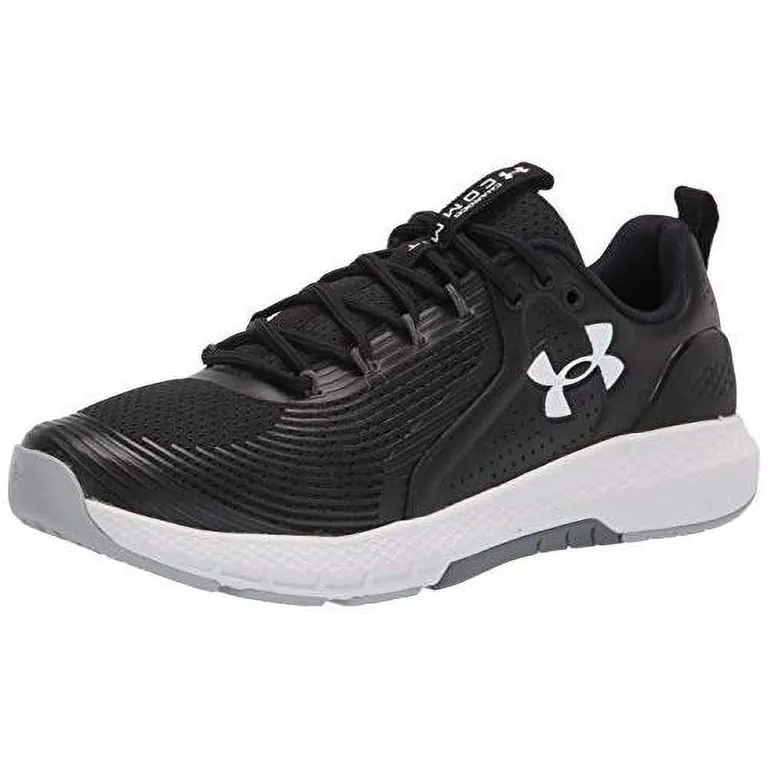
The Charged Commit 3 deserves more respect than “cheap shoe” usually gets. That Fit Friend lists it around $80, with an 8mm drop, an 11.45 oz weight, a wide/4E option, and testing that included 405-pound deadlifts; the same review also notes that it can feel heavy and clunky for HIIT [5]. Against RunRepeat’s roughly $116 average trainer price, that makes it a real $0-$100 tier candidate rather than just a markdown temptation [2].
In apartment terms, the best case for the Charged Commit 3 is controlled, strength-biased training on a tight budget. If the workout is dumbbell rows, goblet squats, lunges, push-ups, and hinges, it gives you a stable enough training frame without asking for Reign-series money. The wide option also matters because a cramped forefoot can make balance work worse, especially in split squats and lateral lunges.
The caution is speed. A shoe can handle a heavy deadlift and still feel wrong for a fast apartment circuit. The Charged Commit 3’s clunkier feel showed up most when the sequence asked for quick foot turnover: lateral steps, burpee transitions, and repeated mat-to-floor changes. Those are exactly the movements where a renter wants the shoe to disappear a little, not announce every reposition.
If the budget ceiling is firm, I would rather see someone buy the Charged Commit 3 for the right workout than stretch for a more expensive shoe and still use it wrong. Keep the programming strength-first, add low-impact conditioning, and avoid pretending it is the best option for jump-heavy HIIT just because it has a training label on the box.
HOVR Rise 4: the hard-floor caution
The HOVR Rise 4 is the model I would be slowest to recommend to a renter with wood or hard flooring. The evidence is not as deep as it is for the TriBase Reign 6, Reign XT, or Charged Commit 3, so this should not be treated as a controlled verdict on every pair. The renter-risk signal is narrower: repeated Zappos customer reviews from 2022-2023 mention squeaking on hard surfaces, and some also raise durability complaints [6].
Customer reviews are messy evidence. They do not tell you the floor finish, the user’s weight, the cleaning products on the surface, the age of the shoe, or whether the sound came from the outsole, midsole, or insole. Still, repeated squeak reports matter more in an apartment article than they would in a garage-gym review. A shoe that squeaks on polished hard flooring can be functionally worse at home even if it performs acceptably on rubber gym flooring.
There is also a model-line evidence problem. Get Sweat Go reviewed the earlier HOVR Rise training shoe with an 8mm drop and 10.6 oz listed weight, but that older review is not the same as a fresh, controlled HOVR Rise 4 apartment test [7]. It helps place the Rise family in the training-shoe category; it does not erase the hard-floor squeak reports attached to the Rise 4 listing.
If you already own the HOVR Rise 4 and it is quiet on your floor, there is no need to panic. If you are buying specifically for a hardwood apartment and cannot test-return easily, this is the Under Armour model in this group with the clearest reason to hesitate.
How I would choose among the four
The right Under Armour trainer depends less on the brand’s lineup logic and more on the room you train in. A shoe that feels great on a thick gym floor can become annoying on sealed wood. A shoe that is stable enough for a garage deadlift can still be too heavy for quiet lateral work beside a downstairs neighbor.
If you are comparing footwear with broader Under Armour gear for a compact setup, the adjacent Project Rock gear for a small home gym is the better place for that lane. For these four shoes, I would not pull Project Rock into the decision unless the actual workout, floor, and return policy make sense.
- Choose the TriBase Reign 6 if your home workouts are mostly stationary strength: dumbbell hinges, split squats, rows, presses, slow lunges, and lifting-first circuits.
- Choose the Reign XT if your sessions mix lifting with athletic movement: burpees, lateral hops, fast transitions, short conditioning blocks, and mat-to-floor changes.
- Choose the Charged Commit 3 if the budget needs to stay under about $100 and your workouts are strength-biased rather than jump-heavy.
- Be cautious with the HOVR Rise 4 if your apartment has hardwood, laminate, tile, or any hard surface where squeak would be a deal-breaker.
References
- The best training shoes, tested and reviewed by NBC Select editors — NBC Select
- Best Training Shoes — RunRepeat
- Under Armour TriBase Reign 6 Review — That Fit Friend
- Under Armour Reign XT Review — That Fit Friend
- Under Armour Charged Commit 3 Review — That Fit Friend
- Under Armour HOVR Rise 4 Reviews — Zappos
- Under Armour HOVR Rise Training Shoe Review — Get Sweat Go
This result comes from one real apartment under the stated conditions — it is a strong signal, not a guarantee your space will measure identically.
Builds this evidence supports
Can insect protein build muscle at home?
Insect protein from crickets and mealworms produces a muscle protein synthesis response comparable to milk protein in acute trials, but the only training study in young men found no extra strength or size gain. This verdict sorts out what the human research actually supports so home lifters can decide if insect protein is worth buying.
Swimming Pool Under $5? The Real Price Ladder
No swimming pool under $5 can support home exercise — that budget buys a resistance band or one community-pool day pass. The verified price ladder runs from $125 inflatables to $25,999+ swim spas, with a depth rule that separates pool toys from real training.
What a Cargo Container Pool Really Costs vs. a Home Gym
A cargo container pool's base price hides a much larger all-in cost: $50,000–$85,000+ installed, plus $500–$7,340 a year to run. This cost reality-check benchmarks the container pool against container gyms and in-home builds so you can judge which delivers more training value per dollar.
Spot something off?
If this result didn't match your own space, let us know — floor-damage and noise claims carry real deposit-risk consequences if we get them wrong.