
Can insect protein build muscle at home?
Insect protein from crickets and mealworms produces a muscle protein synthesis response comparable to milk protein in acute trials, but the only training study in young men found no extra strength or size gain. This verdict sorts out what the human research actually supports so home lifters can decide if insect protein is worth buying.
- Budget tier
- 0-100-tier
- Space type
- apartment
- Total cost
- varies
- Floor protection required
- —
- Best for
- renter, small-apartment, tight-budget
- Last tested
Items included: Adjustable dumbbells, bench, doorway pull-up bar, protein shaker
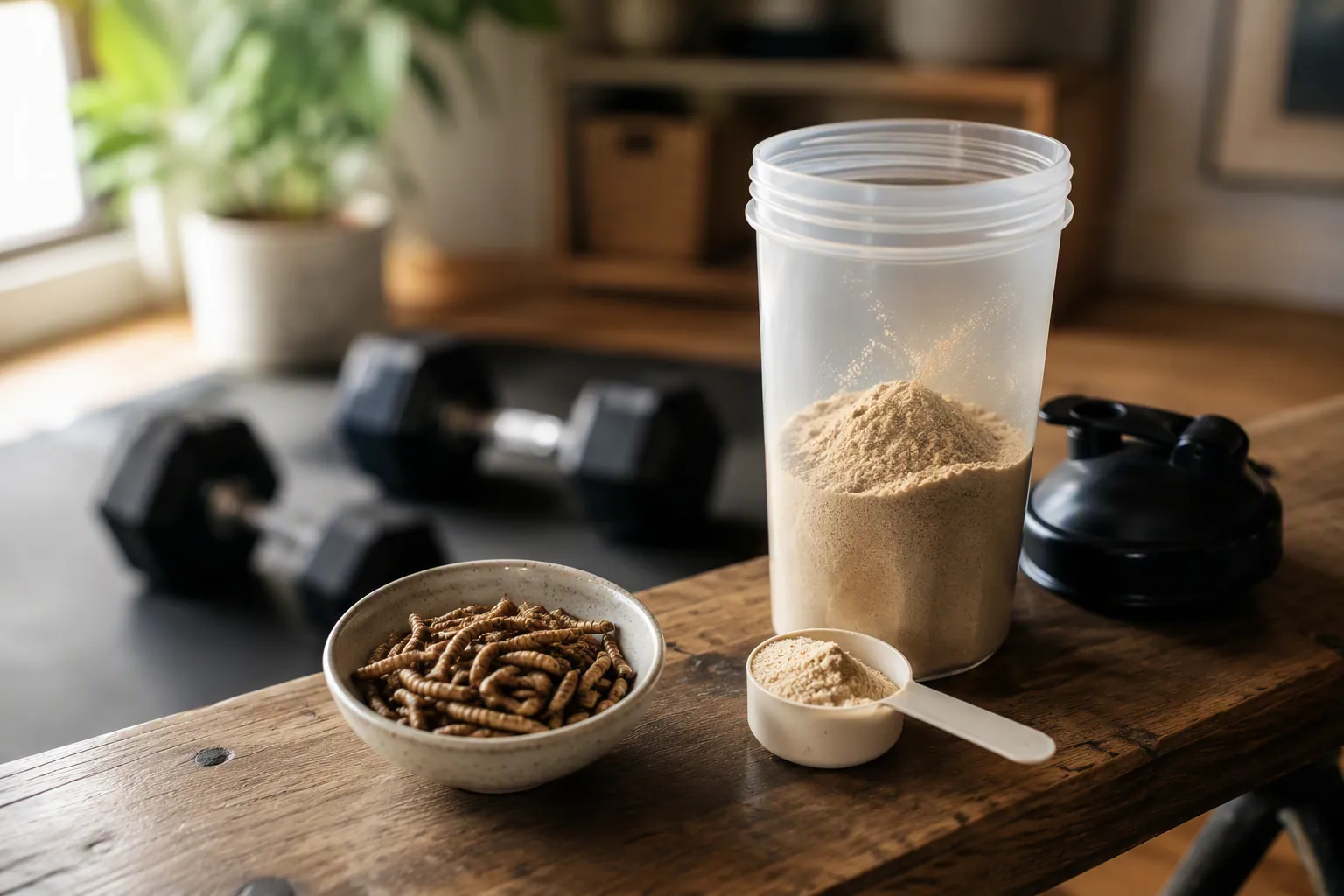
Insect protein can help build muscle at home in the same boring way any useful protein helps: it gives your body amino acids, and those amino acids matter when you train hard enough to need repair and growth. The part worth separating from the marketing is stronger: insect protein is a legitimate protein source, but it is not proven to build more muscle or strength than standard options like milk, whey, soy, eggs, meat, or other high-protein foods.
That distinction matters if you train in a small apartment, count grocery dollars, and do not have shelf space for curiosity tubs. A powder can be novel and still useful. It can also be useful without being worth a premium. The human research so far supports the first claim much better than the second.
The best acute trial makes insect protein look real
The cleanest starting point is a double-blind randomized trial from Hermans and colleagues, because it tested an actual human anabolic response after resistance exercise. In 24 young men, 30 grams of lesser-mealworm protein increased post-exercise muscle protein synthesis similarly to 30 grams of milk protein. Over 5 hours, 73% ± 7% of mealworm-derived phenylalanine appeared in circulation compared with 77% ± 7% from milk, with no statistically significant difference between the two protein sources.[1]
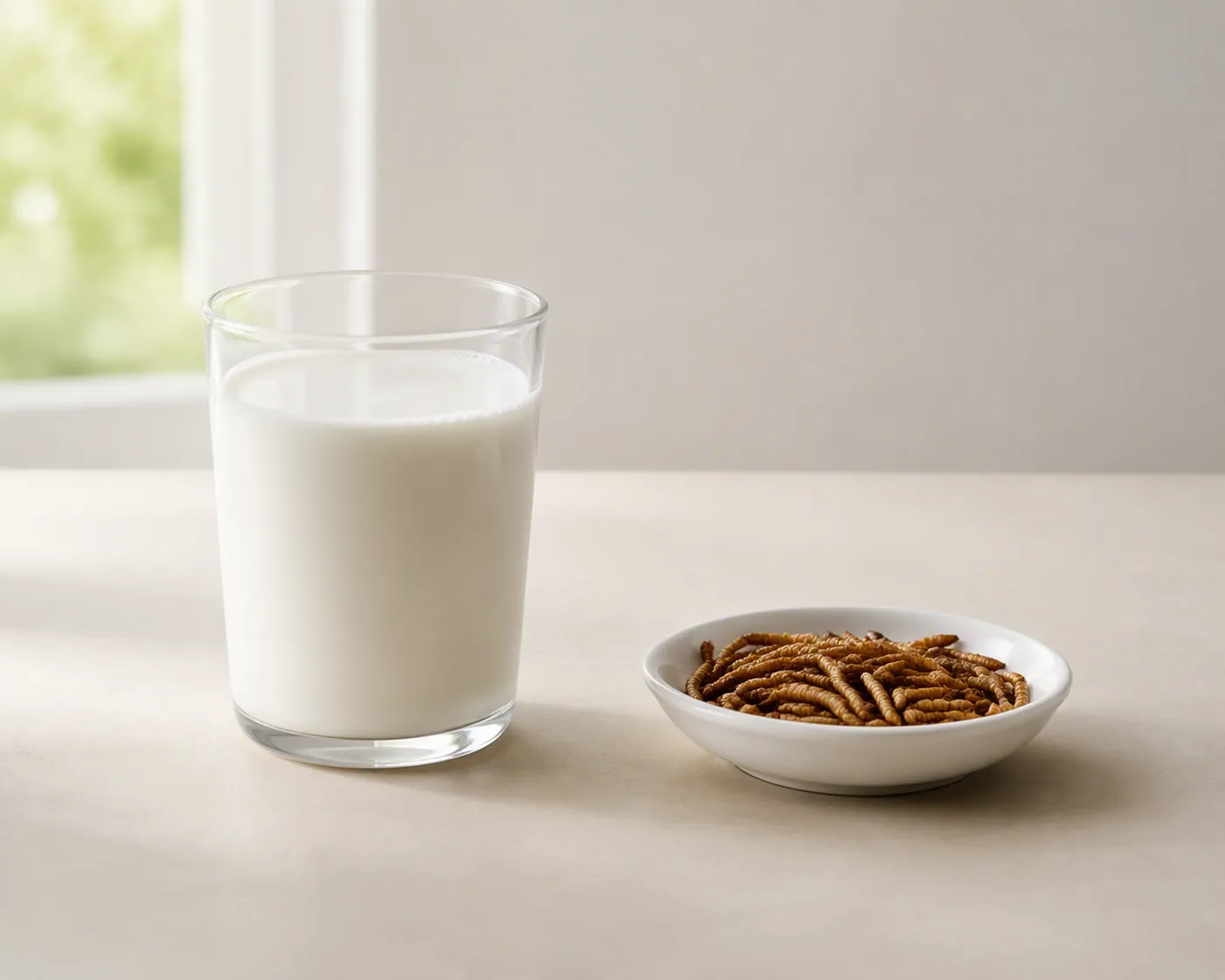
For a supplement aisle full of exaggerated claims, that is a respectable result. It does not say mealworm protein is fake protein. It does not say insects are only a sustainability story with a nutrition label attached. In that trial, after lifting, the mealworm dose supplied amino acids and stimulated muscle protein synthesis in a way that held up against milk.
But an acute muscle protein synthesis study is not the same as an 8-week or 12-week answer to “will I add more size to my shoulders at home?” Muscle protein synthesis is a mechanism. It is useful evidence, especially when the study is done in humans, but it is still a short-window signal. Hypertrophy is the result of repeated training, enough total food, enough total protein, recovery, and time.
The training study in young men is where the hype loses room
The more practical test is the 8-week resistance-training trial by Vangsoe and colleagues. Eighteen young men trained 4 days per week. One group used an insect-protein supplement, while the comparison group received an isocaloric carbohydrate bar. Both groups gained fat- and bone-free mass: about 2.7 kg in the insect-protein group and about 2.5 kg in the carbohydrate group. The difference between groups was not statistically significant, and there were no significant between-group differences in 1-repetition-maximum strength outcomes.[2]
That result is not a takedown of insect protein. It is a takedown of the shortcut claim. These men trained, adapted, and gained. The insect-protein group did not gain more in a way the study could distinguish from the comparison condition.
The likely reason is also the one home lifters most need to hear before buying another powder: the participants were already eating a lot of protein. The study discussion notes habitual protein intakes around 1.7–2.3 g/kg/day, which is already in the range where adding another protein supplement may have little room to create extra gains.[2]
| Human evidence | What it showed | What it does not prove |
|---|---|---|
| 30 g mealworm vs. 30 g milk after resistance exercise | Similar acute muscle protein synthesis response in young men | That mealworm protein builds more muscle over weeks of training |
| 8 weeks of training in young men | Both groups gained lean mass and strength; insect protein did not outperform the comparison condition | That insect protein is useless, or that it cannot help someone who is short on daily protein |
| 11 weeks in physically active adults 60+ | Mealworm protein produced a larger skeletal muscle mass gain than whey or placebo | That the same result applies to young lifters already eating enough protein |
This is why both main findings can be true. Mealworm protein can trigger a comparable short-term anabolic response, and still fail to add extra measurable size or strength in young men whose protein intake is already high. The second result is not more “scientific” than the first; it just answers the buying question more directly.

At home, the limiter is usually the program and the daily protein total
A renter lifting with adjustable dumbbells, a bench, and a doorway pull-up bar does not need a special protein source to make the setup work. They need progressive resistance, enough hard sets, repeatable meals, and enough total protein to support adaptation. If insect protein helps you hit that total because you tolerate it well, like the taste, or want an alternative to dairy, it can fit.
If your daily protein is already covered, the evidence does not give you a good reason to expect insect protein to add more muscle than a cheaper familiar source. For the broader cost, leucine, and daily-target framework, the site’s protein foods guide for home workout muscle gain is the better place to compare ordinary foods and powders before treating novelty as a performance feature.
The same logic applies to the training side. A useful small-apartment gym build and a repeatable 3-day dumbbell plan will do more for measurable progress than swapping one complete-ish protein source for another after your protein target is already met.
The older-adult trial changes the answer for a narrower group
The most interesting longer-term positive result comes from a different population. In an 11-week randomized trial of 70 physically active adults aged 60 and older, 30 g/day of lesser-mealworm protein produced a larger skeletal muscle mass gain than whey or placebo. The reported skeletal muscle mass change was +0.67 kg for the mealworm group, with a 95% confidence interval of 0.20 to 1.14 kg, compared with +0.03 kg for whey and +0.30 kg for placebo. The between-group result was statistically significant, but strength did not differ between groups.[3]

That is not nothing. For someone over 60 thinking about maintaining or adding muscle while training at home, the mealworm result deserves attention. It is also not a blank check to sell young lifters a “better than whey” story. Older adults differ from young men in baseline muscle biology, recovery, dietary patterns, and the practical goal itself. Muscle maintenance in later life is not the same question as squeezing more hypertrophy from an already adequate diet in your 20s or 30s.
For readers in that older bracket, insect protein may be a more interesting option than it is for a young lifter already eating enough. It still belongs inside a full routine: regular resistance training, sufficient calories, enough daily protein, and exercises that can be progressed safely. The site’s guide to muscle maintenance after 50 with a simple home routine is the more useful context for that decision than treating one supplement as the whole intervention.
Labels, leucine, and digestibility are where the tub gets slippery
Once the conversation leaves human outcomes and moves to labels, the details get less tidy. A 2024 analysis in Molecules reported cricket powder at about 80% in-vitro digestibility versus more than 97% for whey. It also reported cricket leucine around 5.14 g per 100 g compared with whey around 7.72 g per 100 g.[4]
That does not erase the Hermans trial, because Hermans measured an in-vivo human response after a specific mealworm dose. It does mean a generic “high protein” label on an insect product is not enough to assume whey-like performance gram for gram, especially across different species, processing methods, and products.
Protein measurement adds another wrinkle. The same Molecules paper noted that nitrogen-based Kjeldahl protein estimates using the common 6.25 conversion factor can inflate insect-protein values by about 10% compared with amino-acid sums or insect-specific conversion factors in the 5.09–5.33 range.[4] In plain buying terms: two powders with the same front-label protein number may not deliver the same amino-acid profile or digestible protein.
This is also why a claim like “50% more digestible than whey” should get checked hard before it affects your cart. That figure has circulated as a company claim from Aelius Biotech in media coverage, not as the same kind of peer-reviewed human training outcome as the trials above, and it conflicts with peer-reviewed in-vitro data showing lower cricket powder digestibility than whey.[5][4]
So should a home lifter buy insect protein?
Buy it if you want a viable alternative protein source, can afford it without pushing out cheaper staples, and like the product enough to use it consistently. It is especially reasonable if you avoid dairy, want more variety, or are older and interested in the limited but promising mealworm data in adults 60 and up.
Do not buy it expecting better muscle or strength gains than a standard protein source. The strongest acute human study says mealworm protein can stimulate muscle protein synthesis comparably to milk. The young-men training study says it did not produce extra size or strength when total protein intake was already high. For a budget-conscious home lifter, that makes insect protein acceptable, not automatically worth a novelty premium.
If this article appears near product links, the site may earn a commission from qualifying purchases. That should not change the standard: compare the actual grams of usable protein, the leucine profile when available, the price per serving, and whether the powder helps you train and eat consistently.
References
- Insects are a viable protein source for human consumption: from insect protein digestion to postprandial muscle protein synthesis in vivo in humans: a double-blind randomized trial, The American Journal of Clinical Nutrition, 2021.
- Effects of Insect Protein Supplementation during Resistance Training on Muscle Mass and Strength in Young Men, Nutrients, 2018.
- Lesser mealworm protein supplementation increases skeletal muscle mass in older adults: a randomized controlled trial, PubMed, 2024.
- Nutritional Quality and In Vitro Digestibility of Protein from Edible Insects, Molecules, 2024.
- Is Insect Protein Really More Bioavailable Than Whey?, Men's Health UK.
Some links on this page are affiliate links — they may earn us a commission at no extra cost to you. Our tier and tests are decided before we ever check which links pay; see our full affiliate disclosure.
Spot something off?
Noise and floor-damage claims carry real deposit-risk consequences if we get them wrong — tell us if your experience with this build didn't match what's above.