
Why No-Jump Cardio Still Counts
There is a persistent belief in fitness circles that effective cardiovascular training requires impact — that without jumping, bounding, or pounding the floor, you cannot elevate your heart rate enough to produce real adaptation. This is not supported by the physiology of how the cardiovascular system responds to work.
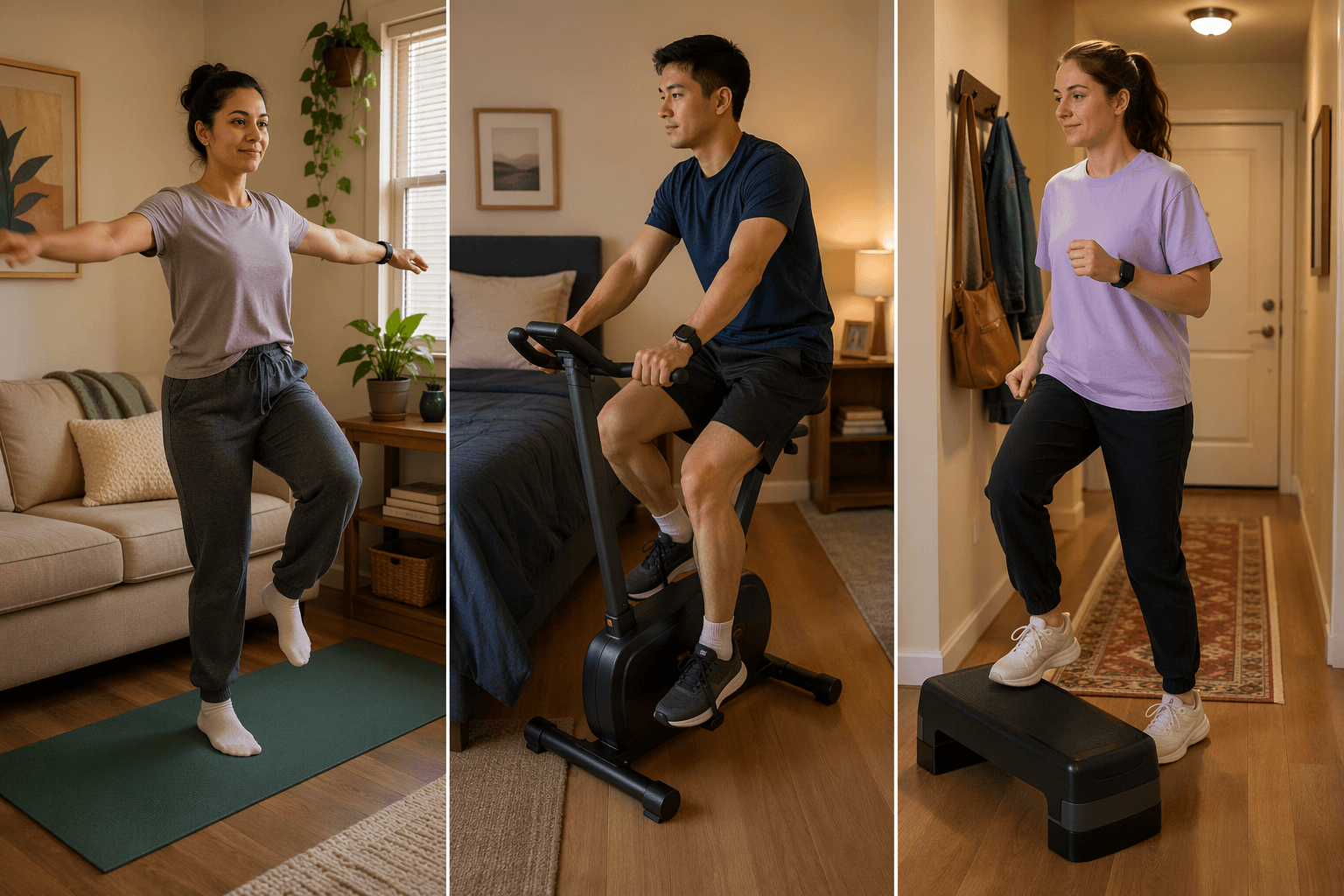
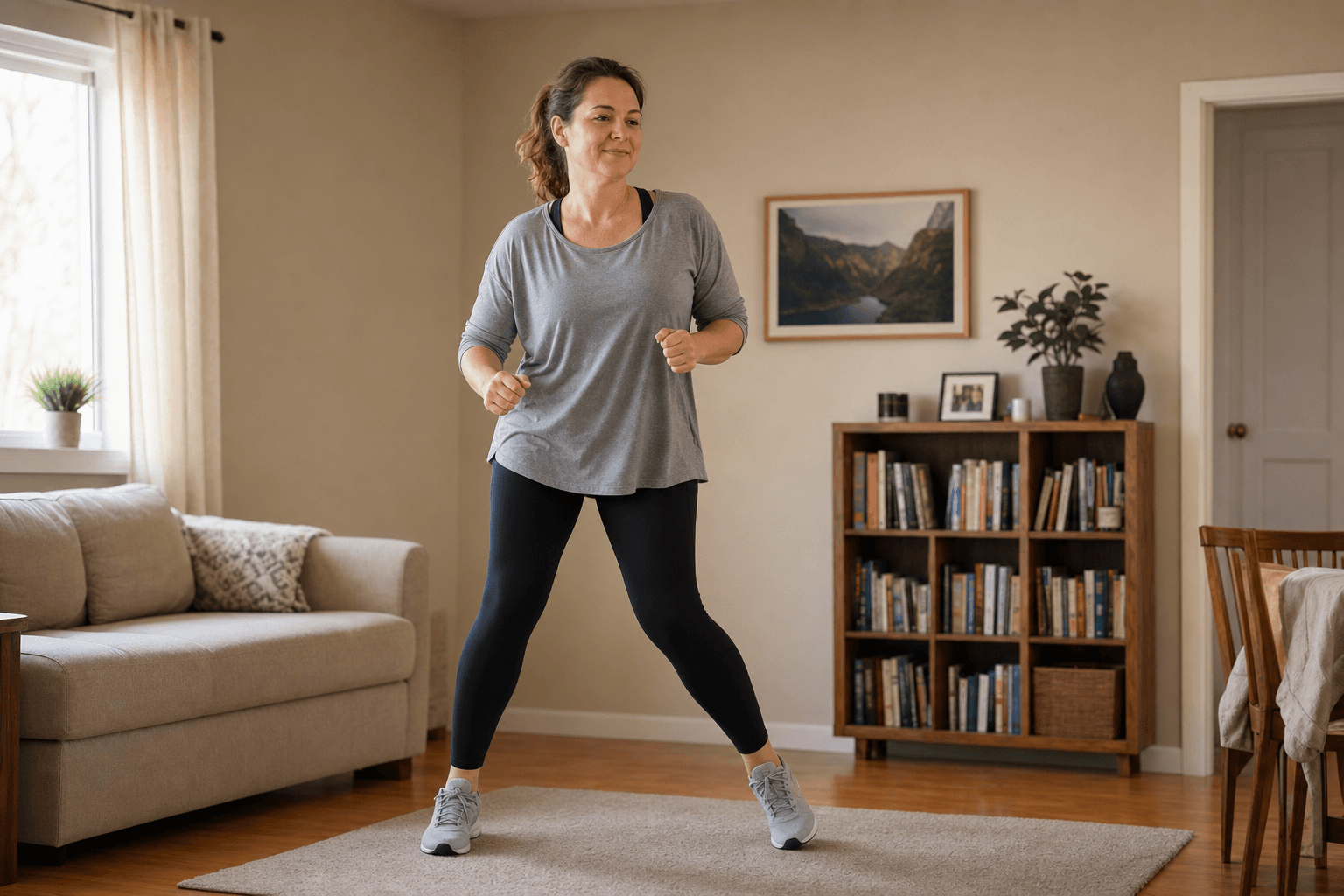
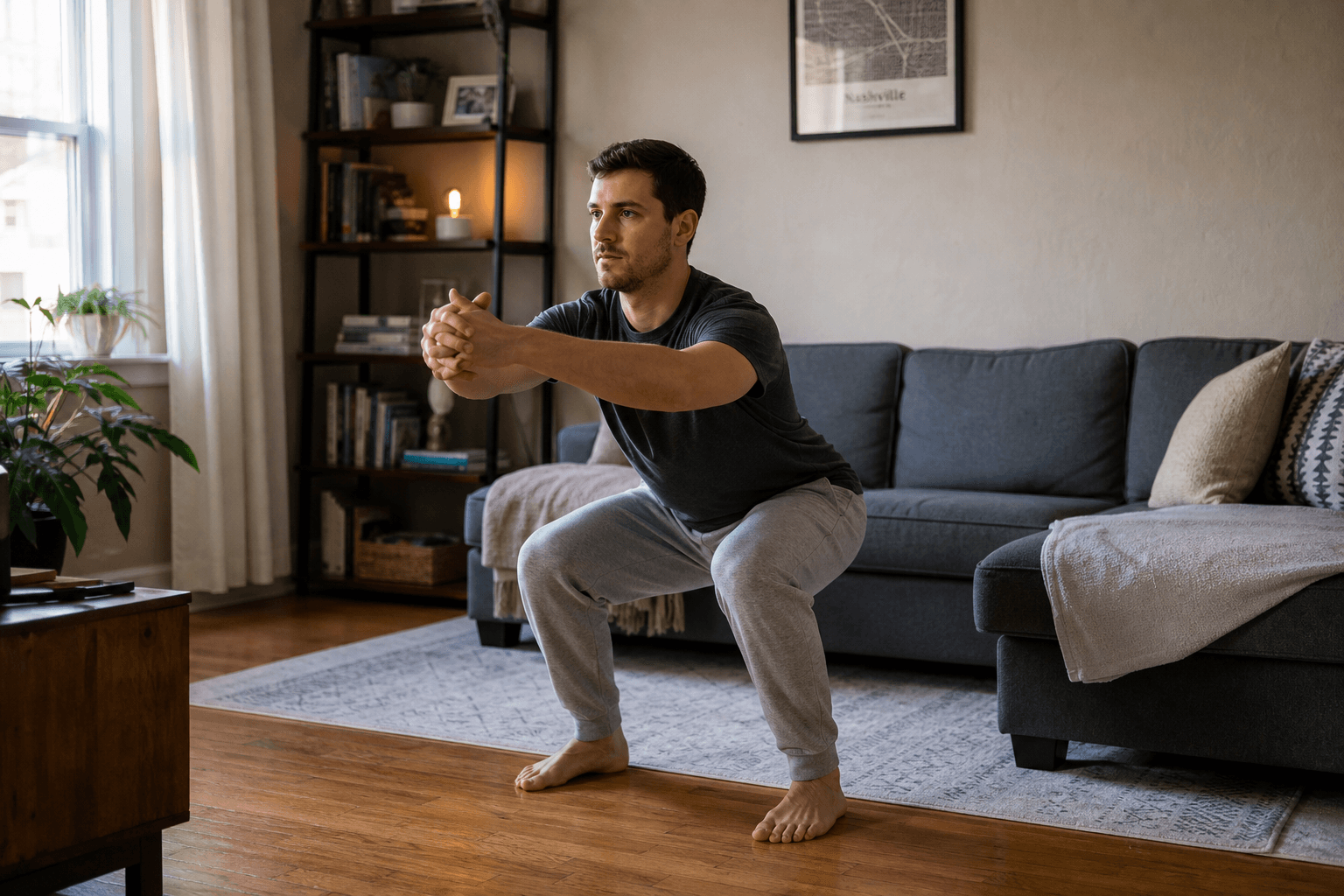
The American Heart Association defines moderate-intensity activity as 50–70% of your maximum heart rate (MHR) and vigorous activity as 70–85% of MHR. MHR is estimated as 220 minus your age. For a 30-year-old, the target zone spans 95 to 162 beats per minute. Reaching 95 bpm does not require a plyometric movement — it requires sustained muscular work. Marching in place with exaggerated arm drive, performing lateral shuffles with a low athletic stance, or cycling through a squat-to-front-kick sequence can all push heart rate into that moderate-to-vigorous range without a single foot leaving the ground.
Beyond the immediate heart rate response, no-jump cardio also triggers the afterburn effect (EPOC). A 2019 review of Tabata-style protocols (20 seconds of work, 10 seconds of rest, repeated for 8 rounds) showed improvements in both VO₂ max and anaerobic capacity, according to Nike.com. The same metabolic elevation that drives EPOC — elevated oxygen consumption post-exercise — occurs whether the work intervals are jumping jacks or standing oblique crunches. The stimulus is intensity and duration, not impact.
The Apartment Cardio Constraint Matrix
The reason most generic "cardio at home" lists fail apartment dwellers is that they ignore the real constraints that define your workout options. A routine that works for someone with a 10x10 ft basement gym and tolerant downstairs neighbors is useless to someone in a 400 sq ft studio on the third floor.
The following three-factor matrix lets you identify your specific constraint profile and immediately filter out exercises and routines that won't work for your situation.
| Constraint | Your Options | Impact on Exercise Selection |
|---|---|---|
| Available floor space | Compact (< 4x4 ft): typical living room corner or bedroom nook. Standard (4x6 ft): hallway or cleared living room area. Generous (6x8+ ft): spare room or open-plan area. | Compact space limits lateral movement and requires exercises that stay in place (marching, step-touch, standing core work). Standard space allows lateral shuffles, low-impact speed skaters, and short travel patterns. Generous space permits full walking circuits and longer travel moves. |
| Noise tolerance / floor type | Upstairs apartment (wood-frame building): impact noise travels easily. Ground floor or concrete building: noise concern is minimal. Shared wall neighbor: vibration through walls matters more than airborne sound. | Upstairs residents must eliminate all jumping, stomping, and heavy foot strikes. Ground-floor dwellers can use a wider range of moves but should still consider neighbor noise from loud landings. Yoga mats and exercise mats reduce footfall noise significantly. |
| Equipment allowance | None: bodyweight only. Minimal: yoga mat + resistance bands. Moderate: yoga mat + bands + small step platform (6–8 inches). | Bodyweight-only workouts rely on tempo, range of motion, and reduced rest to increase intensity. Bands add resistance without noise. A step platform enables step-ups and incline work but requires 4x4 ft minimum space. |
Comments
Join the discussion with an anonymous comment.