
Heat Safety for Home Workouts, by the Numbers
Working out in a hot, AC-free apartment doesn't have to be guesswork. The sports-medicine consensus gives practical numbers for hot home sessions: hydration targets before, during, and after training, when sodium matters, cooling methods that work in a small space, and the 1–2 week heat-adaptation window.
- Equipment tier required
- none
- Duration
- 60 min
- Difficulty
- beginner
- Target area
- full body
Once you have decided that conditions are appropriate for training, the most useful heat safety tips for home workouts are the ones you can put on a clock: fill the bottle early, drink before the warm-up, set an interval for the session, and measure what happened afterward. The targets below are starting points, not a requirement to force down a fixed amount regardless of session length, body size, or personal sweat loss.
The hot-workout protocol, from first drink to recovery
| When | What to do | Number to use |
|---|---|---|
| Several hours before | Start with water rather than trying to catch up during the workout. | 17–20 oz [1] |
| 20–30 minutes before | Top up the bottle and drink again before the warm-up. | 8 oz [1] |
| During exercise | Use a timer or natural rest intervals instead of waiting until the end. | 4–8 oz every 15–20 minutes [1] |
| If the session extends beyond roughly 1 hour | Consider sodium in the fluid, especially when sweating heavily. | Approximately 0.5–0.7 g/L sodium [2] |
| Immediately after | Record session duration, fluid consumed, and any change in body mass under comparable weighing conditions. | Use your own repeated-session pattern rather than a generic bottle count [2] |
| During recovery | Continue replacing the measured loss gradually and eat normally; check urine color only as a rough at-home signal. | No single fixed post-workout amount fits every sweat rate [2][3] |
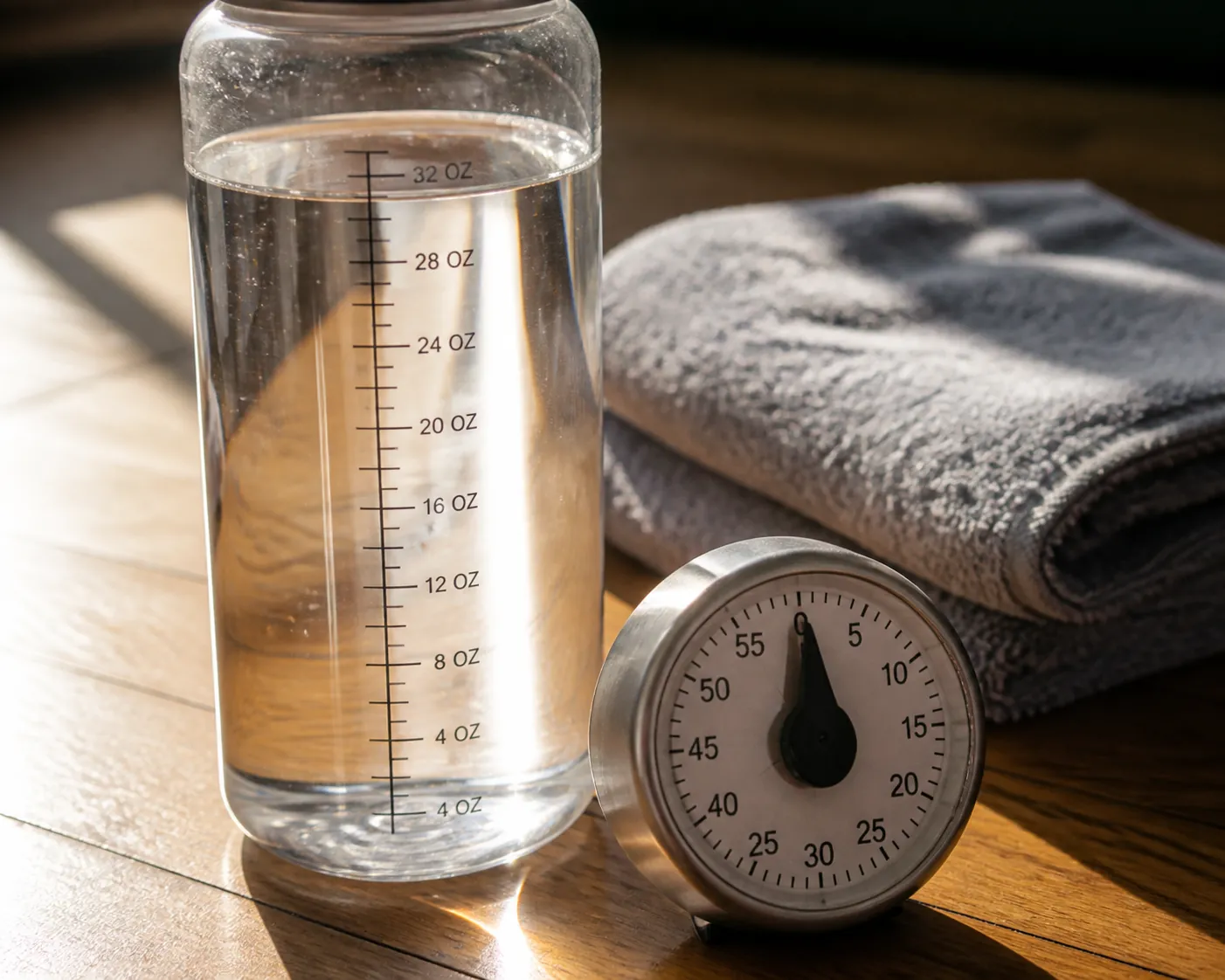
The value of this schedule is logistical as much as physiological. The bottle is already filled when the room becomes uncomfortable, and the timer prevents a concentrated set or circuit from quietly consuming the next half hour. Put enough water for the planned workout within reach before starting; a refill that requires crossing the apartment or interrupting a video is easy to postpone.
These amounts should not be mistaken for an individualized prescription. They are consensus-style guidance for beginning a session reasonably hydrated and drinking at regular intervals. Sweat loss is the number that determines whether the lower or upper end is more realistic for a particular person.
Match the schedule to what you actually sweat
During vigorous exercise in heat, sweat rates of 1.0–1.5 L per hour are common, but individual variation is substantial and reported rates can exceed 2.5 L per hour.[2] That range explains why two people following the same workout in similar apartments may finish with very different fluid deficits. It also explains why an ounce target that works well for one session can be inadequate when the workout becomes longer, harder, or hotter.
For a practical home estimate, weigh yourself before and soon after several comparable sessions, using the same scale and similarly dry clothing. Record how long you exercised and how much you drank. One result can be distorted by clothing, scale variation, food, or a bathroom break; a repeated pattern is more useful than treating a single weigh-in as laboratory data.
This matters because aerobic performance typically begins to decline when a body-water deficit reaches roughly 2% or more of body mass.[2] For a clearly hypothetical example, 2% of a 150-pound starting weight is 3 pounds. That does not create a universal three-pound safety line, nor does every change on a household scale represent water alone. It shows why a large post-session drop deserves more attention than whether you happened to finish one standard-size bottle.
Urine color offers another low-cost check between sessions. A noticeably darker-than-usual result can prompt you to reassess fluid intake before training, while lighter urine generally aligns with better hydration.[3] Color can also be affected by foods, supplements, and medications, so it should remain a rough check rather than a diagnosis or proof that a hot workout is safe.
Sodium earns a place when the session gets long
Plain water is a reasonable default for a typical session lasting less than roughly an hour. Once hot exercise extends beyond that point, the heat consensus recommends approximately 0.5–0.7 g of sodium per liter of fluid.[2] The threshold is approximate because duration is only one part of the decision: sweat rate, how salty the sweat is, prior hydration, intensity, and recovery time also matter.
That recommendation does not make a commercial sports drink compulsory. Check the sodium concentration on the label rather than assuming that every brightly colored drink reaches the target. Sodium may also come from ordinary food during recovery. A short bodyweight workout does not become safer simply because its water contains electrolytes, and a sports drink cannot compensate for excessive heat exposure.
For sessions around the one-hour boundary, use the circumstances rather than the clock alone. Someone whose clothing remains dry after easy mobility work has a different replacement problem from someone whose mat and clothes are soaked after sustained vigorous exercise. When repeated pre- and post-workout measurements show a substantial loss despite scheduled drinking, that personal record deserves more weight than a generic serving suggestion.
Create a cooling buffer before the first set
Pre-cooling is useful because it creates a larger heat buffer before exercise pushes the body toward dangerous conditions. Cooling one small patch of skin with a lone ice pack does comparatively little; broader cooling before the session is the more credible approach.[4]
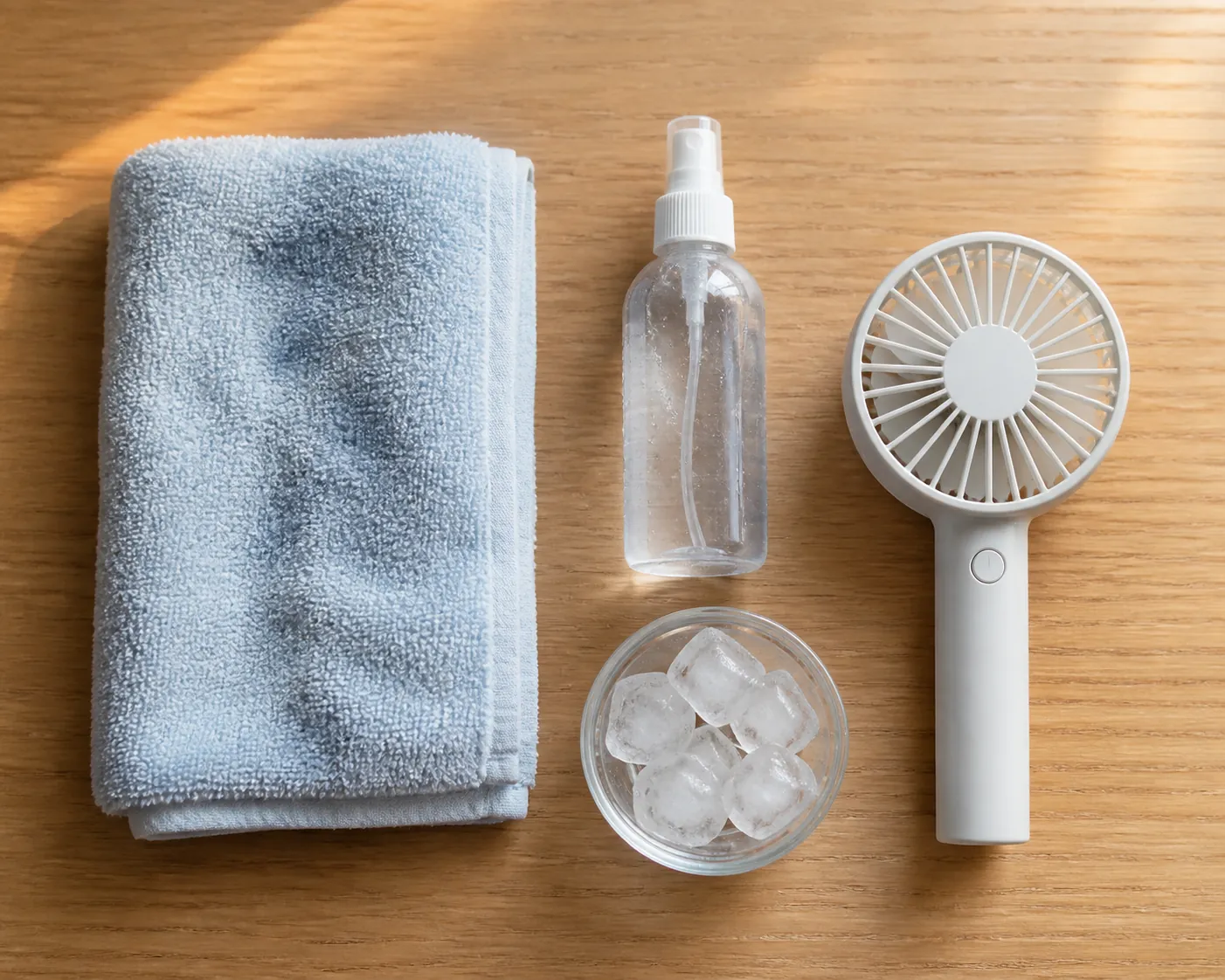
In an apartment, that can be as simple as taking a cool shower, dampening a larger towel, chilling more than one towel in advance, or using cool water on several exposed areas before the warm-up. Keep a second damp towel nearby for rest intervals. These methods use ordinary household supplies and can reduce the thermal head start of a warm room without pretending to turn it into an air-conditioned one.
- Put cooling supplies and the full planned fluid volume beside the mat before training.
- Pre-cool more than one small area; do not count a single pocket-size ice pack as the whole intervention.
- Use rest intervals to re-wet the towel and drink on schedule.
- Treat cooling as extra capacity, not permission to extend a deteriorating session.
A fan also has limits. At indoor temperatures above 90°F, moving hot air can increase body temperature instead of providing effective cooling.[3] Room temperature, humidity, fan use, and the train/modify/skip decision belong in How Hot Is Too Hot to Work Out in a No-AC Apartment? If those conditions have not yet been assessed, make that decision before applying this workout protocol.
Heat adaptation takes repeated exposure, not one punishing workout
Heat acclimatization guidance points to repeated exposure over 1–2 weeks, with much of the adaptation developing during the first week. The cited sports-science protocol uses heat exposures of at least 60 minutes per day.[2] Those are athlete-focused findings, so they describe an adaptation window rather than promising that every apartment exerciser will be acclimatized on a particular day.
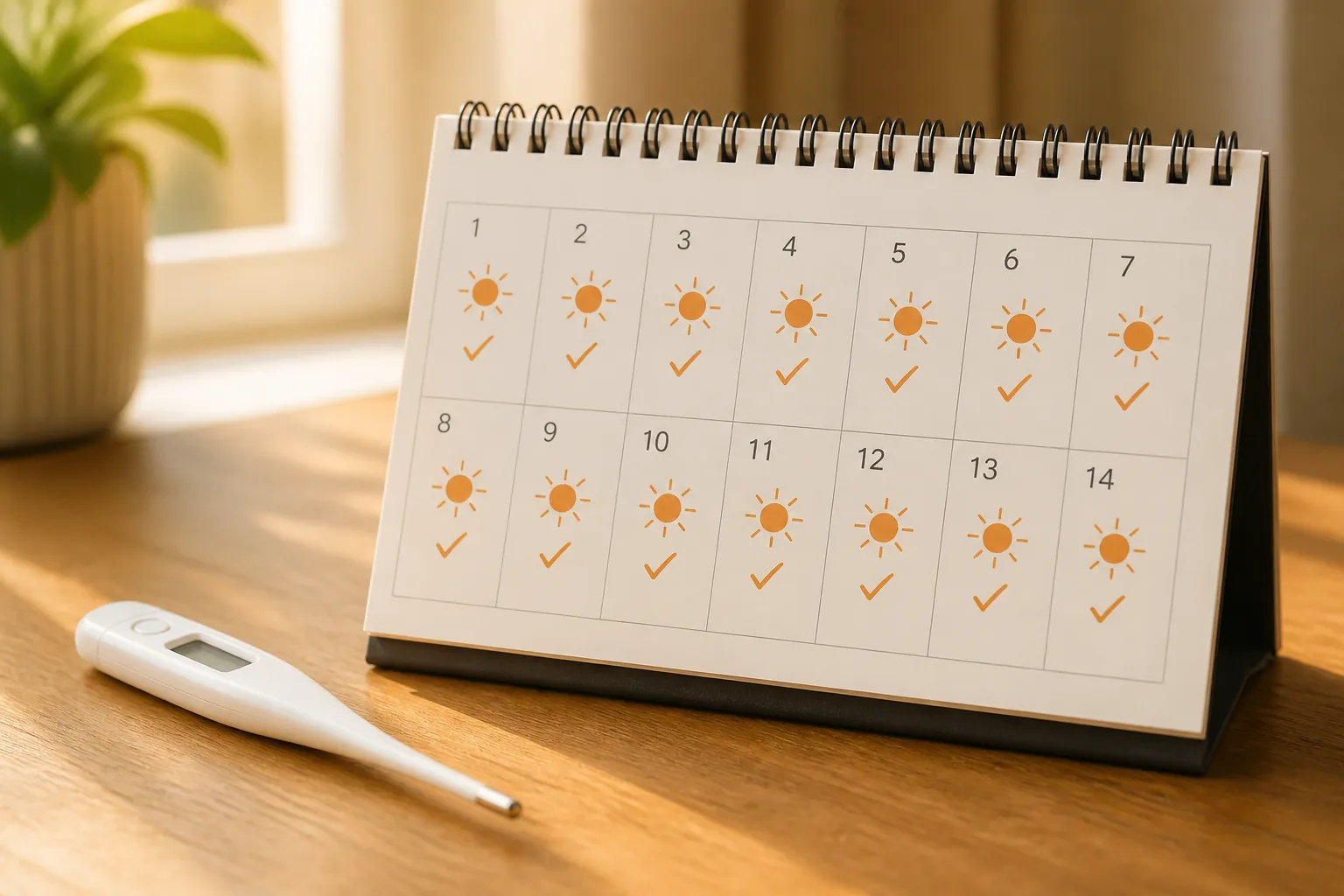
The practical lesson is to progress exposure rather than chase the athlete protocol. Begin with less intensity or volume than you would use in a cool room, repeat manageable sessions, and increase the workload only when the earlier exposure is being tolerated. A shorter home session is not the studied 60-minute dose, and stretching it merely to satisfy that number may add risk without guaranteeing the same adaptation.
Adaptation also does not cancel the need to prepare each time. Keep using the pre-workout drink, the timed intervals, the cooling setup, and the post-session record. The room can become hotter or more humid even while the exerciser becomes more accustomed to heat.
Know when the protocol no longer applies
Scheduled hydration is not a reason to continue through dizziness, nausea, unusual weakness, headache, confusion, loss of coordination, or fainting. Heat illness can progress beyond a problem that another drink and a longer rest interval will fix; confusion, loss of consciousness, or other signs of heat stroke require emergency action and rapid cooling.[5]
Medication can also change the calculation. People using GLP-1 medications should use the separate GLP-1 home-workout dehydration guide rather than assuming that a general drinking schedule covers medication-specific concerns.
Hydration, sodium, pre-cooling, and acclimatization cannot make every hot workout safe. Once the session has been judged appropriate, however, they turn preparation into a repeatable routine: supplies placed before the warm-up, drinking intervals set in advance, losses reviewed afterward, and heat exposure built gradually rather than improvised halfway through training.
References
- Stay Safe Exercising in the Heat — Mass General Brigham
- Consensus recommendations on training and competing in the heat (Racinais et al., BJSM) — British Journal of Sports Medicine
- Heat and Athletes | Heat Health | CDC — Centers for Disease Control and Prevention
- How to exercise safely in hot weather — BBC Future
- Heat-related Illnesses | Heat | CDC (NIOSH) — National Institute for Occupational Safety and Health
What a small equipment investment adds
We don't have a build tagged to this exact tier yet. Browse all builds.
How often should you repeat this?
See our recovery and rest reference for citation-anchored rest-interval guidance.
Spot something off?
Tell us if a movement, tier assumption, or duration didn't match your experience.