
GLP-1 Home Workouts in Extreme Heat: A Real Dehydration Risk?
GLP-1 medications suppress thirst, increase GI fluid loss, and cut the water you normally get from food, so "drink when thirsty" stops working as a hydration guide. This article lays out a concrete scheduled-hydration and session-redesign protocol for home workouts in extreme heat, plus the warning signs that mean stop — not a single generic water tip.
- Equipment tier required
- none
- Duration
- 20-40 min
- Difficulty
- beginner
- Target area
- full body
- Noise level
- low
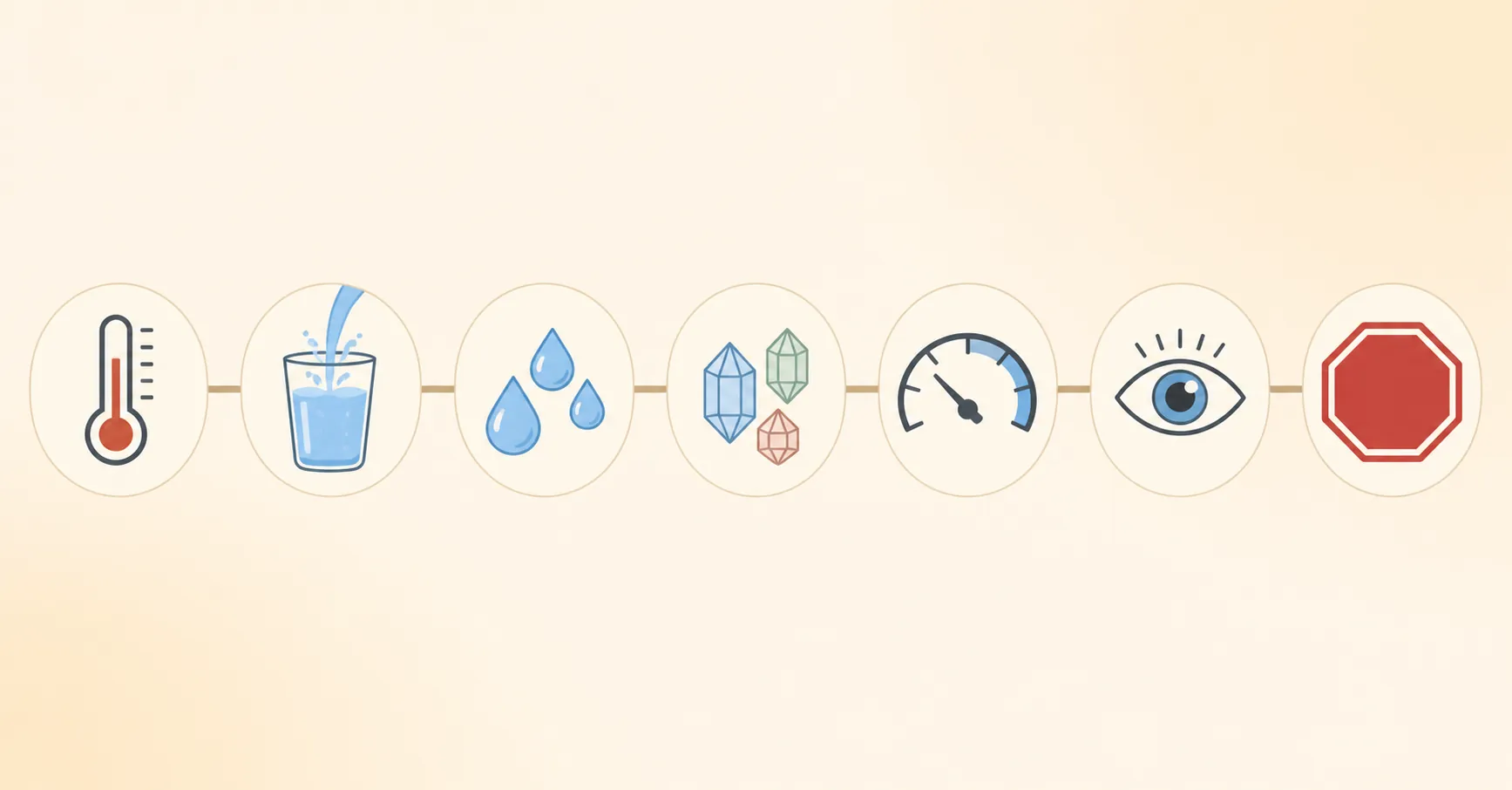
Yes—the dehydration risk is real enough to change how you train on a GLP-1 medication during extreme heat, even though its population-level size is not yet known. Ozempic, Wegovy, Zepbound, and Mounjaro can make thirst a less dependable guide, while nausea, vomiting, diarrhea, and reduced food intake can remove additional fluid sources. The practical response is a scheduled hydration plan paired with a less demanding workout—not an attempt to push through the original session.
- Assess the room before you start; use the room-temperature and fan stop rules.
- Preload fluids before training rather than waiting for thirst.
- Sip on a schedule every 10–15 minutes.
- Account for electrolytes when the session, sweat loss, or GI symptoms make plain water insufficient.
- Reduce heat load by changing the workout time, intensity, duration, and rest periods.
- Watch for symptoms, including changes from your usual medication-related nausea.
- Stop, cool down, and seek appropriate help when a hard warning boundary appears.
Why thirst becomes a poor safety net
The concern is not that every person taking a GLP-1 drug will become dehydrated in a hot workout. It is that several ordinary safeguards can weaken at the same time. GLP-1 pathways in the hypothalamus are involved in both appetite and thirst regulation, so a person who is eating and drinking less may not receive a strong thirst signal early enough to guide fluid replacement. This is the reason “drink when thirsty” is a weak standalone plan in a hot room. [1]
GI symptoms add a more direct route to fluid loss. In the 68-week STEP 1 trial of semaglutide 2.4 mg, nausea occurred in 44.2% of participants, vomiting in 24.8%, and diarrhea in 31.5%. Those are trial event rates, not a prediction that each user will experience all three symptoms, but they show why a generic hydration disclaimer is inadequate for this medication class. [1]
Reduced eating removes another modest but meaningful source of fluid. Roughly 20% of daily water intake normally comes from food, so smaller meals, early fullness, or a day of nausea can lower total intake before a workout begins. Heat then increases sweat loss on top of that shortfall. The resulting risk stack is plausible and clinically important, but it should not be overstated: no large population study has established that GLP-1 users experience higher rates of heat illness during heat waves. [3]
The stakes are not limited to feeling thirsty. In 2025, the FDA made a class-wide labeling update linking severe dehydration associated with GLP-1 drugs to kidney injury. That warning concerns dehydration generally, not proof that a particular hot apartment workout will cause kidney problems. It does, however, support taking fluid loss, persistent GI symptoms, and heat exposure seriously. [2]
Build the hydration plan before the workout
There is no defensible single GLP-1 hydration target for every body, climate, medication response, and medical history. Published guidance varies. Healthline describes 1.5–2 liters per day, Metabolic Science gives 2–2.5 liters, SportsMD gives 2.7–3.7 liters, and GLP-1 Doc gives 80–100 ounces. Treat these as attributed reference ranges, not numbers to combine into a larger universal prescription. A clinician may need to individualize fluid and electrolyte advice if you have kidney, heart, blood-pressure, or other conditions. [6][7]
For the workout itself, the practical sequence is more useful than a large bottle beside the mat:
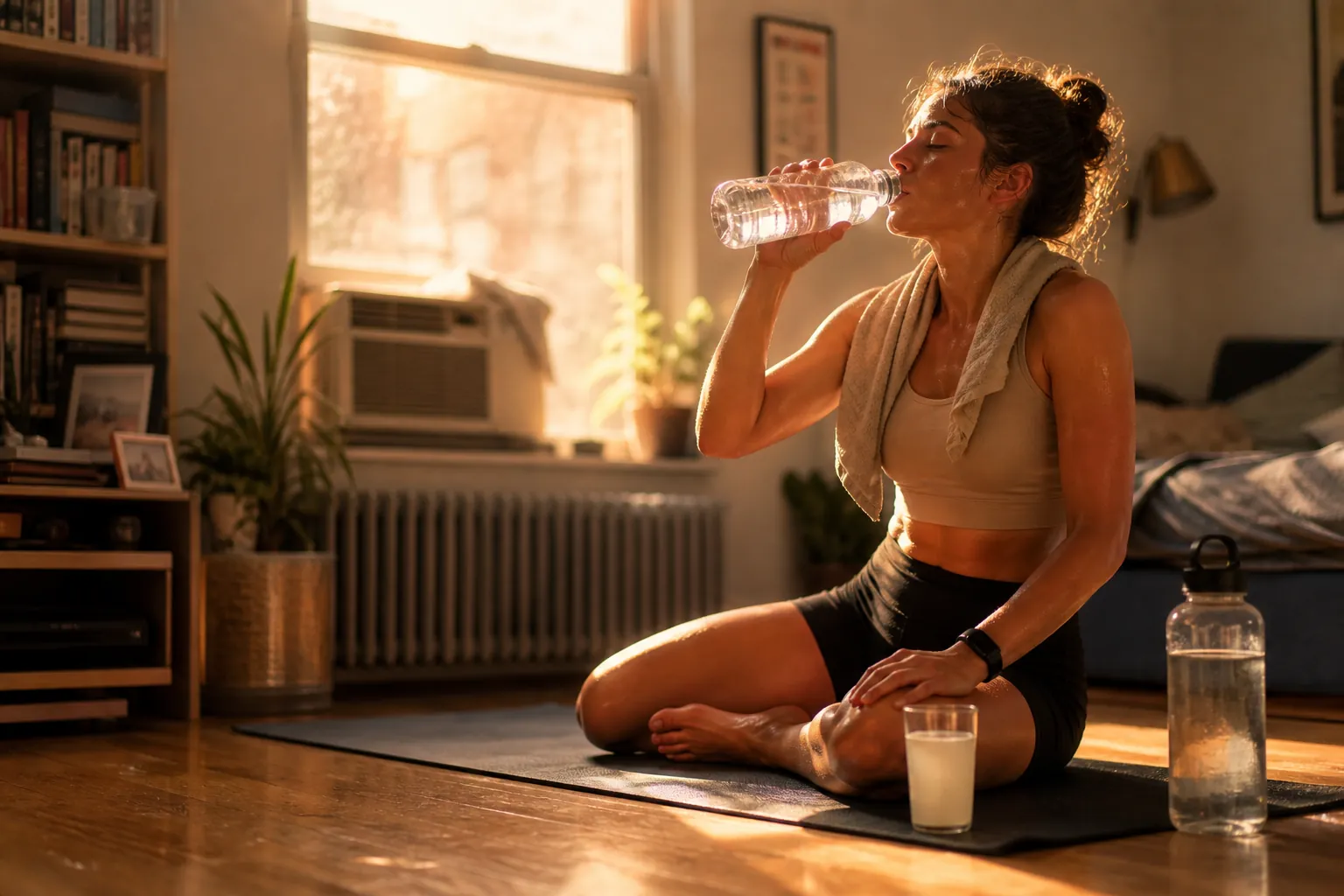
- About two hours before training, drink 16–20 ounces.
- About 15 minutes before, drink another 8 ounces.
- During the session, take small sips every 10–15 minutes.
- For every 30 minutes of exercise, guidance cited by the available sources adds roughly 16–24 ounces, adjusted for heat, sweat, body size, and clinical advice.
The small-sip instruction matters. GLP-1 medications slow gastric emptying, and rapidly forcing down a large volume can aggravate nausea or leave you feeling uncomfortably full. Keep the bottle within reach and use a timer if necessary; the point is to replace fluid before discomfort becomes the signal that starts the process. [6][7]
Plain water may not cover every hot, sweaty session. Sodium helps replace the main electrolyte lost in sweat and supports fluid retention. Potassium and magnesium also contribute to normal muscle and nerve function. Depending on your medical situation, those can come from an electrolyte drink, a clinician-approved electrolyte product, or food such as broth, yogurt, fruit, vegetables, and other ordinary meals. Do not treat electrolyte products as automatically safer than water: some contain substantial sugar or sodium, and people with conditions requiring sodium or fluid restriction need individualized guidance. [6][7]
Food-based hydration also deserves a place in the plan, especially when appetite is low. A small, tolerable meal or snack with fluid can be easier to sustain than trying to drink the entire day’s shortfall immediately. For practical timing ideas, see summer fatigue prevention foods. If nausea, vomiting, or diarrhea is persistent, the workout plan is no longer the main problem; contact your healthcare professional.
Redesign the session around heat load
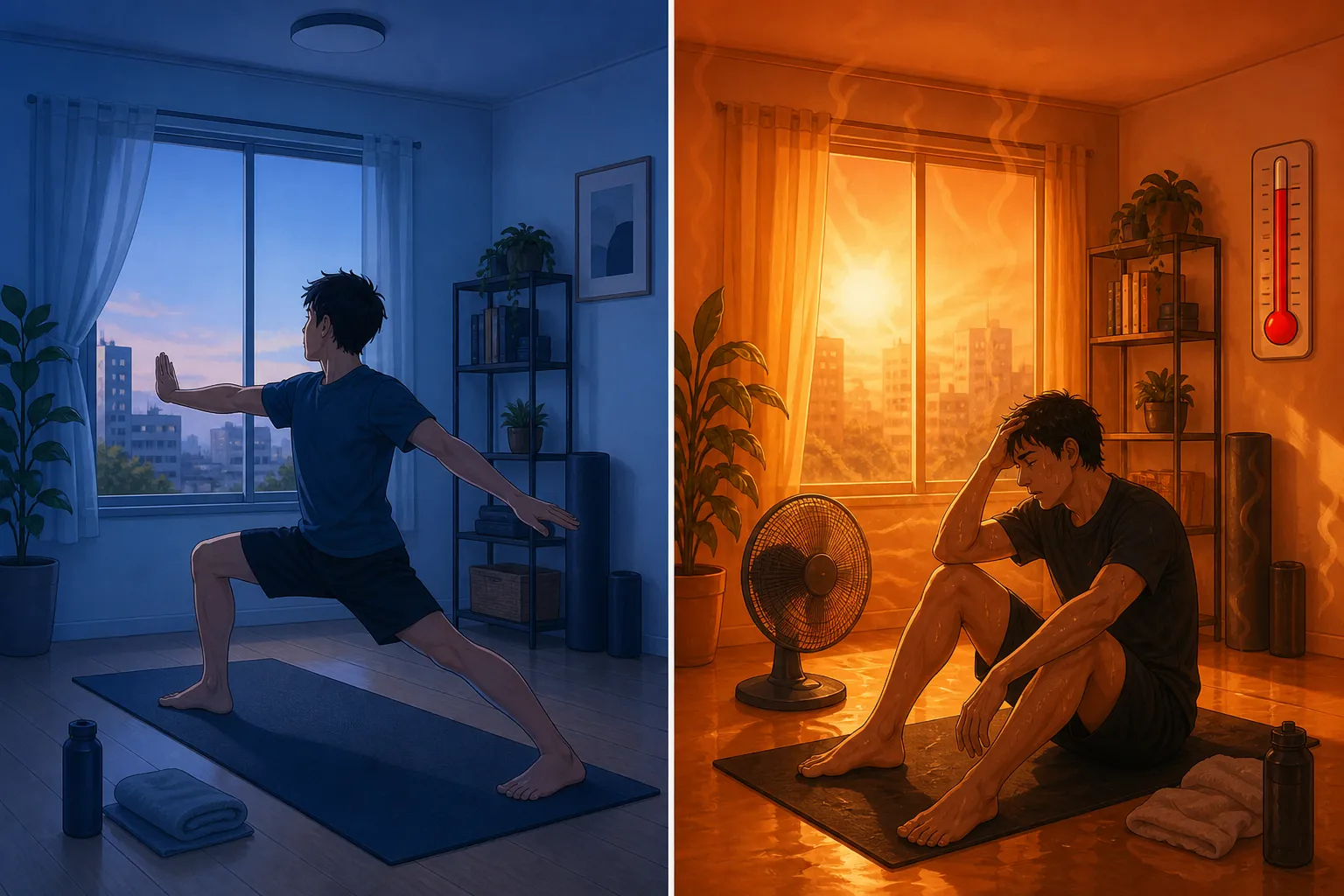
Hydration cannot make an overheated room reasonable. Start with the room rather than the workout calendar. The CDC says fans help with cooling only below about 90°F; above that, a fan can raise body temperature. The WHO advises that above 40°C/104°F, fans may heat the body. A fan moving hot air is not an air conditioner and should not be used to justify training through an unsafe room. [4][5]
For the room go/no-go decision, use the existing no-AC heat-wave workout guide and indoor apartment workout heat-index guide. They cover room assessment and pre-cooling in more detail. Humidity matters too: when the air is humid, sweat evaporates less effectively, so a session that felt manageable on a dry day may require more rest or a lower ceiling. The home-workout humidity guide can help with that assessment.
When the room is within its workable range, lower the demand before you begin:
- Choose an earlier window, ideally before 8 a.m., or an evening window after 6 p.m., rather than the hottest part of the day.
- On a hot day, move effort toward roughly 60–70% of your usual intensity.
- Shorten the workout to about 20–40 minutes instead of trying to complete the standard duration.
- Lengthen rest periods and favor controlled strength work, mobility, or easy conditioning over dense circuits and repeated all-out intervals.
A cool morning or evening room may support a reduced workout. A hot midday room may not. This is a heat-load decision, not a test of commitment.
Know when the plan has ended
Stop exercising, move to a cooler place, and begin appropriate cooling if you develop dizziness, confusion, a rapid heartbeat, stopped sweating, or nausea that is stronger or different from your usual medication baseline. These are not symptoms to track while finishing the last round. Confusion, fainting, severe weakness, or rapidly worsening symptoms warrant urgent medical help. CDC and NIOSH list these signs among the concerning features of heat-related illness. [8]
Do not change the dose or stop a GLP-1 medication to make summer training easier without speaking with the prescriber. Medication decisions belong with that clinician. Likewise, a new pattern of vomiting, diarrhea, poor intake, or unusually dark urine deserves medical advice rather than a more aggressive workout hydration target.
Heat also extends beyond the workout window. Poor sleep and slow recovery can make the next session harder before you notice a clear dehydration symptom; the guidance on hot-night workout recovery and hot-weather sleep and workout recovery is relevant when heat is affecting several days in a row. Keep in-use pens within their medication-specific storage limits—GLP-1 Doc cites up to 86°F for certain in-use pens—and never leave them in a hot car. Check the instructions for your exact product rather than applying one storage rule to every pen.
Training on a GLP-1 medication can remain viable during extreme heat when fluid intake is scheduled, the session is deliberately reduced, and the room and symptoms remain inside clear boundaries. If those conditions are not available, deferring the workout is the safe workout—not a failure to follow the plan.
References
- GLP-1 Dehydration — Metabolic Science; Wilding et al., STEP 1 trial, 2021.
- GLP-1 Drugs and Dehydration: What to Know About Heat-Related Illness — Healthline; 2025.
- GLP-1, Ozempic, Wegovy Heat Illness Risk: Dehydration in Summer 2026 — Medical Daily; 2026.
- About Extreme Heat — Centers for Disease Control and Prevention.
- Climate Change, Heat and Health — World Health Organization.
- Summer Heat, GLP-1 Dehydration, Electrolytes and Exercise — GLP-1 Doc.
- GLP-1 Weight Loss Drugs and Dehydration: The Athlete’s Complete Hydration Guide — SportsMD; December 5, 2025.
- Heat-Related Illnesses — CDC/NIOSH.
What a small equipment investment adds
We don't have a build tagged to this exact tier yet. Browse all builds.
How often should you repeat this?
See our recovery and rest reference for citation-anchored rest-interval guidance.
Spot something off?
Tell us if a movement, tier assumption, or duration didn't match your experience.