
Science-backed home workout plan to reduce dementia risk
Home exercise is genuinely linked to lower dementia risk, but the benefit is dose-dependent. The science supports roughly 150 weekly minutes of moderate aerobic activity plus two strength days — this guide maps that target to tiered, apartment-friendly routines from $0 to about $300, and keeps observational associations separate from trial-proven claims.
- Equipment tier required
- none
- Duration
- 30 min
- Difficulty
- beginner
- Target area
- full body
- Space footprint needed
- small
- Noise level
- quiet
Can home workouts actually reduce dementia risk, or is that phrase doing too much work? The practical answer is yes, exercise belongs in a serious dementia-risk-reduction plan. The honest answer is that the benefit is dose-based and probabilistic, not a home cure.
The best-supported home target is plain enough to write on a calendar: build toward 150–300 minutes a week of moderate aerobic activity, and add muscle-strengthening work on at least 2 days. That is the same general adult activity range promoted in public-health guidance and echoed in Alzheimer’s Association brain-health advice to “get moving.”[1]
There is a second rule worth setting before anyone starts counting minutes. Big dementia-risk percentages from long-term cohorts are associations. They can show that more active people had lower dementia risk, but they do not prove that one person’s living-room routine will cut risk by a fixed amount. Stronger claims about structured exercise improving cognition come from randomized intervention trials, and those trials still have boundaries.
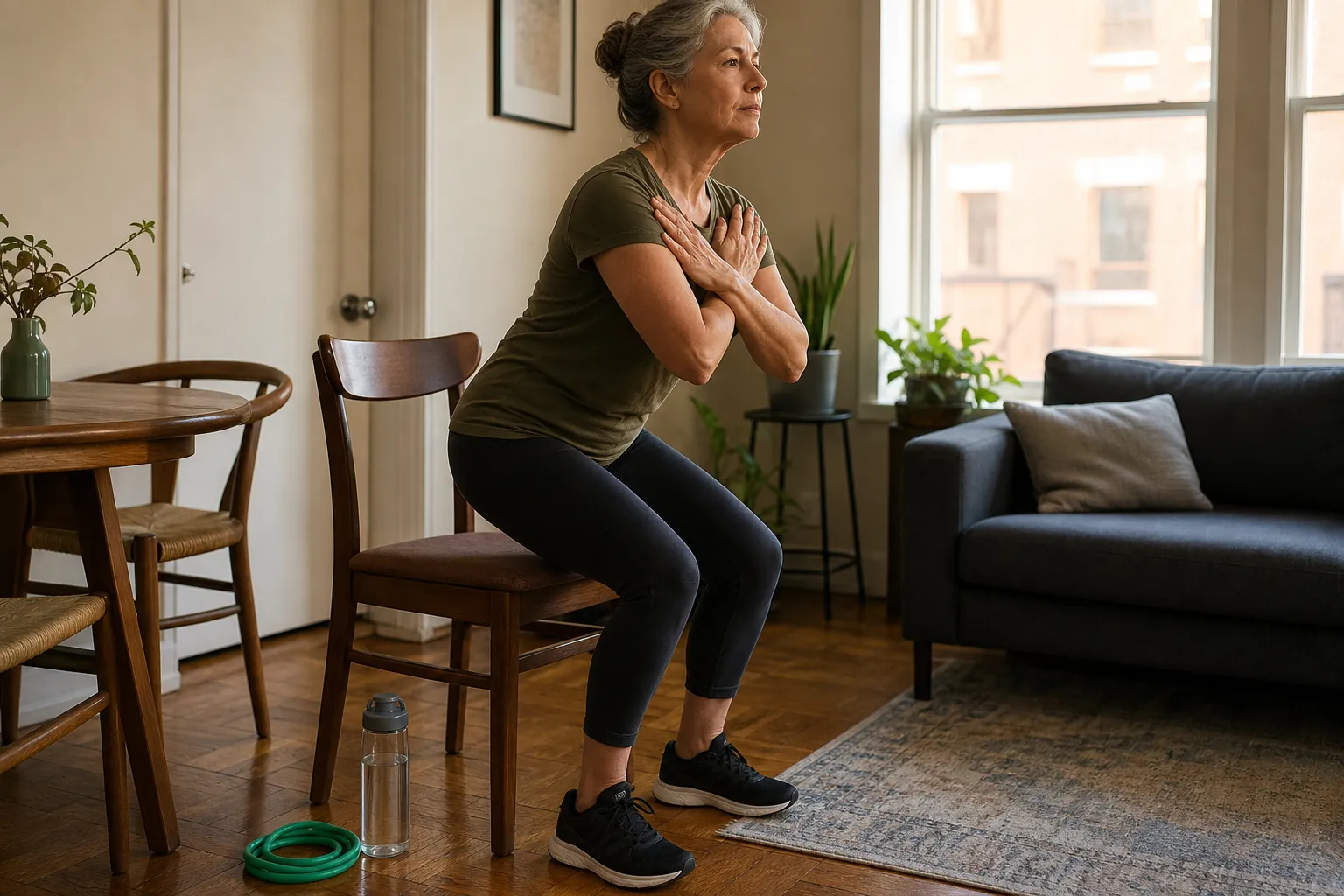
What the science can say without pretending to be a guarantee
The broad prevention frame is encouraging, but it is often overstated. The 2024 Lancet Commission estimated that up to 45% of dementia cases may be potentially preventable or delayed by addressing 14 modifiable risk factors, including physical inactivity.[2] That is a population estimate, not a personal receipt. It does not mean 45% of one person’s risk disappears because they bought resistance bands.
Exercise earns its place because the signal shows up in several kinds of evidence. A 2017 BMJ Open dose-response meta-analysis of 16 prospective studies found that each additional 500 kcal or 10 MET-hours per week of leisure-time physical activity was associated with about a 10% lower risk of all-cause dementia and a 13% lower risk of Alzheimer’s disease.[3] That is useful for dose thinking. It is still observational.
The “some is better than none” message also has data behind it. A 2025 Johns Hopkins report on a UK Biobank accelerometer cohort of 89,667 adults found that as little as 35 minutes a week of moderate-to-vigorous physical activity was associated with a 41% lower dementia risk, with lower-risk associations rising to 60–69% at 70 or more minutes a week.[4] That is a good doorway for someone who is deconditioned or discouraged. It is not a promise that 35 minutes buys a 41% personal discount.
The more practical question is whether people can do meaningful exercise at home, without a gym, and without a room full of equipment. Here the 2024 home-based randomized controlled trial in older adults with mild cognitive impairment is hard to ignore. Ninety adults aged 60–80 were assigned to 3 months of low-intensity home exercise or control. The exercise group trained 35 minutes a day, 5 days a week, at Borg 9–13, using body weight and simple household loads such as water bottles; adherence was reported at roughly 95–97%, and the exercise group improved global cognition and executive function.[5]
That trial does not prove that every older adult should copy the protocol exactly. It was a single study in a specific group with mild cognitive impairment. What it does show is important enough: a home program using ordinary movements and cheap equipment can be carried out with high adherence and can improve cognitive outcomes over a short intervention window.
The landmark FINGER trial adds weight from a larger multidomain intervention. In 1,260 at-risk adults aged 60–77, a 2-year program combining diet, exercise, cognitive training, vascular-risk monitoring, and social activity produced a between-group difference in neuropsychological test battery change of 0.022 per year, with p=0.030.[6] Since exercise was part of a package, FINGER should not be used to claim that exercise alone caused the whole effect. It does support the idea that structured lifestyle programs can move cognitive measures in at-risk adults.
U.S. POINTER, reported by the Alzheimer’s Association in 2025, points in the same direction: the more structured lifestyle group showed greater cognitive benefit, and the reported benefit did not depend on sex, ethnicity, APOE e4 status, or heart-health status.[7] Its exercise recipe is also refreshingly concrete: moderate-to-intense aerobic activity 4 times per week for 30–35 minutes, plus strength and flexibility 2 times per week.[7]
The weekly home dose
For a home routine, the evidence points less to a special “brain exercise” and more to a repeatable weekly dose. The floor is not perfection. The floor is a schedule that gradually gets you toward moderate aerobic minutes and two strength days without making the house feel like a clinic.
| Weekly piece | Defensible target | What it looks like at home |
|---|---|---|
| Moderate aerobic work | 150–300 minutes per week | Brisk indoor walking, outdoor walking from home, low-impact step-ups, marching intervals, shadow boxing, quiet dance cardio, stationary cycling if you already own one |
| Strength training | At least 2 days per week | Sit-to-stands, wall or counter push-ups, hip hinges, calf raises, rows with bands or water bottles, carries, supported split squats |
| Flexibility and balance | Useful support work, especially for older adults | Ankle mobility, gentle hip and thoracic movement, tandem stance near a counter, heel-to-toe walking, easy stretching after sessions |
| Minimum on-ramp | Start below the full target if needed | Ten-minute walks, 5-minute movement breaks, one set of chair exercises, or 35 total weekly minutes of moderate-to-vigorous movement as an early milestone |
Moderate intensity should feel like work you can sustain. The simplest check is the talk test: you can speak in short sentences, but you would rather not sing. If you use Borg rating of perceived exertion, the 2024 home-based MCI trial used Borg 9–13, which ranges from very light to somewhat hard.[5] For many beginners, that is a sensible place to begin before chasing harder intervals.
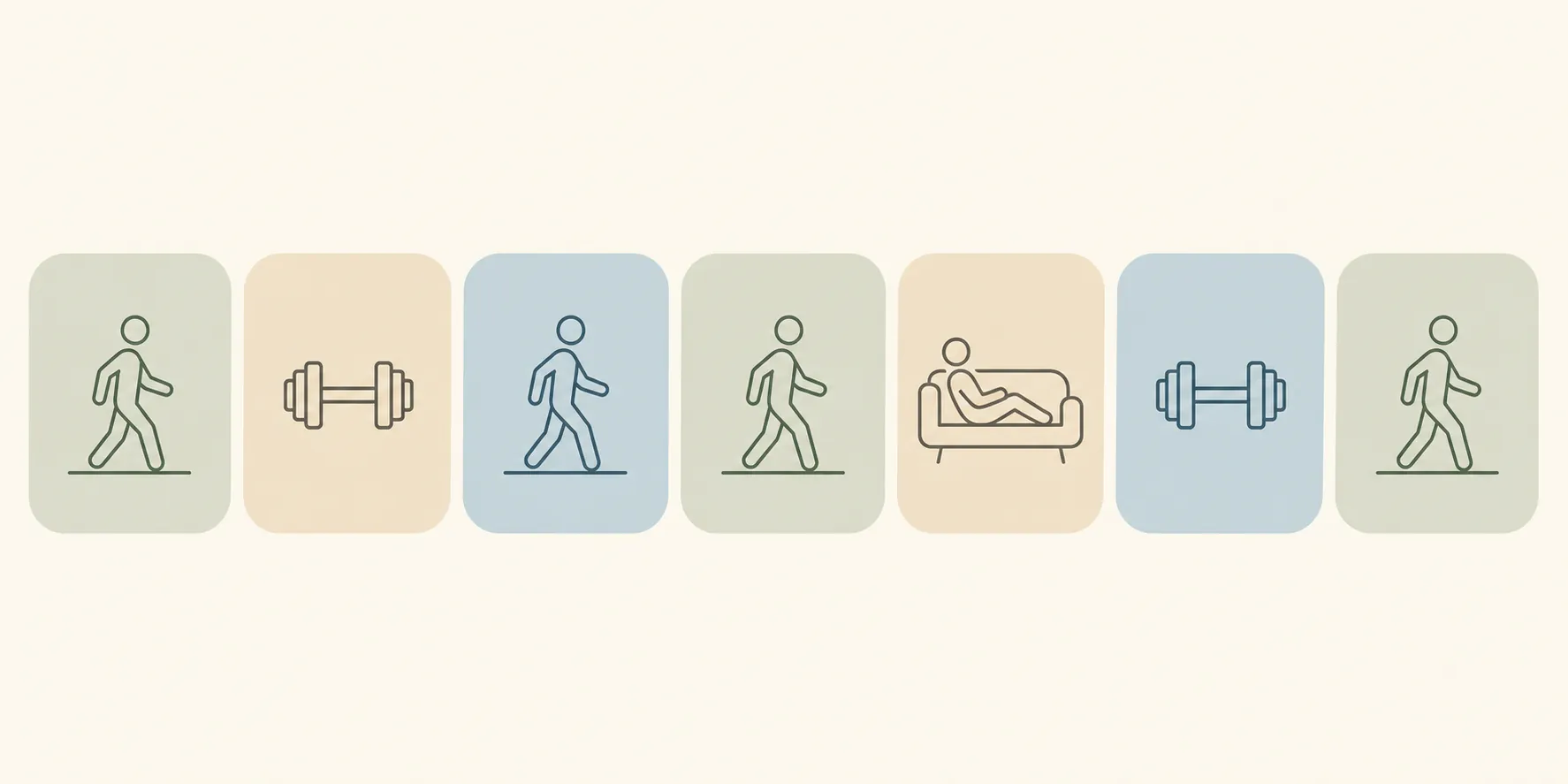
A small-space week that actually fits beside a couch
The weekly layout below aims for the public-health target without assuming a treadmill, a garage, or downstairs neighbors with saintly patience. If 150 minutes is too much right now, cut the aerobic sessions in half and keep the same weekly rhythm. The shape matters before the full dose does.
| Day | Full-dose version | If you are rebuilding |
|---|---|---|
| Monday | 30 minutes moderate aerobic + 5 minutes easy mobility | 10–15 minutes brisk walking or marching |
| Tuesday | Strength day A, 25–35 minutes | 1 round of 4–5 chair-supported strength moves |
| Wednesday | 30 minutes moderate aerobic | 10–15 minutes easy-to-moderate movement |
| Thursday | 30 minutes moderate aerobic + balance practice | 10 minutes walking + 2 minutes counter-supported balance |
| Friday | Strength day B, 25–35 minutes | 1 round, lighter than Tuesday if sore |
| Saturday | 30–45 minutes moderate aerobic | A comfortable walk from home |
| Sunday | 30 minutes easy-to-moderate aerobic or active recovery | Rest, gentle mobility, or a short walk |
That version lands near 150–165 aerobic minutes when Sunday includes a moderate session, plus two strength days. If Sunday is true rest, add 5–10 minutes to two weekday walks. No one gets extra brain-health credit for turning the plan into a bookkeeping punishment.
Aerobic options that do not shake the floor
- Brisk walking outdoors from your front door, if the route is safe.
- Indoor marching with soft foot placement, alternating 2 minutes steady and 1 minute easier.
- Low step-ups on a stable bottom stair or aerobic step, using a wall or rail if needed.
- Shadow boxing without jumping. Keep it low-impact; this no-equipment boxing workout is a useful variation when walking feels stale.
- Quiet dance cardio with no hops, no pivots on sticky flooring, and enough room to recover a stumble.
Strength day A: chair, wall, and floor-space basics
Do 1–3 rounds. Rest as needed. Stop a set while you still have clean form left.
- Sit-to-stand from a sturdy chair: 6–12 repetitions.
- Wall or counter push-up: 6–12 repetitions.
- Hip hinge with hands on thighs or holding light bottles: 8–12 repetitions.
- Standing calf raise near a counter: 8–15 repetitions.
- Suitcase carry with one bag or bottle: 20–40 slow steps per side.
Strength day B: pulling, hips, and balance support
- Band row, towel row around a sturdy post, or bottle row from a supported hinge: 8–12 repetitions.
- Supported split squat or reverse step-back: 5–10 repetitions per side.
- Glute bridge on a mat or firm carpet: 8–12 repetitions.
- Overhead press with light bottles or dumbbells, only if shoulders tolerate it: 6–10 repetitions.
- Tandem stance near a counter: 10–30 seconds per side.
If you want a fuller strength progression, use a dedicated beginner plan rather than inventing new moves every week. The 8-week home strength training plan or the 6-week home strength training plan can plug into Tuesday and Friday while the aerobic minutes stay the main weekly yardstick.
Three equipment tiers, one evidence target
Gear should earn its floor space. For dementia-risk reduction, the bands and dumbbells are not magic brain tools; they are simply ways to make the two strength days easier to progress. The aerobic target can be met with shoes and a safe walking route.
| Tier | What you need | Best use | What not to overbuy |
|---|---|---|---|
| $0 | Sturdy chair, wall, floor space, water bottles or a backpack | Starting the habit, sit-to-stands, counter push-ups, carries, indoor marching, walking | Any device that claims to be brain-specific |
| Minimal gear | Resistance band, loop band, mat if your floor is hard, possibly one light pair of dumbbells | Rows, presses, hinges, bridges, supported lower-body work | Bulky machines if you will not use them weekly |
| Roughly $100–300 | Adjustable dumbbells or a few light pairs, better bands, compact step, storage basket | Progressive strength work and quieter cardio variety | Anything too loud, unstable, hard to store, or annoying enough to avoid |
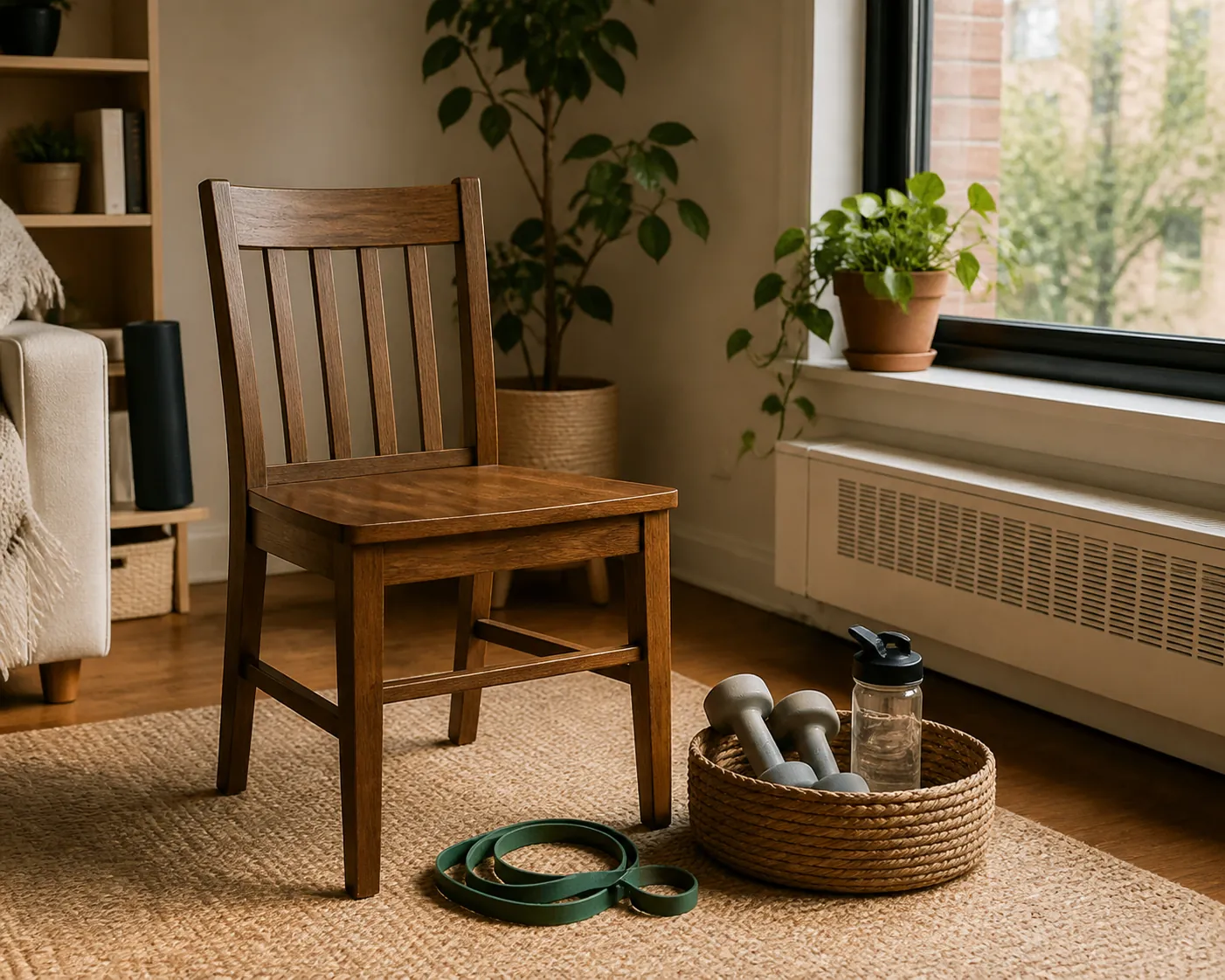
Apartment equipment has to be quiet, stowable, and safe under tired feet. Before buying anything larger than bands or light dumbbells, check whether it solves a real problem in your week: does it help you reach 150 minutes, make strength work easier to progress, or reduce weather excuses? The small-space home exercise equipment guide is the better place for compact, quiet choices.
If 150 minutes is not realistic yet
Plenty of people reading about dementia prevention are not starting from “exercise enthusiast.” They are starting from a sore knee, caregiving fatigue, a long break, or the humbling discovery that 12 brisk minutes feels like plenty. That is not failure. It is the starting dose.
| Current capacity | First 2 weeks | Next step |
|---|---|---|
| You are mostly sedentary | 5–10 minutes of easy walking or marching on 4–5 days | Add 2 minutes to one or two sessions each week |
| You can walk briskly for 10–15 minutes | Do that 4 days per week and add one short strength circuit | Build toward 20-minute aerobic sessions |
| You can do 20–25 minutes comfortably | Use 5 aerobic days and 2 short strength days | Lengthen 2 aerobic days until the week reaches about 150 minutes |
| You are helping someone with mild cognitive impairment | Keep sessions familiar, supervised as needed, and low intensity | Use consistent timing, simple movements, and provider guidance |
The Johns Hopkins accelerometer finding is useful here because it gives the discouraged person a first rung: very small amounts of moderate-to-vigorous movement were associated with lower dementia risk in that cohort.[4] The randomized home-based MCI trial gives another kind of encouragement: people with mild cognitive impairment were able to follow a simple home program at high adherence for 3 months.[5] Neither result says to stop at the lowest dose forever.
Progress without turning the plan into punishment
A good progression is almost dull. Add time before intensity. Add one variable at a time. Keep enough easy days that the plan survives ordinary life.
- If you are below 90 aerobic minutes per week, add 5–10 total minutes the next week.
- If you are between 90 and 150 minutes, add 5 minutes to two sessions rather than making one heroic long session.
- If soreness changes your walking or balance, hold the dose steady or reduce it for several days.
- If a strength move causes joint pain rather than muscle effort, swap the exercise or shorten the range.
- If you miss a week, restart at the last comfortable dose, not the dose you wish you still had.
Warmups do not need to be elaborate. Five minutes of easy marching, shoulder rolls, ankle circles, gentle sit-to-stands, and gradually faster walking is enough for most sessions. If you like a guided template, this 5-minute home warmup can be adapted before walking or strength work.
Recovery matters more as the years add up. Sleep, protein, hydration, and an easy day after harder strength work will do more for consistency than another gadget. For a simple after-session structure, use a post-workout recovery routine at home and keep it short enough that you will actually do it.
Safety checks for older adults and caregivers
Anyone with chest pain, fainting, unexplained shortness of breath, recent falls, major balance problems, rapidly changing cognition, or new neurologic symptoms should check with a clinician before starting or progressing exercise. The Alzheimer’s Association also advises talking with a doctor before beginning a new exercise program, especially for people with health concerns.[1]
- Clear throw rugs, cords, pet toys, and low tables from the workout path.
- Use a sturdy chair that does not slide; place it against a wall if needed.
- Keep balance drills near a counter, rail, or heavy piece of furniture.
- Wear shoes with traction if socks make the floor slippery.
- For someone with mild cognitive impairment, repeat the same short routine before adding variety.
- Stop for chest pressure, dizziness, unusual breathlessness, sudden weakness, or confusion that is not typical for the person.
Pain changes the plan. If you are returning after an injury or working around a known limitation, treat the routine as general conditioning, not rehab. A clinician or physical therapist can individualize the work; this home injury rehab exercise guide can help you think through safer substitutions.
What to track
Track the things that change the week, not the things that decorate an app. For this goal, the useful records are aerobic minutes, strength days, perceived effort, and whether the plan was easy enough to repeat.
| Metric | Why it matters | A simple note |
|---|---|---|
| Aerobic minutes | This is the main dose target | “Walked 22 minutes, moderate” |
| Strength days | Keeps the 2-day target visible | “Chair circuit, 2 rounds” |
| Intensity | Prevents both underdoing and overdoing | “Talk test: short sentences” or “Borg 11” |
| Symptoms | Guides safety and progression | “Knee sore next morning; repeat same dose” |
| Adherence | Shows whether the plan fits real life | “4 of 5 planned days done” |
There are plenty of brain-health variables outside this article: blood pressure, hearing, sleep, smoking, diabetes, depression, social connection, air pollution, and more. Exercise does not erase them. It is one modifiable piece with enough evidence to deserve a regular slot in the week.
So the best home workout plan for dementia-risk reduction is not exotic. It is the one that steadily builds toward moderate aerobic minutes, two strength days, safe progression, and long-term adherence while staying honest about the science: cohort percentages are associations, structured trials support intervention effects, and no living-room routine is a guaranteed shield against dementia.
References
- Get Moving, Alzheimer’s Association.
- New WHO guidelines: up to 45% of dementia risk could be prevented or delayed, World Health Organization, July 15, 2026.
- Leisure time physical activity and dementia risk: a dose-response meta-analysis, BMJ Open, 2017.
- Small Amounts of Moderate to Vigorous Physical Activity Are Associated with Big Reductions in Dementia Risk, Johns Hopkins Bloomberg School of Public Health, 2025.
- Effects of low-intensity home-based exercise on cognition in older persons with mild cognitive impairment, Frontiers in Medicine, 2024.
- A 2 year multidomain intervention of diet, exercise, cognitive training, and vascular risk monitoring versus control to prevent cognitive decline in at-risk elderly people (FINGER): a randomised controlled trial, The Lancet, 2015.
- U.S. POINTER | Study Results, Alzheimer’s Association, July 2025.
What a small equipment investment adds
We don't have a build tagged to this exact tier yet. Browse all builds.
How often should you repeat this?
See our recovery and rest reference for citation-anchored rest-interval guidance.
Spot something off?
Tell us if a movement, tier assumption, or duration didn't match your experience.