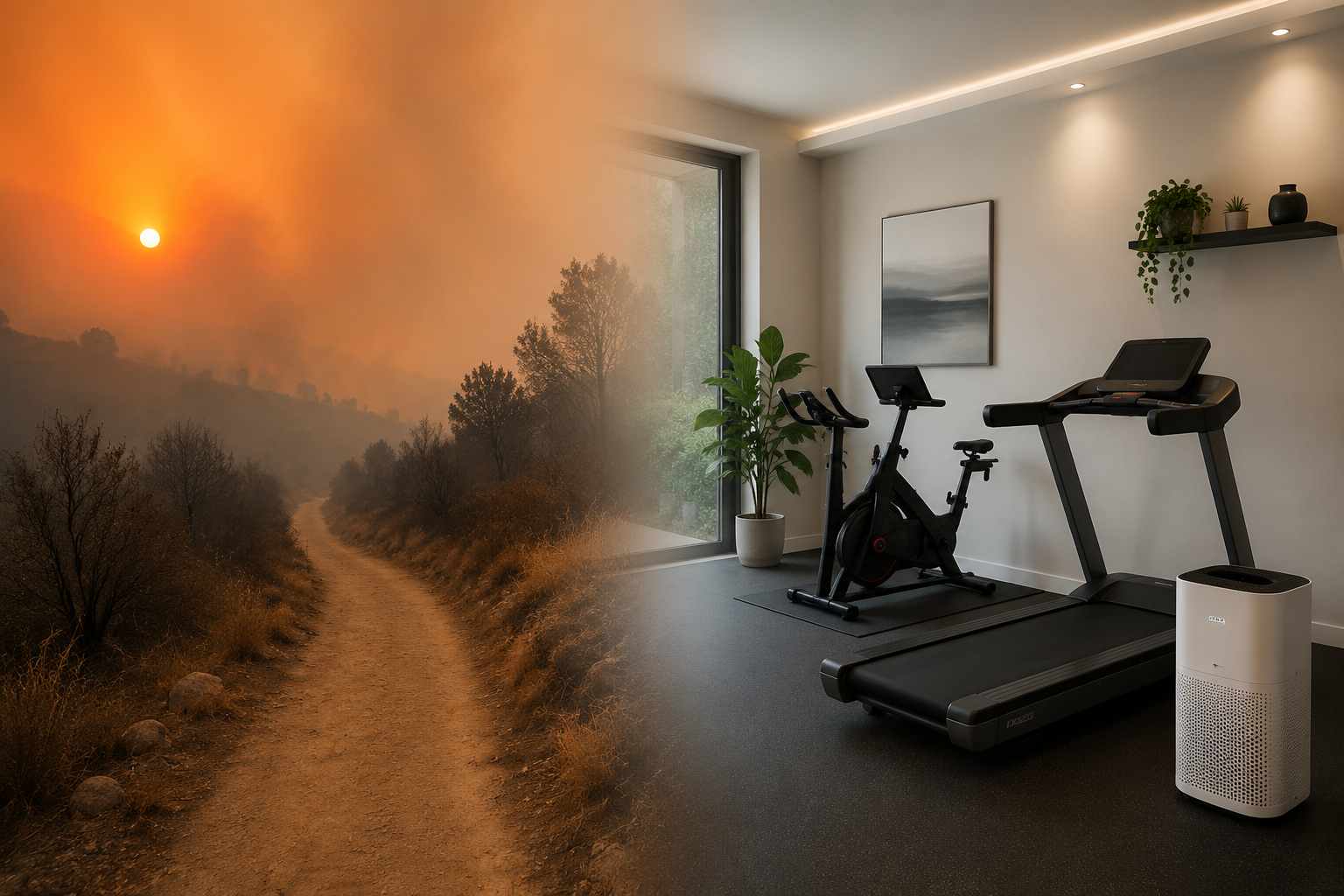
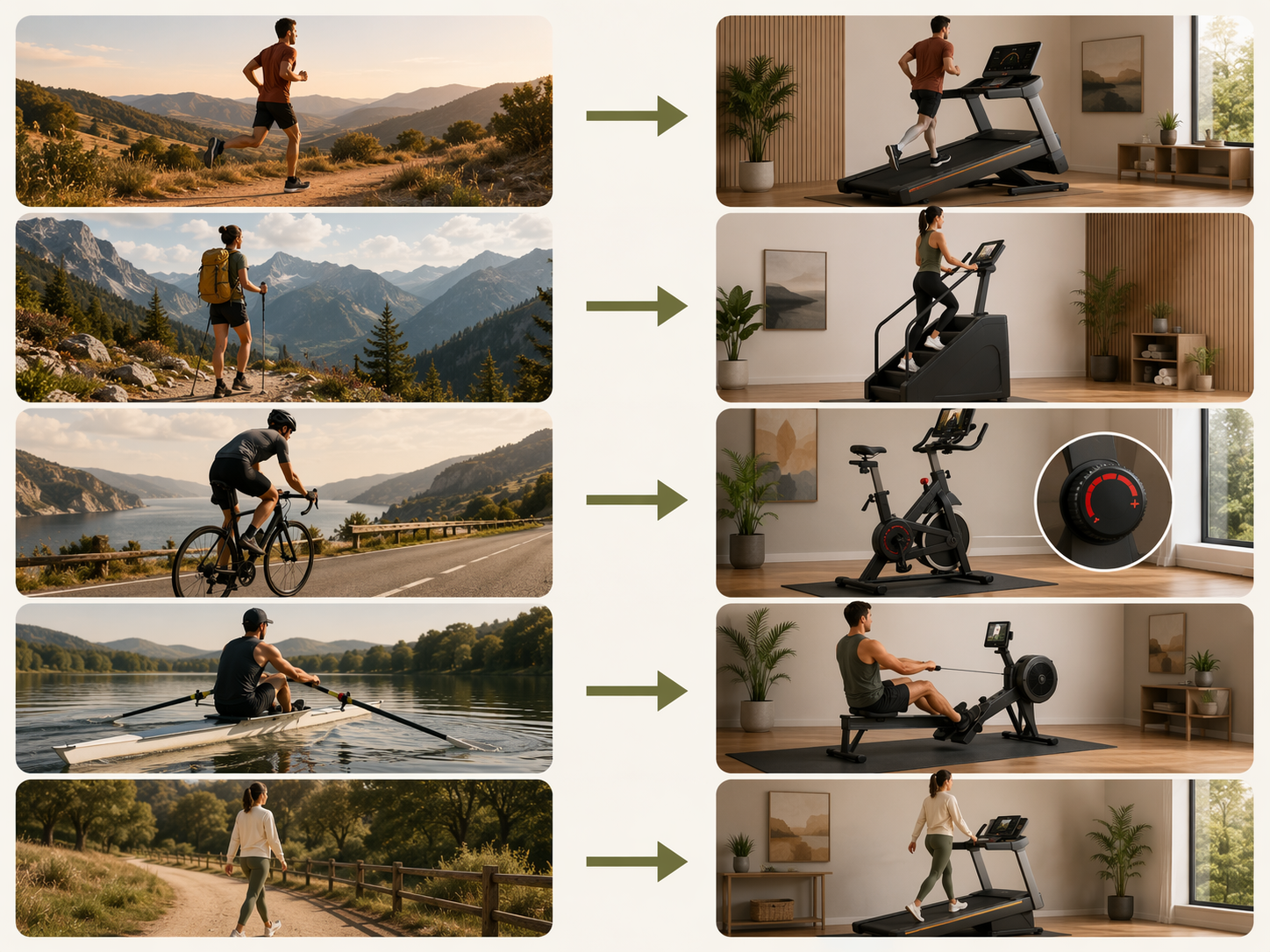
When smoke cancels the outdoor session, the useful question is not whether indoor exercise is inspiring enough. It is simpler: what was the workout supposed to train, and what indoor session preserves that effect with less exposure? The best indoor workout alternatives on smoky days are direct swaps: run to treadmill, climb ride to resistance intervals, row to erg, hike to incline work, walk to indoor steady movement.
Air quality still sets the ceiling. Sensitive groups should act earlier, and the American Lung Association advises checking the Air Quality Index before outdoor activity because people with asthma, COPD, cardiovascular disease, diabetes, older adults, children, and people who are pregnant face higher risk when air pollution rises.[1] For the general training decision, the EPA’s Air Quality Index treats 151-200 as “Unhealthy,” 201-300 as “Very Unhealthy,” and 301-500 as “Hazardous,” which is enough reason to move the workout inside by code red and reduce intensity when the AQI is above 200 even indoors.[2]
Pick the Closest Swap First
Start with the cancelled workout, not with a random indoor menu. A smoky long run should not turn into jump-squat intervals just because both are hard. A hill ride should not become a low-resistance spin unless the original purpose was recovery. Match the movement pattern, then match the effort zone, then adjust for the air in the room.
| Cancelled outdoor plan | Closest indoor alternative | How to set it | Smoke-day adjustment |
|---|---|---|---|
| Easy run or steady aerobic run | Treadmill run | Use 1-2% incline to better approximate the energy cost of level outdoor running.[3] | Keep it conversational if indoor air quality is uncertain; avoid turning it into intervals. |
| Tempo run, hill run, or rolling route | Treadmill incline session | Use speed for pace work and incline changes for terrain, with recovery sections flat or nearly flat. | At AQI above 200, shorten the hard segments or move the session to steady easy running.[2] |
| Hike | Incline treadmill, stair climber, step-ups, or loaded indoor walk | Use incline and duration before speed; add a light pack only if that was part of the outdoor plan. | Keep the effort mostly aerobic, especially if filtration is limited. |
| Road ride or climb session | Stationary bike or trainer ride | Use resistance to replace grade and wind load; keep cadence controlled instead of just spinning faster. | Reduce high-resistance blocks when AQI is very unhealthy or the room feels stale. |
| Row on water | Rowing machine | Match stroke rate and effort: steady aerobic rows stay smooth; power pieces use deliberate pressure, not frantic strokes. | Favor moderate work over maximal pieces when smoke is severe. |
| Walk | Indoor walk, treadmill walk, mall walk, hallway laps, or low-step circuit | Preserve time-on-feet; add incline only if the outdoor walk included hills. | This is often the safest continuity option when you want movement without heavy ventilation. |
| Any plan with no equipment available | Bodyweight aerobic circuit | Use low-impact or moderate-impact moves in timed rounds. | Treat it as a fitness-preserving fallback, not a perfect substitute for a run, ride, or row. |
Running: Use Incline Before You Use Heroics
For a cancelled run, the treadmill is the cleanest replacement because it keeps the same gait, cadence range, and aerobic demand. The calibration detail matters: a 1-2% incline is commonly used to better match the energy cost of running outdoors on level ground, where wind resistance and small surface changes do some work for you.[3] If the plan said 45 minutes easy, set the treadmill at an easy pace and 1% incline, then leave it alone. The smoke day has already added enough variables.
For a workout that was supposed to include terrain, change incline more than speed. A rolling outdoor route can become repeated blocks of modest incline with flat recoveries. A hill session can become controlled climbs at a pace you can sustain without grabbing the rails. The point is to recreate the muscular and aerobic load of climbing, not to win a treadmill leaderboard in a sealed room.
| Outdoor run | Indoor version |
|---|---|
| 30-60 minute easy run | Same duration on treadmill at easy effort, 1% incline. |
| Steady run with rolling terrain | Alternate several minutes at 1-3% incline with several minutes flat or at 1%. |
| Hill repeats | Use repeatable incline blocks; reduce speed enough that form stays smooth. |
| Fast intervals | Keep the planned work-to-rest structure only if indoor air is well filtered and AQI is not very unhealthy; otherwise convert to aerobic running. |
If the smoke is heavy enough that you are questioning the indoor air, do not cling to the sharpest version of the workout. Swap speed intervals for easy running, or cut the number of repeats. You keep more training value by finishing a controlled aerobic session than by forcing a hard workout in marginal air.
Cycling: Resistance Replaces the Road
A stationary bike can replace an outdoor ride well, but only if resistance does the work that hills, wind, and road load were going to do. A flat indoor spin at a vague “moderate” effort is fine for recovery. It is not a climb session.
For an endurance ride, use a resistance level that lets you hold steady pressure without surging. For a climb workout, raise resistance and let cadence fall into a controlled climbing rhythm. For short power efforts, increase resistance enough that each interval has a clear load, then recover easily between efforts. If you normally ride with power or heart rate, use those zones. If not, use breathing and leg pressure: endurance should feel sustainable; climbs should feel firm but repeatable; all-out work belongs only on cleaner indoor-air days.
| Outdoor ride | Indoor version |
|---|---|
| Easy endurance ride | Steady bike ride at light-to-moderate resistance for the same planned duration or slightly shorter if indoor heat builds. |
| Rolling route | Alternate moderate resistance with easier spinning to mimic rises and descents. |
| Climb session | Use longer high-resistance blocks with controlled cadence and easy recoveries. |
| Sprint or VO2-style workout | Keep only if indoor air is well filtered; otherwise convert to endurance or tempo. |
The common mistake is chasing sweat instead of load. Indoor riding gets hot quickly, especially with windows closed. A fan can help with cooling, but it does not clean the air. If the room is not filtered, keep the session aerobic and save the high-resistance work for better conditions.
Hiking and Walking: Preserve Time on Feet
Hiking is not just slow running. The training effect often comes from time on feet, incline, eccentric loading on descents, and sometimes pack weight. Indoors, the closest swap is an incline treadmill walk, stair climber, step-up session, or loaded walk through a hallway or room loop. The less equipment you have, the more you should protect duration and steady effort.
For a planned hilly hike, use incline rather than speed. A treadmill set to a meaningful grade at a controlled walking pace is closer to hiking than jogging flat because you feel the work in the calves, glutes, and hips. If you were going to carry a pack, a light pack indoors can make sense, but skip it if it changes your posture or makes the session feel like a choreographed punishment workout.
For a cancelled walk, do not overcomplicate the replacement. Walk indoors for the planned time, use a treadmill if available, or break it into shorter blocks through the day. If smoke has pushed the AQI into very unhealthy territory, walking may be the better choice than trying to preserve a harder session.
Rowing: Match Stroke Rhythm, Not Just Effort
If rowing on water is cancelled, a rowing machine is the obvious substitute because it keeps the leg drive, hip swing, and pull pattern in the workout. The trap is turning every indoor row into a frantic conditioning test. A steady water session should become a steady erg session. Technical rows can stay lower-rate and smooth. Power pieces can use harder pressure, but the stroke should still have a drive and recovery rather than constant yanking.
Use stroke rate as the anchor. If the planned row was aerobic, keep the rate and breathing under control. If it included intervals, preserve the work and recovery pattern only when the indoor air is good enough for hard breathing. On heavy smoke days, the rower is still useful, but the session may need to become shorter, easier, or more technical.
If You Have No Equipment
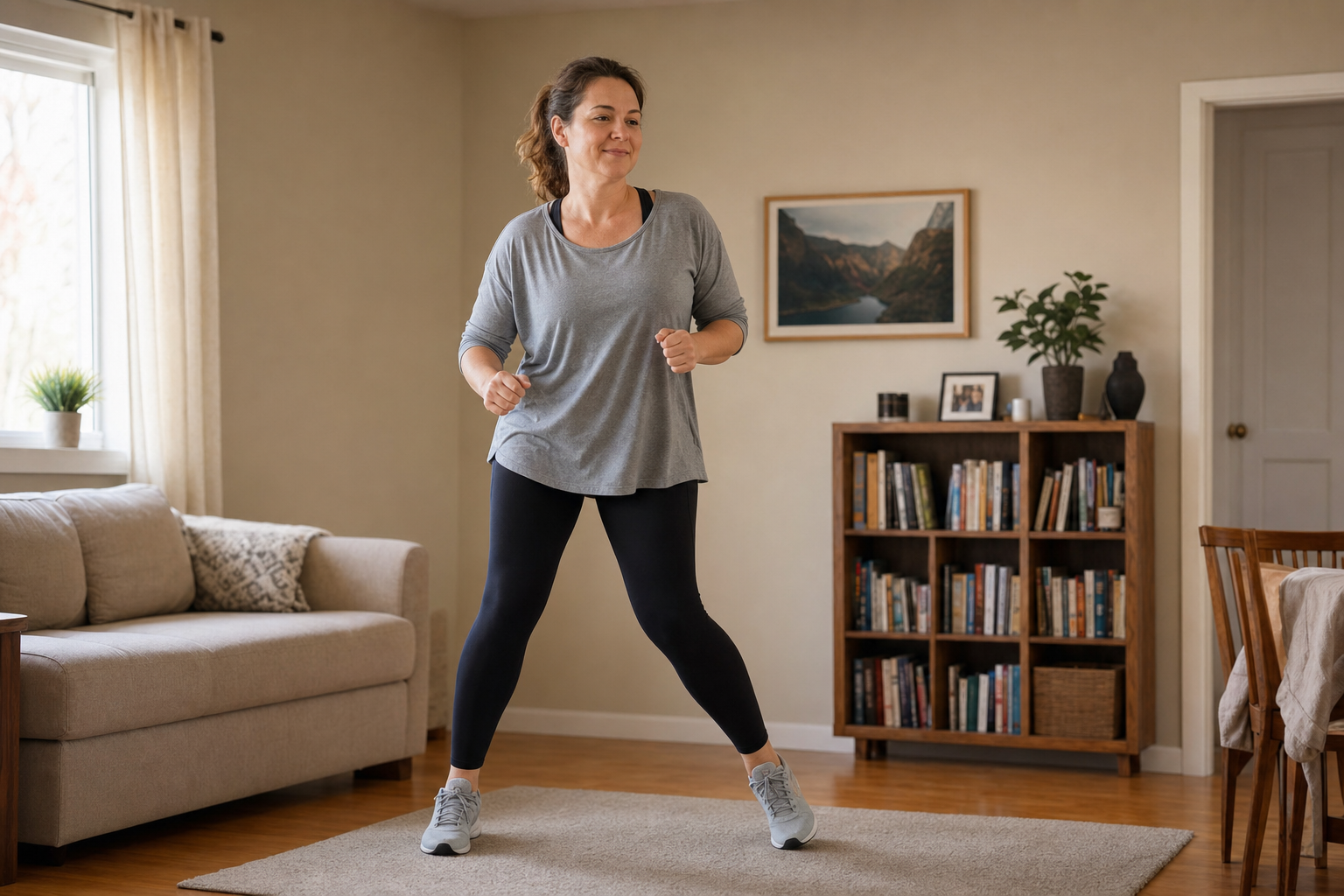
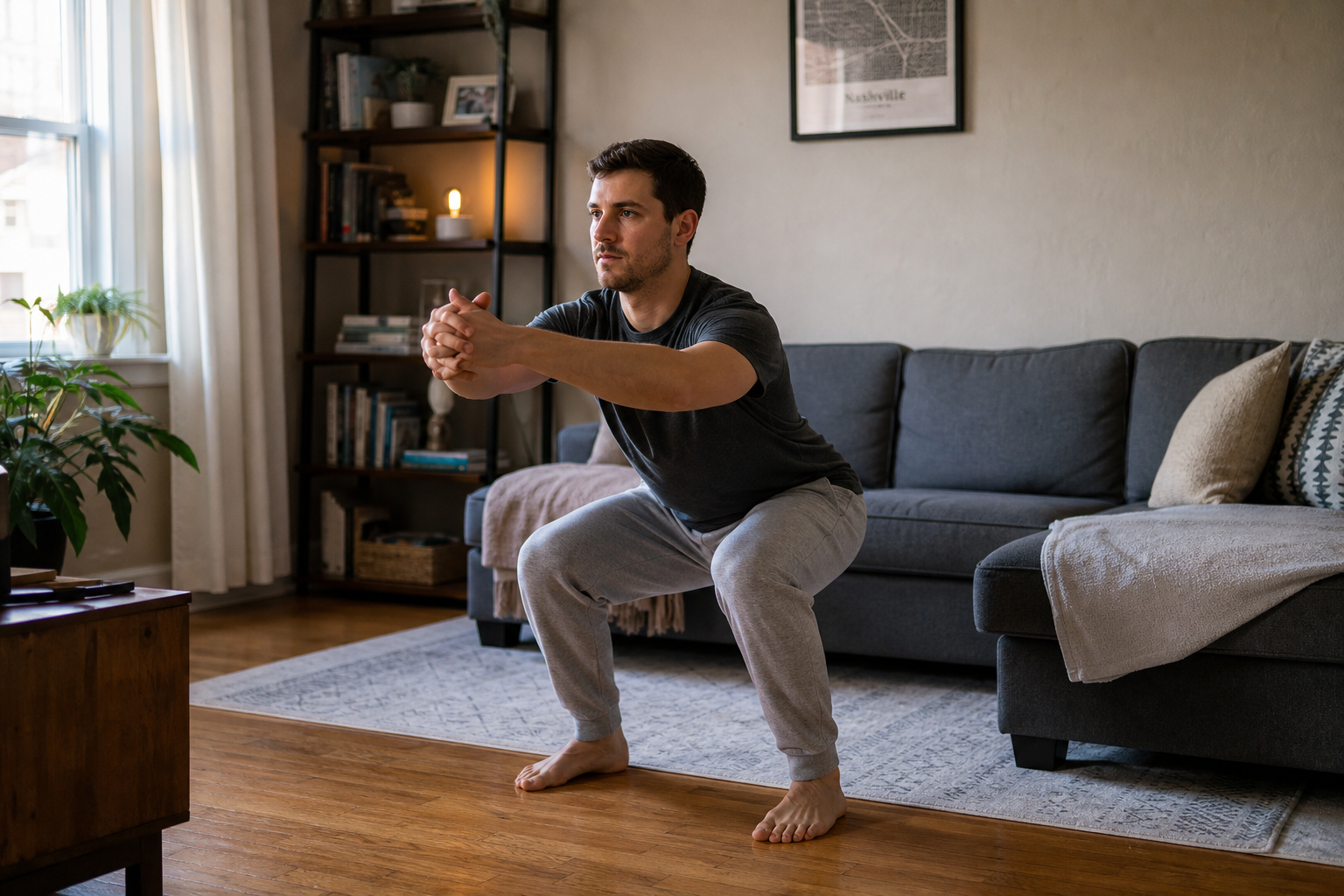
A bodyweight circuit is the fallback, not because it perfectly replicates a run or ride, but because it can preserve aerobic continuity when the outdoor option is gone. Keep the movements simple enough that breathing, not skill failure, determines the session.
- Low-impact version: marching in place, step-back lunges, incline push-ups on a counter, bodyweight squats, dead bugs, and plank variations.
- Moderate version: high knees, mountain climbers, squat jumps, burpees, skaters, and plank shoulder taps.
- Smoke-day control: use timed rounds, stop short of gasping, and choose low-impact moves when indoor air quality is uncertain.
A simple format works: choose four to six movements, work for a short interval, rest long enough that form stays intact, and repeat until you have a moderate aerobic session. If the cancelled workout was an easy run, use the low-impact version. If it was a harder conditioning day and indoor air is filtered, the moderate version can fit. If the smoke is severe, the circuit should come down a notch.
Set the Air-Quality Ceiling Before the Warmup
Smoke days are not ordinary bad-weather days because exercise changes the dose. Breathing rate can rise from about 15 breaths per minute at rest to 40-60 breaths per minute during exercise, which means a workout can pull far more polluted air through the lungs than sitting still in the same conditions.[4] That is why the indoor substitute and the air setup belong in the same decision.
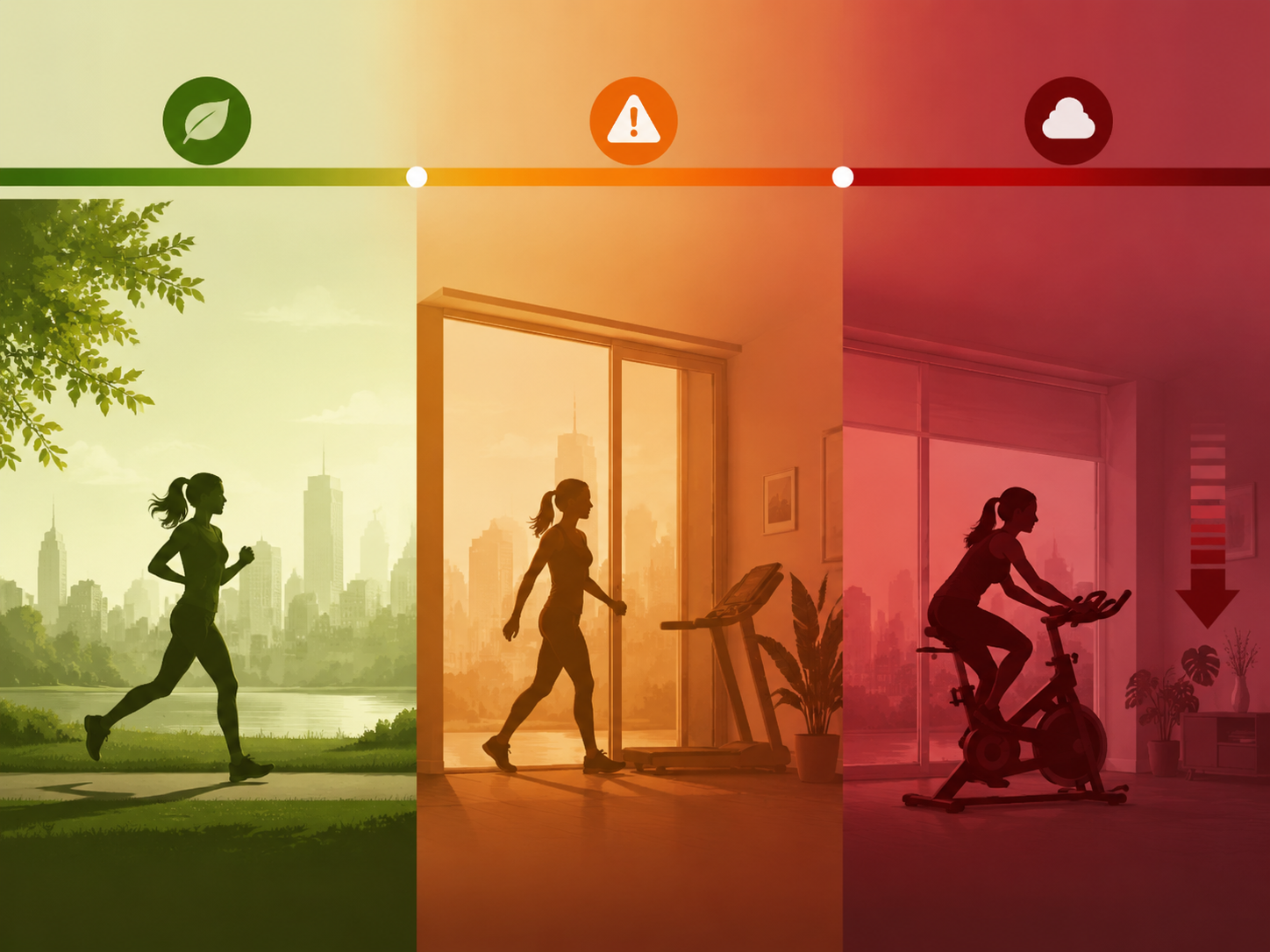
| Outdoor AQI | Training decision |
|---|---|
| Good to moderate | Train as planned if you feel well and local conditions are stable. |
| Unhealthy for sensitive groups | Sensitive groups should move indoors or reduce intensity earlier; others should watch symptoms and local guidance.[1] |
| 151-200 | Move exercise indoors; this is code red, or unhealthy air.[2] |
| Above 200 | Reduce intensity even indoors, especially for long or hard sessions.[2] |
| Indoor air uncertain | Choose easy aerobic work, walking, mobility, or a shortened session. |
The cutoff is tiered because the guidance is tiered. Some people need to act before the general population does. A runner with asthma does not need to wait for the AQI to hit 151 before changing the plan; the risk category has already changed. A healthy adult with a hard workout planned should still move indoors by code red and should stop treating indoor intensity as unlimited once conditions pass 200.
Indoor Does Not Automatically Mean Clean
The indoor setup matters. Colorado State University notes that exercising indoors with windows closed and a HEPA filter running can reduce PM2.5 exposure to less than half of outdoor levels during wildfire smoke.[5] That is a useful reduction, not a license to hammer intervals in any room with four walls.
The EPA says portable air cleaners and HVAC filters can reduce indoor particle concentrations, and a properly used portable air cleaner can reduce indoor particle concentrations by as much as 85%.[6] The words “properly used” matter. The purifier has to be sized for the room, and CADR is the practical rating to check because it tells you how much filtered air the unit can deliver. A tiny purifier in a large garage gym is more comfort object than control measure.
Air conditioning is not the same thing as fine-particle filtration. Some systems can help if they use appropriate filters and recirculate indoor air; many ordinary household setups are designed mainly for temperature, not wildfire PM2.5. Keep windows and doors closed, avoid bringing in smoky outdoor air, and run filtration before and during the session when possible.[6]
How to Decide in Two Minutes
- Check the AQI and your risk category before changing clothes.
- If the workout should move indoors, choose the closest movement match: treadmill for running, incline or step work for hiking, bike resistance for cycling, erg for rowing, indoor walking for walking.
- Keep the original training purpose: easy stays easy, climbs use incline or resistance, intervals stay intervals only when indoor air supports harder breathing.
- Close windows and doors, run HEPA filtration if available, and do not assume cooling equals filtration.
- When AQI is above 200 or indoor air quality is uncertain, reduce intensity before trying to preserve the original workout exactly.
The practical smoke-day rule is this: choose the closest movement match, calibrate the load instead of chasing sweat, and let air quality cap the session. Continuity is the goal, not unnecessary exposure.
References
- Four Things to Know About Air Quality and Exercise, American Lung Association
- Air Quality Index (AQI) Basics, AirNow / U.S. EPA
- Indoor Run Workout Tips, Runner's World
- The AQI Dilemma: Is It Safe to Exercise?, GU Energy Labs
- Is It Safe to Exercise Outside When There Is Wildfire Smoke in the Air?, Colorado State University
- Wildfires and Indoor Air Quality (IAQ), U.S. EPA
Comments
Join the discussion with an anonymous comment.