Pickleball got big before a lot of players got ready for it. In 2025, 24.3 million Americans played, with participation up 171.8% over three years; the more uncomfortable number is that falls accounted for 65.5% of pickleball-related ER visits in the injury data summarized by MyHealthyFeet. [1]
That matches what you see on public courts: people arrive in running shoes, warm up with three lazy dinks, then sprint sideways for a ball their feet are not prepared to stop. Pickleball feels social and forgiving until it asks for lateral braking, short recoveries, quick pivots, and one awkward reach too many.
A useful plan for pickleball training with Nike gear should start there, not with a shopping cart. The week needs separate jobs: strength work to build force and tissue tolerance, agility and conditioning to handle repeated short points, court practice to make the movement useful, and recovery so the next session does not start with a tight calf. Nike gear can fit that week well, but only when the shoe and apparel choices match the session.
The Week At A Glance
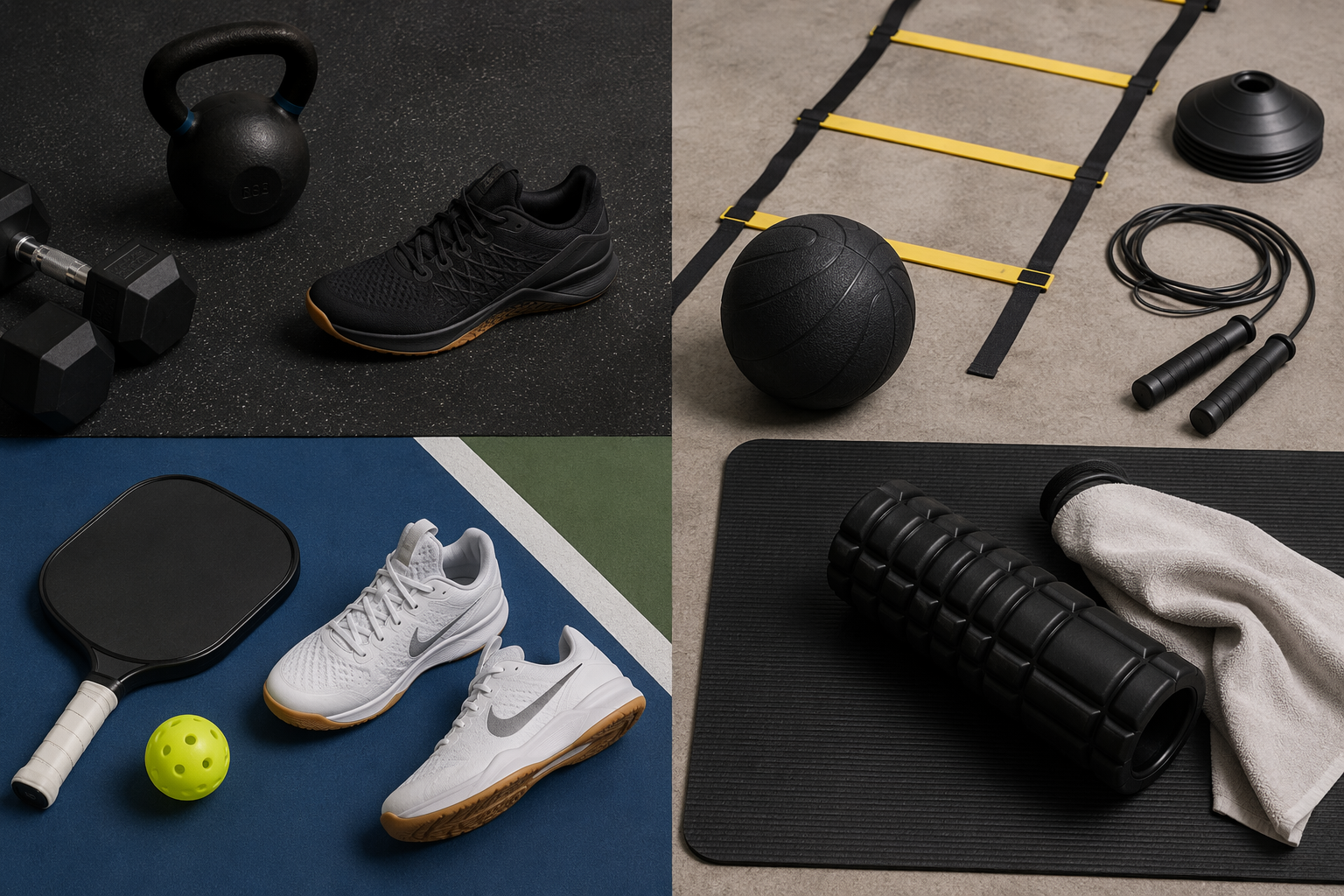
This schedule assumes a beginner-to-intermediate player who plays or trains most weeks, but does not want a second job. Shift days as needed; keep the relationship between sessions. Do not stack heavy lower-body strength, hard agility, and competitive doubles on consecutive days if your legs are already barking.
| Day | Session | Main Job | Nike Gear Pairing |
|---|---|---|---|
| Monday | Strength, 45 minutes | Leg and core strength for starts, stops, and power transfer | Nike Metcon-style trainer, Dri-FIT top, flexible shorts or tights |
| Tuesday | Agility and conditioning, 25–35 minutes | Side-to-side speed, deceleration, repeated efforts | Nike Vapor Pro 3, Zoom GP Challenge Pro, or Zoom Challenge PB; Dri-FIT kit |
| Wednesday | Court practice, 60–90 minutes | Dinks, drops, serves, returns, transition-zone movement | Same court shoe rotation; NikeCourt apparel with pockets |
| Thursday | Active recovery, 20–40 minutes | Walk, mobility, easy tissue work | Nike recovery slides or comfortable trainers, Therma-FIT layer if cool |
| Friday | Strength, 45 minutes | Second weekly strength exposure without trashing Saturday legs | Metcon-style trainer, Dri-FIT compression or breathable training apparel |
| Saturday | Play day or match simulation | Decision-making under fatigue | Fresh court shoes, extra socks, towel, bag, breathable court apparel |
| Sunday | Off or light recovery | Let the week become repeatable | Comfortable recovery apparel; no need for court shoes |
The two 45-minute strength sessions are the anchor. Peloton’s pickleball strength guidance and Paddletek’s strength recommendations both point toward twice-weekly strength training as a practical protocol for improving power transfer from the legs through the core into the paddle swing while supporting injury prevention. [2][3]
The court and conditioning days are there because pickleball is not steady jogging. One study summarized by Men’s Health found that doubles pickleball increased caloric expenditure 36% over walking, perceived exertion 44%, and enjoyment 150%. [4] That enjoyment matters because people come back. The training has to make those repeat sessions feel better, not turn rec play into punishment.
Monday: Strength Without Wearing Court Shoes Into The Ground
Strength day is where Nike Metcon-style shoes make sense. That is not the same as saying they are pickleball-specific shoes. Nike does not need to have a dedicated pickleball lifting shoe for the pairing to be logical: a flat, stable training shoe is better suited to squats, hinges, split squats, loaded carries, and controlled lateral lunges than a cushioned court shoe you are trying to preserve for outdoor traction.
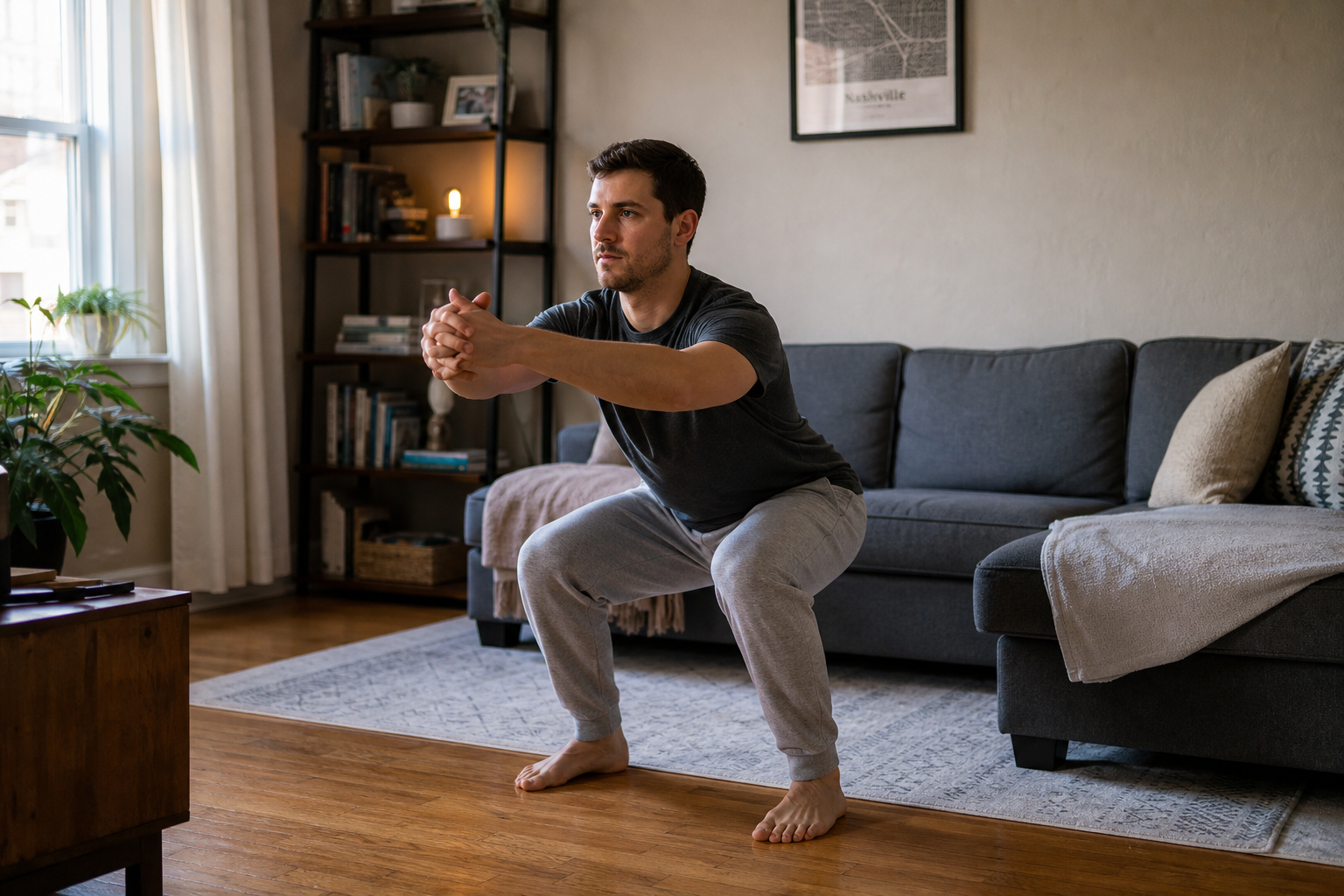
Keep this session simple enough that you can repeat it on Friday. A normal 45-minute version might include goblet squats or trap-bar deadlifts, reverse lunges, Romanian deadlifts, calf raises, Pallof presses, side planks, and a loaded carry. The point is not to chase a gym number; it is to make the legs and trunk less surprised when a rally pulls you wide and asks you to recover back to the kitchen.
- Shoes: Nike Metcon-style trainers for a stable base during lifting and controlled strength work.
- Top: Nike Dri-FIT training shirt or tank so the shirt does not stay soaked between sets.
- Bottoms: flexible Nike training shorts, tights, or compression layers that let you squat, lunge, and hinge without pulling at the hip.
- Accessory: a towel you actually use between sets, especially if you are going straight from the gym to the court later in the week.
If you use Nike Training Club or another app for off-court sessions, treat it as a guide, not a reason to make every workout maximal. For broader app options, the guide to free workout apps for home can help fill in strength and mobility days without turning the pickleball week into guesswork.
Tuesday: Agility And Conditioning Belong In Court Shoes
This is where running shoes lose the argument fast. A running shoe is built mostly for forward motion. Pickleball conditioning asks you to shuffle, brake, cross over, split step, open the hips, and push back in the opposite direction. That is court-shoe territory.
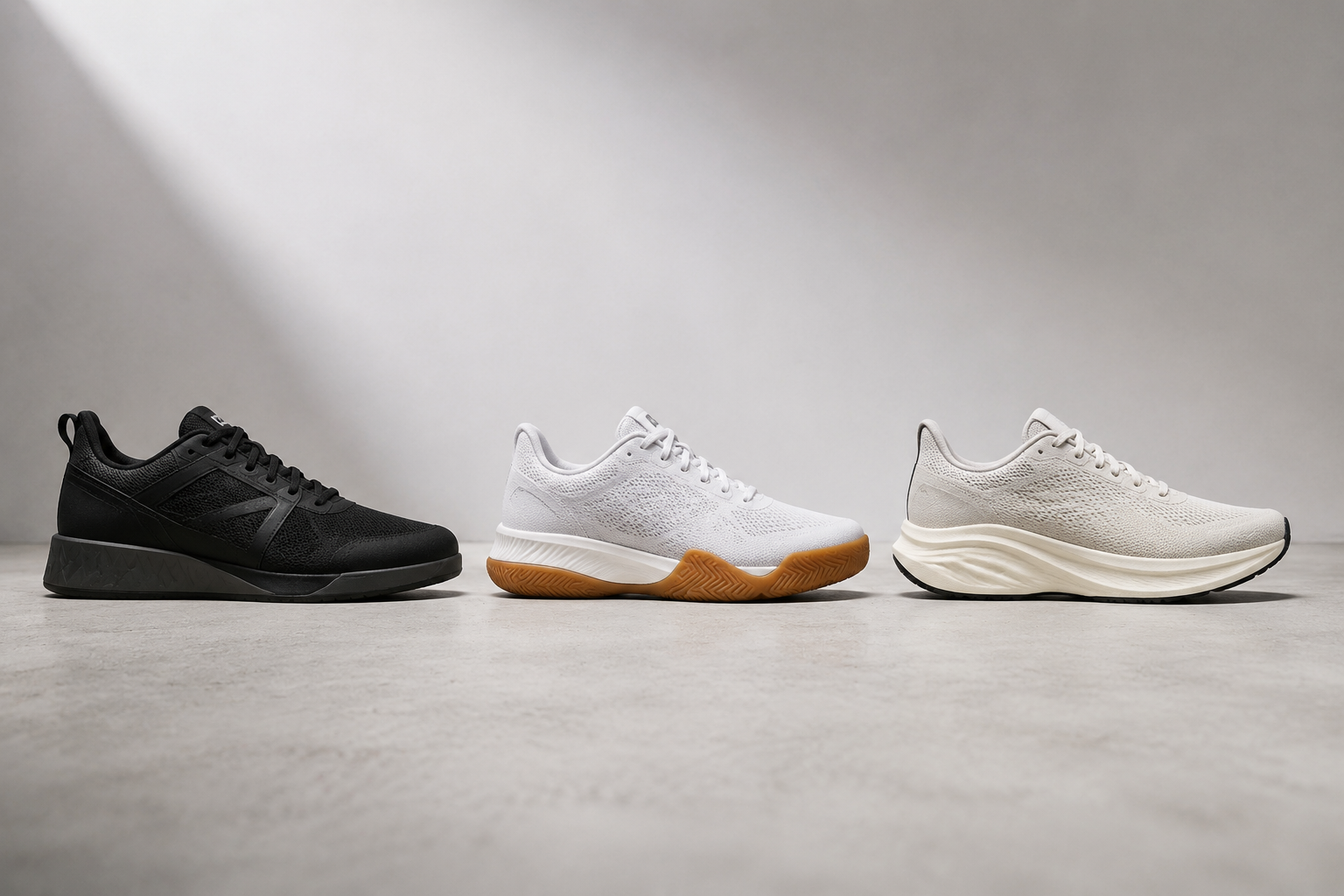
Nike’s official pickleball shoe guidance points players toward court models such as the Zoom GP Challenge Pro and Vapor Pro 3, with an emphasis on court traction and lateral support rather than straight-line cushioning. [5] The 2026 Zoom Challenge PB deserves attention because it carries explicit pickleball labeling and has been described in early pickleball-specific coverage as using full-length React foam with forefoot Zoom Air. [6] That does not make it the only credible Nike option, but it does mean Nike is no longer only asking pickleball players to decode the tennis wall.
A useful Tuesday session does not need to be long. Pickleball.com’s conditioning guidance emphasizes speed, endurance, and progression for court movement, while The Picklr’s conditioning library includes the kind of agility and footwork work that fits between strength days and court play. [7][8] Build the session around quality stops, not sloppy volume.
- Warm-up: 5–8 minutes of easy movement, ankle rocks, hip openers, and low-intensity shuffles.
- Footwork: short ladder or cone patterns, keeping the chest quiet and the feet under control.
- Deceleration: shuffle three to five steps, plant, hold balance, then push back the other way.
- Intervals: short court-length efforts with enough rest to keep the next rep crisp.
- Cool-down: calves, hips, and adductors, because those are often the first areas to complain after lateral work.
Dri-FIT matters more here than it does on a casual walk. Pickleball’s rally-rest rhythm can involve sub-20-second rallies followed by 20–30 seconds of rest, so clothing gets hit with repeated sweat and cooling cycles rather than one smooth endurance effort. [7] A breathable top and shorts that do not cling after the first hard interval are not luxury details.
Wednesday: Practice The Shots That Make The Footwork Matter
Court practice should not feel like Tuesday with a paddle. Use the better movement you trained, then slow the ball down enough to learn something. Start with serves and returns, move into third-shot drops or drives, spend real time at the kitchen, and finish with transition-zone points where one player starts back and has to work forward.
Wear the same class of shoe you use for hard court movement: Vapor Pro 3, Zoom GP Challenge Pro, Zoom Challenge PB, or another Nike court shoe with lateral support and multidirectional traction. This is not the day for Metcons just because they felt stable in the gym. A lifting shoe can feel planted under a squat and still be the wrong tool for repeated outdoor pivots.
Nike’s pickleball apparel guidance is mostly practical tennis-court logic, and that is fine as long as nobody pretends every item was invented from scratch for pickleball. NikeCourt Advantage shorts or similar court shorts earn their place because pockets hold balls securely, the waistband moves during lunges, and the fabric handles sweat. Dresses, skirts, polos, tanks, and shorts from the NikeCourt side of the catalog can work when they support reach, rotation, and storage. [9]
- Shoes: Nike court shoes, not running shoes and not weight-room trainers.
- Shorts or skirt: choose pockets if you drill serves, returns, or feed balls without a basket.
- Top: Dri-FIT shirt, tank, polo, or dress that lets the shoulders rotate freely.
- Bag: enough room for paddle, balls, towel, socks, water, and a light layer.
If you do not have court access that week, swap in a compact home session rather than skipping movement entirely. The pickleball home workout drills routine is a better substitute than pretending a random jog trains kitchen footwork.
Thursday: Recovery Is A Training Day If It Keeps Friday Possible
Recovery day does not need much product thinking. Walk, do easy mobility, roll the calves if that helps you relax, and get out of the court shoes. If the morning is cool, a Nike Therma-FIT layer makes more sense before and after movement than during a sweaty indoor session. The job is temperature control and comfort, not performance theater. [9]
This is also the day to look at your shoes. If the outsole is smoothing out where you push off, if one side is collapsing, or if you have started sliding on stops that used to feel secure, the shoe is no longer doing the same job. Nike’s own court-shoe guidance recommends replacing court shoes about every six months or when the tread wears down. [5]
Friday: The Second Strength Day Should Help Saturday, Not Steal It
Friday strength should be a little more conservative if Saturday is your main play day. Keep the Metcon-style shoe, keep the stable lifting surface, but bias the session toward controlled reps and clean positions. Single-leg work, hip hinges, calf and soleus work, rows, rotational core, and carries give you plenty without turning Saturday’s first game into a negotiation with your hamstrings.
Players who want a broader off-court base can add a general strength plan later, but the first win is consistency. If your legs are sore for every weekend match, the plan is not smart just because it looks athletic on paper.
Saturday: Play In The Shoe You Trust Most
Match day is not the time to test a shoe that still feels stiff, a sock that bunches under the forefoot, or shorts with useless pockets. Use the court shoe you know, preferably with enough tread left to stop without sliding. If you rotate two pairs, Saturday gets the fresher outsole and Tuesday gets the older pair until it is retired.
Pack like someone who has played past noon. Extra socks matter. A towel matters. A light top layer matters if you sit between games and cool down. None of those items will make a weak backhand good, but they keep small irritations from turning into bad movement choices late in the session.
The Shoe Distinction Matters More Than The Logo
The cleanest way to buy Nike gear for pickleball is to stop asking one shoe to do three jobs. The weight room, the court, and recovery all load the foot differently.
| Shoe Type | Best Use | Why It Fits | Where It Falls Short |
|---|---|---|---|
| Nike Metcon-style trainer | Strength days | Stable base for squats, hinges, lunges, carries, and gym work | Not built as a pickleball court shoe; save it from outdoor pivots |
| Nike Vapor Pro 3 | Court practice, agility, match play | Court-oriented support and traction for lateral movement | More shoe than needed for lifting or recovery walks |
| Nike Zoom GP Challenge Pro | Court practice, agility, match play | Court-shoe platform suited to multidirectional stops | Not a weight-room substitute |
| Nike Zoom Challenge PB | Pickleball court sessions | Explicit 2026 pickleball-labeled option with React foam and forefoot Zoom Air as reported in pickleball-specific coverage | Still should be judged by fit, surface, and break-in feel |
| Nike running shoe | Running or walking | Comfortable for forward-motion mileage | Wrong tool for repeated side-to-side pickleball braking |
This is where the marketing language deserves a raised eyebrow. Nike’s pickleball collection is useful, but much of the court apparel and footwear logic comes from tennis. [10] That is not automatically a problem. Tennis also demands lateral movement, braking, pivots, sweat management, and pockets. The problem starts only when tennis-derived gear is described as pickleball innovation without explaining which pickleball movement demand it solves.
For most players, the first upgrade should be a real court shoe. The injury data does not prove that a specific Nike model prevents falls, and it would be sloppy to say it does. What the data does show is that falls are a major part of the pickleball injury picture, and what the movement demands show is that lateral support and traction are not optional details. [1][5]
Mid-2026 Gear Checklist
Prices move, sizes disappear, and colorways are the least important part of this decision. As a mid-2026 planning range, Nike pickleball and court-related items commonly sit across a broad catalog from lower-cost apparel and accessories into court shoes around the higher end of the $55–$180 range. [10] Check current product pages before buying, especially if you are choosing between a sale tennis model and the newer Zoom Challenge PB.
| Training Day | Buy Or Rotate First | Approx. Mid-2026 Price Awareness | Replacement Or Rotation Note |
|---|---|---|---|
| Strength | Metcon-style Nike training shoe, Dri-FIT training apparel | Usually less urgent than the court-shoe purchase if you already own stable trainers | Keep gym shoes indoors when possible; do not grind down court-shoe tread in the weight room |
| Agility and conditioning | Vapor Pro 3, Zoom GP Challenge Pro, or Zoom Challenge PB | Court shoes often sit near the higher end of the Nike court range | Use the pair with dependable lateral traction; retire when tread smooths or support breaks down |
| Court practice | Court shoes plus NikeCourt shorts, skirt, dress, or top with useful pockets | Apparel varies widely; pocket function matters more than matching a full outfit | Rotate socks and tops more often than shoes; wet gear breaks comfort fast |
| Recovery | Comfortable slides, easy trainers, Therma-FIT or soft recovery layers | Usually optional unless you need cold-weather layering | Do not use recovery walks to add miles to your best court shoes |
| Match day | Freshest court shoe, extra socks, towel, bag | Spend first on traction and fit, then on accessories | If rotating two court pairs, save the better outsole for competitive play |
One shoe and one outfit for everything is simpler. It is also how a good court shoe gets worn down under a squat rack, how a running shoe gets asked to brake sideways, and how a sweaty cotton layer turns a cool-down into a stiff ride home. Build the week first, then let the Nike gear serve the session.
References
- Pickleball Injury Statistics (2026): What the Studies Show — MyHealthyFeet
- 10 Strength Exercises That'll Power Up Your Pickleball Game — Peloton
- Strength Training for Pickleball: 5 Essential Exercises — Paddletek
- The Ultimate Pickleball Workout Plan — Men's Health
- The Best Pickleball Shoes by Nike — Nike.com
- Best Nike Shoes for Pickleball in 2026: The No-BS Buyer's Guide — Let's Pickleball
- Pickleball Conditioning: Proven Exercises to Increase Speed and Boost Endurance — Pickleball.com
- Pickleball Workouts: Conditioning Exercises to Improve Your Game — The Picklr
- What to Wear Playing Pickleball — Nike.com
- Pickleball Collection — Nike.com
Comments
Join the discussion with an anonymous comment.