
Why Your Next Workout Plan Won’t Be a PDF
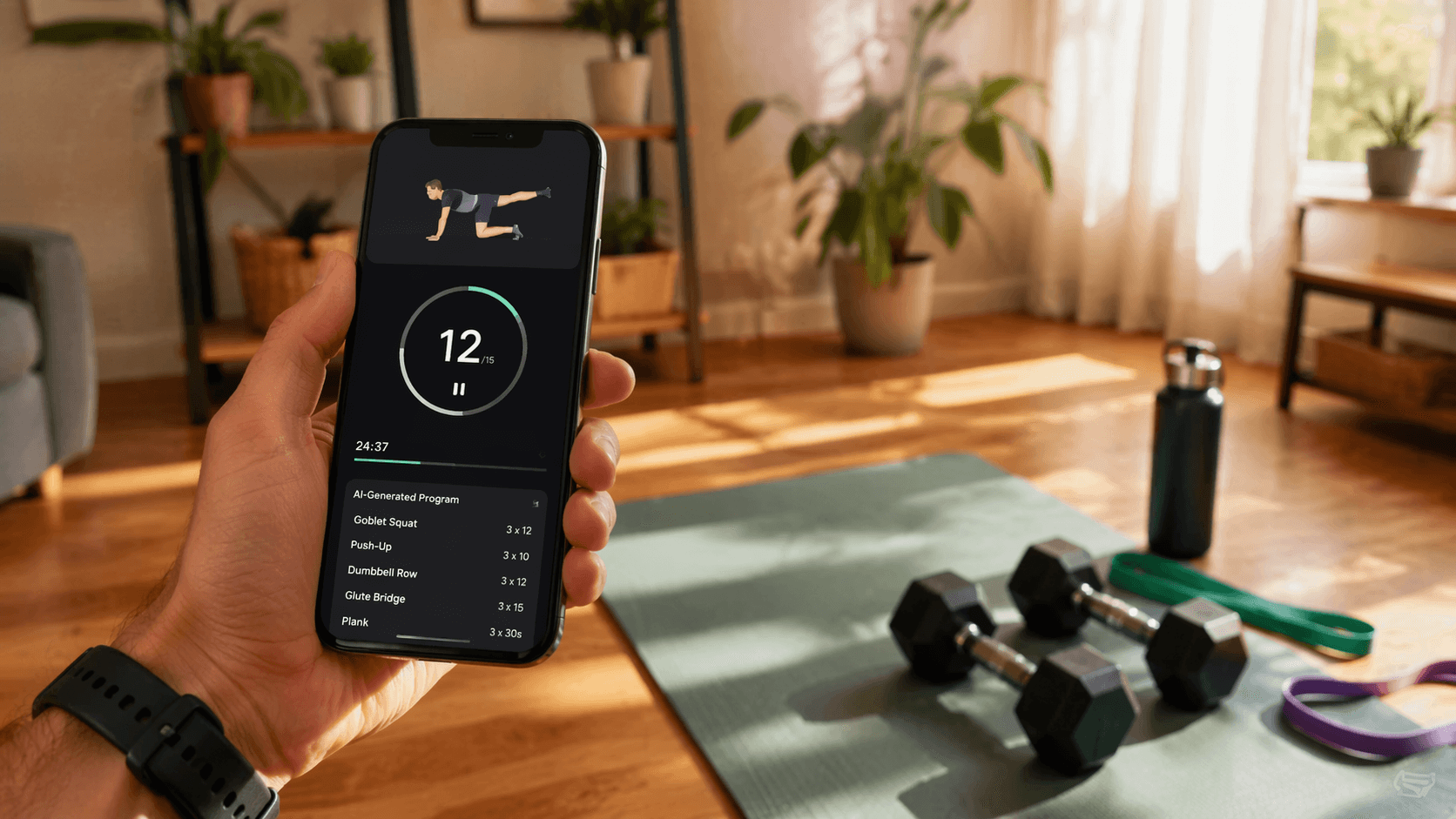
I have tested workout apps for years. For most of that time the category has been a library of pre-recorded videos and static PDFs—pick a program, follow the order, tap “next” when your timer dings. That model still works for beginners, but it does not learn. It does not notice that you struggled on the last set of squats, that your lower back is fried from yesterday’s deadlifts, or that you only have a pair of adjustable dumbbells and a pull-up bar.
That is changing. The global fitness apps market is projected at $7.7 billion in 2026, according to Future Market Insights, a firm that sells reports. They name AI-powered adaptive training as the primary growth catalyst. But the marketing copy rarely tells you where the algorithm stops working. The apps adjust weight, volume, and exercise selection based on your last workout, your reported recovery, and the equipment you have. The quality of that adaptation varies sharply—and the hype tends to outrun the reality.
How Adaptive Really Works
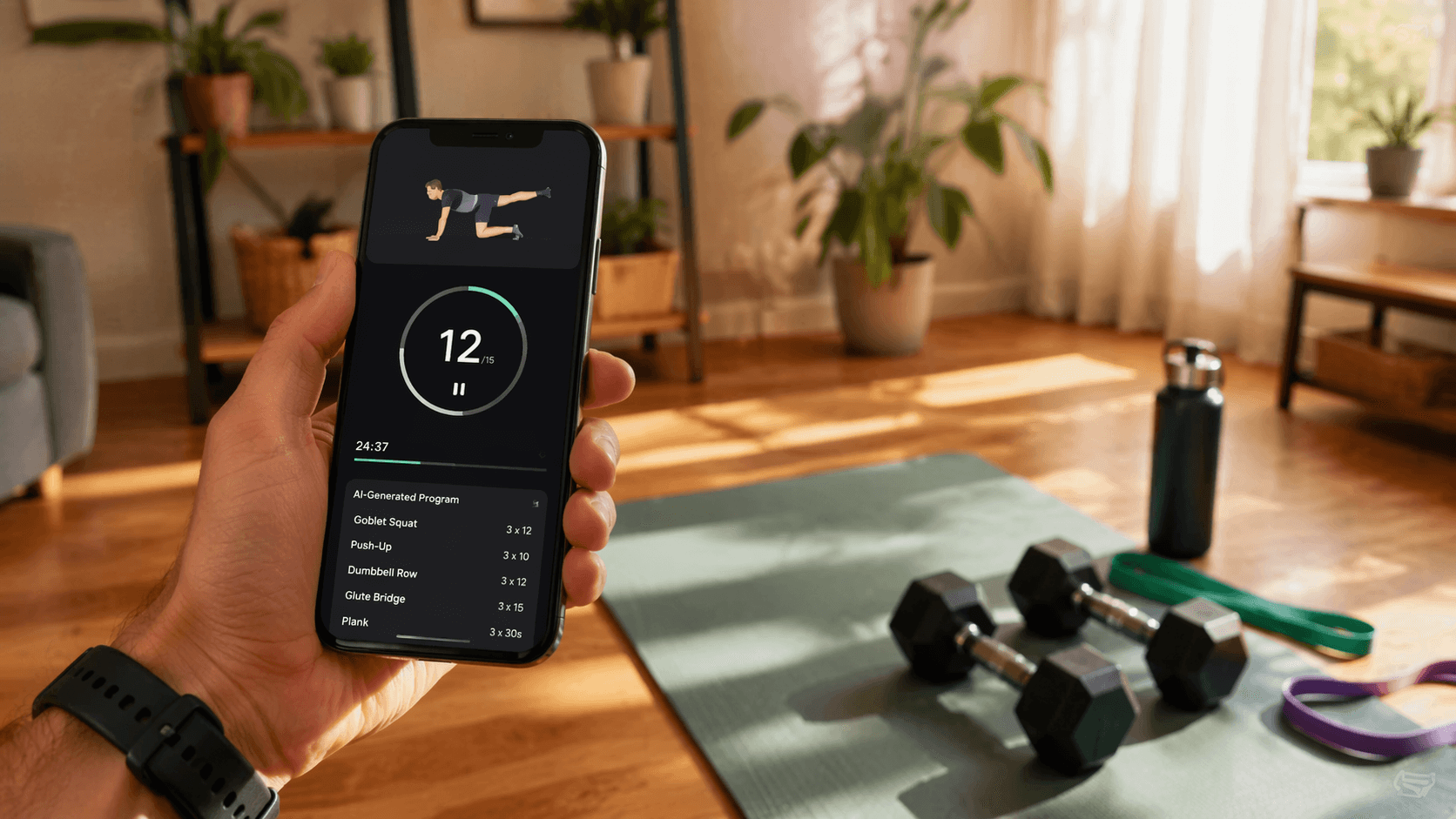
When an app says it adapts, it almost always means it adjusts one or more of these variables between sessions: load, repetitions, volume, exercise selection, or rest intervals. The mechanism is usually a progressive overload algorithm. A 2022 study by Plotkin et al. with 43 resistance-trained participants showed that both load progression and repetition progression are viable strategies for muscular adaptations. That gives app developers two levers to pull—and most AI apps pull one or both.
Some apps also incorporate recovery scoring. They ask how you felt after the last workout, or (more rarely) they pull heart rate variability from a wearable. The data feeds back into the next session: lower the intensity, swap an exercise, add a deload week. The idea is sound. The execution varies dramatically. For a deeper breakdown of how different apps implement progressive overload—including the ones that do it well and the ones that just repackage a set-rep scheme—see our guide to Best Strength Training Apps for Progressive Overload.
Four Apps, Four Blind Spots
I looked at four apps that market themselves as AI-driven: Fitbod, TR[Ai]NER by Element 26, Shred, and JuggernautAI. Each optimizes for a different goal, and each has a blind spot that the marketing copy does not mention.
| App | Best for | AI mechanism | GGR tester score highlights | Price |
|---|---|---|---|---|
| Fitbod | General strength, variety seekers | Algorithm selects exercises based on available equipment, previous volume, and muscle balance; adjusts load via rep-in-reserve logging | 5/5 variety, 3/5 instruction (Olympic lifting programming off by a weightlifter’s standard) | ~$12.99/mo (typical) |
| TR[Ai]NER | Budget-minded, trial-first users | Adapts after each set via user-reported feedback (“How was that?”); allows manual overrides | Freemium: up to 6 months free across 3 programs; adaptive only after paying | $10–14.99/mo |
| Shred | Hypertrophy circuits, form tracking | Camera tracks rep cadence and range of motion; AI adjusts next set based on user-reported effort | Affordable, but adaptation relies entirely on user input, not sensor data | $9.99/mo |
| JuggernautAI | Powerlifters, strength-focused lifters | Periodized progressive overload for squat, bench, deadlift; adjusts based on RPE and performance over weeks | 5/5 progressive overload, 3/5 workout variety (limited to powerlifting movements) | ~$24.99/mo |
Take Fitbod. It scored 5/5 for workout variety from Garage Gym Reviews’ expert testers, and I agree—it can generate an almost endless stream of exercises. But the same tester, an Olympic-level lifter, gave it only 3/5 for instruction because the app programmed snatches off a 15-inch deficit and used rep schemes that do not align with weightlifting. The algorithm understands variety but not specificity. That matters if you are training for a sport, less so if you just want a well-rounded gym session.
TR[Ai]NER offers up to three free programs that can total six months of training—an unusually generous trial. But those free programs are pre-built; adaptive adjustments kick in only after you subscribe. The trial lets you test the content, not the AI. At $10/month with an annual plan, it is well below the average workout app price of $34/month. That is a good deal if the programming matches your goal.
Shred costs $9.99/month and uses the phone’s camera to track your reps and range of motion. After each set it asks “How was that?” and adjusts your next set accordingly. The adjustment is based on what you tell it, not on what the camera measured—that is a weaker form of adaptation than apps that use your full workout history or wearable data. For a simple hypertrophy circuit it works fine, but do not expect it to periodize your program over weeks.
JuggernautAI is the outlier: it scored 5/5 for progressive overload but only 3/5 for variety because it sticks strictly to powerlifting movements. If you are a powerlifter, that is a feature; if you are not, you will get bored fast.
The average workout app costs $34/month, per Garage Gym Reviews’ testing of 70+ apps. All four apps here cost less than that. But a lower price does not mean better value—the value comes from how well the adaptation matches your training goal.
Where the Algorithm Hits the Wall
The common thread across these apps: they get progressive overload right but miss context. Fitbod cannot handle Olympic lifting specificity. JuggernautAI gives you only powerlifting. Shred adapts to what you say, not what you do. TR[Ai]NER hides its adaptive programming behind a paywall. None of them understands sport-specific biomechanics, periodization that accounts for competition timing, or nuanced recovery beyond a simple “are you sore?” prompt.
That does not mean they are useless. For the intermediate home fitness lifter who wants a varied, progressively overloaded program without writing their own, these apps are a huge upgrade over a static PDF. But the best algorithm today is still a human who watches you lift and knows your sport.
What Still Missing: Wearable Biometrics
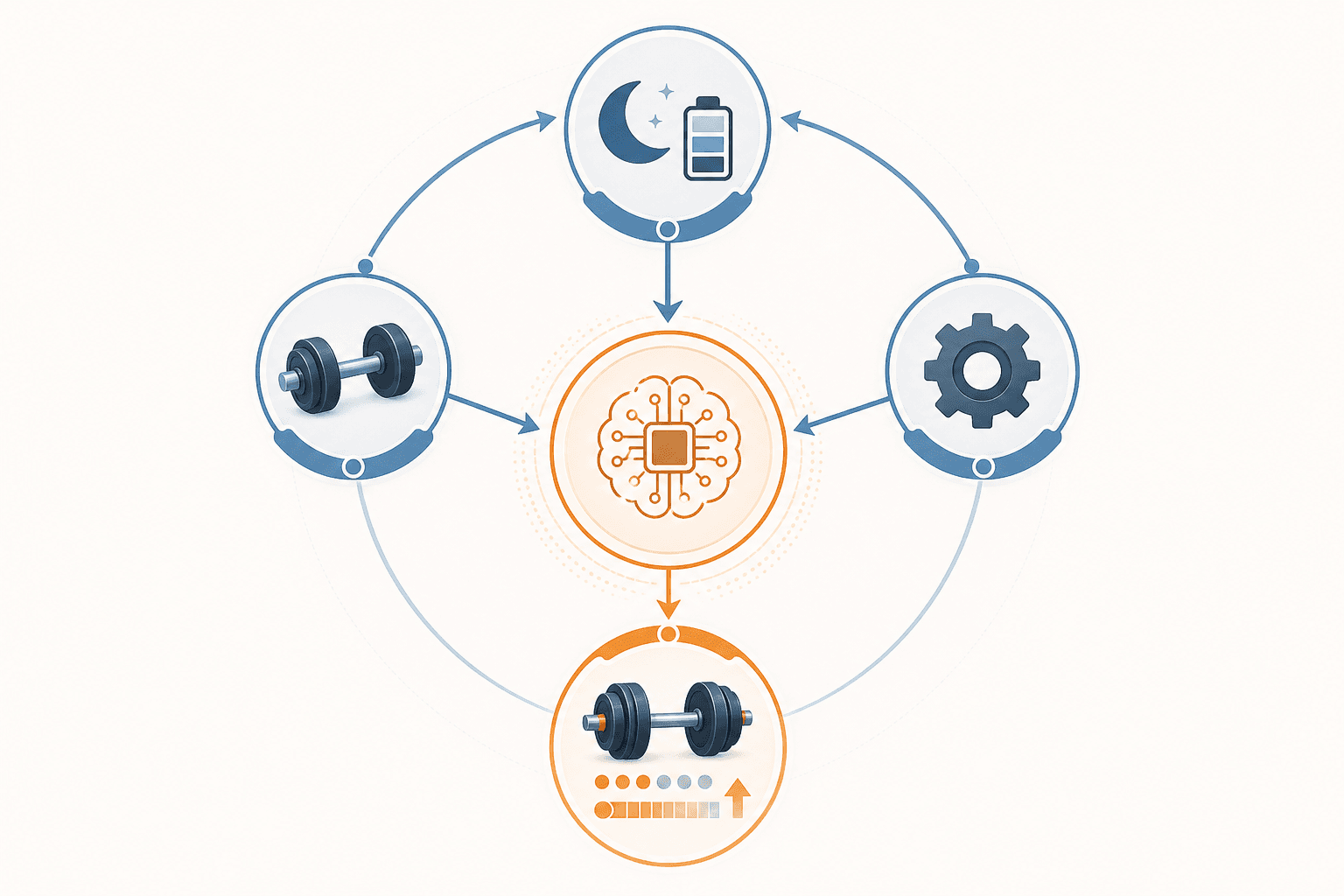
The FMI report identifies wearable biometrics as the primary growth catalyst for AI-powered training. The logic is obvious: if an app knows your heart rate variability, sleep quality, and resting heart rate, it can adjust your training more intelligently than a simple “how was that?” prompt. None of the four apps tested fully uses wearables yet—some sync basic step data, but none adapts training based on HRV or sleep. That is coming. TR[Ai]NER and Fitbod both have Apple Health integrations that could be deepened. But today, the adaptation still relies on what you tell the app, not what your body tells the app.
Which App Should You Download?
AI-powered adaptive coaching is real and beneficial for most intermediate home fitness users. But the choice is not “which app is best.” It is “which app fits the way you train.”
- You want variety and general strength, and you do not do Olympic lifts: Fitbod gives you more exercise options than you will ever use, with decent adaptive adjustments based on your logged effort.
- You are on a budget and want the longest trial to feel out an AI app: TR[Ai]NER offers the best try-before-you-buy deal, but keep in mind that the adaptive features only unlock after you subscribe.
- You only do hypertrophy circuits and want a cheap tracker with form feedback: Shred works—the camera feedback is a nice extra, but the adaptation is shallow.
- You are a powerlifter or serious about the big three: JuggernautAI has the best progressive overload logic in the category, but you will get nothing else.
And if your training is genuinely sport-specific—Olympic weightlifting, bodybuilding with high exercise specificity, or competition peaking—the current generation of AI apps is not ready. The adaptation is still too general. A good human coach still wins. But that gap is narrowing, and the apps that integrate real biometric feedback will be the ones that close it first.
Comments
Join the discussion with an anonymous comment.