
What the Numbers Mean — and Why People Quit
Most fitness apps lose users before the welcome email gets read. The data from Business of Apps puts a fine point on it: health and fitness apps had a 3% retention rate by day 30 in 2023. That means 97 out of 100 people stop using the app within a month. Annual subscriptions fare only slightly better — a 33% retention rate, meaning two out of three paying users walk away.
I spend a lot of time asking how these numbers are measured. The day-30 retention figure tracks whether a user opens the app at least once in the 30 days after install. It is not a measure of satisfaction or workout completion — it is a measure of whether the app survived the first month of real life. And it says that most apps do not.
The activation rate tells a similar story. 26% of users activate on day one. By day 28, that number drops to 10%. The funnel is brutal: most people download, open once, and never come back. If you have abandoned a fitness app before, you are not the exception — you are the majority.
The reasons are not mysterious. After talking to users and reading through reviews, a few patterns emerge:
- No structure — the app provides a library of exercises but no weekly plan. Users open it and feel overwhelmed.
- Poor instruction — exercise demos are unclear, no feedback on form. Users hurt themselves or get bored.
- No accountability — the app is a solo experience. Users have no reason to come back after a missed day.
- App fatigue — too many notifications, too many upsells, too much friction just to log a set.
These are not user failures. They are design failures. The apps ask you to be self-motivated, self-directed, and self-correcting — three things most beginners are not.
Three Features That Correlate with Staying
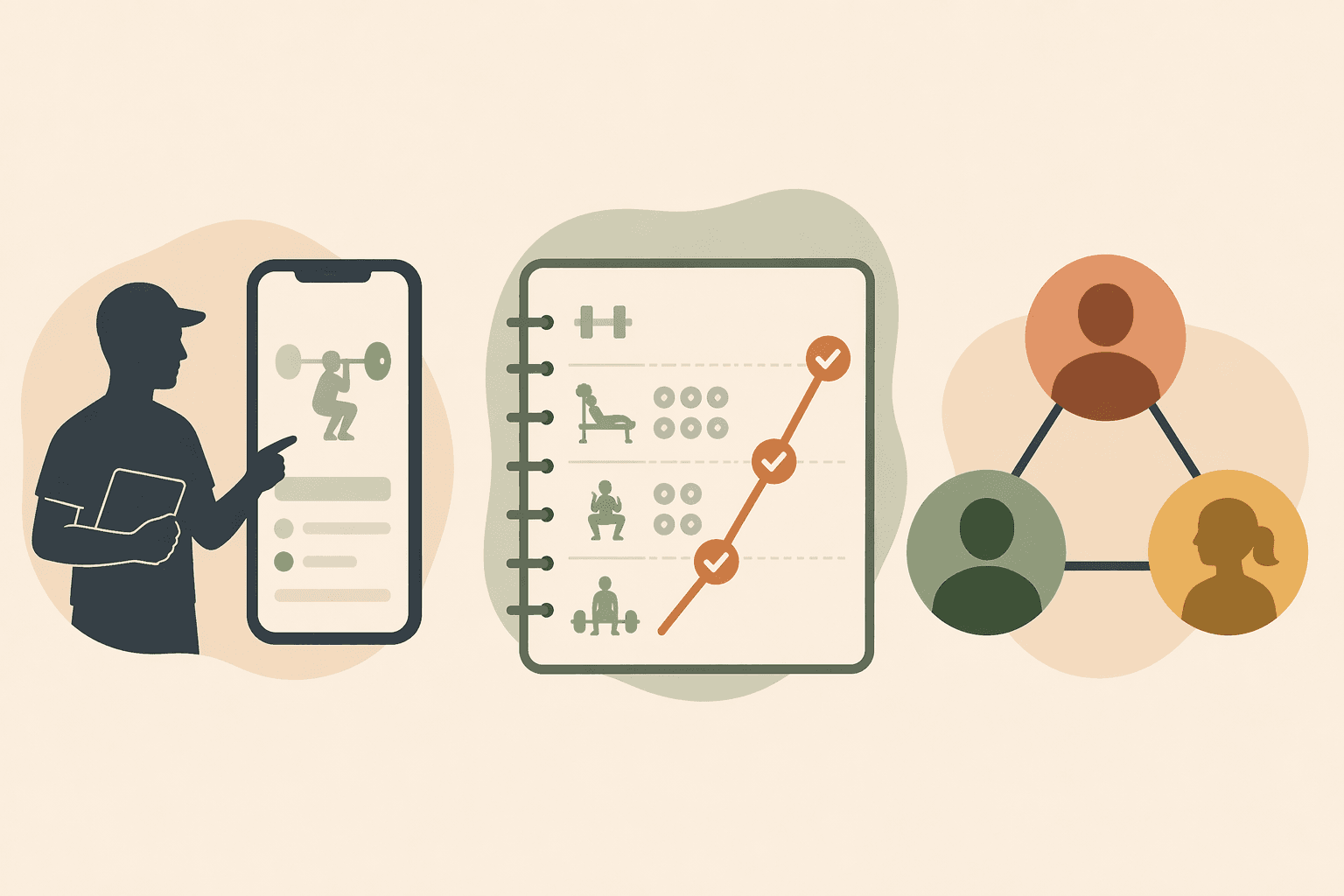
A handful of features consistently appear in the apps that people stick with. I call them the three pillars of retention: human coaching, progressive overload tracking, and community accountability. But before I treat them as a recipe, a caveat: the evidence is correlational, not causal. An app can have all three and still lose users if the onboarding is a mess. The scores below come from reviewer opinion, not a controlled retention study.
Human Coaching
Apps with real human coaches score highest on accountability metrics. Future earns a 5/5 for accountability in Garage Gym Reviews testing because of daily coach check-ins and personalized programming. Caliber Strength Training also gets 5/5, letting users send form videos for direct feedback. These apps replace the guesswork of what to do next with a human who adjusts the plan based on last week's performance.
Progressive Overload Tracking
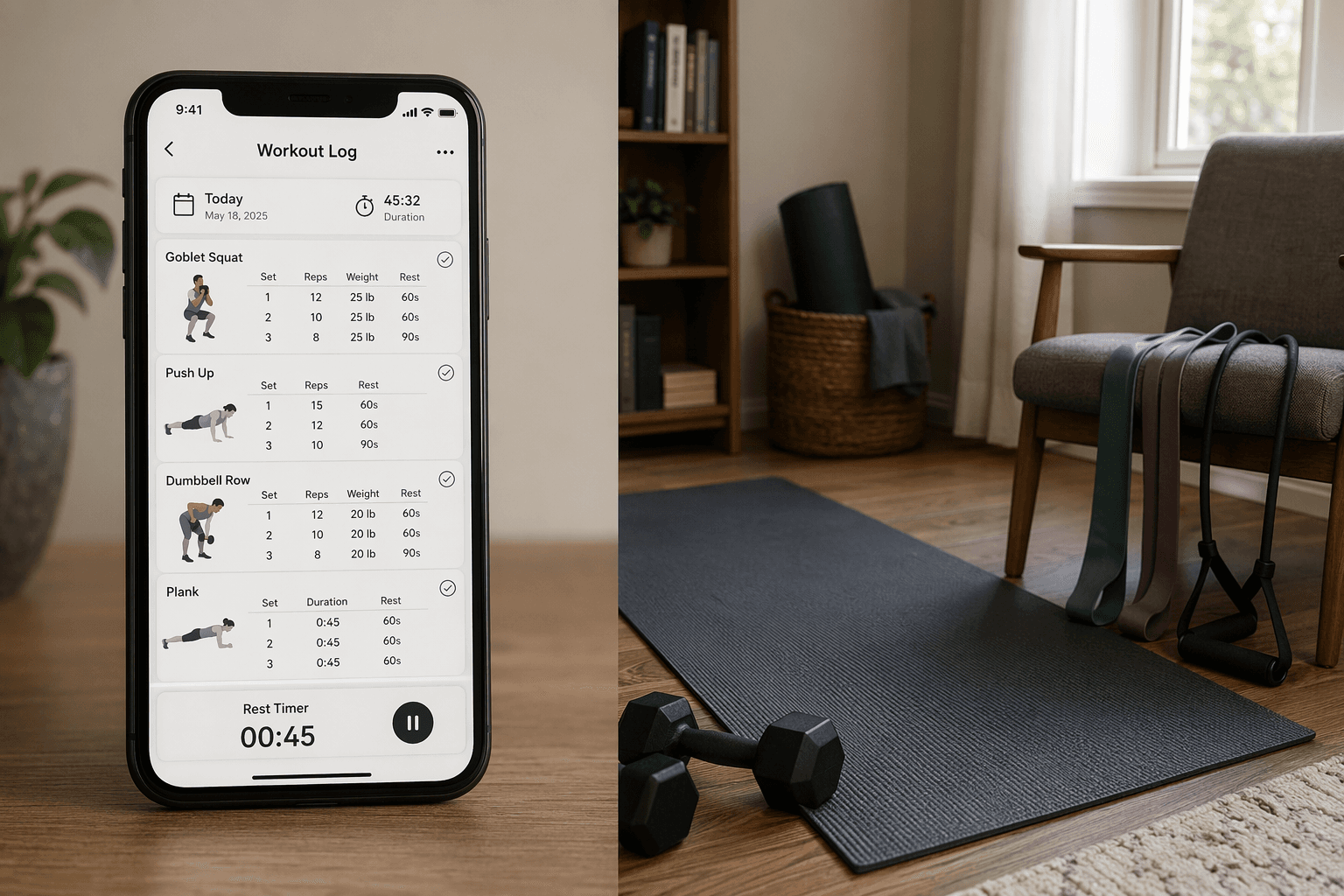
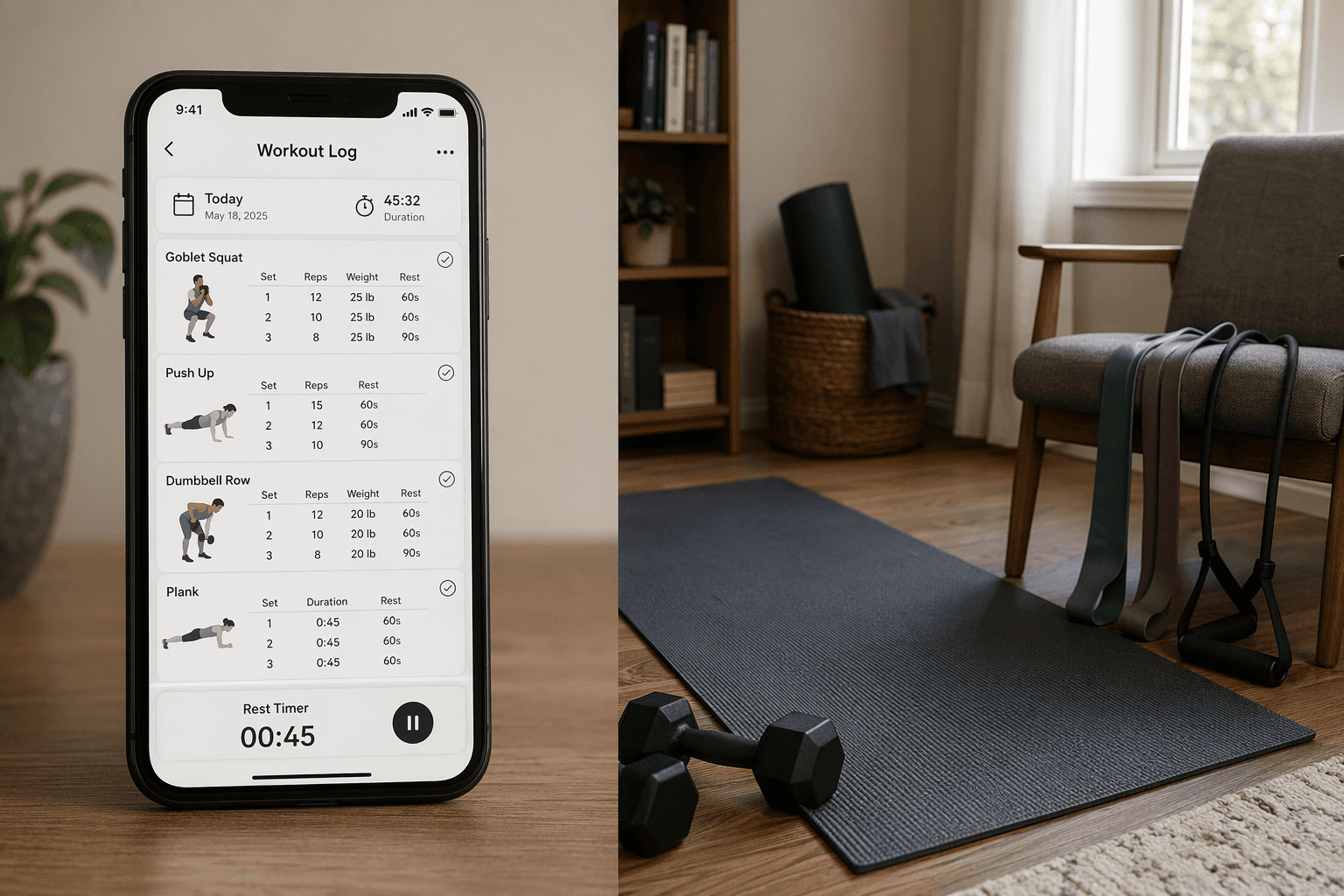
Progress is motivating. But remembering what you lifted last week is a cognitive chore. The apps that remove that chore reduce the cost of showing up. Setgraph, for example, pre-fills your most recent set when you log an exercise. You glance at it, add a rep or increase the weight, and move on. That simple loop — see what you did, beat it — drives progressive overload without you having to think about it. The research calls this 'set-history pre-fill,' and it transforms a planning task into a reflex.
Community Accountability
Hevy earns a 4.5/5 for interactive features because of its community feed. Users share workouts, follow each other, and get feedback. It turns a solo activity into a social one, and social pressure is a powerful retention lever.
Apps That Check Those Boxes — and What to Watch For
Based on the features above, a shortlist of apps stands out. But keep in mind: the scores reflect reviewer opinion, not a retention guarantee. And the average workout app costs $34 per month — a price that itself can cause churn.
- Future — 5/5 accountability, human coaching + daily check-ins. $30+/month.
- Caliber Strength Training — 5/5 accountability, form video feedback. Free tier available, coaching costs extra.
- Hevy — 4.5/5 interactive features, community feed. Free tier with full logging, premium for advanced analytics.
- Nike Training Club — 5/5 value, completely free. No coaching, but structured workouts and live classes.
That $34/month average? If you are paying that and still quit, the cost itself is another reason to walk. Future at $30+ might keep you going only as long as you feel you are getting value. If the coach stops being useful, the subscription becomes an anchor.
The biggest trap is the free tier that locks core functions. A truly usable workout app should give you unlimited set logging, full history, a rest timer, and basic progress charts — at no cost. If the app hides set logging behind a paywall, it is not a free workout tool; it is a demo.
Also watch for the double churn: paying $34/month and then quitting because you resent the recurring cost. If you are unsure, pick an app with a free tier that gives you the essentials, and only upgrade after you have proven you will use it consistently.
How to Test for Long-Term Fit — and the Bottom Line
The 5-minute test is a heuristic, not a guarantee. But it gives you a quick read on whether an app is built for retention:
- Install the app and log one workout (3 exercise sets). Does the app pre-fill your last set? If yes, progressive overload is built in. If no, you will have to remember or write it down.
- Check the rest timer. Can you start a timed rest after each set? Do you have to reset it manually?
- Look at the history section. Can you see your past workouts at a glance, or do you have to dig into reports?
- Test the community or coaching features. Is there a feed, a coach chat, or a way to share? If the app is completely silent, accountability is zero.
I cannot promise this test predicts retention — it is untested as a methodology. But it surfaces the features that correlate with sustained use, and it takes five minutes.
Most fitness apps fail because they are designed for discovery, not for daily use. They optimize for downloads and first sessions, not for the thousandth log. The best apps for sticking with your routine are the ones that prioritize human coaching, progressive overload tracking, and community accountability — not the ones with the most exercise libraries or the lowest price. But remember: the link between those features and retention is correlational, not proven. The only way to know if an app works for you is to try it.
Try Future, Caliber, Hevy, or Nike Training Club with the 5-minute test. See which one makes you want to come back tomorrow. And remember: the data says 97% of apps lose you in a month. The app that keeps you is the one that makes it easier to show up than to skip.
Comments
Join the discussion with an anonymous comment.