
I tested seven strength training apps over the past six weeks. I logged each workout, followed each app's prescribed progression, and measured the results against what I know drives strength gains. Most of them did not make me stronger.
That is the only conclusion that matters. The single most validated mechanism in resistance training is progressive overload — a 2022 PeerJ study by Plotkin et al. confirmed that systematically adding weight or reps over time produces muscular adaptations. An app that does not do this is just an expensive exercise database.
Garage Gym Reviews tested over 70 apps and assigned a 1–5 progressive overload score. Their testers are certified personal trainers who actually run the programs, not just review screenshots. I trust that methodology. Here is what they found — and what I found using the same criteria.
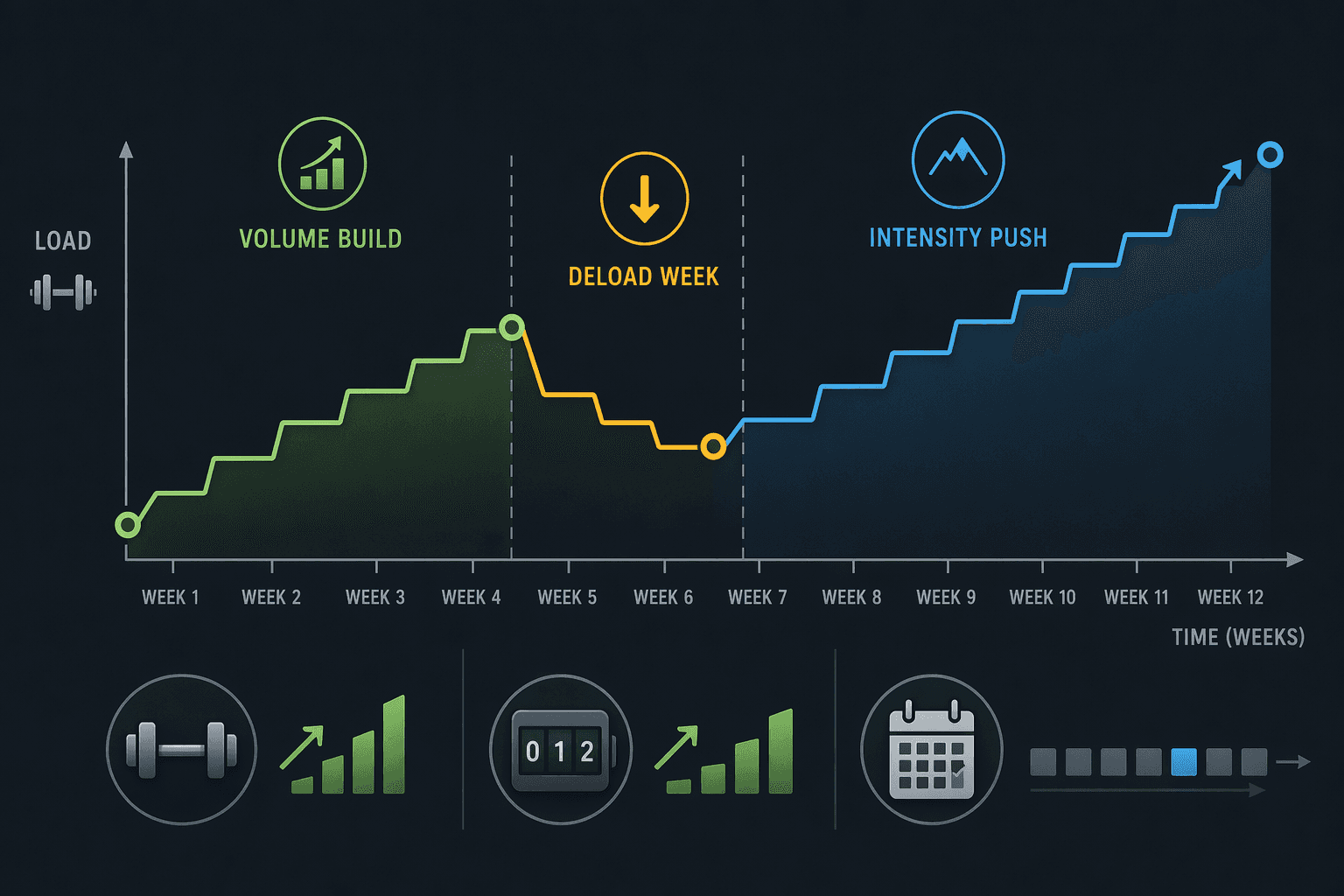
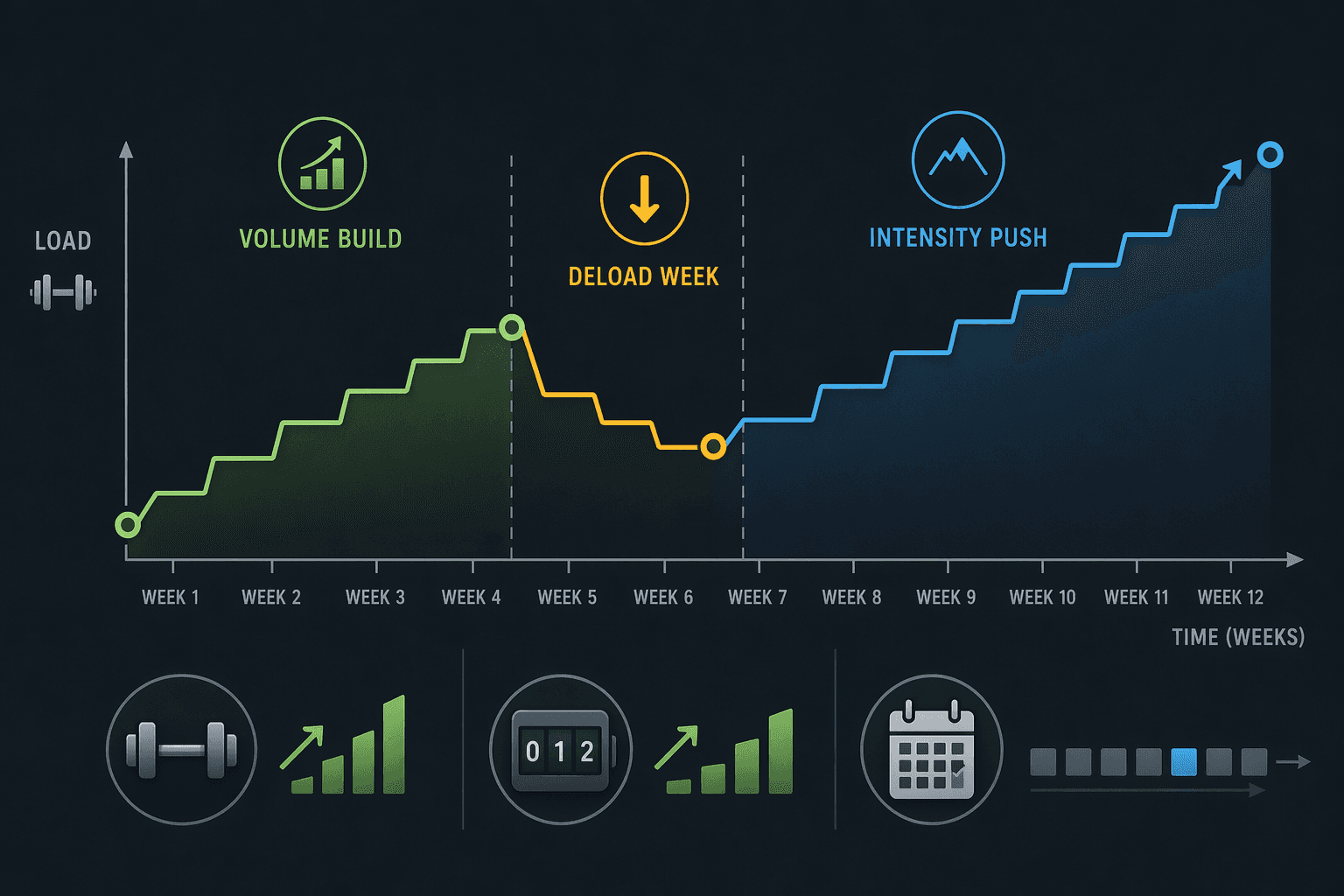
A strength app that actually makes you stronger should include at least three of these four features: periodization (planned phases that vary volume and intensity across weeks), deload weeks, auto-regulation (the app adjusts based on how you performed or felt), and RPE or RIR tracking so the algorithm can calibrate the next load.
The Four Apps That Get It Right (5/5)
Four apps scored a perfect 5/5 for progressive overload. Each earns it through a different mechanism, but the core is the same: they prescribe a long-term plan with systematic load progression, not daily variety.
| App | Key Feature That Earned the 5/5 | Pricing |
|---|---|---|
| JuggernautAI | Auto-regulates loads daily based on your soreness, fatigue, and motivation inputs | ~$30/month |
| Boostcamp | Programs from elite coaches (Wendler, Helms) with built-in deload weeks and explicit periodization | Free with in-app purchases |
| Caliber | Human coaches prescribe weekly weight/rep goals; form-check videos ensure you're progressing safely | Starts at $29/month |
| Ladder | Multi-week series with gradual increases and scheduled deload weeks | ~$25/month |
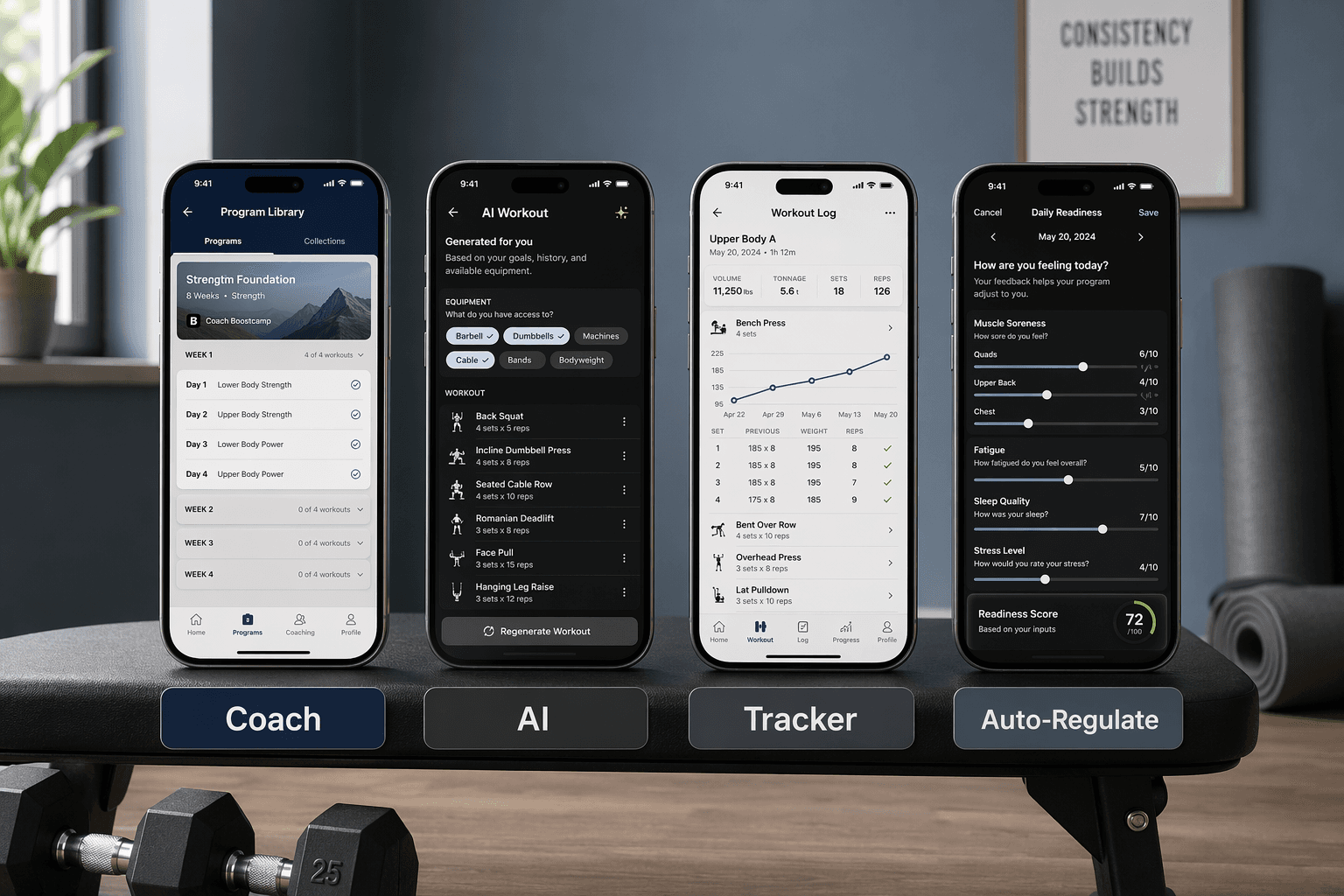
JuggernautAI stood out because it does not follow a fixed linear progression. You rate your soreness, fatigue, and motivation each morning, and the algorithm adjusts that day's load and rep scheme. That is genuine auto-regulation, not a cookie-cutter template.
Boostcamp gives you access to proven templates like Jim Wendler's 5/3/1 and Dr. Eric Helms' programs. These are not generic frameworks — they include explicit deload weeks and rep-max testing. If you follow the program as written, you will progress.
Caliber adds human oversight: a coach prescribes your weekly goals and reviews your form via video. That hybrid model means the progression is not left to an algorithm alone. It is slower but more precise.
Ladder structures its programs as multi-week series — typically four to eight weeks — with gradual increases in weight and reps, capped by a deload week. The progression is transparent and linear, which makes it easy to follow for lifters who want a clear roadmap.
The Middle Ground — and One I'd Score Lower
SHRED scored 4/5, which is respectable. Its AI adjusts based on your performance, but the app leans heavily on circuits and supersets. If your goal is pure strength, the metabolic conditioning approach may interfere with the volume and rest periods needed for heavy compound lifts.
Fitbod scored 3/5, and I think that is generous. Fitbod's AI generates a workout based on your logged equipment and muscles worked recently, but the weights and rep schemes often feel arbitrary — what GGR testers described as 'off' for specific goals. The problem is that variety is not progression. Fitbod changes exercises frequently, which keeps workouts interesting but undermines any coherent long-term overload. You might bench press 135 lb one week, then switch to dumbbell floor press the next at a different intensity. The system never accumulates.
Pure Trackers: Hevy and Strong (1/5)
Hevy and Strong scored 1/5 for progressive overload. That sounds damning, but it is also the correct score. These are trackers, not programmers. They log what you do and let you see your history, but they do not prescribe the next weight or reps. If you already know how to program, Hevy is excellent — it is clean, affordable ($2.99/month), and syncs across devices. But if you are looking for an app to make you stronger, a tracker alone will not do it.
That distinction matters. Many lifters download Hevy expecting it to provide a training plan. It does not. It is a logbook. You bring the plan; Hevy just writes down what you did. For experienced lifters, that is fine. For everyone else, it is a dead end.
After spending weeks with these apps, a few red flags became obvious. Use this checklist when you evaluate any strength training app:
- No deload weeks ever — the app never reduces volume. Progress without recovery leads to plateau or injury.
- AI that changes exercises every session — variety is not progression. Look for apps that stick with a core set of movements for several weeks.
- No RPE or RIR tracking — if the app cannot gauge effort, its weight suggestions are guesses.
- No way to input fatigue or soreness — without auto-regulation, the app treats you like an average lifter, not an individual.
- Free or cheap but claims 'AI-powered' — many free apps use a simple randomizer. Check if the weeks actually connect.
Which One Should You Choose?
If your goal is to get stronger and you want the app to handle the programming, pick from the 5/5 group. JuggernautAI is the best for auto-regulation; Boostcamp gives you elite coach programs at the lowest price; Caliber adds human coaching; Ladder provides a straightforward linear progression. All four are built around periodization. They will make you stronger.
If you already know how to program your own progression and just need a log, Hevy or Strong are fine. They are cheap, clean, and reliable. But do not expect them to tell you what to do next.
The average workout app costs $34 per month. That is a significant recurring expense for something that might not progress you at all. Before you subscribe, ask the app one question: "Will this app systematically increase my loads over the next eight weeks?" If the answer is not a clear yes, keep looking.
Comments
Join the discussion with an anonymous comment.