
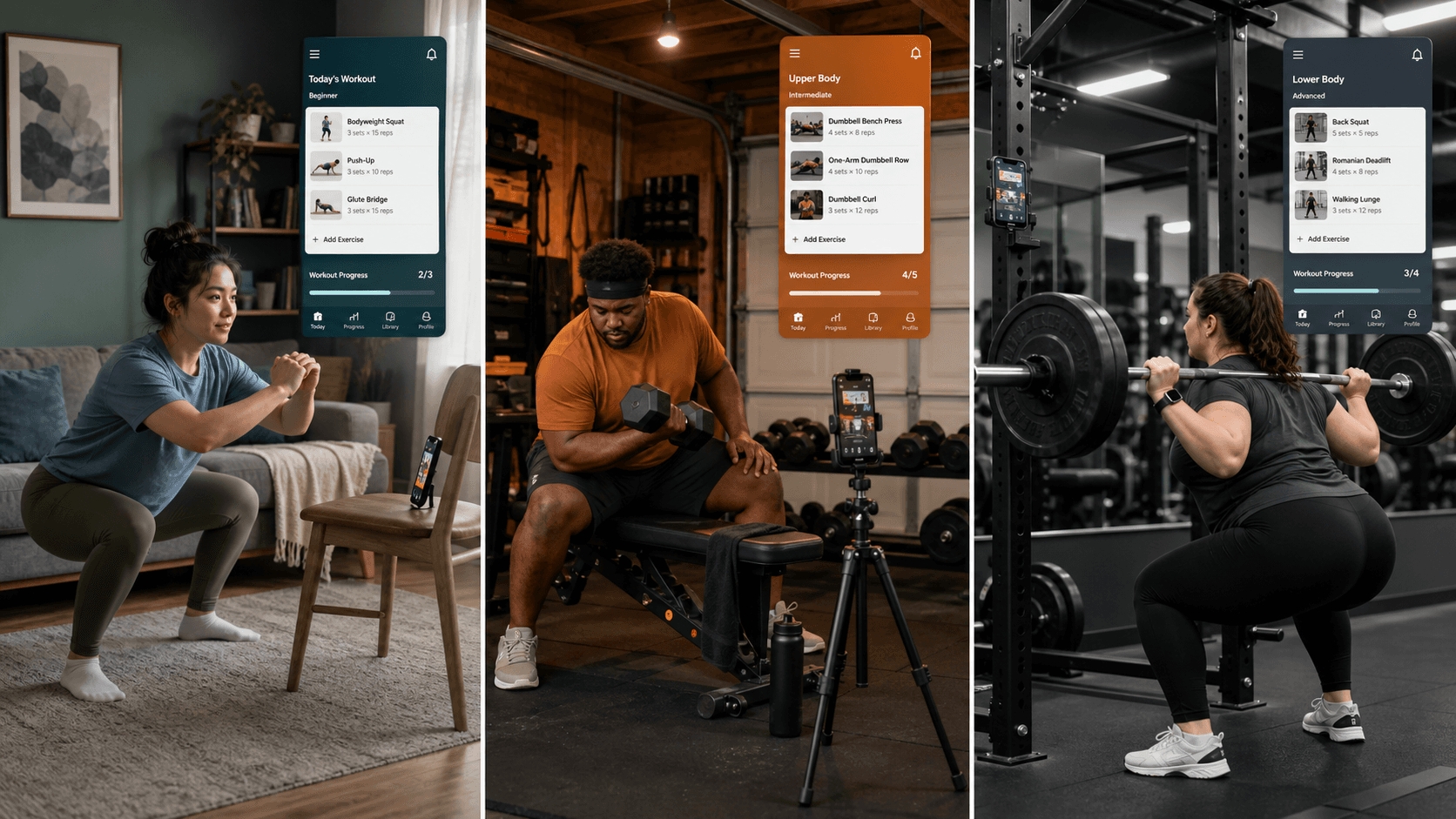
Only 7% of people who download a workout app are still using it 30 days later. That figure comes from WifiTalents, and it is the single best argument I know for not paying a dime until you have proven to yourself that you will stick. The industry does not want you to know that. It wants you to upgrade the moment the trial ends. But the data says something else: features do not drive adherence. If they did, retention would not be 7%.
The fitness app market generated $3.4 billion in revenue in 2025, up 24.5% year over year. Subscriptions account for 65% of that. The industry has every financial incentive to make you feel that free is not enough. So I wanted to see what actually changes as the price goes up — and at what point the money buys something that matters.
Free: It's Enough for Most People
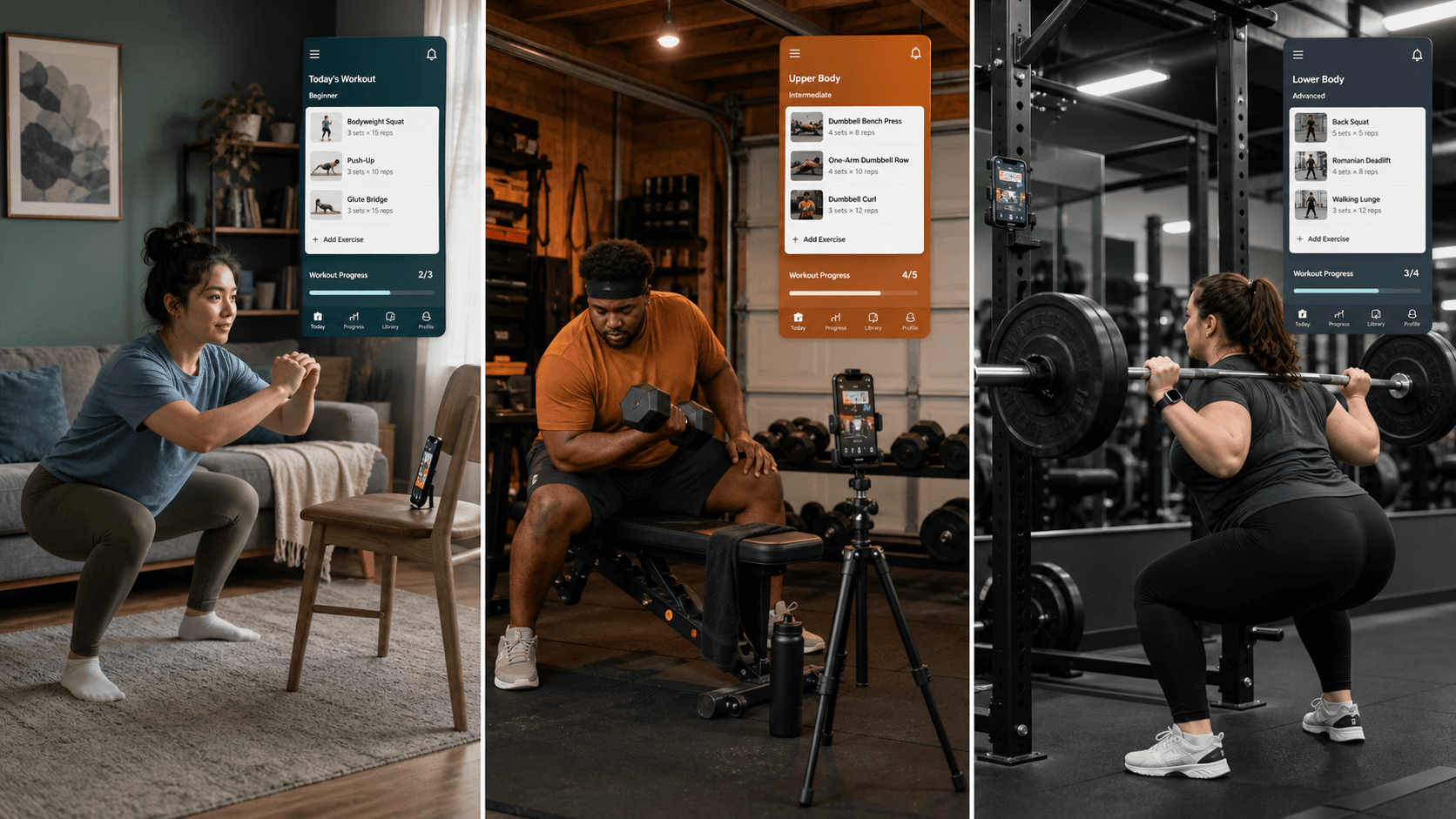
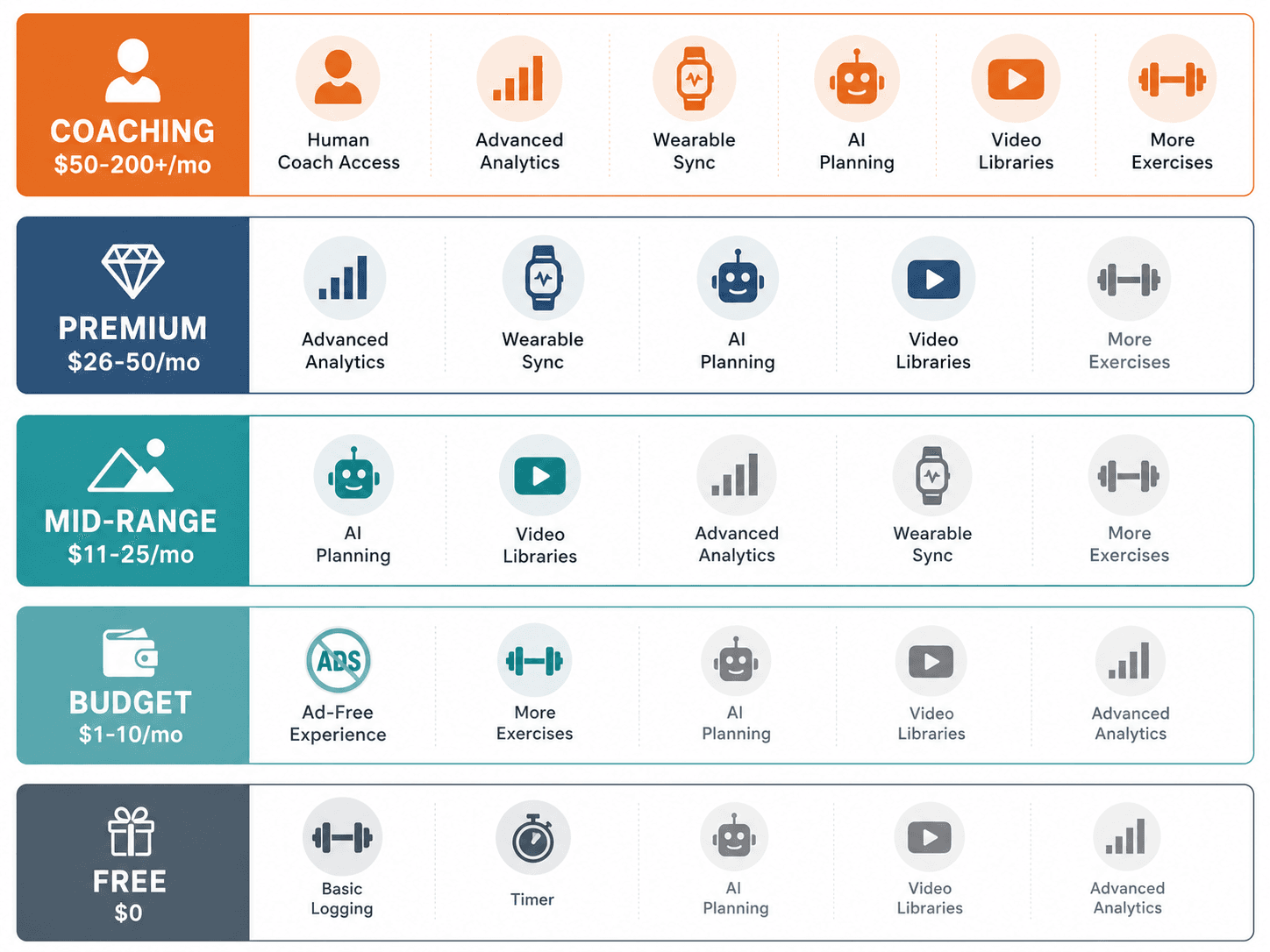
Let me save you some scrolling. If you are self-motivated, the free tier of Hevy, Nike Training Club, Caliber (free-forever version), or JEFIT will give you everything you need to log workouts, follow programs, and track progress. Nike Training Club is completely free. Caliber’s free tier is genuinely functional — you get workout logging, basic programs, and community features. Hevy and JEFIT both offer robust free tiers that cover logging and history. You don’t get AI planning, coaching, or advanced analytics. Most people don’t need those to see results.
What you lose on free: no personalized AI programming, no human coach, no detailed analytics like volume load or recovery scores. But look at the 7% retention figure again. The problem is not feature depth — it’s that most people stop using the app entirely. If you are among the minority who stick with it, free is enough.
Budget ($1–10/Month): Mostly Just Removes Ads
The jump from free to budget is small. For $2.99 a month (Hevy) or $4.99 (Setgraph) you get ad removal and a few extra workout plans. Strong costs $9.99 a month and unlocks more tracking features but still no AI or coaching. SHRED from Garage Gym Reviews is $9.99 and includes guided workouts. These apps are good, but the core functionality — logging and basic programs — was already available for free.
If you find the free tier’s ads genuinely annoying, this tier is worth the small cost. But do not expect a revolution in results. The same 7% retention problem applies.
Mid-Range ($11–25): AI Convenience, No Outcome Data
This is where apps start adding AI-driven workout planning. Fitbod costs $15.99 a month and generates workouts based on your logged history, recovery, and available equipment. TR(AI)NER by Element 26 is $14.99 a month (or $99.99 a year) and does similar AI programming. Boostcamp is $14.99 a month and offers programs from well-known coaches. At this tier you also get video libraries, more exercises, and sometimes basic analytics.
The key question: does AI planning outperform a well-structured free program? There is no outcome data. None of the sources provide evidence that users of Fitbod get better results than users of a free JEFIT routine. AI is a convenience — it saves you the mental load of choosing exercises. That has real value if you are busy and just want to follow. But if you are already willing to follow a standard push/pull/legs or full-body split from a free app, the incremental value is small.
Premium ($26–50): More of the Same
At $29.99 a month you can get Ladder, which includes expert-designed programs and community features. JuggernautAI is $35 a month and offers periodized strength programming with AI adjustments. WalkFit is $24.99–$29.99 and focuses on walking programs. These apps add deeper analytics, wearable sync, and more detailed programming.
The issue: many of these features (sync, analytics, periodization) appear in the mid-range tier already. The jump from mid-range to premium is not a step change in value. You are paying for more of the same kind of thing — more data, more complexity. Unless you specifically need advanced volume tracking or heart-rate-based program adjustments, this tier is easy to skip.
Coaching ($50–200+): The Only Tier That Buys Accountability
Now we get to the expensive stuff. Future costs $199 a month and pairs you with a real human coach who designs your workouts, checks in, and adjusts based on your feedback. Caliber Premium starts at $200 a month and offers similar one-on-one coaching. This is the only tier where the price directly buys a solution to the 7% retention problem. Human accountability works — if you have someone expecting you to show up, you are more likely to show up.
But it comes with a steep price and a clear condition: it only makes sense if you have tried self-directed training and it failed, and if you have the budget. For everyone else, it is overkill. The evidence suggests that a self-motivated person can get the same results from free apps, and an unmotivated person may not get enough value from a coach to justify $2,400 a year.
What Each Tier Actually Unlocks
| Feature | Free | Budget ($1-10) | Mid-Range ($11-25) | Premium ($26-50) | Coaching ($50-200+) |
|---|---|---|---|---|---|
| Workout logging | Yes (most apps) | Yes | Yes | Yes | Yes |
| Program library | Yes (limited) | More plans | Extensive | Extensive | Custom plans |
| AI planning | No | No | Yes (e.g., Fitbod) | Yes | Yes (with coach input) |
| Human coach | No | No | No | No | Yes (one-on-one) |
| Advanced analytics | No | No | Some | Yes (volume, HRV) | Yes |
| Video library | Limited | Moderate | Extensive | Extensive | Extensive |
| Wearable sync | Sometimes | Sometimes | Yes | Yes | Yes |
| Ad-free | No | Yes | Yes | Yes | Yes |
Subscription Traps: Why the Industry Pushes You to Upgrade
Auto-renewal is the norm. Many apps start a free trial and then charge the full annual subscription unless you cancel within a narrow window — often before you have used the app long enough to know if you like it. Some degrade the trial experience deliberately: limited content, nag screens, features that disappear after day 7. The industry incentive is clear: 65% of revenue comes from subscriptions. They want you to forget to cancel.
One protection: use a free app for at least a month before considering any paid tier. If you are still using it after 30 days, you are already in the 7% minority. Then decide if the paid features are worth it. Do not upgrade on day 1. The app’s marketing is designed to make you feel that you need the premium version from the start. You don’t.
If you want a deeper look at why beginners quit fitness apps — and how to avoid that — read our guide on why most beginners quit their fitness app.
When to Pay — A Practical Decision Guide
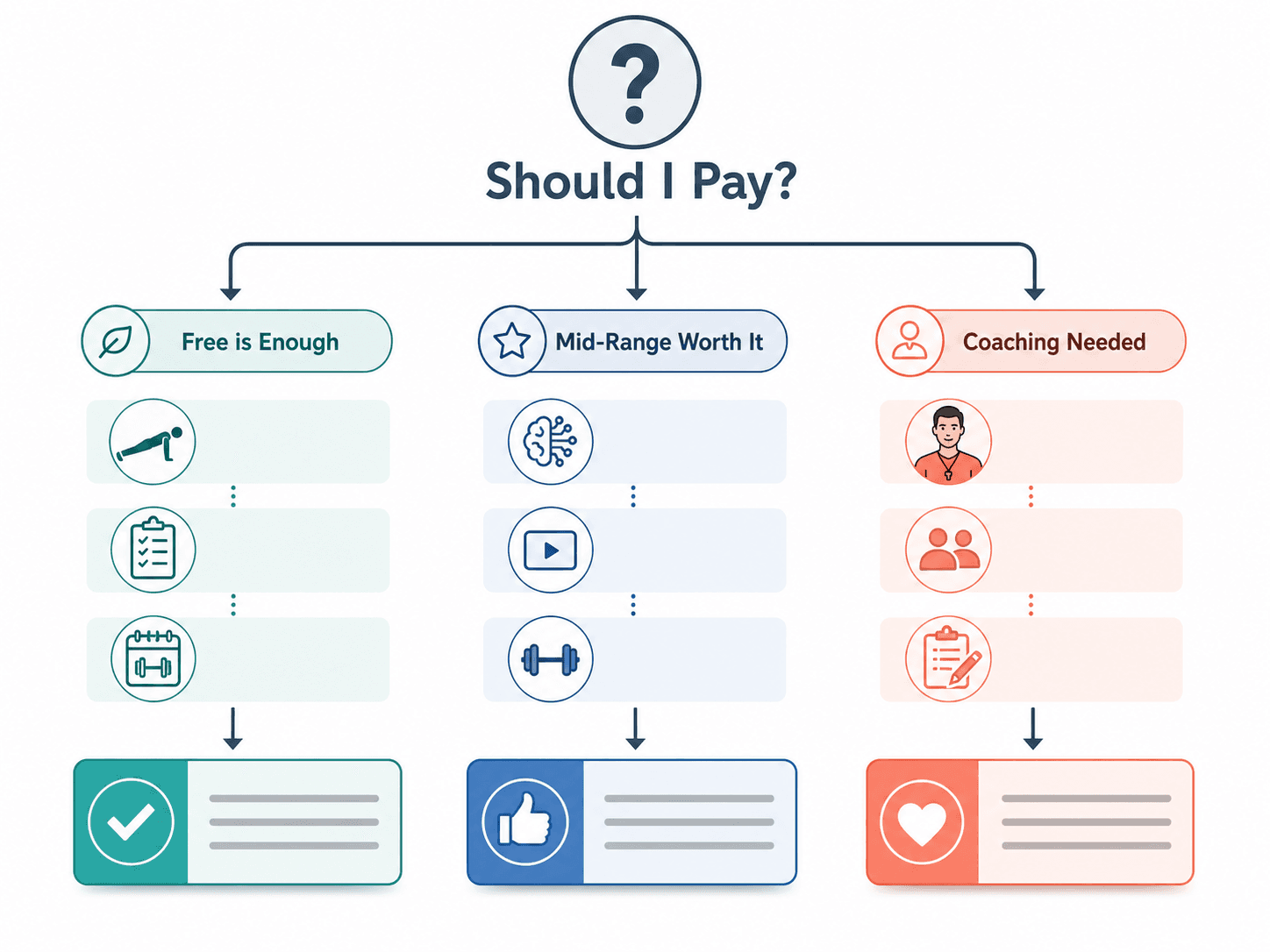
- If you are self-motivated and just need logging and basic programs, stick with free. Hevy, NTC, Caliber free, or JEFIT will serve you well.
- If you want AI planning and video libraries but do not need a human coach, the mid-range tier ($11–25/month) offers real convenience. Fitbod, TR(AI)NER, or Boostcamp are solid picks.
- If you have tried everything and still fail to stick without accountability, and you have the budget, coaching apps ($50–200+/month) like Future or Caliber Premium can be worth it. But only if you can honestly say you’ve exhausted self-directed options.
For more on how to build a complete home fitness setup on a budget, see our guide to smart equipment and app choices.
Comments
Join the discussion with an anonymous comment.