
Last reviewed: July 10, 2026.
If you searched for a “whoops fitness tracker,” you almost certainly mean Whoop. The extra “s” is a very normal guess if you have only heard the name out loud on a podcast or seen the blank black band on an athlete’s wrist.
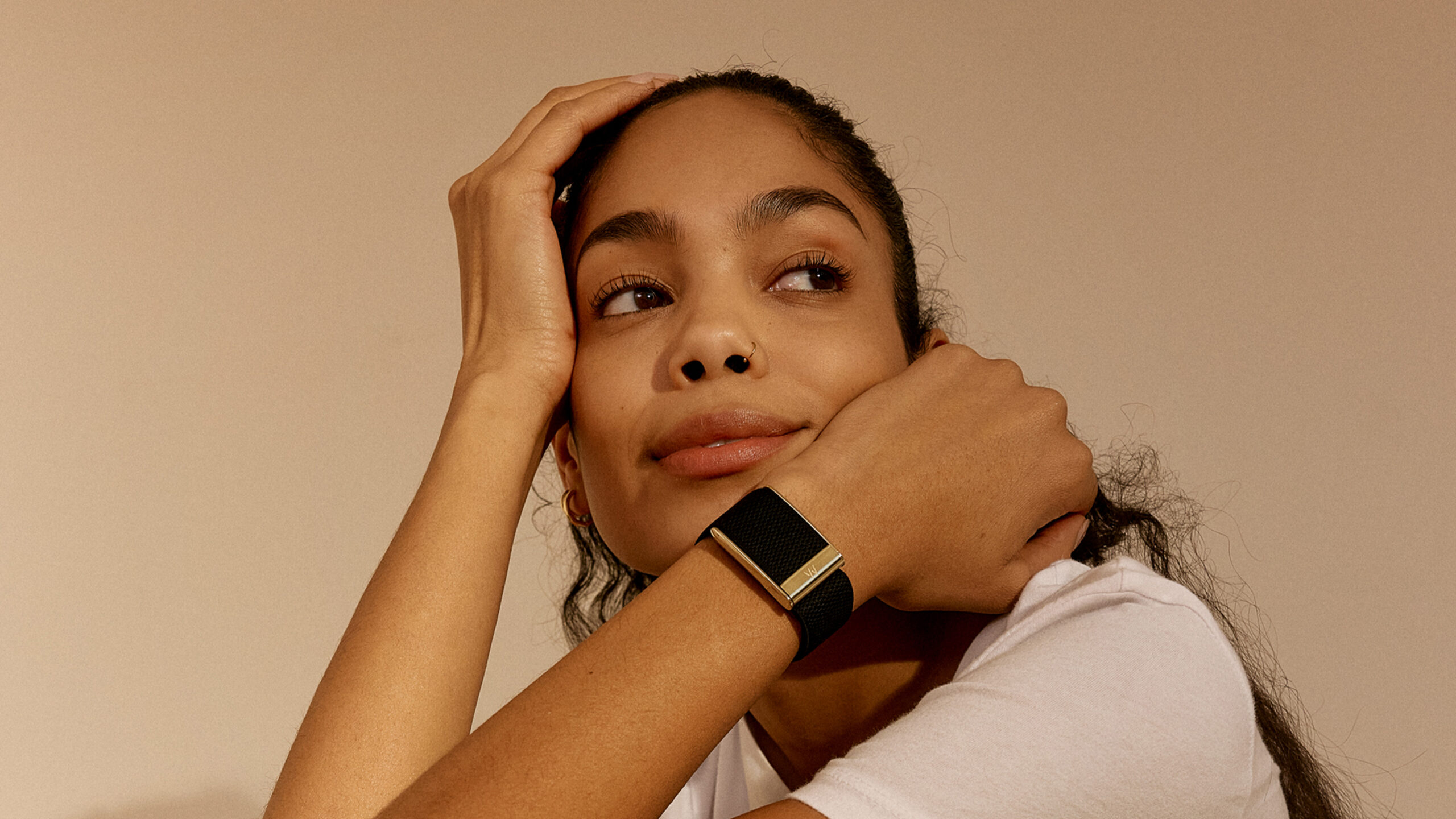
The more important correction is the category. Whoop is not a normal fitness tracker in the Apple Watch, Fitbit, or Garmin sense. It has no screen, no app notifications, no live GPS map, and no watch face. It is a screenless subscription band built around recovery, sleep, strain, and readiness. That makes it interesting for the right person and oddly expensive for the wrong one.
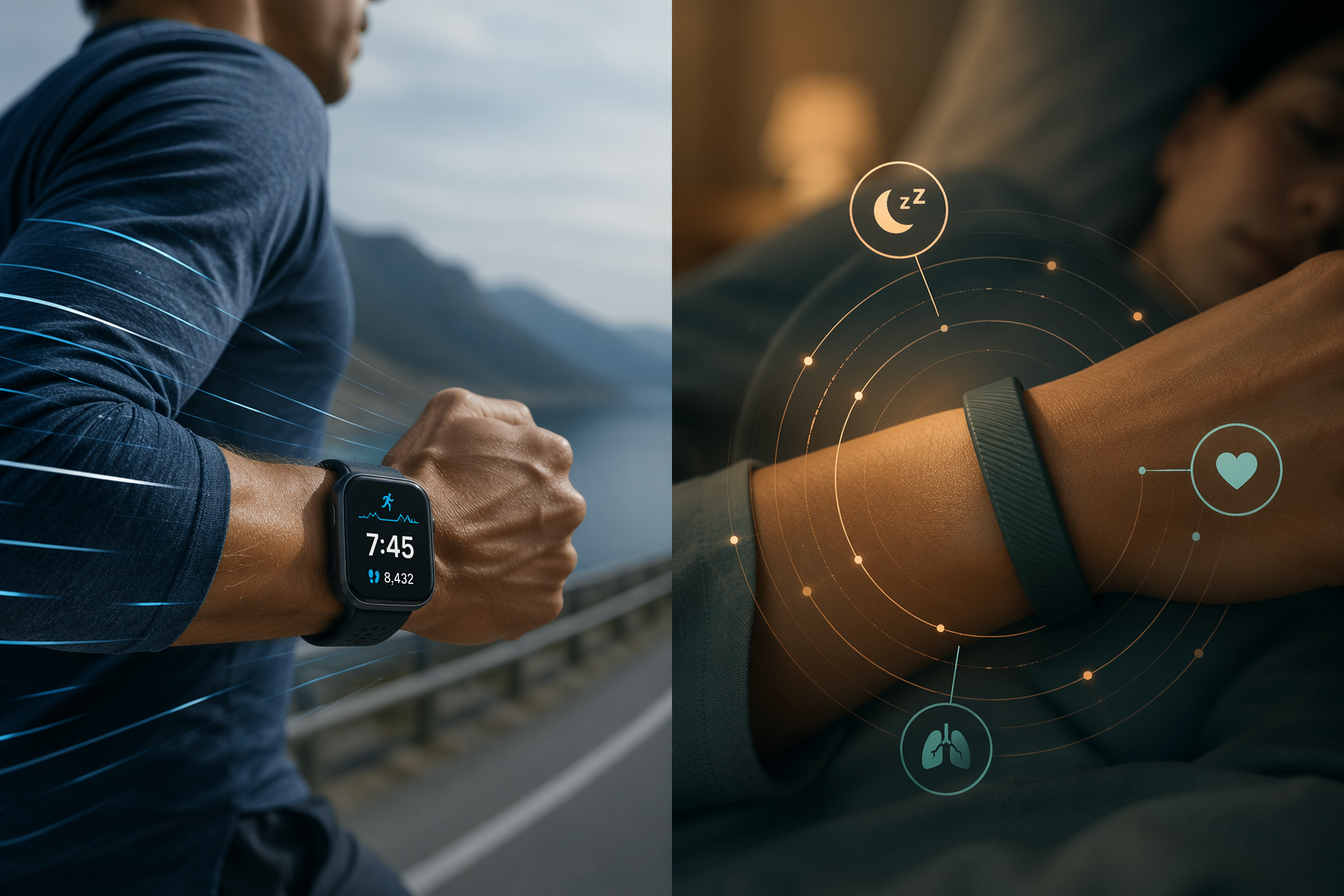
What Whoop Is, In Plain English
Whoop is a wearable band that collects body data all day and night, then turns it into scores about how much strain you took on, how well you recovered, and how ready you may be to train again. You do not glance at it during a run for pace. You do not tap it to read texts. You wear it, sync it to the app, and let the app interpret the patterns.
That design explains both the appeal and the first objection. If you are trying to stop overtraining, protect sleep, or understand why some workouts feel unusually hard, Whoop is built for that job. If you mainly want a visible step counter, a running watch, a phone companion, or a cheaper first tracker, the fit is weaker before you even reach the spec sheet.
The Subscription Is Part Of The Product
Whoop pricing should be read as an annual membership, not as a one-time gadget purchase. As of Q3 2026, Whoop lists three membership tiers: One, Peak, and Life, each bundling hardware access with different software features.[1]
| Whoop tier | Annual price | Main features | Beginner read |
|---|---|---|---|
| Whoop One | $199/year | Whoop 5.0 hardware, core Strain, Recovery, Sleep, step count, and Health Monitor features | The lowest-cost way into Whoop if you mainly want the core recovery system |
| Whoop Peak | $239/year | Adds Healthspan/Whoop Age, Stress Monitor, and Strength Trainer | The most logical middle tier for many active users who want more than sleep and recovery basics |
| Whoop Life | $359/year | Adds ECG, expanded Health Monitor, beta blood pressure, and SpO2 spot checks | A health-feature-heavy tier, but not the place to casually assume medical-grade certainty |
That table belongs near the top because the subscription is not an accessory. It is how Whoop works. If paying every year already feels wrong for your use case, the rest of the product has to be unusually well matched to your goals to overcome that.
The hardware-upgrade promise also needs a careful reading. Reviewers note that free hardware upgrades apply only to subscribers with at least six months remaining, and that Whoop does not guarantee when future generations will arrive.[2]
Why There Is No Screen
A screenless fitness band sounds limiting until you understand what Whoop is protecting: continuous wear. PCMag reports that Whoop claims 14-plus days of battery life and measured 16.5 days in testing; that is a very different charging rhythm from an Apple Watch, which PCMag contrasts with an 18-hour battery rating.[2]
For sleep and recovery tracking, this matters. A wearable that spends the night on a charger is not collecting your overnight heart rate variability, resting heart rate, or sleep data. Whoop’s blank band is not just an aesthetic choice. It is a trade: fewer watch-like conveniences in exchange for more continuous body data.
The trade still has consequences. During a workout, you will not raise your wrist and see pace, distance, splits, rep targets, or a map. You can view data in the app, but that is not the same experience as a watch that coaches you mid-session. For runners and cyclists who depend on live metrics, this is not a small omission.
What Whoop Tracks, And What You Might Actually Do With It
Whoop’s app can feel dense at first because it is not organized around the familiar question, “How many steps did I take?” It is closer to, “How much stress did my body absorb, and how ready does it look for more?”
| Metric | What it means | What a beginner might change |
|---|---|---|
| Strain | A 0–21 score based on heart rate and duration | Back off from an extra hard session when yesterday already pushed the body high |
| Recovery | A percentage influenced by HRV, resting heart rate, and sleep metrics | Choose a lighter workout, mobility session, or rest day when recovery is low |
| Sleep performance and sleep debt | How your sleep compares with estimated need | Move bedtime earlier instead of treating fatigue as a motivation problem |
| HRV | Overnight heart rate variability used as a recovery signal | Watch trends rather than panic over a single low reading |
| Stress Monitor | A Peak-and-up feature for tracking physiological stress | Notice whether non-workout stress is affecting the day’s training plan |
| Steps | A daily step count, added to Whoop in 2025 | Use it as background activity context, not the main reason to buy Whoop |
| VO2 Max estimate | An estimated aerobic fitness marker | Track broad fitness direction over time |
| Strength Trainer | A Peak-and-up feature using strength-session modeling | Log lifting with more structure if resistance training is a main focus |
| Healthspan / Whoop Age | Peak-and-up longevity-oriented features | Treat them as long-term trend prompts, not proof that the band is extending your life |
The best beginner use is not to obey every score like a traffic light. It is to catch patterns. If your Recovery score drops after late meals, alcohol, poor sleep, or stacked high-intensity sessions, the useful action is not mystical: change the thing that keeps showing up before bad mornings.
Whoop’s Healthspan and Whoop Age features are part of the brand’s newer longevity direction, and reviewers have treated that shift as a major part of Whoop 5.0’s identity.[3] The caution is just as important as the feature: positive app feedback about “pace of aging” is not the same thing as long-term, third-party proof that using Whoop improves longevity outcomes.
Accuracy: Good At Rest, More Complicated During Hard Workouts
Wearable accuracy is not one question. A device can be useful for overnight recovery trends and still struggle with wrist-based heart rate during fast, sweaty, grip-heavy training. Whoop sits in that exact tension.
Independent and reviewer testing has reported wrist-based optical heart rate inconsistencies during exercise, especially in HIIT, CrossFit, and interval-style sessions, with deviations in the 5–15 BPM range noted across reviews from PCMag, CNET, and the5krunner.[2][4][5]
Placement changes the story. In the5krunner’s 19-workout test, wearing Whoop on the biceps with an arm sleeve reached a 0.98 correlation with reference chest straps.[5] That is encouraging, but it should not be over-generalized. It is one tester’s dataset, not a universal guarantee for every body, sport, skin tone, fit, or movement pattern.
The same source found a strong overnight HRV correlation between Whoop and Oura Ring 4 at r=0.841 in a 31-day comparison, and r=0.775 versus Eight Sleep.[5] That supports the idea that Whoop can be strong for recovery-style tracking, while still leaving room for caution about wrist heart rate during chaotic workouts.
If you do CrossFit, HYROX, kettlebells, rowing intervals, or strength circuits and care about workout heart rate, plan on thinking about placement. The biceps sleeve is not just a style accessory; for some training types, it may be the difference between data you trust and data you mentally discount.
The Blood Pressure Feature Deserves Extra Skepticism
Whoop Life includes a blood pressure feature, but the important boundary here is narrow: the feature is in beta, and the FDA has disputed Whoop’s marketing claims. It should not be treated as a validated replacement for a conventional blood pressure cuff or medical guidance.
That does not make the Life tier useless. It does mean a beginner should be very clear about why they are paying $359 per year. ECG, SpO2 spot checks, and expanded health monitoring may appeal to some users, but medical-sounding features deserve a higher evidence bar than workout convenience features.
The Real Cost Compared With Other Trackers
Whoop’s annual price can look manageable in isolation. The harder comparison is total cost after the novelty period. At $239 per year, Whoop Peak costs $717 over three years.[1] PCMag’s cost comparison places that against devices such as Fitbit Charge 6 at $159.95 before any optional Premium subscription, Oura Ring 4 at $349 plus $69.99 per year, and Apple Watch Series 10 at $399 without a mandatory subscription.[2]
| Device or membership | Cost structure | Three-year cost example | What that means |
|---|---|---|---|
| Whoop Peak | $239/year | $717 | The recurring fee is the product model |
| Fitbit Charge 6 | $159.95 one-time, optional Premium | $159.95 before optional subscription costs | Lower commitment if you want a familiar band-style tracker |
| Oura Ring 4 | $349 plus $69.99/year | $559 over three years | Another screenless recovery option, more sleep-ring than training band |
| Apple Watch Series 10 | $399 one-time, no mandatory subscription | $399 before optional services or upgrades | A stronger choice if you want a visible smartwatch and live workout screen |
This is where a beginner should be honest. If Whoop changes your bedtime, rest days, training load, and recovery habits, the yearly cost may feel earned. If you mostly want to see steps, calories, notifications, and pace, you can spend less and get more of what you actually wanted.
Whoop Versus Apple Watch, Fitbit, Garmin, And Oura
The fastest way to choose is to name the job you are hiring the wearable to do.
- Choose Whoop if recovery, readiness, sleep, strain, and 24/7 wear are the main reasons you want a tracker.
- Choose Apple Watch if you want a smartwatch first: notifications, apps, calls, a bright screen, and solid workout tracking.
- Choose Garmin if live sport metrics, GPS, training plans, pace, distance, and endurance features matter most.
- Choose Fitbit if you want a simpler band, step motivation, sleep basics, and a lower initial price.
- Consider Oura if you like the screenless idea but care more about sleep and recovery than active strain tracking.
None of those alternatives is automatically better. They simply answer different needs. The common mistake is buying Whoop because serious athletes wear it, then discovering you personally wanted a watch face and real-time workout guidance.
Who Should Seriously Consider Whoop
Whoop makes the most sense for people who will change behavior based on recovery data. That includes some CrossFit and HYROX athletes, endurance athletes managing training load, committed home-gym users who stack strength and conditioning, and biohacking-minded users who already care about sleep timing, HRV, alcohol effects, stress, and recovery routines.
It can also work for an intermediate exerciser who keeps repeating the same cycle: train hard for two weeks, feel run down, lose momentum, start again. Whoop will not fix that by itself. But it may make the fatigue pattern visible early enough that a rest day feels like part of training rather than a failure of discipline.
Who Should Skip It
- Skip Whoop if you want live pace, distance, route maps, or glanceable workout stats.
- Skip it if step count is your main motivation; Whoop now includes steps, but it is not built around step coaching.
- Skip it if notifications, music controls, and a visible watch face are part of the appeal.
- Skip it if an annual bill of $199 to $359 would make you resent the device.
- Skip the Life tier in particular if you are mainly attracted by blood pressure claims and do not want to navigate beta-feature uncertainty.
A Sensible Beginner Path
If Whoop still sounds appealing, start with the membership decision rather than the color or band style. Whoop One covers the core recovery concept. Peak adds the features many active users are likely to be curious about, including Healthspan/Whoop Age, Stress Monitor, and Strength Trainer. Life is the expensive health-monitoring tier, and its blood pressure caveat makes it a poor casual upgrade.
Then decide how you will wear it. A wrist band may be fine for everyday tracking and sleep. If your training includes lots of intervals, gripping, flexing, or upper-body movement, look closely at biceps placement before judging workout heart-rate accuracy.
Finally, decide what would make the subscription worth renewing after the first year. A good answer sounds concrete: “I changed my sleep schedule,” “I stopped stacking hard days after poor recovery,” or “I learned which training blocks overload me.” A weak answer sounds like general fitness aspiration. Whoop is too expensive to be a vague nudge.
The Bottom Line On The “Whoops Fitness Tracker”
Whoop is the correct name, and it is best understood as a screenless recovery coach rather than a traditional fitness tracker. Its strongest case is continuous wear, sleep and recovery insight, strain tracking, and a design that removes the distractions of a smartwatch. Its weakest case is the recurring cost, the lack of live workout display, wrist-based heart-rate limitations during intense exercise, and health claims that deserve careful boundaries.
If recovery data will change how you train, Whoop belongs on your shortlist. If you want a watch that shows what is happening while you move, start with Apple Watch, Garmin, Fitbit, or another screen-based tracker instead.
References
- Whoop Membership, WHOOP, https://www.whoop.com/us/en/membership/
- Whoop 5.0 Review, PCMag, https://me.pcmag.com/en/fitness-trackers/35225/whoop-50
- Whoop 5.0 Review, Wareable, https://www.wareable.com/wearable-tech/whoop-5-review
- Whoop 5.0 Review, CNET, https://www.cnet.com/health/fitness/whoop-5-0-review/
- 2026 Whoop 5.0 MG Review, the5krunner, https://the5krunner.com/2025/10/31/2026-whoop-5-0-mg-review-discount-accuracy-strain-recovery-athletes/
Comments
Join the discussion with an anonymous comment.