
Home Gym Builds / $100-300 / apartment
Your Home Gym Training Plan for Mount Olympus
A 12-week progressive training plan for climbing Mount Olympus, designed for home gym owners with limited space and a budget of $100-300. Build the endurance, leg strength, and downhill resilience needed using just a step platform, weighted backpack, and basic home equipment.
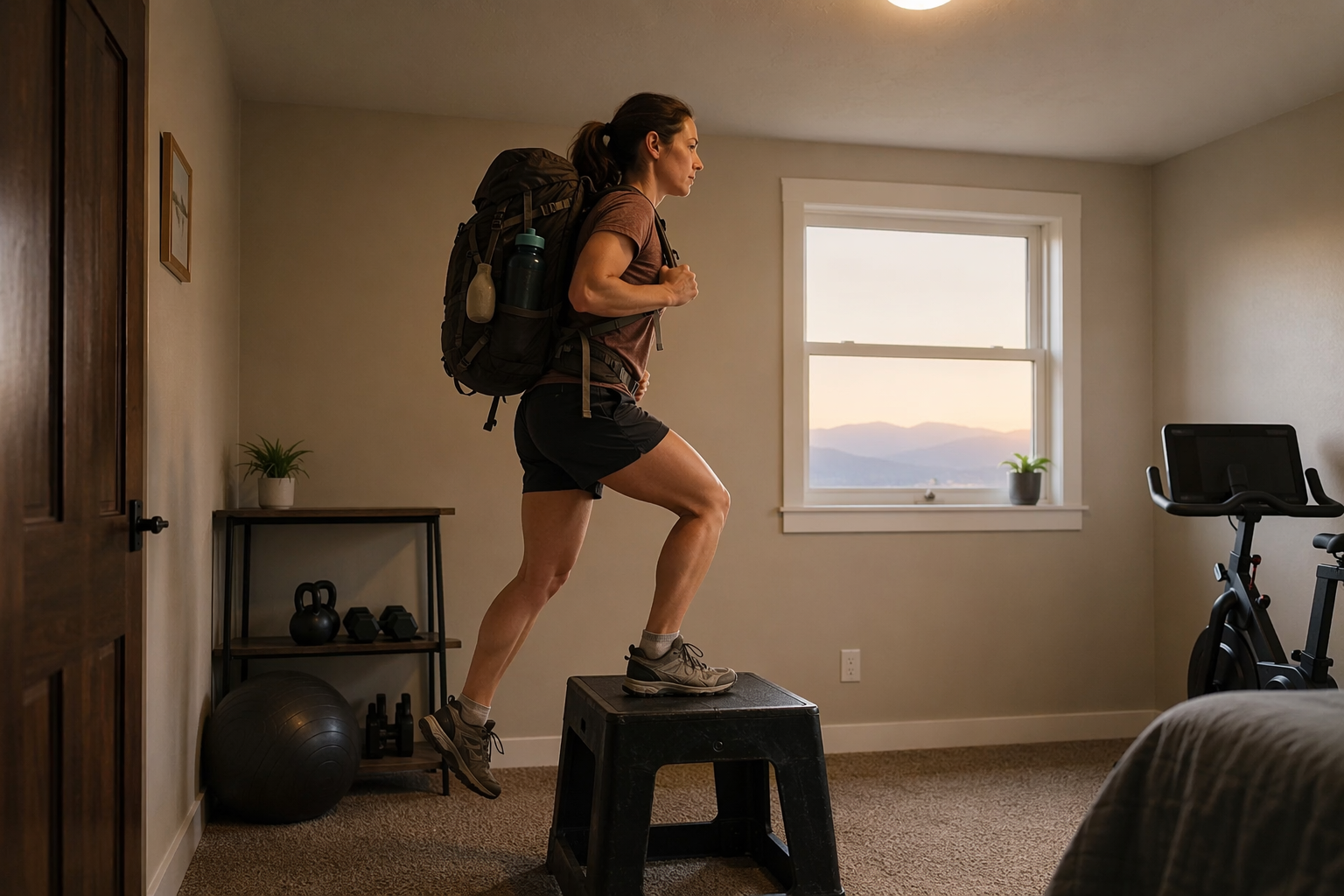
- Budget tier
- $100-300
- Space type
- apartment
- Floor footprint
- 2x3 ft
- Noise level
- low
By Editorial Team
Itemized build and cost breakdown
- Total cost estimate
- $100-300
- Included equipment
- Step platform, weighted backpack, optional resistance bands or dumbbells
Prices and specs on this build are rechecked periodically — if something looks stale, flag it below.
Climbing Mount Olympus fitness training has to answer a plain question before it gets romantic: can a small home gym prepare you for roughly 1,800 meters of gain from Prionia at 1,100 meters to Mytikas at 2,917 meters, followed by a long descent and a Class III scramble near the top? The answer is yes for the engine, legs, and downhill tolerance; no for exposure judgment and real scrambling confidence. The usual route demand is commonly described as a 6–9 hour ascent and a 4–5 hour descent, which is too specific to treat like a generic “leg day plus cardio” problem.[1][2]
The useful translation is this: you need weekly aerobic volume, repeated vertical work, progressive pack weight, eccentric quad strength for the way down, and enough upper-body and trunk control that the final scramble does not feel like the first time your hands have joined the climb. Alpine Ascents frames mountain preparation around progression from base work toward specificity, with weekly training volume building from about 6 to 10 hours and a benchmark of moving at 1,000 vertical feet per hour with pack weight.[3]
At home, the closest honest substitute is not a clever circuit. It is repeated stepping. Alpine Ascents and Uphill Athlete both point toward step-ups, stair repeats, and incline walking as practical ways to imitate sustained uphill work when you do not have mountain terrain; the box-height range often used for step-ups is 14–24 inches, while a standard stair or 6–12 inch step can still support hiking-specific home work.[3][4][5]
The Home Setup That Is Enough
You do not need a StairMaster, an incline treadmill, a rack, or a dedicated garage gym. For this plan, the useful setup is a stable step or stairs, a backpack you can load gradually, shoes you will actually climb in, and enough floor protection that your downstairs neighbor does not become part of the program.
- Step option: a sturdy stair, 6–12 inch aerobic step, or 14–24 inch box if your knees, ceiling height, and balance allow it.
- Load option: a hiking backpack filled with books, water containers, sandbags, or plates, starting around 10% of body weight and progressing only when form stays quiet and controlled.
- Optional strength tools: resistance bands, one or two dumbbells, or a weight vest; useful, but not required.
- Flooring: a dense mat under the step, no jumping in late sessions, and controlled foot placement on every rep.
If you still need to build the corner before starting, use compact home gym budget builds for broader setup ideas, small-space exercise equipment for compact gear choices, and apartment floor soundproofing if repeated stepping will happen over someone else’s ceiling.
How the 12 Weeks Progress
The plan uses three phases: Base, Build, then Specificity & Peak. The early weeks make you durable enough to train. The middle weeks turn that durability into vertical work. The final weeks make the pack heavier, the step sessions longer, and the descent work harder before tapering into the climb.
| Phase | Weeks | Weekly target | Main work |
|---|---|---|---|
| Base | 1–4 | About 6 hours | Easy aerobic volume, basic strength, light step-ups, mobility |
| Build | 5–8 | About 8 hours | Weighted step-ups, stair repeats, longer Zone 2 sessions, eccentric lowers |
| Specificity & Peak | 9–12 | Peak work, then taper | Heavier pack carries, long vertical substitute sessions, scramble simulation, reduced volume before departure |
Use heart-rate zones as effort labels if you do not train with a monitor. Zone 1 is very easy recovery. Zone 2 is conversational and sustainable. Zone 3 is steady work where sentences shorten. Zone 4 appears only in short controlled intervals. Most of this plan lives in Zone 2 because Mount Olympus rewards repeatable output more than dramatic suffering.
Weeks 1–4: Base
Base work is not filler. It is where your calves, feet, hip stabilizers, and low back learn that training happens again tomorrow. Keep the backpack light, keep the step height conservative, and finish most sessions feeling like you could have done a little more.
| Week | Mon | Tue | Wed | Thu | Fri | Sat | Sun |
|---|---|---|---|---|---|---|---|
| 1 | Rest + 15 min mobility | 45 min Zone 2 walk or stair walk, unloaded | Strength: 3x10 step-ups each leg, 3x10 glute bridges, 3x8 push-ups, 3x30 sec plank | 40 min Zone 2 walk | Rest | 60 min easy step/walk mix, backpack 0–10% body weight | 45 min recovery walk + calves/hips |
| 2 | Rest + ankles/hips | 50 min Zone 2 walk or stairs | Strength: 4x10 step-ups each leg, 3x10 split squats each leg, 3x12 band rows, 3x30 sec side plank | 45 min Zone 2 | Rest | 75 min easy step/walk mix, backpack about 10% | 45 min recovery walk |
| 3 | Rest | 55 min Zone 2 with 6 x 1 min brisk stair segments | Strength: 4x12 step-ups each leg, 3x8 reverse step-downs each leg, 3x10 push-ups, 3x12 rows | 45 min Zone 2 | 20 min mobility + easy core | 90 min step/walk mix, backpack about 10% | 40 min recovery walk |
| 4 | Rest | 45 min Zone 2 | Strength deload: 3x10 step-ups each leg, 2x8 split squats, 2x10 rows, 2x30 sec plank | 40 min Zone 1–2 | Rest | 75 min step/walk mix, backpack 10% | 45 min easy walk + mobility |
If Week 3 leaves your knees grumpy, repeat Week 3 instead of moving on. The mountain will not care whether your spreadsheet says Week 5; it will care whether your legs tolerate repeated stepping without swelling, sharp pain, or compensation.
Weeks 5–8: Build the Uphill Engine
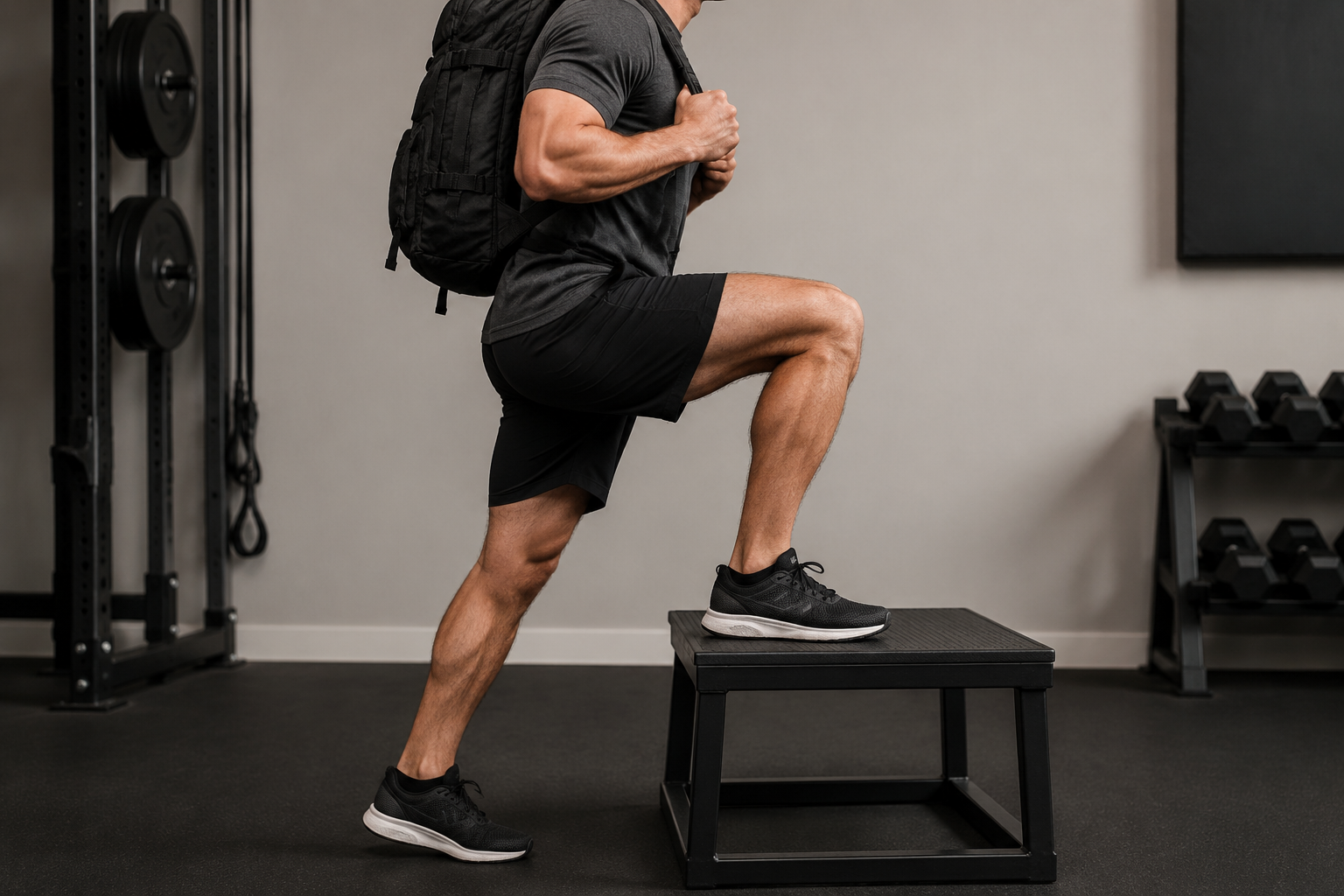
This is where the plan starts to look like Mount Olympus training instead of general fitness. Step-ups become longer and more loaded. Easy aerobic work stays in the week because it lets you absorb the heavier sessions. If you have only one stair, alternate legs patiently and count time, not glory.
| Week | Mon | Tue | Wed | Thu | Fri | Sat | Sun |
|---|---|---|---|---|---|---|---|
| 5 | Rest + mobility | 60 min Zone 2 | Weighted step-ups: 5x8 each leg, backpack 10–15%; strength: 3x10 split squats, 3x12 rows, 3x40 sec plank | 45 min Zone 2 + 6 x 30 sec Zone 3 stairs | Rest | 105 min step/walk mix, backpack 10–15% | 45 min recovery walk + eccentric lowers 2x6 each leg |
| 6 | Rest | 65 min Zone 2 | Weighted step-ups: 6x8 each leg, backpack 15%; strength: 3x8 reverse lunges, 3x10 push-ups, 3x12 rows | 50 min Zone 2 stair walk | 20 min mobility + calves | 120 min long step session, backpack 15%, mostly Zone 2 | 45 min recovery walk |
| 7 | Rest + soft tissue | 60 min Zone 2 with 8 x 1 min Zone 3 stairs | Weighted step-ups: 5x10 each leg, backpack 15–20%; controlled lowers 3x6 each leg; core 3 rounds | 55 min Zone 2 | Rest | 135 min step/walk mix, backpack 15–20% | 50 min easy walk + mobility |
| 8 | Rest | 50 min Zone 2 | Strength deload: 4x8 weighted step-ups each leg, backpack 15%; 2x8 controlled lowers; light upper body | 45 min Zone 1–2 | Rest | 105 min long easy session, backpack 15% | 45 min recovery walk |
Step-up form matters more as the pack gets heavier. Plant the whole foot, drive through the working leg, stand tall before stepping down, and avoid bouncing off the floor with the trailing leg. A higher box is not automatically better; if a 14–24 inch box makes every rep twisty or noisy, use the lower step and accumulate clean volume.[3][5]
Do Not Undertrain the Descent
The climb up gets most of the attention because it is easy to measure. The descent is where tired legs, loose footing, and braking forces make people suddenly less graceful. Outdoor Adventure Training reports that descending can place forces up to 10 times body weight on the knees, which is why quad tolerance and controlled lowering belong in the plan rather than as optional accessories.[6]
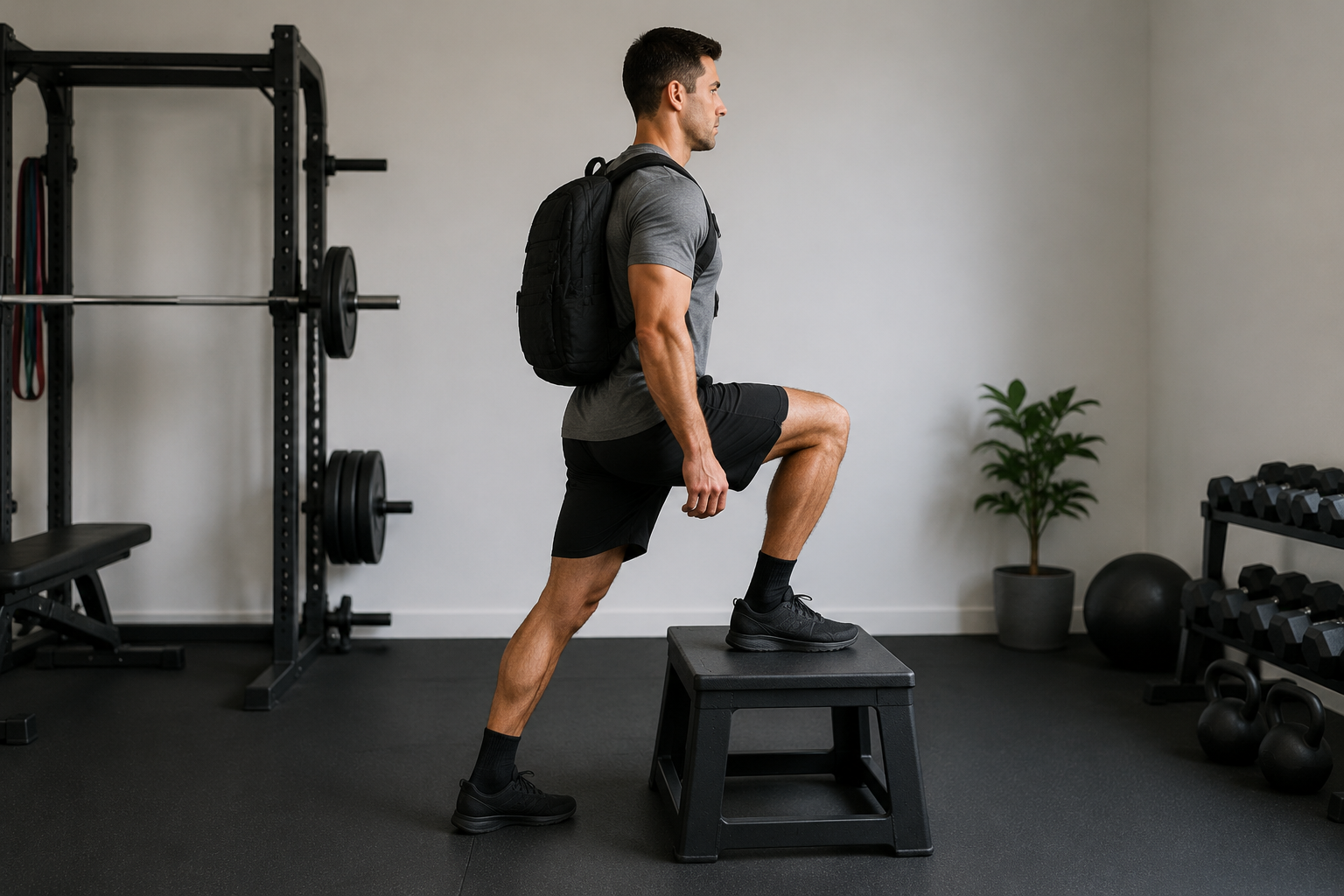
The main home drill is the controlled reverse step-down. Stand on the step, keep one foot planted, and lower the other foot toward the floor over three to four seconds. Touch lightly, then return to the top using both control and balance. The lowering phase is the point. If you drop, thud, or collapse inward at the knee, the rep is too heavy, too high, or too fast.
- Start with 2 sets of 6 reps each leg once per week in Week 3.
- Build to 3–4 sets of 6–8 reps each leg in Weeks 7–10.
- Use no pack at first; add light pack load only when the lowering phase stays quiet.
- Keep at least one easy day after the hardest eccentric session.
This work can create delayed soreness even when the session feels modest. That is not a reason to chase soreness. It is a reason to put the hardest eccentric work far enough from your longest step session that both can be useful.
Weeks 9–12: Specificity, Peak, and Taper
The final block makes the training resemble the climb as much as a room can. The pack reaches its heaviest planned load. The long sessions become mentally plain on purpose. The scramble simulation adds crawling, bracing, and controlled movement under fatigue, while staying honest about what it cannot reproduce.
| Week | Mon | Tue | Wed | Thu | Fri | Sat | Sun |
|---|---|---|---|---|---|---|---|
| 9 | Rest + mobility | 70 min Zone 2 stair or step walk, backpack 15–20% | Weighted step-ups: 6x10 each leg, backpack 20%; controlled lowers 3x6 each leg; rows and planks | 55 min Zone 2 + 10 min easy crawling/bear-position movement | Rest | 150 min long step/walk session, backpack 20%, steady Zone 2 | 45 min recovery walk |
| 10 | Rest | 75 min Zone 2 with 8 x 1 min Zone 3 stair repeats | Weighted step-ups: 5x12 each leg, backpack 20–25%; controlled lowers 4x6 each leg; upper-body pulling | 60 min Zone 2 | 20 min mobility + balance: single-leg stands, slow step-downs | 165 min long vertical substitute session, backpack 20–25% | 45–60 min recovery walk |
| 11 | Rest + mobility | 60 min Zone 2, backpack 15–20% | Peak strength: 4x10 step-ups each leg, backpack 20–25%; controlled lowers 3x6; light scramble circuit | 45 min Zone 1–2 | Rest | 120 min long session, backpack 15–20%, finish fresh | 40 min easy walk |
| 12 | Rest | 40 min Zone 2, unloaded or very light pack | Light tune-up: 2x8 step-ups each leg, 2x6 controlled lowers, 2x30 sec plank | 30 min easy walk + mobility | Rest | 20–30 min shakeout walk if travel allows | Rest or climb schedule |
Some mountaineering training uses sport-specific pack progression toward 25–35% of body weight. Treat that as an upper range, not a dare. For this plan, reaching 20–25% with clean step mechanics is more useful than staggering around the room with a heroic load and bad knees.
The Scramble Simulation Is Only a Fitness Placeholder
The final section from Skala at 2,866 meters to Mytikas at 2,917 meters is commonly described as a Class III scramble. That classification matters because the limiting factor is not just conditioning; it includes balance, hand-and-foot movement, route choice, weather, rock, and comfort with exposure.[1][7]
At home, you can prepare the supporting pieces: bear crawls, plank shoulder taps, loaded carries, slow step-downs, single-leg balance, and getting up and down from the floor with a pack. You cannot simulate the consequence of a real exposed ridge in a carpeted bedroom. If exposure makes you freeze, the fix is not another set of step-ups; it is appropriate route guidance, conditions judgment, and prior scrambling practice where mistakes are managed.
How to Adjust the Plan Without Breaking It
The plan is built around transfer, so substitutions should preserve the job of the session. A long Zone 2 step session can become a long stairwell session. Weighted step-ups can become split squats only if you still keep separate vertical repetition elsewhere. Controlled lowers should not disappear just because they are less exciting than uphill work.
| Problem | Adjustment |
|---|---|
| Low ceiling | Use a lower step and increase time instead of height. |
| No step platform | Use a building stair, sturdy bottom stair, or stable low box. |
| Downstairs neighbors | Train earlier, use dense matting, avoid jumping, and step down silently. |
| Knee irritation | Lower the step, reduce pack load, slow the progression, and keep pain-free range only. |
| No long weekday window | Split one aerobic day into two shorter Zone 2 sessions, but keep the weekend long session intact when possible. |
| Already strong but poor endurance | Do not add more strength work; add Zone 2 time and longer step blocks. |
For a more general way to scale home training beyond this climb, use the home gym workout plan equipment tier. For this specific plan, resist the temptation to replace boring step volume with a prettier full-body circuit. Mount Olympus will ask for repeated uphill and repeated braking on the way down.
Recovery Rules That Keep the Plan Usable
A compact home gym makes training convenient, which also makes it easy to stack hard sessions too closely. Keep one full rest day each week. Put the longest session on a day when you can eat afterward and sleep normally. If eccentric lowers make stairs unpleasant two days later, cut their volume before cutting the aerobic base.
- Warm up for 8–10 minutes before step sessions with easy walking, calf raises, hip circles, and unloaded step-ups.
- Keep easy days easy enough that they restore movement rather than prove discipline.
- Increase only one major stress at a time: step height, duration, pack load, or intensity.
- Use the taper in Week 12; do not try to earn fitness in the final few days.
Readiness Check Before You Go
By the end of this plan, you should be able to complete the Week 9 or Week 10 long session with a weighted pack, return to normal walking the next day, and perform controlled step-downs without knee collapse or lingering sharp pain. You should also know what pack load you tolerate, what shoes you trust on long stepping days, and how your stomach handles food during steady work.
That is a good home-gym outcome. It means the small room has prepared the parts it can prepare: aerobic durability, vertical repetition, loaded legs, and descent resilience. The remaining question is not fitness alone. The Skala-to-Mytikas scramble still requires exposure tolerance, balance, conditions judgment, and the willingness to turn around if the mountain is asking for skills you do not have that day.
References
- Mount Olympus Climb, Much Better Adventures, 2025.
- Mount Olympus Greece Hiking Guide, The Best Viewpoints, 2026.
- Training for Mountaineering, Alpine Ascents International.
- Training for the Uphill Athlete, Uphill Athlete.
- Hiking Fitness: 7 Exercises to Get You Trail Ready, Appalachian Mountain Club.
- Downhill Hiking Knee Load and Eccentric Training, Outdoor Adventure Training, 2025.
- Mount Olympus Guided Ascent, Bulguides, 2024.
Best for
Before you buy
Verify an item, or start using this build
Spot a stale price or spec?
Prices and stock change. If something in this build no longer matches what you found at checkout, let us know so we can recheck it.