
Home Gym Builds / $0-100 / apartment
Hydration Tips for Home Exercise Without Spending a Fortune
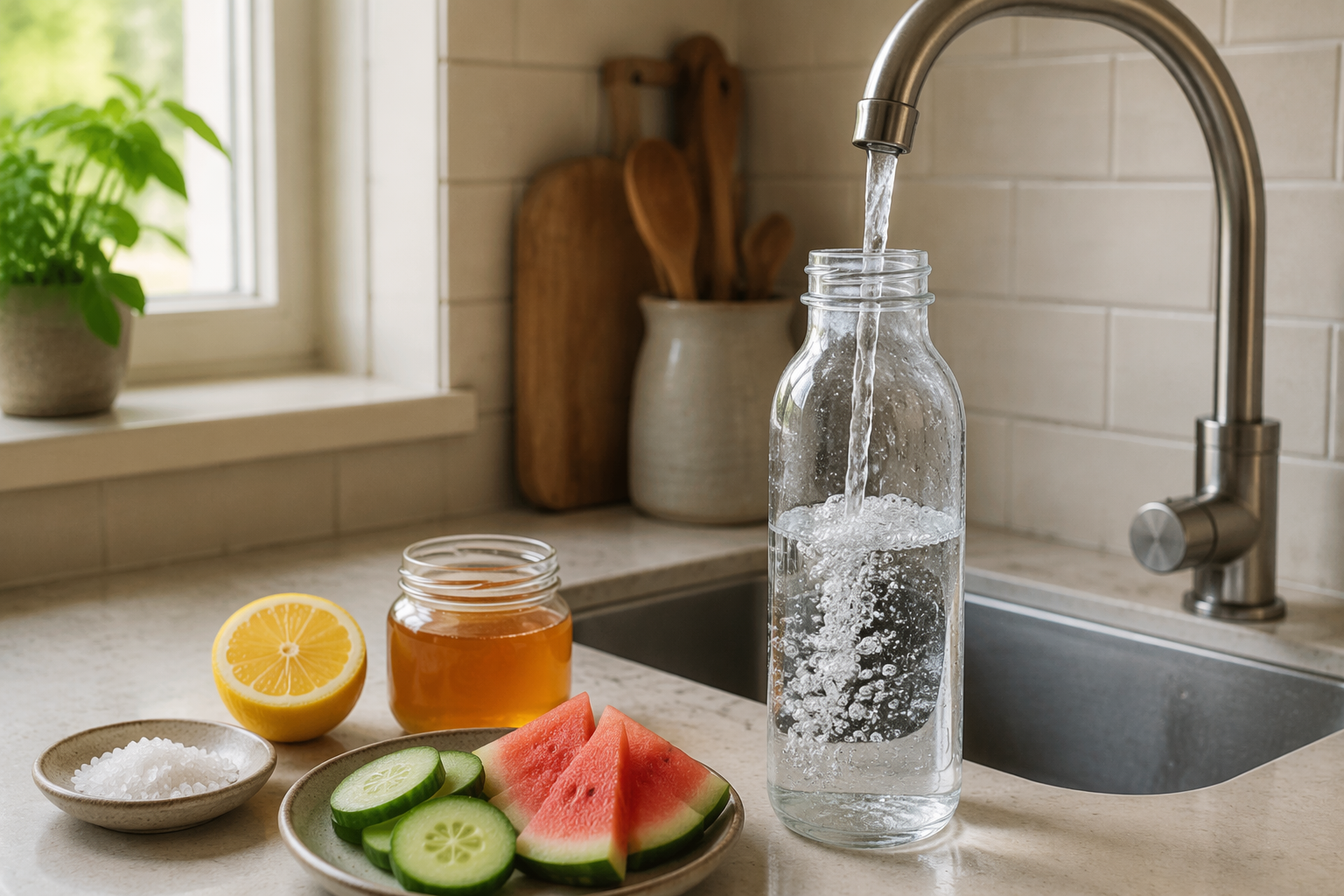
Most hydration advice for home exercise pushes expensive products, but effective hydration requires nothing more than tap water, table salt, and kitchen ingredients. This guide provides three DIY electrolyte tiers under $0.20 per serving and explains when water alone is sufficient, saving you money without compromising performance.
- Budget tier
- $0-100
- Space type
- apartment
- Floor footprint
- None
By Editorial Team
Itemized build and cost breakdown
- Total cost estimate
- Under $0.20 per serving
- Included equipment
- Water bottle, table salt, honey/sugar, orange juice
Prices and specs on this build are rechecked periodically — if something looks stale, flag it below.
You fill a bottle at the kitchen sink, slide the coffee table two feet to the left, and then the doubt creeps in: is plain water too basic now? Search for hydration tips for home exercise and half the answers seem to come with packets, powders, flavored tablets, or a bottle that needs charging.
For most home workouts under 60 minutes in normal indoor conditions, water is enough. Harvard’s Nutrition Source says electrolyte drinks are generally unnecessary for most people doing routine exercise under 60 minutes; plain water does the job.[1] That covers a lot of living-room strength circuits, bodyweight sessions, yoga flows, short indoor cycling rides, and beginner dumbbell workouts.
The exception is not a brand. It is a situation: sessions that run longer than an hour, rooms that are unusually hot or humid, heavy sweaters, visible salt on skin or clothes, or repeated headaches, sluggishness, or cramping during workouts. In those cases, electrolytes may be useful. The cheapest adequate option is usually still sitting in the kitchen.
The Simple Decision: Water First, Electrolytes When Conditions Change
Start with the workout in front of you, not the label on a tub. If the session is moderate, indoors, and under an hour, drink water before and during as needed. If you are already well hydrated that day, you do not need to turn a 35-minute mat workout into a sports nutrition event.
A practical split looks like this:
| Workout situation | Lowest-cost drink that usually fits |
|---|---|
| Under 60 minutes, normal room temperature, ordinary sweat | Plain water |
| Under 60 minutes but hot room, humid room, or unusually heavy sweat | Water first; consider a light homemade electrolyte drink if symptoms repeat |
| Over 60 minutes of sustained effort | Homemade electrolyte drink |
| Visible salt marks on skin or clothes after training | Homemade electrolyte drink may be useful |
| Kidney disease, hypertension, heart condition, or sodium restriction | Ask a clinician before adding salt-based recipes |
That last row matters. Table salt is useful because sodium is one of the main electrolytes lost in sweat, but “kitchen ingredient” does not mean “risk-free for everyone.” If you have kidney issues, high blood pressure, a heart condition, or a sodium-restricted diet, do not treat a general recipe as personal medical advice.
The Under-$0.20 DIY Hydration Framework
The most useful recipe in this whole topic is not complicated: water, a little salt, orange juice, and honey or sugar. Hopkins Medicine gives a homemade sports drink formula built from those ingredients, and this version comes in under about $0.15 per liter while meeting ACSM-style electrolyte replacement guidance.[2]
That is the point where the budget math gets hard to ignore. If a packet costs more than the whole bottle you are mixing at home, it should be buying you convenience, flavor, or portability—not basic permission to exercise.
| Tier | Use it when | What goes in it | Approximate cost |
|---|---|---|---|
| 1. Basic salt-water-sugar | You need a cheap electrolyte option for longer or sweatier sessions | Water, a small pinch of table salt, sugar or honey | About $0.05 per serving |
| 2. Fruit-based kitchen mix | You want better flavor and some carbohydrate without buying packets | Water, salt, orange juice or citrus, honey or sugar | About $0.11-$0.15 per liter |
| 3. Coconut-water variant | You already buy coconut water and want a more drinkable homemade option | Coconut water, water as needed, salt, optional citrus | About $0.20 per serving |
The table is not a ladder of purity. Tier 3 is not “better” because it costs more. Tier 1 may be enough if the job is simply replacing some sodium and fluid during a sweaty session. Tier 2 is the most useful everyday compromise because citrus and a little sweetness make the drink easier to sip, which matters more than pretending everyone enjoys salted water.
Tier 1: Salt, Water, and a Little Sugar
Use this when the workout crosses from “I could just sip water” into “I am sweating enough that plain water is not cutting it.” Mix water with a small pinch of table salt and a little sugar or honey. The salt helps replace sodium; the sugar makes the drink more tolerable and can help during longer effort.
This is the emergency drawer version. It replaces the idea that you need tablets on hand before you are allowed to do a longer indoor workout. It does not need a flavor system, a scoop, or a subscription.
Tier 2: The Hopkins-Style Kitchen Sports Drink
For the version most people will actually drink, use the Hopkins-style structure: water, salt, orange juice, and honey or sugar.[2] Orange juice brings flavor and carbohydrate; honey or sugar rounds it out; salt handles the sodium piece. Lemon or another citrus can work for taste, but orange juice is the formula named in the source.
This is the one to try if you are doing a longer home cycling ride, a sweaty summer bodyweight session in a room without great airflow, or back-to-back workouts where you know from experience that water alone leaves you dull and headachy. Make a bottle, sip it, and notice whether the symptoms improve across a few similar sessions.
Tier 3: Coconut Water, If It Is Already in Your Budget
Coconut water can make a homemade drink more pleasant, but it is not the budget baseline. Use it if you already buy it, like the taste, or need a drink you will reliably sip. If buying coconut water would crowd out dumbbells, bands, floor padding, or actual groceries, the cheaper tiers do the practical job.
Before, During, and After a Normal Home Workout
Hydration does not have to be dramatic. The easiest plan is to avoid starting dry, sip during the workout, and replace what you lost afterward. Mass General Brigham’s athlete hydration guidance gives cup-based before/during/after amounts derived from exercise hydration recommendations, but a home exerciser should still scale the idea to workout length, sweat, and comfort rather than force exact drinking.[3]
- Before: Drink water earlier in the day, not just in the five minutes before the warmup.
- During: Keep a bottle nearby and sip, especially if the room is warm or the session is intense.
- After: Drink enough to feel normal again, then eat regular food; hydration is one part of recovery, not the whole job.
- For longer or sweatier sessions: Use one of the homemade electrolyte tiers instead of reaching automatically for a commercial drink.
If you are building the rest of the recovery habit around stretching, food, and sleep, hydration fits naturally into your complete post-workout recovery routine at home. The drink does not need to carry the entire recovery phase on its back.
Do Not Chug Just Because the Bottle Is There
One quiet mistake in home workouts is treating hydration like a catch-up contest. You forget water all morning, then try to fix it with a giant bottle right before squats. That can leave you sloshy, uncomfortable, and no better prepared.
There is also such a thing as too much water during exercise. Houston Methodist warns that overdrinking can contribute to hyponatremia, a dangerous dilution of blood sodium, and recommends drinking to need rather than forcing excessive water intake.[4] For ordinary home training, sipping beats chugging.
This is another reason not to turn “water is enough” into “water at any amount is always harmless.” A steady bottle nearby is useful. A personal challenge to empty the biggest jug in the apartment is not.
The Zero-Cost Check: Look Before You Guess
The cheapest hydration monitor is still the bathroom check. Pale lemonade-colored urine usually suggests you are in a reasonable hydration zone; darker apple-juice color suggests you may be behind. It is not a medical test, and supplements or some foods can change color, but it is useful enough for daily self-checking.
Thirst deserves attention too, but it can show up late. The research brief notes a common sports-hydration warning: by the time you feel thirsty, you may already be around 2% dehydrated, enough to affect performance.[3] That does not mean you need to panic-buy electrolyte packets. It means a headache halfway through a workout may be a hydration clue, not proof that you are out of shape.
- If urine is pale and workouts feel normal: water is probably doing its job.
- If urine is often dark before workouts: drink more earlier in the day.
- If headaches or sluggishness repeat in hot or sweaty sessions: try a homemade electrolyte drink and compare similar workouts.
- If symptoms are severe, unusual, or persistent: stop treating it as a hydration puzzle and ask a clinician.
Food Counts, But It Does Not Replace the Bottle
Water-rich foods are underrated because nobody can sell you a cucumber as a “hydration system.” Harvard Health lists cucumber at 96% water, tomatoes at 95%, spinach at 93%, and watermelon at 92%; strawberries, cantaloupe, and bell peppers also contribute meaningful water.[5]
This belongs in the daily hydration layer. A lunch with tomatoes, spinach, and fruit helps your total fluid intake. Watermelon after a workout can be pleasant and useful. But water-rich foods are not a magic pre-workout fix if you start a sweaty session already behind.
| Food | Water content |
|---|---|
| Cucumber | 96% |
| Tomatoes | 95% |
| Spinach | 93% |
| Watermelon | 92% |
This is also where the old “8 glasses a day” rule gets less useful. NASM notes that daily water needs vary by factors such as body size, activity, sweat rate, and environment, and gives broader daily intake ranges of 91 ounces for women and 125 ounces for men from total water sources.[6] Eight glasses is not automatically harmful as a rough habit. It is just too blunt to guide every body, every apartment, and every workout.
Where Commercial Drinks Fit
Commercial electrolyte drinks and powders are convenient. That is the honest case for them. They are easy to pack, easy to dose, and usually taste better than a rushed salt-water mix.
Convenience is not the same as necessity. For the typical under-60-minute home workout, plain water is sufficient, and the evidence base cited here does not require branded powders, hydration multiplier packets, expensive tablets, or smart bottles for basic exercise support.[1] If your setup budget is $0-$300, that money usually works harder as a mat that does not slide, a pair of dumbbells you will use, or bands that give you more exercise options. The same logic applies when planning complete budget home gym starter kits: buy the thing that removes the real constraint.
If packets help you stay consistent during long indoor training, travel, or very sweaty sessions, use them. Just do not let a product category convince you that tap water is amateur hour.
A Practical Home-Workout Hydration Plan
For a normal 30- to 45-minute home session, the plan is almost boring: drink water during the day, keep a bottle nearby, sip when needed, and check urine color later. If the room is hot, the workout is longer, or sweat leaves salt marks, mix a cheap homemade electrolyte drink with water, salt, citrus or orange juice, and honey or sugar.
If you routinely train in a small room without much airflow, hydration is only one environmental variable. Temperature, humidity, ventilation, and air quality can change how hard indoor exercise feels; that is the same practical territory as learning how to work out indoors when the air quality is bad.
The smart budget move is not rejecting electrolytes. It is refusing to buy them by default. Use water for the workouts where water is enough. Use table salt and kitchen ingredients when the session actually asks for more. Step outside the general recipe when your medical context makes sodium something a clinician should help you manage.
References
- Do I need electrolyte drinks? Harvard T.H. Chan School of Public Health, The Nutrition Source
- Sports and Hydration for Athletes: Q&A with a Dietitian Hopkins Medicine
- Hydration Tips for Athletes Mass General Brigham
- Can You Drink Too Much Water During Exercise? Houston Methodist
- Using food to stay hydrated Harvard Health
- Recommended Daily Water Intake for Health and Performance NASM
Best for
Before you buy
Verify an item, or start using this build
Spot a stale price or spec?
Prices and stock change. If something in this build no longer matches what you found at checkout, let us know so we can recheck it.