
Lower Cholesterol at Home with a 7-Day Workout and Diet Plan
This 7-day plan combines bodyweight home workouts and affordable dietary swaps to help lower LDL cholesterol, backed by AHA, Mayo Clinic, and Cleveland Clinic guidance.
- Citation source
- American Heart Association
- Evidence level
- Formal position stand
- Recommended frequency
- 150 minutes moderate aerobic per week, muscle-strengthening 2 days per week
Before you start: use this as a home plan, not medical treatment
If you have chest pain, dizziness with exertion, uncontrolled blood pressure, diabetes complications, a recent cardiac event, or you have been told to limit exercise, check with a healthcare professional before starting. If you already take a statin or another cholesterol medication, do not stop or adjust it because of a workout or food plan. This is a repeatable home routine to support better cholesterol numbers; your lipid panel and clinician still decide whether it is enough.
For this week, the job is simple: hit the adult baseline of at least 150 minutes of moderate aerobic activity and add muscle-strengthening work on at least two days, using your floor, a wall, a chair, and whatever walking space you have available.[1] On the food side, the plan repeats two moves that matter most at the grocery level: replace saturated fats with unsaturated fats, and build meals around soluble-fiber foods such as oats, beans, lentils, apples, barley, carrots, and berries.[2][3][4]
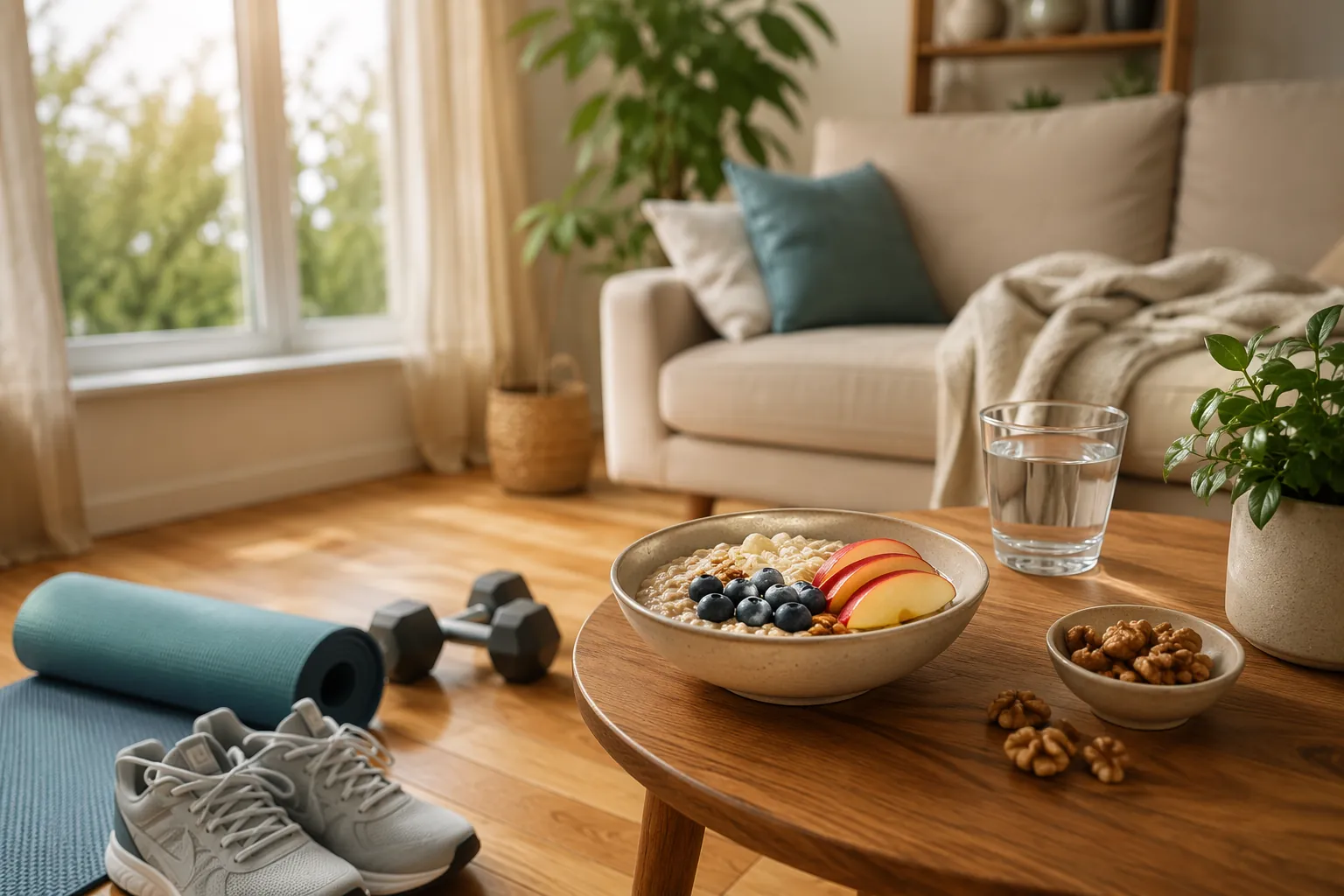
The 7-day home workout and diet map
This plan is built for a normal week, not a perfect one. The cardio minutes can be walking outside, marching in place, low-impact step-touches in the living room, or quiet cycling if you already own a bike. The strength days use bodyweight moves because the cholesterol-supporting habit should not depend on buying equipment first.
| Day | Home movement target | Food move | Plain-language goal |
|---|---|---|---|
| Day 1 | 30 minutes moderate cardio: brisk walk, hallway laps, or marching in place | Oatmeal with berries or sliced apple; add walnuts or almonds if you have them | Start the week with soluble fiber at breakfast instead of a pastry, biscuit, or butter-heavy option |
| Day 2 | 20 minutes moderate cardio + 15–20 minutes bodyweight strength | Beans or lentils replace red meat at one meal | Keep dinner filling while reducing saturated-fat load |
| Day 3 | 30 minutes moderate cardio | Swap butter, cream sauce, or full-fat cheese-heavy lunch for an unsaturated-fat option | Use avocado, nuts, olive-oil-based dressing, or canned tuna/salmon instead of treating all fat as the enemy |
| Day 4 | 25 minutes quiet cardio: step-touch, low-impact intervals, or indoor cycling if available | Barley, beans, or lentils added to soup, salad, or leftovers | Make soluble fiber show up outside breakfast |
| Day 5 | 20 minutes moderate cardio + 15–20 minutes bodyweight strength | Second bean or lentil meal; add fruit or carrots as the snack | Repeat the meal swap before the weekend gets less structured |
| Day 6 | 30 minutes moderate cardio | Canned tuna or salmon, beans, or nuts used in place of processed or fatty meat | Make the convenient choice cholesterol-friendlier without cooking a special diet meal |
| Day 7 | 15 minutes easy-to-moderate walk, marching, or mobility-heavy cardio | Prep oats, beans/lentils, fruit, and nuts for the next week | Protect the routine by making the next Monday easier |
The week totals about 170 minutes of aerobic movement, which gives a small cushion if one session gets cut short. If your week is crowded, protect the two strength days and enough cardio to reach 150 minutes. If your joints are irritated, shorten the step length, use chair-supported squats, skip lunges, and keep the pace at a level where you can continue without bracing for the next move.
Day 1: make breakfast and movement boring on purpose
Walk for 30 minutes if the weather cooperates. If it does not, march in place during a show, walk a hallway, or do low step-touches beside the couch. The pace should feel like work, but not like a test. You should be warm, breathing faster, and still able to speak in short sentences.
Breakfast is oats with fruit. Rolled oats are cheap, shelf-stable, and forgiving: microwave them, cook them on the stove, or make them overnight. Add berries or apple for more fiber, then a small handful of walnuts or almonds if your budget allows. The point is not to create a café bowl. The point is to replace a saturated-fat-heavy or refined breakfast with a bowl you can repeat half-asleep.
Day 2: strength work, then a bean dinner
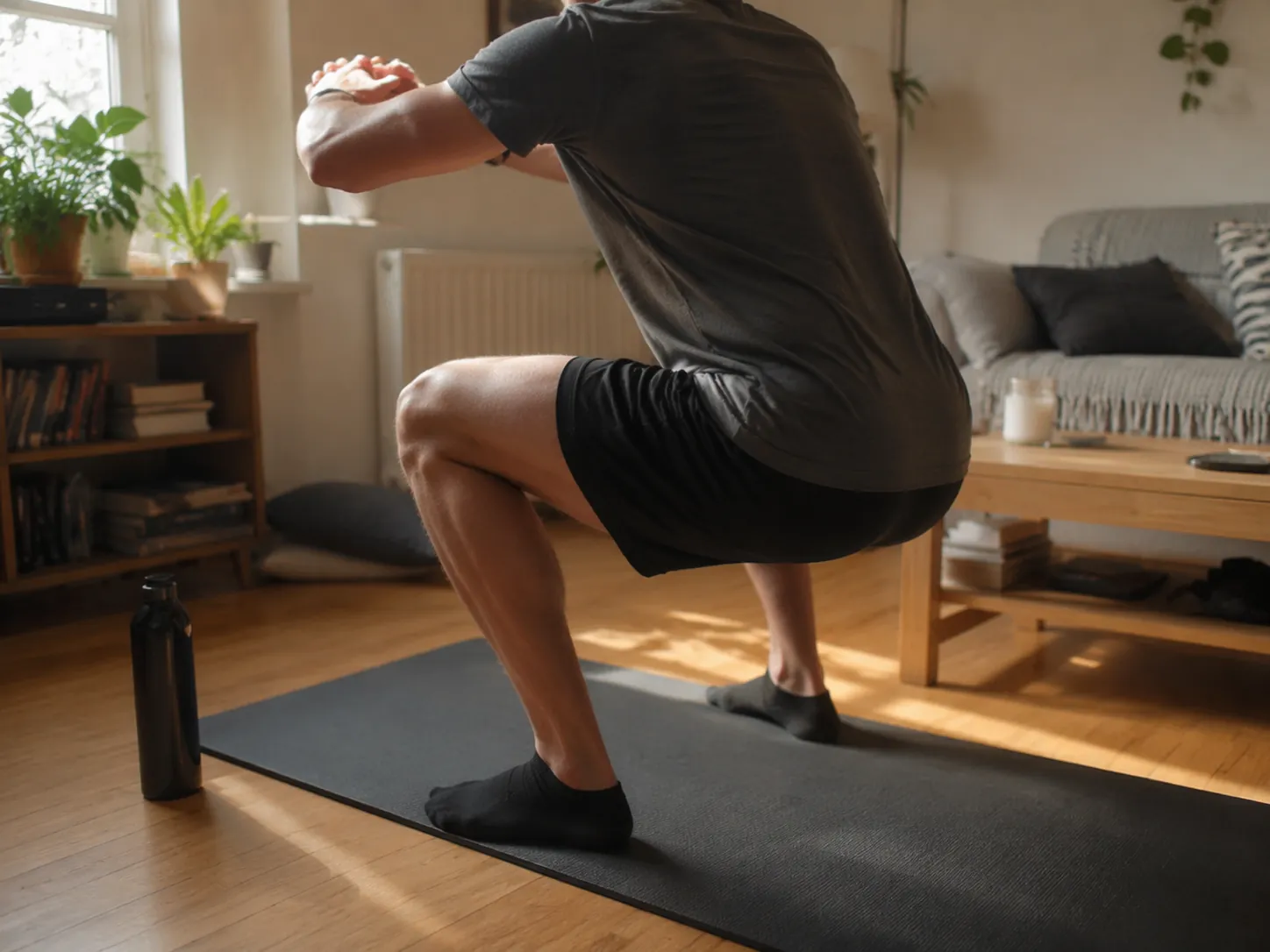
Do 20 minutes of moderate cardio first or later in the day. Then run two rounds of this bodyweight circuit: 8–12 chair squats, 6–10 incline pushups against a counter or wall, 8 reverse lunges per side or step-backs without a deep knee bend, and a 15–30 second plank from the knees or against a counter. Rest as needed. The circuit should feel useful, not punishing.
Dinner gets the first bigger food swap: beans or lentils replace red meat. That can mean lentil soup, beans in a tortilla, chickpeas in a salad, or a bean-and-vegetable bowl over rice. If you cook for other people, this is where the plan needs diplomacy. Keep the familiar seasoning, sauce, or side dish, and change the protein more quietly.
If you want a fuller strength template for these two weekly sessions, a 4-week home workout plan for busy parents can give you more structure without changing the spirit of this plan. For upper-body variety, especially if pushups get old, use a no-equipment upper body workout rather than buying equipment immediately.
Day 3: keep the walk, change the fat source
Repeat 30 minutes of moderate cardio. If your legs are sore from the circuit, make it a flat walk or gentle marching session. You are collecting minutes, not proving toughness.
The food move is a saturated-fat swap. That might be tuna with avocado instead of a buttered grilled cheese, olive-oil-based dressing instead of a creamy dressing, nuts instead of chips, or a smaller amount of cheese with more beans and vegetables around it. The evidence-backed idea is replacement, not fat elimination. A plan that makes every meal dry and joyless usually loses to the refrigerator by Thursday.
Day 4: quiet cardio and a second fiber anchor
Use 25 minutes of low-impact cardio. Try one minute of marching, one minute of step-touch, one minute of gentle knee lifts, and one minute easy; repeat that pattern. If you already own an indoor bike and need apartment-friendly options, these quiet indoor cycling workouts for small apartments fit the same cardio slot.
Today’s food job is to move soluble fiber into lunch or dinner. Add barley to soup, lentils to leftovers, beans to salad, or carrots and beans beside whatever else the household is eating. This is the difference between a cholesterol plan and a one-good-breakfast plan.
Day 5: repeat the circuit before the weekend interrupts you
Do another 20 minutes of moderate cardio and the same bodyweight circuit from Day 2. If the first round felt too easy, add a third round or slow the lowering phase of squats and pushups. If it felt rough, keep two rounds and clean up the form. Moderate resistance work is enough for this purpose; there is no special cholesterol prize for turning Friday into a max-effort gym session.
Repeat the bean or lentil meal today, because one lonely serving of lentils is not a habit. If dinner is already planned, put beans into lunch. If nobody else in the house wants them, keep a can of beans or a jar of cooked lentils as the add-on for your plate.
Day 6: use convenience without giving up the plan
Take the 30-minute cardio session wherever it fits: morning walk, errand walk, treadmill if you already have one, or a living-room march broken into two 15-minute pieces. The split session still counts toward the weekly habit if it keeps you moving.
For food, lean on pantry convenience: canned tuna or salmon, beans, nuts, fruit, carrots, oats, or leftovers built around lentils. This is where expensive specialty cholesterol products can sneak into the cart. Most households get farther by making the ordinary foods visible and easy to grab.
Day 7: recover, then set up the next seven days
Move for 15 minutes at an easy-to-moderate pace. If you feel good, walk. If you feel stiff, march gently, do mobility work between short bouts of walking, or keep it easy. The goal is to finish the week without making Monday feel like a restart.
Then do the unglamorous part that makes the plan work: put oats where you can see them, rinse fruit, cook or buy beans and lentils, portion nuts if you tend to over-pour them, and decide which two meals next week will use beans or lentils instead of red meat. The household implementer deserves a plan that does not require a fresh decision at every meal.
Why the workout and food pairing works
LDL cholesterol is the number many people are told to lower because excess LDL can contribute to plaque buildup in arteries. HDL is often called “good” cholesterol, but the more useful idea is what HDL helps do: move cholesterol away from tissues and toward clearance. Exercise and food do not work through the same doorway, which is why pairing them is more practical than arguing over which one matters more.
Exercise should not be described as melting LDL out of your blood. Cleveland Clinic’s explanation is narrower and more useful: physical activity helps improve HDL and supports the liver’s role in clearing LDL from the blood.[5] In a 2022 American Heart Association journal study of 115 adults, 12 weeks of moderate exercise improved cholesterol efflux capacity by 13.5%, which means HDL function improved, not merely that someone earned a vague “heart healthy” label.[6]
Food works through a different lever. Soluble fiber helps reduce cholesterol absorption in the digestive tract, which is why oats, beans, lentils, barley, apples, and similar foods keep showing up in cholesterol guidance.[4] Saturated-fat replacement is the other lever: swapping butter, fatty meats, and full-fat dairy patterns toward unsaturated fats changes what your usual meals are made from, rather than asking you to eat a no-fat diet.[2]
That is the reason the 7-day plan pairs movement with food instead of putting workouts in one week and diet changes in another. A walk does one job. Oats and beans do another. Repeating both gives your body more than one route toward better cholesterol control.
The food swaps that do most of the work
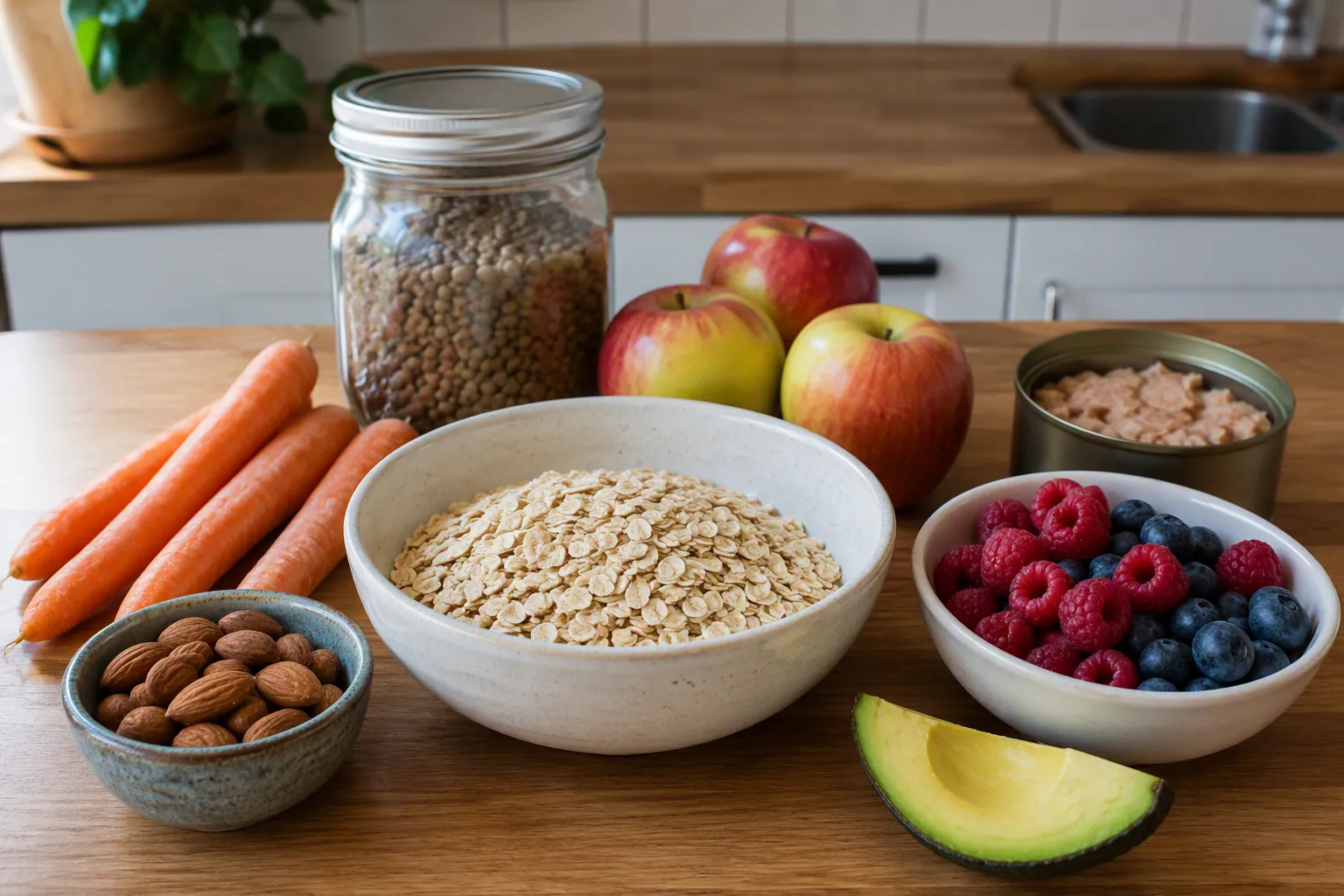
A cholesterol-lowering grocery plan does not need to look like a glossy Mediterranean cookbook spread, even though Mediterranean-style eating is one of the best-studied patterns for cholesterol and heart health.[5] For a small kitchen and a normal budget, the useful version is more repetitive: oats, beans, lentils, apples, barley, carrots, berries, nuts, avocado when affordable, and canned tuna or salmon.
| If this is the usual choice | Try this instead | Why it helps the plan |
|---|---|---|
| Pastry, biscuit, or buttered toast breakfast | Oatmeal with apple, berries, or nuts | Adds soluble fiber early, when breakfast is usually easiest to repeat |
| Red meat several nights a week | Beans or lentils 2–3 meals a week | Keeps the meal filling while reducing reliance on saturated-fat-heavy proteins |
| Creamy dressing or cheese-heavy lunch | Olive-oil-based dressing, avocado, tuna, salmon, or nuts | Replaces saturated-fat sources with unsaturated-fat options |
| Chips or sweets as the default snack | Apple, carrots, berries, or a small portion of nuts | Adds fiber or unsaturated fats without needing a specialty product |
| Plain refined grain side | Barley, beans, lentils, or oats used somewhere else that day | Gives soluble fiber another chance beyond breakfast |
The soluble-fiber target does not have to be perfect on day one. Mayo Clinic notes that 5 to 10 grams or more of soluble fiber daily can decrease LDL cholesterol.[4] In a real kitchen, that usually means stacking small choices: oats at breakfast, beans at lunch, fruit as a snack, and barley or lentils at dinner. One of those choices is helpful; several of them repeated through the week is the actual plan.
The saturated-fat side is mostly a substitution problem. Use beans or lentils where red meat usually sits. Choose nuts or avocado more often than butter or cream-based spreads. Use fish such as canned tuna or salmon when convenience matters. The American Heart Association’s cooking guidance emphasizes replacing foods higher in saturated fat with healthier options rather than treating dietary fat as something to erase.[2]
If your household resists “healthy food,” keep the outer shape of the meal familiar. Beans can go into chili. Lentils can go into soup. Oats can be sweetened with fruit. Tuna can become a sandwich. The cholesterol-supporting change is often the ingredient behind the meal, not a completely new dinner identity.
How hard the home workouts should feel
Moderate cardio is the backbone. It can be brisk walking, marching in place, low-impact intervals, or cycling if you already have access to it. The American Heart Association’s adult recommendation is at least 150 minutes per week of moderate-intensity aerobic activity, plus muscle-strengthening activity at least two days per week.[1] You do not need a gym version of cardio to meet that target.
For intensity, use the talk test. You should be able to talk, but not comfortably sing. In a small apartment, that may look like marching with deliberate arm swings, alternating step-touches, walking stairs if your knees tolerate them, or walking outside at a pace that makes you warmer within a few minutes. If jumping jacks bother your floor, knees, or downstairs neighbor, skip them. Quiet cardio done consistently beats noisy cardio you avoid.
The strength work is there because the weekly physical-activity baseline includes it, and because muscle-strengthening work helps keep the plan from becoming only walking. Squats, incline pushups, reverse lunges, planks, and wall sits are enough to start. A review comparing aerobic exercise, resistance training, and combined exercise found lipid benefits across modalities, and the plan here keeps resistance work moderate rather than turning it into high-intensity lifting.[7]
If you later want to add bands, dumbbells, or a more organized setup, do it because it helps you repeat the habit, not because cholesterol control requires a home gym. A home gym workout plan that grows with your equipment is useful once you are ready to build out. If space is tight, read the compact home gym mistakes to avoid before buying anything that has to live beside your couch.
Make the template fit your actual week
The 7-day plan is a template, not a contract. If Tuesday collapses, move the strength circuit to Wednesday. If dinner is already meat-based, make lunch the bean meal. If your knees dislike lunges, use chair squats and wall pushups. If your grocery budget is tight, prioritize oats, beans, lentils, apples, carrots, and canned fish before pricier foods like avocado or specialty nuts.
- Lowest-cost base: oats, dried or canned beans, lentils, apples, carrots, barley, and frozen berries when affordable.
- Noisy-neighbor cardio: marching, step-touch, low knee lifts, shadow boxing without bouncing, and indoor walking loops.
- Joint-friendlier strength: chair squats, wall pushups, counter planks, step-backs instead of deep lunges, and shorter ranges of motion.
- Busy-week minimum: protect two strength sessions and enough 10- to 30-minute cardio blocks to reach the weekly aerobic target.
The most common failure point is not misunderstanding cholesterol. It is asking the person who shops and cooks to perform a new routine with no shortcuts. Keep repeat foods on purpose. Cook extra lentils. Buy the oats you will actually eat. Keep the walking shoes near the door or the mat near the couch. A plan that can be restarted quickly is better than one that requires a full reset every time life gets in the way.
What to expect by week 12
Do not judge this by how your cholesterol “feels” after seven days. Cholesterol changes are measured with blood work, and individual response depends on baseline levels, genetics, medications, other health conditions, and how consistently the plan is repeated. The 12-week mark is a more realistic checkpoint: the AHA journal exercise study measured the 13.5% improvement in cholesterol efflux capacity after 12 weeks of moderate exercise, and Cleveland Clinic also frames cholesterol-related exercise changes over a multiweek timeline.[5][6]
Use the 7-day map for 12 weeks, adjusting the meals and movements so they fit your budget, joints, schedule, and household. Then review progress with a follow-up lipid test and your healthcare provider. If your LDL remains high, that does not mean the walks or oats were useless; it may mean you need a stronger medical plan alongside the home routine.
References
- American Heart Association Recommendations for Physical Activity in Adults — American Heart Association
- Cooking to Lower Cholesterol — American Heart Association, 2026
- 11 foods that can help lower your cholesterol — Harvard Health, 2026
- Cholesterol: Top foods to improve your numbers — Mayo Clinic
- Does Exercise Lower Cholesterol? — Cleveland Clinic, 2026
- Moderate- and High-Intensity Exercise Improves Lipoprotein Profile and Cholesterol Efflux Capacity — AHA Journal, 2022
- Differential Effects of Aerobic Exercise, Resistance Training and Combined Exercise Modalities on Cholesterol — PMC
This is general fitness education, not medical advice. For diagnosis or treatment of pain or injury, consult a qualified clinician.
Pick your next session
Browse all routines to find an appropriately-spaced next session.
Spot something off?
This content sits adjacent to health guidance — tell us if a citation or figure needs a correction.