Healthy eating habits for home fitness start with a very ordinary question: if your workout is later today, what should happen before, during, and after it? For most healthy adults doing home workouts, the answer is not a strict diet plan. It is a repeatable rhythm: eat an easy carb-plus-moderate-protein meal or snack 1–3 hours before training, refuel with protein plus carbs within about two hours afterward, and drink steadily before, during, and after the session.
That rhythm covers the parent squeezing in dumbbells at lunch, the beginner doing a 25-minute bodyweight circuit, and the person rolling out a mat for mobility work after dinner. The portions and urgency change with workout length and intensity, but the habits stay recognizable enough to survive a normal kitchen.
The three habits in one day
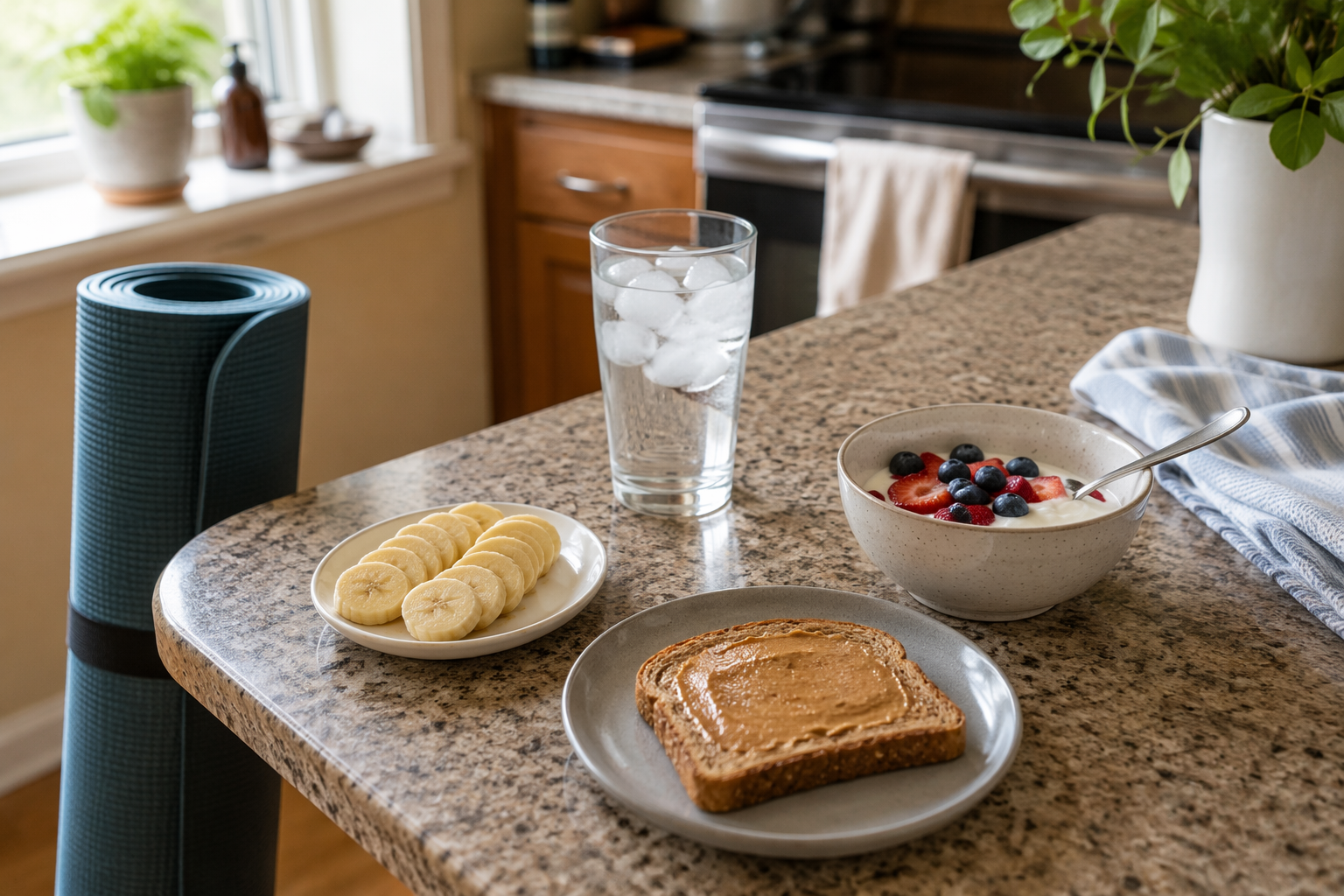
A home workout day does not need to begin with macro math. It helps more to know what decision comes next. The American Heart Association recommends fueling up about two hours before exercise with healthy carbohydrates and avoiding saturated fats that slow digestion; it gives examples such as oatmeal with banana, toast with peanut butter, and Greek yogurt with berries.[1]
| When | Habit | Simple options |
|---|---|---|
| 1–3 hours before | Eat easy carbohydrates with moderate protein | Oatmeal with banana; toast with peanut butter; Greek yogurt with berries |
| During most workouts under 60 minutes | Usually skip food; sip water | Water nearby; steady small sips |
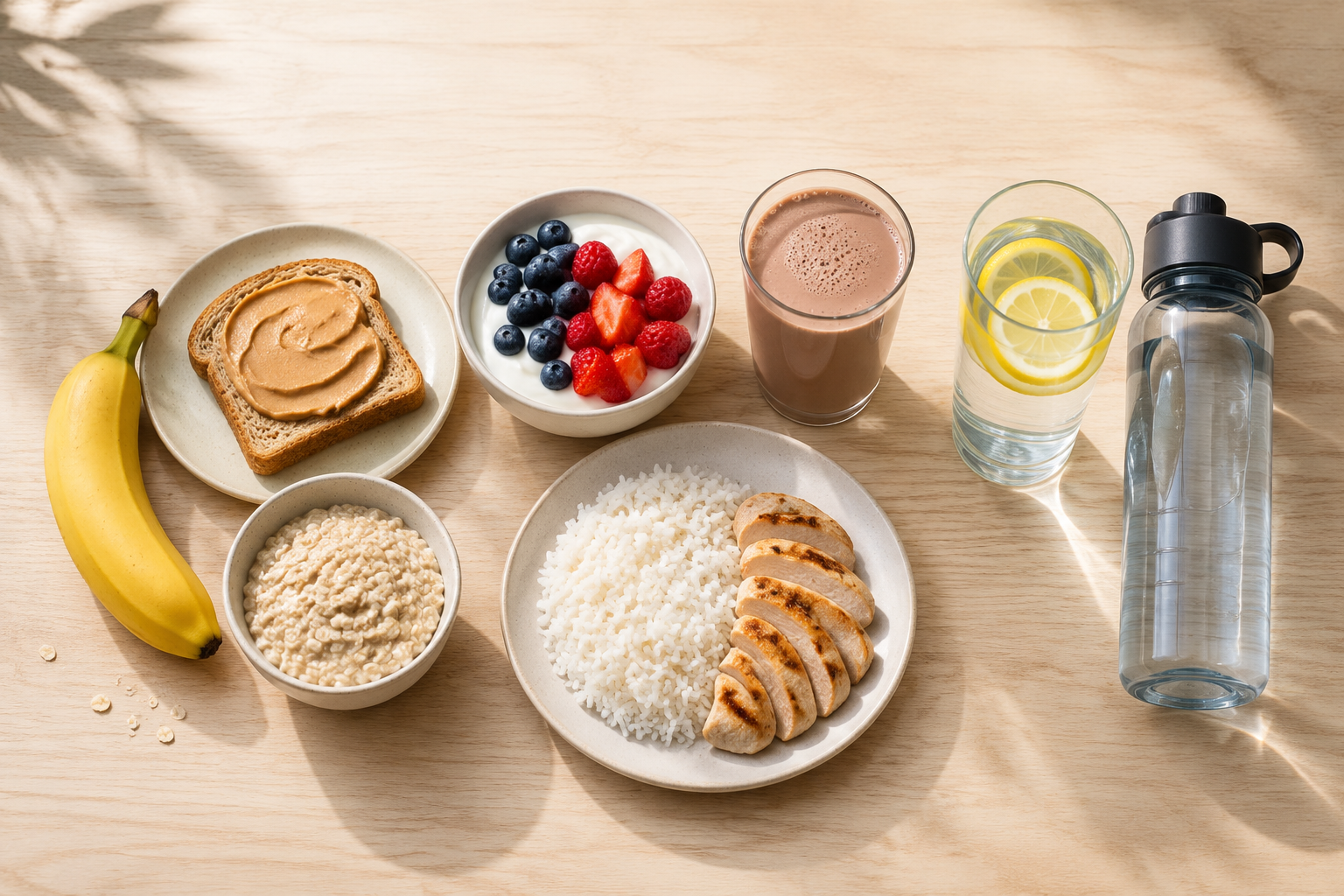
| Within about two hours after | Refuel with protein plus carbohydrates | Chicken and rice; tuna sandwich; Greek yogurt with berries; chocolate milk; protein shake with banana |
| Across the day | Hydrate before, during, and after | Water with meals; bottle during training; rehydrate afterward |
This table is enough for many workouts. The rest is adjustment: how much food feels comfortable before movement, whether the session is long enough to need fuel during it, and whether the workout was demanding enough that skipping the post-workout meal would leave you dragging into the next one.
Before the workout: eat something that will not argue with your stomach
The pre-workout meal has one job: make the workout easier to start and easier to finish. It does not have to be large, and it should not leave you feeling as if the first set of squats is competing with digestion.
For a workout later in the day, aim for a familiar meal or snack 1–3 hours beforehand. Carbohydrates are useful here because they are the body’s accessible exercise fuel. Moderate protein helps make the meal more sustaining. Heavy, greasy, or very high-fat meals are more likely to sit around, which is why the AHA’s advice to avoid saturated fats before exercise matters in real life, not just on paper.[1]
- Morning workout: oatmeal with banana, or toast with peanut butter if you want something smaller.
- Lunch-break workout: Greek yogurt with berries, or a half sandwich if the session is closer to midday.
- After-work workout: rice, chicken, and vegetables at lunch; then a banana or yogurt if dinner is still far away.
- Evening mobility session: a light snack may be enough, especially if dinner is soon.
Coffee can be part of the routine if it already agrees with you, but it is not a meal. If the only “fuel” before a strength session is coffee, the problem is not that the plan lacks a supplement. The problem is that the body is being asked to train on very little usable food.
The 1–3 hour window is also forgiving. If you ate a balanced lunch two hours ago, you may not need another snack before a short home session. If breakfast was five hours ago and you are about to do intervals in the living room, something simple is more useful than trying to power through and calling it discipline.
During the workout: most home sessions do not need snacks
For workouts under 60 minutes, food during exercise usually is not needed. The AHA’s guidance is straightforward on this point: save during-workout carbohydrates for longer, higher-intensity sessions, where 30–90 grams of carbohydrates per hour may be appropriate.[1]
That distinction matters at home because many workouts are short. A 20-minute bodyweight circuit, a beginner dumbbell routine, or a yoga flow does not automatically require a sports drink, gel, or mid-session snack. Water is usually the useful thing to keep within reach. If a session regularly runs long or feels intense enough that energy falls sharply, the answer may be a better pre-workout meal before reaching for during-workout fuel.
After the workout: protein plus carbs, within about two hours
Post-workout food is where many home exercisers accidentally undercut their own consistency. The workout ends, the laptop opens again, the laundry timer goes off, and the meal becomes “later.” A practical two-hour target prevents that drift.
The International Society of Sports Nutrition recommends eating high-quality protein within two hours after exercise to support muscle protein synthesis, according to Healthline’s 2026 update.[2] The useful everyday version is protein plus carbohydrates: protein supports muscle repair, while carbohydrates help replenish the energy used during training.
- Greek yogurt with berries when you want something quick and cold.
- Chicken and rice when the workout falls before a normal meal.
- A tuna sandwich when lunch has to do the recovery work.
- Chocolate milk when appetite is low and drinking feels easier than eating.
- A protein shake with a banana when convenience is the difference between refueling and skipping.
Harvard Health gives 8 ounces of chocolate milk as one example of a recovery option because it supplies carbohydrate, protein, fluid, and electrolytes in a simple package.[3] That does not make chocolate milk magic. It makes it a useful reminder that recovery food can be ordinary.
The timing conversation deserves some calm. A 2025 meta-analysis discussed by Healthline found no significant difference in strength or lean mass between eating protein soon before or soon after a workout, which complicates the older idea that an immediate “anabolic window” decides everything.[2] A 2024 review in Nutrients, however, reports that consuming protein and carbohydrates within 30 minutes to two hours after exercise can significantly enhance muscle protein synthesis and glycogen restoration.[4]
For a home exerciser, the sensible conclusion is narrow: the two-hour window is a useful habit, not a reason to panic. If dinner happens 30 minutes later, eat dinner. If the meeting runs long and your snack lands at two and a half hours, the workout was not wasted. The bigger issue is whether you routinely finish training and then spend the rest of the day under-eating.
Adjust the plate to the workout, not to internet rules
A hard dumbbell session and a gentle stretching session should not demand the same refueling response. UCLA Health’s workout-type guidance separates the emphasis clearly: cardio leans toward easily digestible carbohydrates, strength training benefits from a more balanced protein-plus-carbohydrate approach, and flexibility workouts may need only something light.[5]
Cardio at home
For indoor cycling, dance cardio, step workouts, or intervals, pre-workout food should be easy to digest. A banana, oatmeal, toast, or yogurt works better than a heavy meal right before jumping around. Afterward, add protein back in: yogurt with fruit, a sandwich, or a normal meal with rice or potatoes and a protein source.
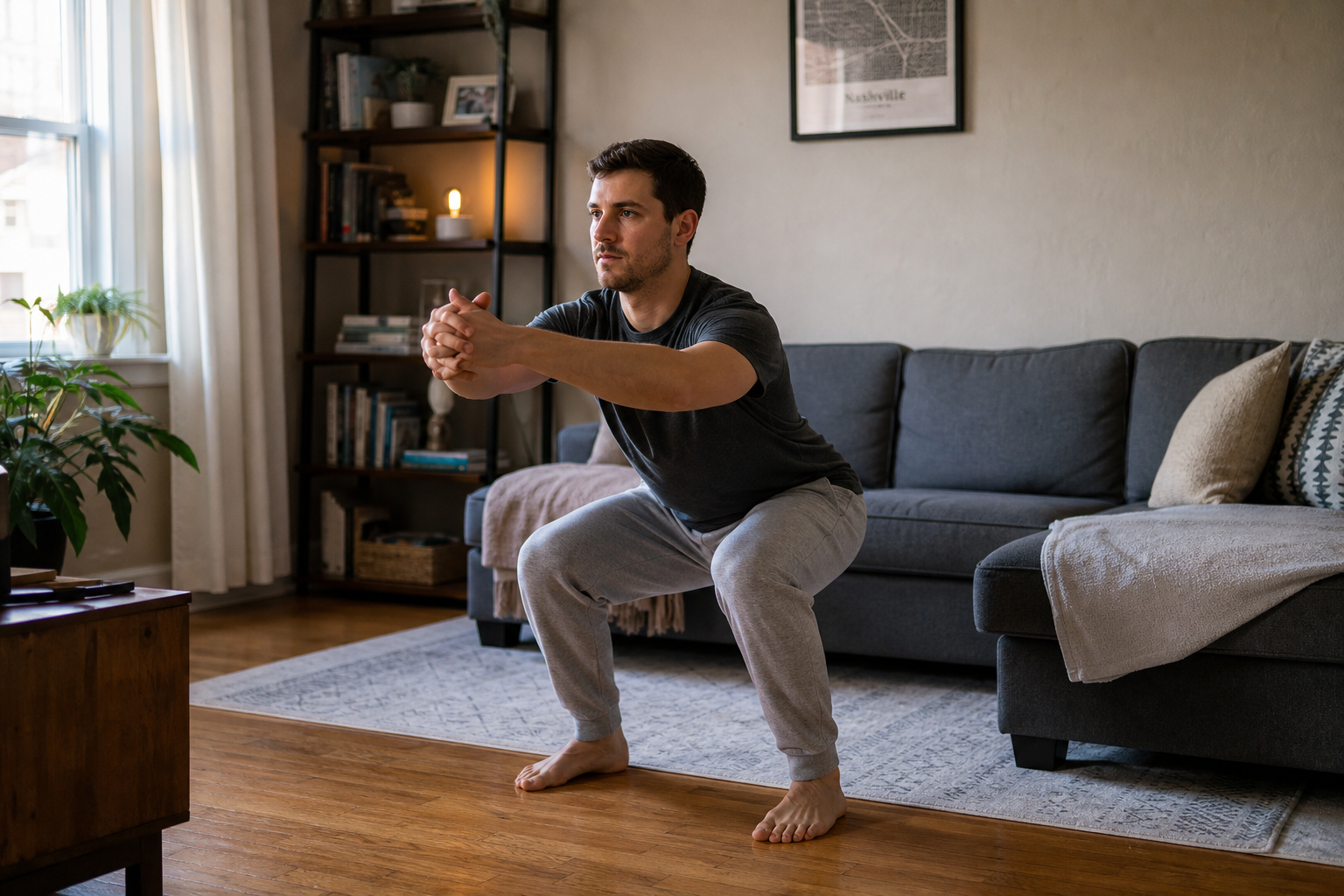
Strength training in the living room
For dumbbells, kettlebells, resistance bands, push-ups, or lower-body strength circuits, the post-workout meal matters because the session is asking muscle tissue to repair and adapt. This is where chicken and rice, tuna on whole-grain bread, Greek yogurt with berries, or a shake with a banana fits neatly. Readers who enjoy food-based ideas can also use recovery meals such as high-protein, high-fiber pasta or other balanced post-workout recipes as long as the basic protein-plus-carb pattern remains intact.
Mobility, yoga, and flexibility work
For flexibility-focused sessions, recovery nutrition may be less dramatic. If the workout is short and low intensity, a normal meal schedule may cover it. If you are hungry beforehand, choose something light. If the session follows a long gap without food, a small snack can make the practice feel steadier without turning it into a full fueling project.
Hydration: enough structure to remember, not enough to obsess over
Hydration is easy to ignore at home because there is no locker room, no water fountain, and no coach telling everyone to take a break. The bottle has to be part of the setup, just like the mat or dumbbells.
The National Athletic Trainers’ Association recommends drinking 500–600 milliliters of water 2–3 hours before exercise and 200–300 milliliters every 10–20 minutes during exercise, as summarized by Healthline.[6] Those numbers are useful reference points, especially before longer or sweatier workouts, but most home exercisers do not need to turn every session into a measuring exercise.
A simpler cue works for daily use: drink water with the meal before training, keep water visible during the workout, sip steadily instead of waiting until you feel very thirsty, and rehydrate afterward. If the room is hot, the workout is intense, or you are sweating heavily, you will likely need more than you would for a slow mobility session.
Where supplements and tracking fit
Supplements can be convenient, especially protein powder for someone who cannot face a full meal after training. They are not the foundation of recovery. A shake with a banana is useful because it solves the protein-plus-carb problem quickly, not because a tub of powder is inherently superior to yogurt, eggs, tuna, milk, tofu, beans, or chicken.
Logging can also help some people. If you like using an app, track patterns that affect the next workout: Did you eat before training? Did you refuel afterward? Did you drink enough that the session did not feel worse than it needed to? For most healthy adults training at home, that kind of pattern recognition matters more than chasing exact numbers after every short session.
A repeatable home workout eating pattern
If your workout starts later today, build the day around the next decision. Eat a familiar carbohydrate-plus-protein meal or snack 1–3 hours before. Skip during-workout food unless the session is long or unusually intense. Refuel within about two hours afterward with protein plus carbohydrates. Drink before, sip during, and rehydrate after.
This is general wellness guidance for healthy adults, not medical treatment, weight-loss advice, or athlete-specific performance coaching. People with medical conditions, pregnancy-related needs, eating disorder history, or prescribed nutrition plans should follow qualified clinical guidance.
Recovery nutrition for home fitness is not a separate program to buy or memorize. It is three ordinary habits repeated consistently enough that the next workout feels possible.
References
- Food as Fuel Before, During and After Workouts, American Heart Association, reviewed July 2024
- Post-Workout Nutrition: What to Eat After a Workout, Healthline, updated March 2026
- Feeding Your Fitness, Harvard Health, July 2024
- From Food Supplements to Functional Foods: Emerging Perspectives on Post-Exercise Recovery Nutrition, PMC / Nutrients, 2024
- What to Eat Before and After a Workout, Based on Your Workout Type, UCLA Health, July 2025
- Eating the Right Foods for Exercise, Healthline


Comments
Join the discussion with an anonymous comment.