
Compact Home Gym Equipment Guide for Apartments: 9 Best Options Tested for Noise, Footprint, and Portability
A tested product roundup for apartment renters who need quiet, small-footprint, portable equipment that won't damage walls. Includes side-by-side comparison data, category-by-category picks, and three concrete budget builds ($250, $750, $1,500).
- Budget tier
- $250–$1,500
- Space type
- apartment
Items included: —
The 5 Apartment-Specific Constraints That Change Your Equipment Choices
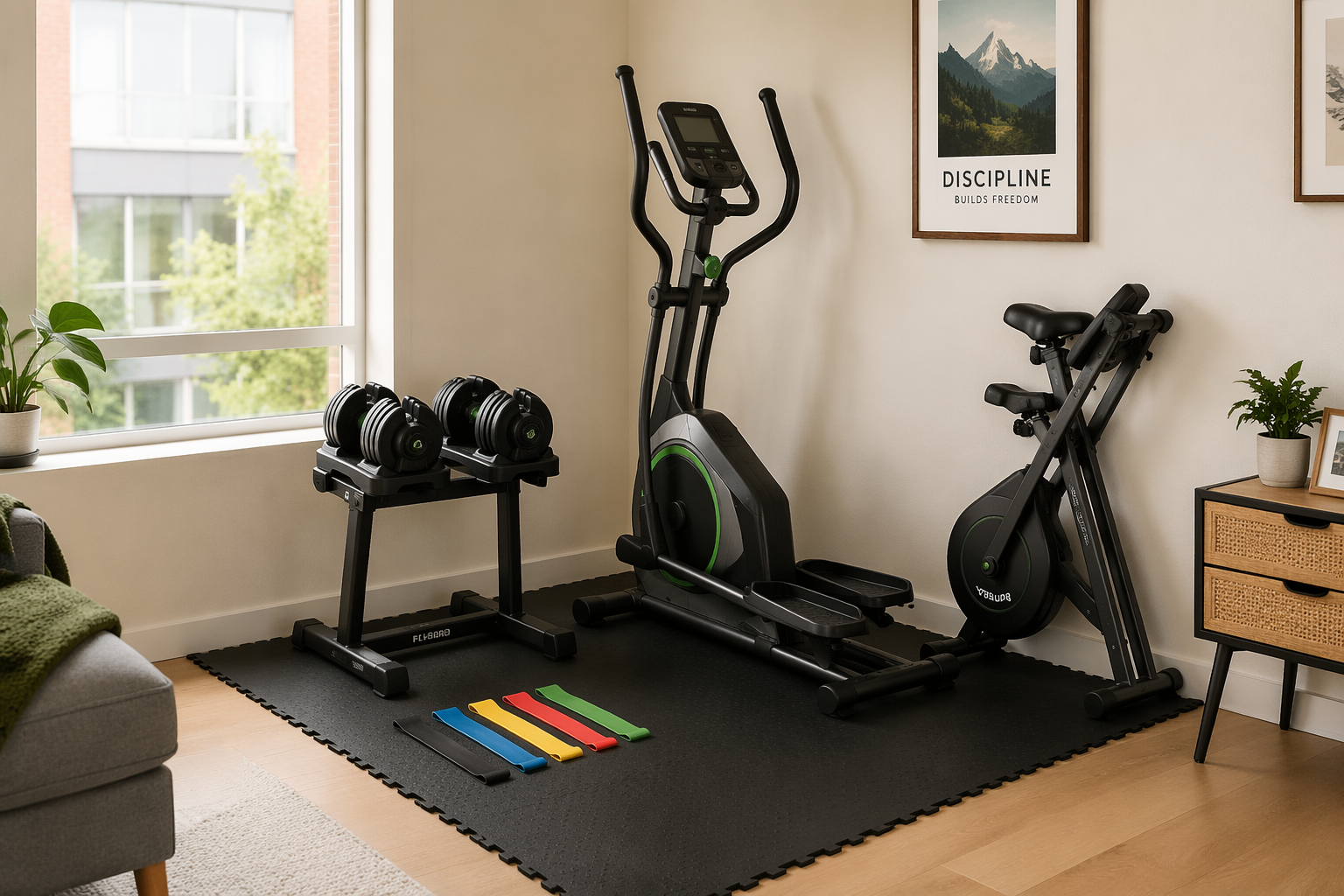
Nearly 39 million Americans live in apartments, according to a 2023 National Apartment Association estimate cited by Garage Gym Reviews. That is a massive number of people who want to work out at home but cannot simply replicate a garage gym setup in a fourth-floor walkup. The equipment that works in a basement or spare bedroom often fails in an apartment for reasons that have nothing to do with the quality of the gear.
If you have read The Renter's Guide to a Compact Home Gym, you already understand the broad constraints. This article is the specific, product-guided follow-up: we tested nine pieces of equipment across six categories, evaluated them against the five constraints that matter most in an apartment, and built three concrete budget setups that solve for noise, footprint, portability, and wall preservation.
Constraint 1: Noise Transmission to Neighbors
In a wood-frame apartment building, sound travels through floors and walls. Dropping a 45-pound iron plate or using a loud treadmill at 6:00 AM is not just inconsiderate — it can lead to noise complaints or lease violations. Equipment that relies on clanging metal plates, loud motors, or heavy impacts is a poor fit. The solution is magnetic resistance, band-based resistance, or battery-powered machines with no loud drivetrain.
Constraint 2: Floor Protection and Damage Prevention
Hardwood, laminate, and vinyl plank floors scratch, dent, and stain easily under gym equipment. Dropping a dumbbell or dragging a bench across the floor can cost you your security deposit. Every piece of equipment in this roundup was evaluated for its potential to damage floors, and we recommend pairing all of them with proper flooring protection.
Constraint 3: Portability for Moves
Apartment dwellers move more frequently than homeowners. A 300-pound all-in-one gym that requires disassembly and two people to carry is a liability when you need to relocate. Equipment that is lightweight, folds flat, or breaks down into manageable pieces scores higher for apartment use. We weighted portability heavily in our evaluations.
Constraint 4: No-Drill Installation Requirements
Most apartment leases prohibit drilling into walls, ceilings, or doors for mounting equipment. Wall-mounted squat racks, pull-up bars that require lag bolts, and ceiling-mounted cable systems are off the table. Every product in this guide either requires zero installation or uses a doorframe mount that leaves no permanent marks.
Constraint 5: Storage When Not in Use
A dedicated home gym room is a luxury most apartment renters do not have. Equipment lives in a corner of the living room, a bedroom closet, or behind the couch. If it cannot be stored out of sight when not in use, it becomes a permanent piece of furniture. Foldable, stackable, and compact designs are essential.
Category-by-Category Picks: What We Tested and How We Evaluated
We evaluated each product across four apartment-specific criteria: footprint (floor space when in use and when stored), noise (tester-reported during typical use), portability (weight and ease of moving), and installation (drill vs. no-drill). Each category below highlights the top pick that best balances these constraints.
Adjustable Dumbbells: NÜOBELL and PowerBlock
A full set of fixed dumbbells takes up an entire wall of floor space and costs thousands of dollars. Adjustable dumbbells solve both problems. The NÜOBELL Adjustable Dumbbells (5–80 lbs per hand) measure 17 inches long by 7.5 inches wide by 7.5 inches high and start at $595. They use a dial system to change weight quickly, and the compact cradle stores neatly on a shelf or in a closet. For apartment use, the NÜOBELL is the top pick because it replaces an entire dumbbell rack with a single small footprint.
PowerBlock Sport Series adjustable dumbbells (5–50 lbs per hand, expandable to 90 lbs) cost $409 and come with a 5-year limited warranty. They are more budget-friendly than the NÜOBELL and offer expandability, but the selector pin design is slightly slower to adjust. Both options are excellent for apartments because they eliminate the need for a dedicated dumbbell rack.
Resistance Bands: Fringe Sport Latex-Free Strength Bands
Resistance bands are the ultimate apartment-friendly strength tool: they weigh almost nothing, store in a drawer, make no noise, and cannot damage floors. The Fringe Sport Latex-Free Strength Bands (complete set of 6 for $192) offer a resistance range of 20–175 lbs and are made from biomedical-grade synthetic rubber, which means they are suitable for users with latex allergies. These bands are the best option for apartment strength training because they produce zero noise and require no installation or floor space.
Compact Cardio: Niceday Elliptical and LEIKE X Bike
Cardio is the hardest category to fit into an apartment. Treadmills are loud, bulky, and heavy. Rowers are long and require ceiling clearance. The Niceday Elliptical Machine (under $600, 400 lb user weight capacity, 16 lb flywheel, 106 lbs total weight) uses magnetic resistance and runs on battery power — no plug needed. Testers report it is nearly silent during use, making it the best cardio option for upstairs apartments where noise transmission is a primary concern.
For those who prefer cycling, the LEIKE X Bike (under $200, 38.5 lbs) folds to 46 inches long by 16 inches wide by 9 inches high — thin enough to slide behind a couch or into a closet. It offers 10 resistance levels and is quiet enough for apartment use. At that price and folded size, it is the best low-impact cardio option for renters with minimal storage space.
No-Drill Pull-Up Bar: Perfect Fitness Multi-Gym Doorway Pull-Up Bar
Pull-ups are one of the most effective upper-body exercises, but most pull-up bars require drilling into the wall or ceiling. The Perfect Fitness Multi-Gym Doorway Pull-Up Bar (under $40, 300 lb weight capacity) mounts in a standard doorframe using tension, not screws. It installs in seconds, leaves no marks when removed, and can be taken down and packed in a suitcase for a move. For apartment renters who cannot modify walls, this is the only practical pull-up solution.
Smart Gym: Tempo Move and Speediance Gym Monster
Smart home gyms have become popular for their small footprint and guided workout experience. The Tempo Move (under $500) requires only an iPhone and a TV — no wall mounting, no permanent installation. It uses 3D sensors to track your form and guide you through workouts. Note that the Tempo Studio has been discontinued as of 2026, so the Move or Core models are the current options.
For those who want a more traditional strength training experience, the Speediance Gym Monster (49.21" L x 28.34" W x 72.83" H unfolded, 187 lbs) folds to just 14.96" deep, making it one of the most compact all-in-one strength machines available. It offers 220 lbs of max resistance (110 per arm) and requires no subscription. The trade-off is weight — at 187 lbs, it is not something you want to move up three flights of stairs alone.
Band-Based Strength: X3 Bar
The X3 Bar (10" L x 19" W x 1" H footprint, 17–19 lbs, ~$550) uses resistance bands instead of weight plates to generate up to 300 lbs of force (600 lbs with the elite band). Because there are no metal plates to clang together, it produces zero impact noise — a critical advantage for upstairs apartments. The bar itself is compact enough to store under a bed, and the bands roll up into a small bag. For renters who want heavy resistance without the noise and floor damage of free weights, the X3 Bar is a compelling option.
Quiet Flooring: Amazon Basics Foam Tiles
No apartment gym is complete without floor protection. Amazon Basics Foam Interlocking Exercise Gym Floor Mat Tiles (under $25 for 6 squares covering 24 sq ft) are the most cost-effective solution for protecting floors and dampening sound transmission to downstairs neighbors. The foam material absorbs impact from dropped weights and reduces vibration. For heavier use, consider upgrading to rubber mats, but for the equipment in this roundup, foam tiles provide adequate protection.
Side-by-Side Comparison Table: Footprint, Noise, Weight, Portability, and Price
The table below summarizes all nine picks across the five dimensions that matter most in an apartment. Use it to quickly compare options before reading the detailed budget builds.
| Product | Category | Footprint (In Use) | Noise Level (Tester-Reported) | Weight | Portability Score | Price |
|---|---|---|---|---|---|---|
| NÜOBELL Adjustable Dumbbells | Dumbbells | 17" L x 7.5" W x 7.5" H | Low (dial mechanism) | ~80 lbs (set) | High | ~$595 |
| PowerBlock Sport Series | Dumbbells | ~15" L x 8" W x 8" H | Low (selector pin) | ~50 lbs (set) | High | $409 |
| Fringe Sport Latex-Free Bands (6-pack) | Bands | Stores in drawer | None | ~5 lbs | Very High | $192 |
| Niceday Elliptical | Cardio | ~40" L x 24" W | Very Low (magnetic, battery) | 106 lbs | Medium | < $600 |
| LEIKE X Bike | Cardio | 46" L x 16" W x 9" H (folded) | Low | 38.5 lbs | High | < $200 |
| Perfect Fitness Doorway Pull-Up Bar | Pull-Up Bar | Fits doorframe | None | ~3 lbs | Very High | < $40 |
| Tempo Move | Smart Gym | Requires TV + floor space | Low (no moving parts) | ~15 lbs | High | < $500 |
| Speediance Gym Monster | Smart Gym | 49" L x 28" W x 73" H (unfolded); 15" D (folded) | Low (digital resistance) | 187 lbs | Low | ~$2,000 |
| X3 Bar | Band-Based Strength | 10" L x 19" W x 1" H | None (no plates) | 17–19 lbs | Very High | ~$550 |
| Amazon Basics Foam Tiles (6-pack) | Flooring | 24 sq ft coverage | N/A (dampens noise) | ~5 lbs | Very High | < $25 |
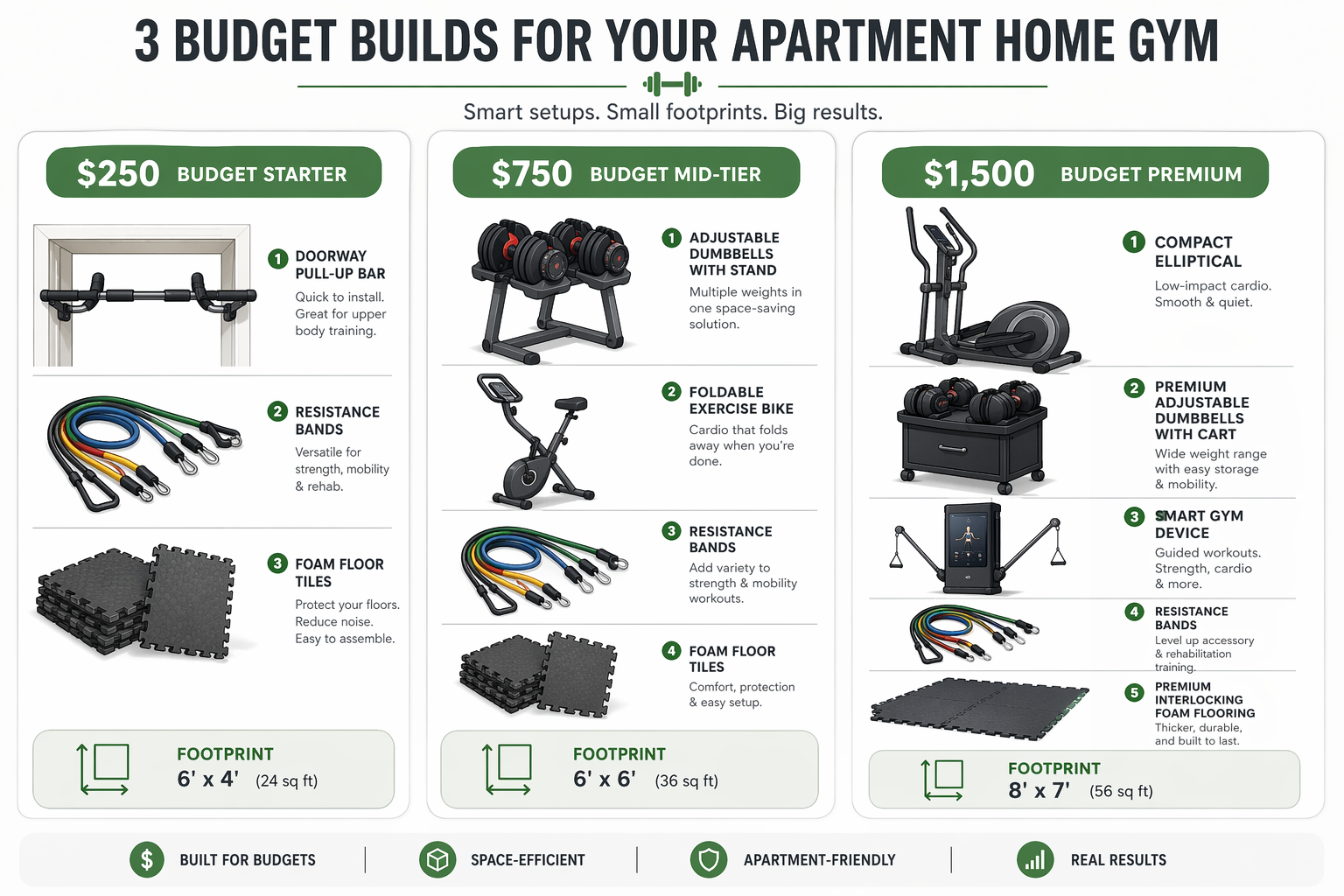
Three Apartment Gym Builds: $250, $750, and $1,500
The following builds combine products from the roundup into complete apartment gym setups. Each build explicitly addresses the five constraints: noise, floor protection, portability, no-drill installation, and storage. Prices are approximate and may vary by retailer.
The $250 Starter Build: Bodyweight and Bands
This build is for renters on a tight budget who want a complete, quiet, no-installation gym that fits in a closet.
| Item | Price | Why It Works in an Apartment |
|---|---|---|
| Perfect Fitness Doorway Pull-Up Bar | < $40 | No drilling, holds 300 lbs, removes without marks |
| Fringe Sport Latex-Free Strength Bands (6-pack) | $192 | Zero noise, stores in a drawer, 20–175 lbs resistance |
| Amazon Basics Foam Tiles (6-pack) | < $25 | Protects floors, dampens sound, 24 sq ft coverage |
| Total | ~$257 |
This setup covers pull-ups, rows, presses, squats, and core work using the bands and pull-up bar. The foam tiles protect your floor and reduce noise for downstairs neighbors. Everything fits in a single storage bin or backpack for easy moving.
The $750 Mid-Tier Build: Adding Cardio and Dumbbells
This build adds adjustable dumbbells and a foldable cardio machine to the starter setup, giving you a more complete strength and cardio routine without overwhelming your living space.
| Item | Price | Why It Works in an Apartment |
|---|---|---|
| PowerBlock Sport Series Dumbbells (5–50 lbs) | $409 | Replaces a full dumbbell rack, expandable to 90 lbs |
| LEIKE X Bike (foldable) | < $200 | Folds to 9" thin, 38.5 lbs, stores behind furniture |
| Fringe Sport Latex-Free Strength Bands (6-pack) | $192 | Adds band-resisted exercises, zero noise |
| Amazon Basics Foam Tiles (6-pack) | < $25 | Floor protection and sound dampening |
| Total | ~$826 |
The PowerBlock dumbbells handle all your strength work from light to moderate loads, while the LEIKE X Bike provides quiet cardio that folds away when not in use. The bands add variety for pull-ups, rows, and band-resisted presses. This setup requires about 24 sq ft of floor space for the foam tiles and can be broken down and moved by one person.
The $1,500 Premium Build: Smart Gym and Premium Cardio
This build is for renters who want a premium experience — guided workouts, near-silent cardio, and heavy resistance — without sacrificing apartment compatibility.
| Item | Price | Why It Works in an Apartment |
|---|---|---|
| Niceday Elliptical Machine | < $600 | Battery-powered, nearly silent, 400 lb capacity |
| NÜOBELL Adjustable Dumbbells (5–80 lbs) | ~$595 | Dial system, compact cradle, replaces full rack |
| Perfect Fitness Doorway Pull-Up Bar | < $40 | No drilling, 300 lb capacity, removable |
| Amazon Basics Foam Tiles (6-pack) | < $25 | Floor protection and sound dampening |
| Total | ~$1,260 |
The Niceday Elliptical is the centerpiece — it provides quiet, effective cardio without needing a wall outlet. The NÜOBELL dumbbells handle strength work up to 80 lbs per hand, and the pull-up bar adds upper-body pulling exercises. This setup covers every major movement pattern (push, pull, squat, hinge, carry, cardio) in about 30 sq ft of floor space. The elliptical weighs 106 lbs and has transport wheels, so it can be moved by one person during a relocation.
Tips for Protecting Floors and Not Disturbing Neighbors
Even with apartment-friendly equipment, a few additional practices can keep your workouts neighbor-friendly and protect your security deposit.
Floor Protection Strategy
- Use foam or rubber tiles under all equipment. The Amazon Basics foam tiles recommended in this guide cost about $1 per square foot and provide adequate protection for bodyweight, band, and dumbbell work. For heavier equipment like the Speediance Gym Monster, consider upgrading to 3/8-inch rubber mats.
- Place equipment on the ground floor if possible. If you live on the second floor or higher, position your gym area over a structural beam or load-bearing wall to minimize floor vibration transmission to the unit below.
- Use vibration-dampening pads under cardio machines. Even the quietest elliptical or bike transmits some vibration through the floor. A set of rubber vibration pads ($10–$20) placed under the feet of the machine can significantly reduce this.
Noise Reduction Practices
- Avoid early morning and late evening workouts. Even quiet equipment can be audible in a quiet building. Mid-morning and early afternoon are the most neighbor-friendly times.
- Set dumbbells down gently. Adjustable dumbbells like the NÜOBELL and PowerBlock are designed to be placed down, not dropped. Controlled lowering protects both the equipment and your floor.
- Use a workout mat for floor exercises. A standard 6mm yoga mat on top of the foam tiles adds an extra layer of sound dampening for floor-based movements like planks, push-ups, and core work.
Storage and Organization
- Use vertical storage for bands and accessories. A small wall-mounted hook strip (no drilling required — use adhesive strips) can hold resistance bands, jump ropes, and foam rollers off the floor.
- Store foldable equipment in a closet or behind furniture. The LEIKE X Bike folds to 9 inches thick and can slide behind a couch or into a hall closet. The X3 Bar fits under a bed.
- Keep a dedicated gym bin for bands and small accessories. A single plastic tote can hold your bands, pull-up bar, foam tiles, and workout accessories, making setup and teardown a five-minute process.
Building a home gym in an apartment is not about compromising on your fitness goals — it is about choosing equipment that respects your living situation. The products in this guide were selected because they solve the specific constraints of apartment life: noise, floor protection, portability, no-drill installation, and storage. Whether you spend $250 or $1,500, you can build a gym that works for you and your neighbors.
Some links on this page are affiliate links — they may earn us a commission at no extra cost to you. Our tier and tests are decided before we ever check which links pay; see our full affiliate disclosure.
Spot something off?
Noise and floor-damage claims carry real deposit-risk consequences if we get them wrong — tell us if your experience with this build didn't match what's above.