
Home Gym Flooring: A Decision Guide for Thickness, Material, and Budget
A practical decision tree for first-time home gym builders choosing flooring. Learn how your workout type, subfloor, and budget determine the right thickness and material — from foam tiles to rubber rolls and stall mats.
- Budget tier
- $300–$1,000
- Space type
- garage
Items included: —
Your Flooring Decision Tree: Three Questions to Answer First
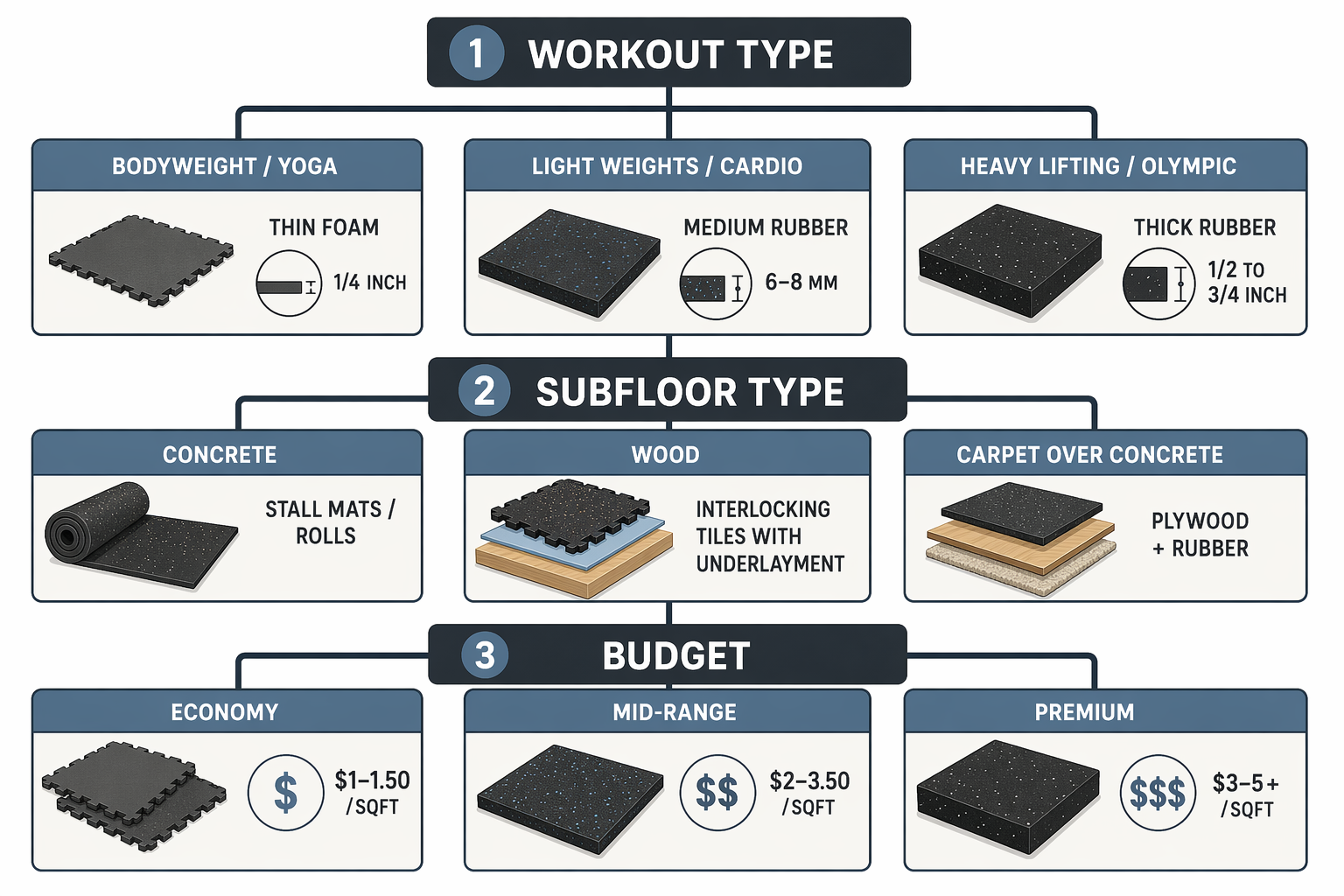
Walk into any home improvement store or browse online and you'll find gym flooring priced from under $1 per square foot to over $12 per square foot. The options — foam tiles, rubber rolls, stall mats, vinyl planks — seem interchangeable until you put a barbell on the wrong one and watch it sink into a permanent dent. The confusion is understandable, but the decision itself is straightforward if you answer three questions in order.
The first question is about your workouts: what type of training will happen on this floor? That determines the minimum thickness you need. The second question is about your subfloor: what's underneath — concrete, plywood, or carpet? That determines whether you can use rolls, tiles, or individual mats. The third question is about your budget: how much are you willing to spend per square foot? That determines which material tier — foam, rubber, or stall mats — makes sense for your situation.
If you're also deciding on the rest of your gym equipment, our Home Fitness Decision Guide for Complete Beginners walks through the full setup process step by step. But if flooring is your current question, the decision tree below will get you to the right answer.
Match Your Workout to the Right Floor Thickness
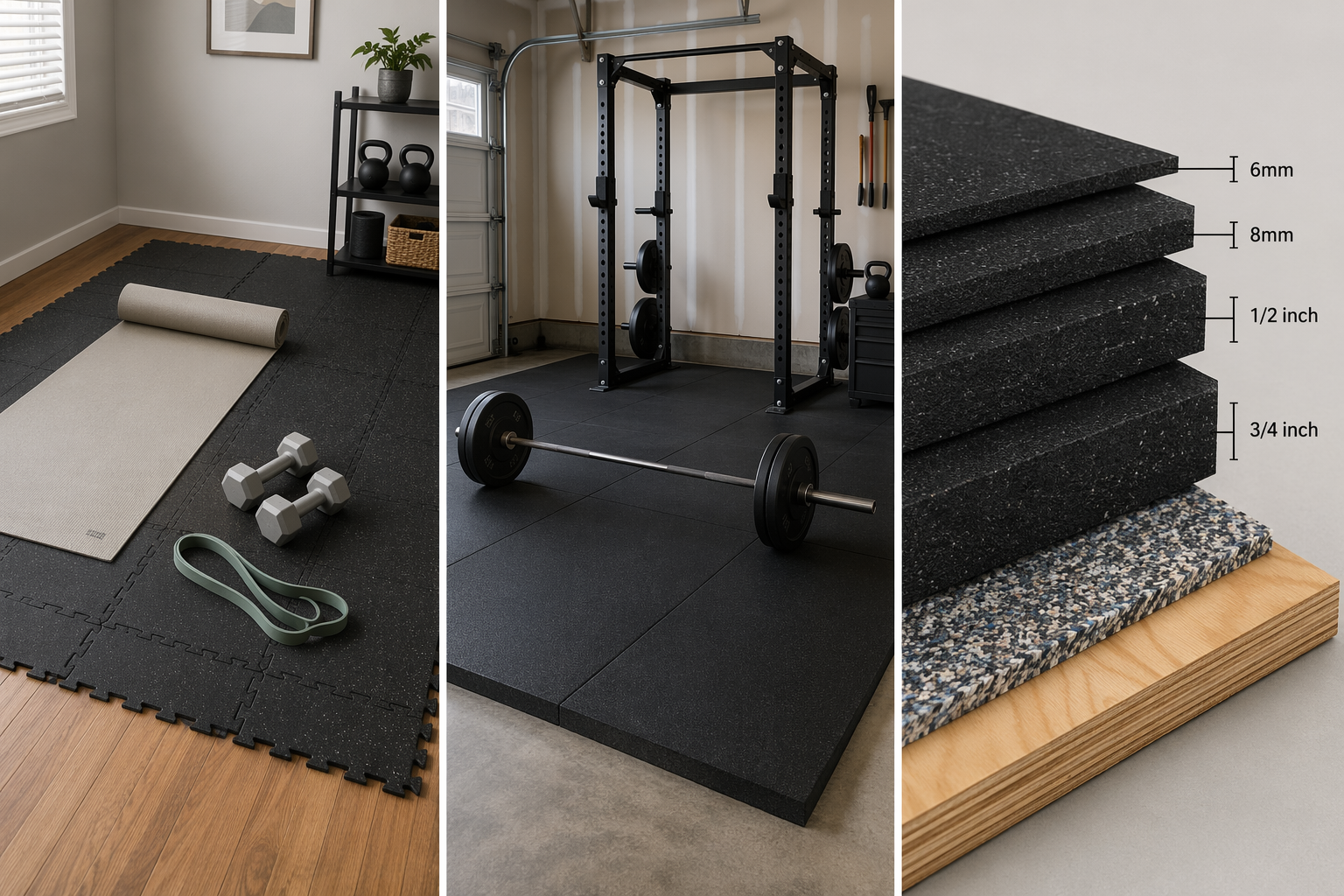
Thickness is the single most important specification because it determines whether your floor absorbs impact or transfers it to the subfloor — and to your equipment. The right thickness depends almost entirely on what you're doing on top of it.
| Workout Type | Minimum Thickness | Recommended Material | Why This Thickness |
|---|---|---|---|
| Bodyweight, yoga, stretching, light Pilates | 1/4" (6mm) | EVA foam tiles or thin rubber mats | No heavy impact or dropped weights; comfort and grip are the priorities |
| Light dumbbells, kettlebells (under 50 lbs), cardio machines, HIIT | 8mm (~5/16") | Rubber rolls or interlocking rubber tiles | Most common all-around thickness; handles foot traffic and light drops without transferring shock to subfloor |
| Heavy lifting (deadlifts, squats, bench press with controlled drops) | 1/2" (12-13mm) | Rubber rolls, stall mats, or heavy-duty rubber tiles | Olympian Caine Wilkes recommends 1/2" as the minimum for heavy lifting; absorbs impact from moderate-height drops |
| Olympic lifting, frequent barbell drops from overhead | 3/4" (18-20mm) or a dedicated deadlift platform | Stall mats or layered rubber on plywood platform | Caine Wilkes prefers 3/4" for overhead drops; a platform with 3/4" plywood + 3/4" rubber provides 1.5" total protection |
Some links on this page are affiliate links — they may earn us a commission at no extra cost to you. Our tier and tests are decided before we ever check which links pay; see our full affiliate disclosure.
Spot something off?
Noise and floor-damage claims carry real deposit-risk consequences if we get them wrong — tell us if your experience with this build didn't match what's above.