
The problem with shopping for compact home gym equipment is that the pieces are usually reviewed one at a time. A pair of adjustable dumbbells looks sensible. A folding bench looks sensible. A rower that stores upright looks sensible. Then all of it arrives, and the room still has a door, a closet, a bed, a bookshelf, a dog crate, or a person who needs to walk through it on Tuesday morning.
For a small space, the setup is the product. A great individual item can still be the wrong purchase if the total system overfills the room, duplicates one movement pattern while ignoring another, or quietly requires a bench, rack, ceiling height, or open training area you do not have.
The three setups below are meant to be bought as coherent systems, not as a trophy shelf of “best” picks. Prices and specifications reflect June 2026 source listings and testing notes, and they can change with promotions, availability, and retailer updates. Your room can also change the answer: manufacturer dimensions describe the equipment, not always the space your body needs to use it.
| Budget tier | Buy this kind of system | Core equipment | Best fit | Main caution |
|---|---|---|---|---|
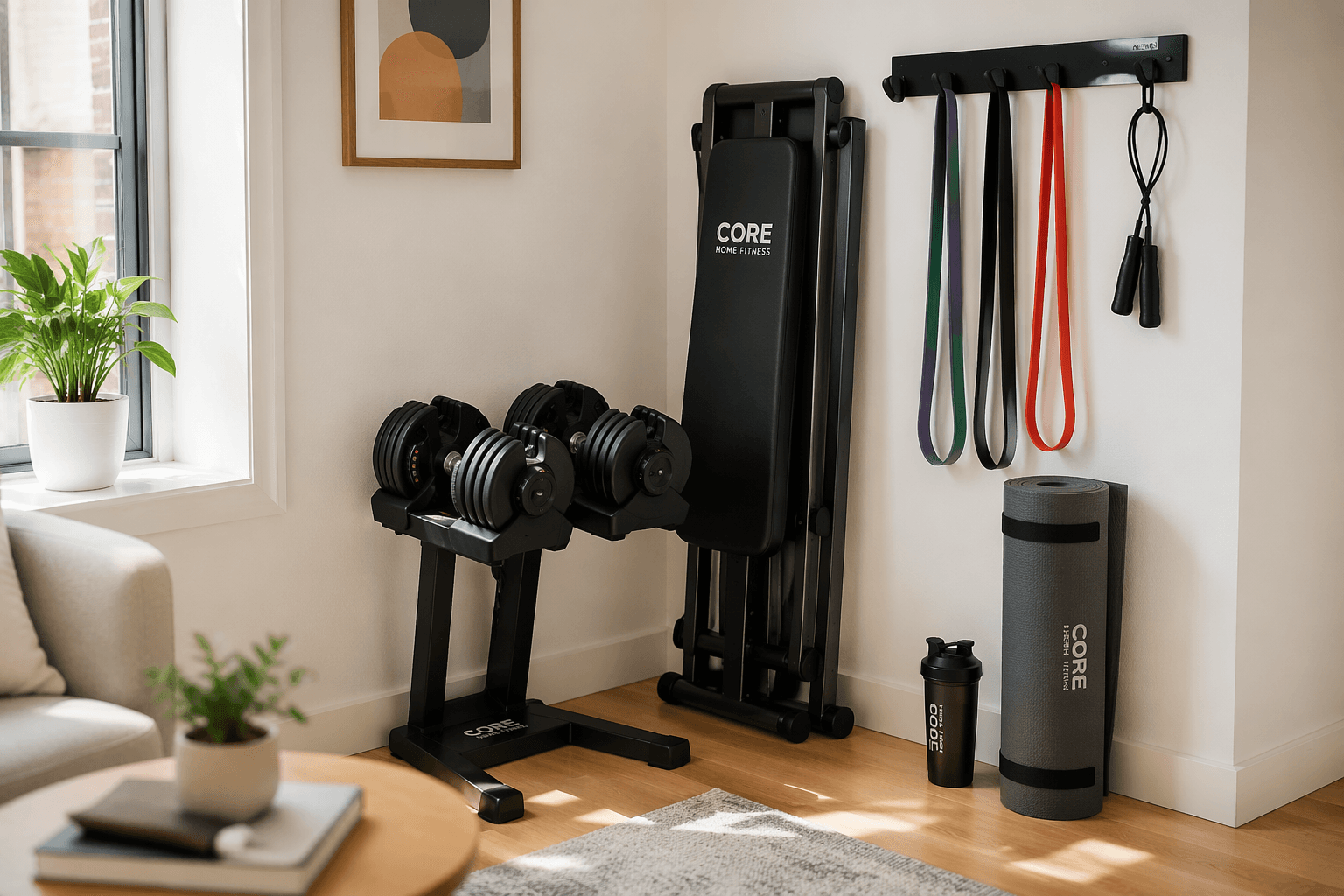
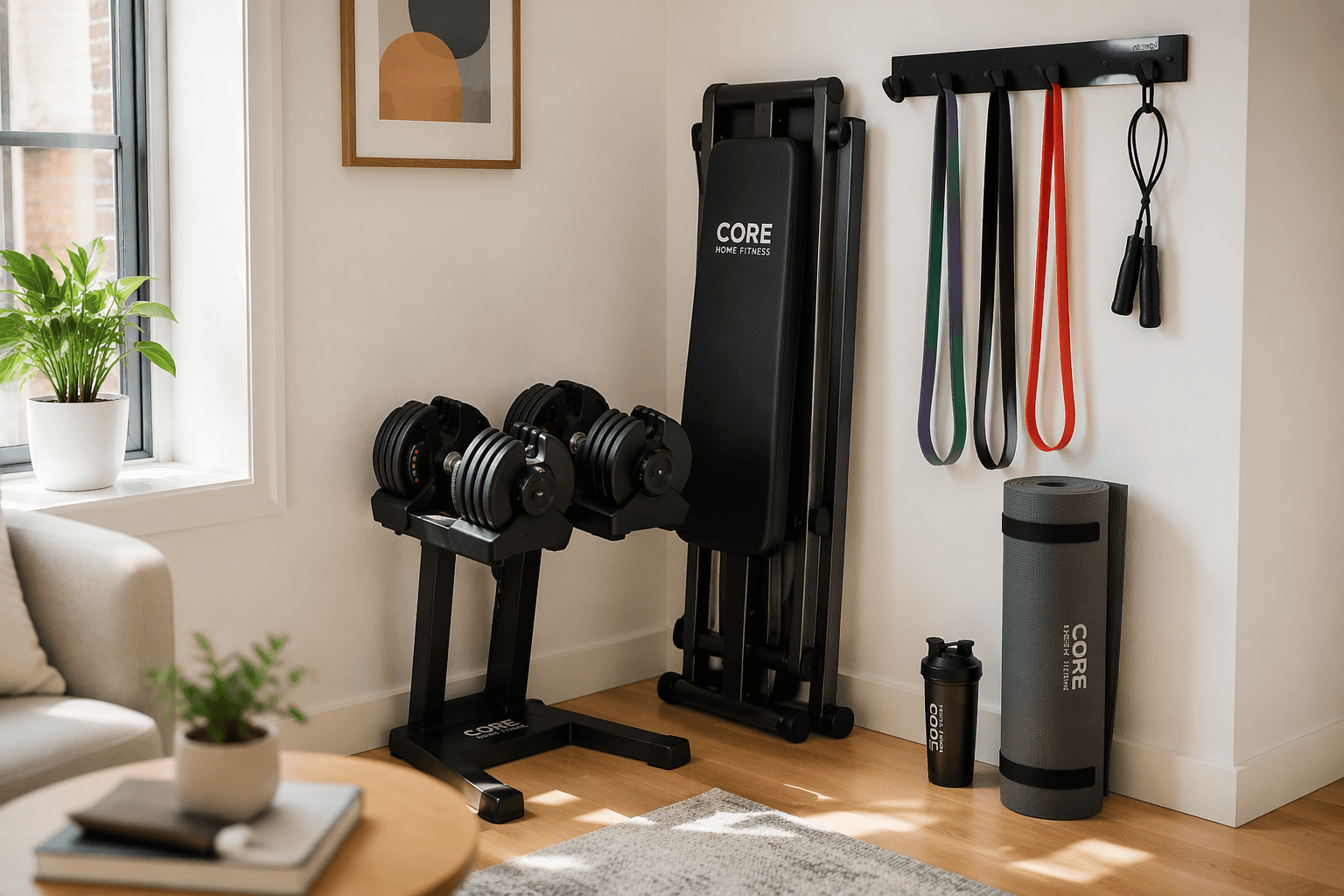
| Under $500 | Bands + adjustable dumbbells + floor basics | Living.Fit resistance bands, entry-level adjustable dumbbells such as REP QuickDraw, yoga mat, jump rope | Small apartments, bedrooms, shared rooms, beginners and general-strength users | Top-end loading is limited compared with barbell work |
| $1,000–$1,500 | Adjustable dumbbells + real bench + compact cardio | REP QuickDraw dumbbells, Ironmaster Super Bench Pro V2, Concept2 RowErg | People who want strength and conditioning without installing anything | The RowErg pushes the budget high and needs real use clearance |
| $2,000–$3,500 | Choose a premium direction: foldable rack or smart gym | PRx Profile PRO foldable rack system, or Speediance Gym Monster | Lifters who know whether they prefer free weights or guided all-in-one training | Stored footprint can be much smaller than workout footprint |
Before you pick a tier, measure the room as a room
Do not start with the wall depth of a machine or the folded length of a bench. Start with the working zone: where you stand, where the bench moves, where dumbbells travel when you set them down, whether a door swings into the space, and whether stored equipment blocks anything the room still needs to do.
A compact setup usually fails in one of three ways. It stores well but is annoying to set up. It trains one thing beautifully but leaves out too many movement patterns. Or it fits the budget only because one necessary piece was left out of the cart.
If your biggest constraint is apartment noise, neighbor tolerance, or whether cardio belongs in a shared living room, it is worth comparing this list against an apartment-specific compact gym setup before you buy. If you are not sure whether your equipment should favor strength, fat loss, mobility, or conditioning, start with a training-goal-based compact gym setup instead. A good deal is not a good deal if it solves the wrong problem.
Under $500: bands, adjustable dumbbells, and floor work
This is not the “cheap until you can afford the real thing” setup. It is the smallest complete system that still lets you train push, pull, squat, hinge, and core work without giving a permanent piece of the room to exercise equipment.
| Component | Why it belongs | Small-space role |
|---|---|---|
| Living.Fit resistance band set | Provides a broad resistance range from 6 to 250 pounds at a listed price of $129 | Hangs on a hook, fits in a drawer, and covers pulling, pressing assistance, hinges, rows, and warmups |
| Entry-level adjustable dumbbells such as REP QuickDraw | REP QuickDraw dumbbells are listed from $335+, adjust from 5 to 60 pounds, and measure 18.5 inches long | Replaces a small dumbbell rack without committing floor space to fixed pairs |
| Yoga mat | Creates a defined floor station for core work, mobility, push-ups, and stretching | Rolls away and protects the floor enough for most low-impact work |
| Jump rope | Adds inexpensive conditioning when ceiling height, flooring, and downstairs-neighbor concerns allow it | Stores almost anywhere |
Garage Gym Reviews lists the Living.Fit band set at $129 with a 6-to-250-pound resistance range, while REP QuickDraw adjustable dumbbells are listed from $335+ with a 5-to-60-pound range and an 18.5-inch length.[1]
In storage terms, this system is hard to beat. The bands can hang behind a door or sit in a bin, the dumbbells can live under a desk or beside a closet, and the mat and rope disappear when the workout is over. The full kit can be stored in under 10 square feet because none of the pieces needs to stay assembled in the middle of the room.
The training trade-off is loading. Sixty-pound adjustable dumbbells are plenty for many presses, rows, lunges, split squats, Romanian deadlifts, curls, carries, and floor presses. They are not the same as a barbell setup for heavy squats or deadlifts. Bands help fill gaps, especially for pulls and hinge patterns, but they feel different from iron because resistance changes through the range of motion.
Buy this tier if you need the room to reset quickly after every session. Avoid it if your main goal is heavy barbell strength, progressive powerlifting-style work, or cardio that does not depend on jumping, walking outside, or using another machine elsewhere.
$1,000–$1,500: the compact strength-and-cardio setup that does not install into the room
This is the tier where small-space buying gets easier to mess up. At under $500, the pieces are naturally portable. At $1,000 and above, equipment gets more capable, heavier, and more tempting. That is exactly when the setup has to behave as one system.
The cleanest mid-range combination is REP QuickDraw adjustable dumbbells, the Ironmaster Super Bench Pro V2, and a Concept2 RowErg. Together, they cover dumbbell strength work, supported pressing and rowing variations, unilateral lower-body work, core training, and serious conditioning without requiring a rack, wall mount, platform, or permanent floor commitment.
| Component | Listed spec or price | What it adds to the system |
|---|---|---|
| REP QuickDraw adjustable dumbbells | $335+, 5–60 pounds, 18.5 inches long | Main strength loading for presses, rows, split squats, hinges, carries, curls, and accessory work |
| Ironmaster Super Bench Pro V2 | $499, 65 pounds, 1,000-pound capacity | A stable adjustable bench for pressing, incline work, supported rows, step-ups, and seated movements |
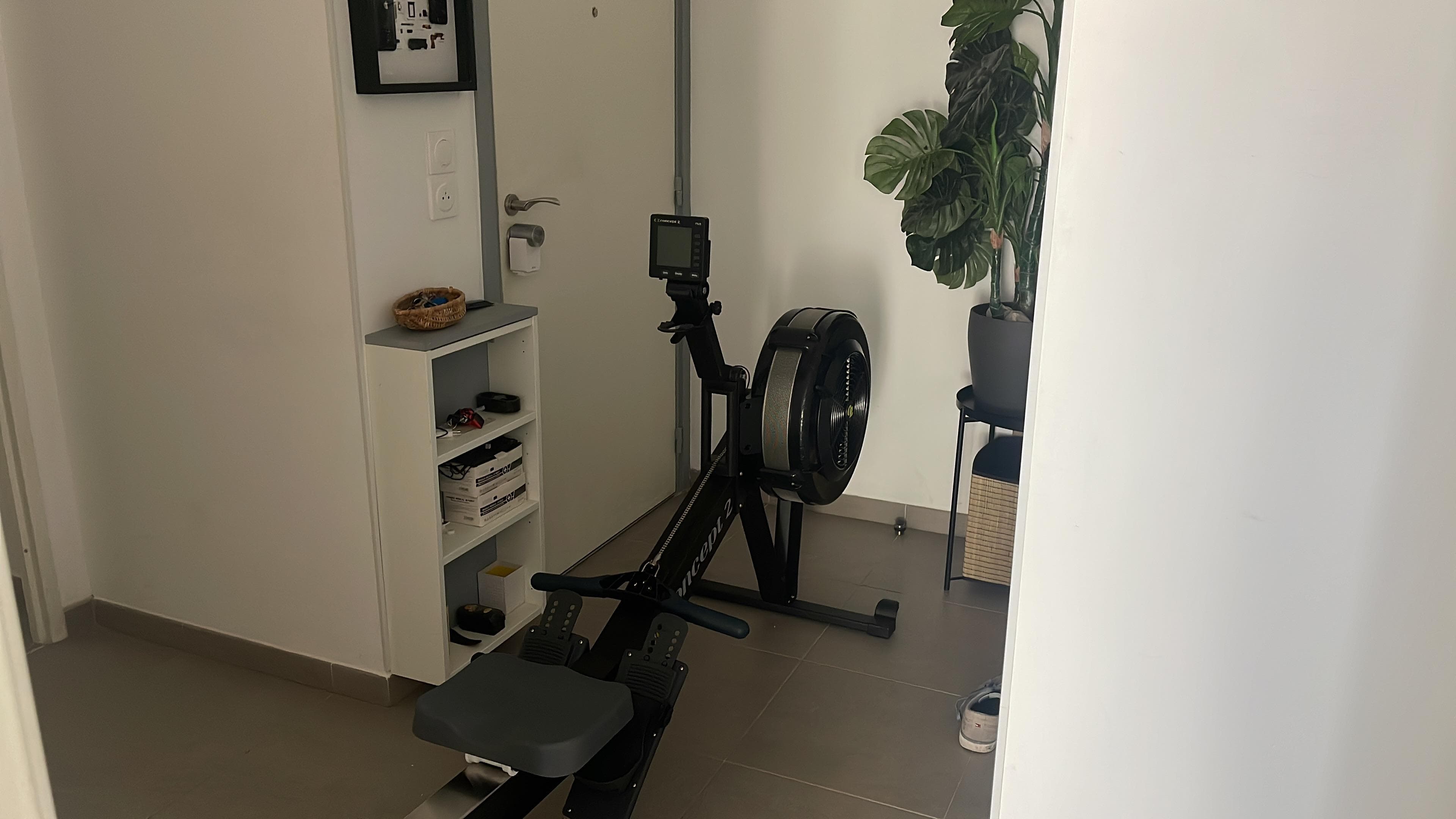
| Concept2 RowErg | $990, stores vertically | Low-impact conditioning and full-body cardio that can stand upright when not in use |
The Ironmaster Super Bench Pro V2 is listed at $499, weighs 65 pounds, and has a 1,000-pound capacity.[2] The Concept2 RowErg is listed at $990 and is noted for vertical storage capability.[1]
The bench is the piece people underestimate. A good adjustable bench changes what the dumbbells can do: floor press becomes bench press, standing shoulder work can become seated work, unsupported rows can become chest-supported rows, and lower-body training gets more options. The Ironmaster is not a featherweight accessory at 65 pounds, so plan where it will live between sessions rather than assuming you will happily drag it across the room four times a week.[2]
The RowErg is the budget pressure point. At $990, it can push the whole tier toward the top of the range before tax, shipping, matting, or small accessories. It also needs a real rowing lane when in use. Vertical storage is useful, but upright storage is not the same thing as workout clearance. If your room cannot spare the operating length during a session, the fact that the machine stores well will not save the setup.
A walking pad is the practical substitution if the RowErg breaks the budget or the room. Current listings place walking-pad alternatives around $300–$500, which can keep the tier tighter while still adding indoor cardio. That substitution changes the training feel: a RowErg gives harder pulling-based conditioning, while a walking pad gives quieter, lower-intensity, more workday-friendly movement.
Do not add a rack casually to this tier. A rack changes the room, the budget, and the equipment chain. Now you need a barbell, plates, collars, floor protection, storage, and enough clearance to lift safely. If what you actually want is cable-style training rather than rowing, compare this tier against cable machines under $1,000 before spending the same money on equipment you will not enjoy.
This tier is best for people who want a real strength-and-cardio setup but are renting, sharing a room, or unwilling to bolt anything into a wall. Avoid it if your main goal is heavy barbell lifting, or if the rower would be stored beautifully and used rarely because setting it down blocks the whole room.
$2,000–$3,500: choose free weights or a guided all-in-one system
The premium tier should not be treated as one shopping cart. At this budget, the important decision is not simply “better equipment.” It is whether you want free-weight training that folds away, or a guided all-in-one machine that replaces much of the decision-making.
| Premium path | Representative equipment | Choose it if | Think twice if |
|---|---|---|---|
| Free-weight foldable rack | PRx Profile PRO foldable squat rack | You want barbell squats, presses, pull-up options, and a more traditional strength setup | You do not have wall structure, ceiling clearance, plate storage, or a room that can become a lifting zone during workouts |
| Guided smart gym | Speediance Gym Monster | You want digital resistance, guided programming, and an all-in-one footprint without a subscription | You dislike machine-guided resistance or want the feel and loading path of a barbell |
Path A: PRx Profile PRO for the lifter who wants a rack, not a gadget
The PRx Profile PRO foldable squat rack is listed at $1,099 with a 12-inch folded depth.[1] That folded depth matters because it lets a rack live against a wall instead of occupying the middle of a garage, spare room, or basement corner all week.
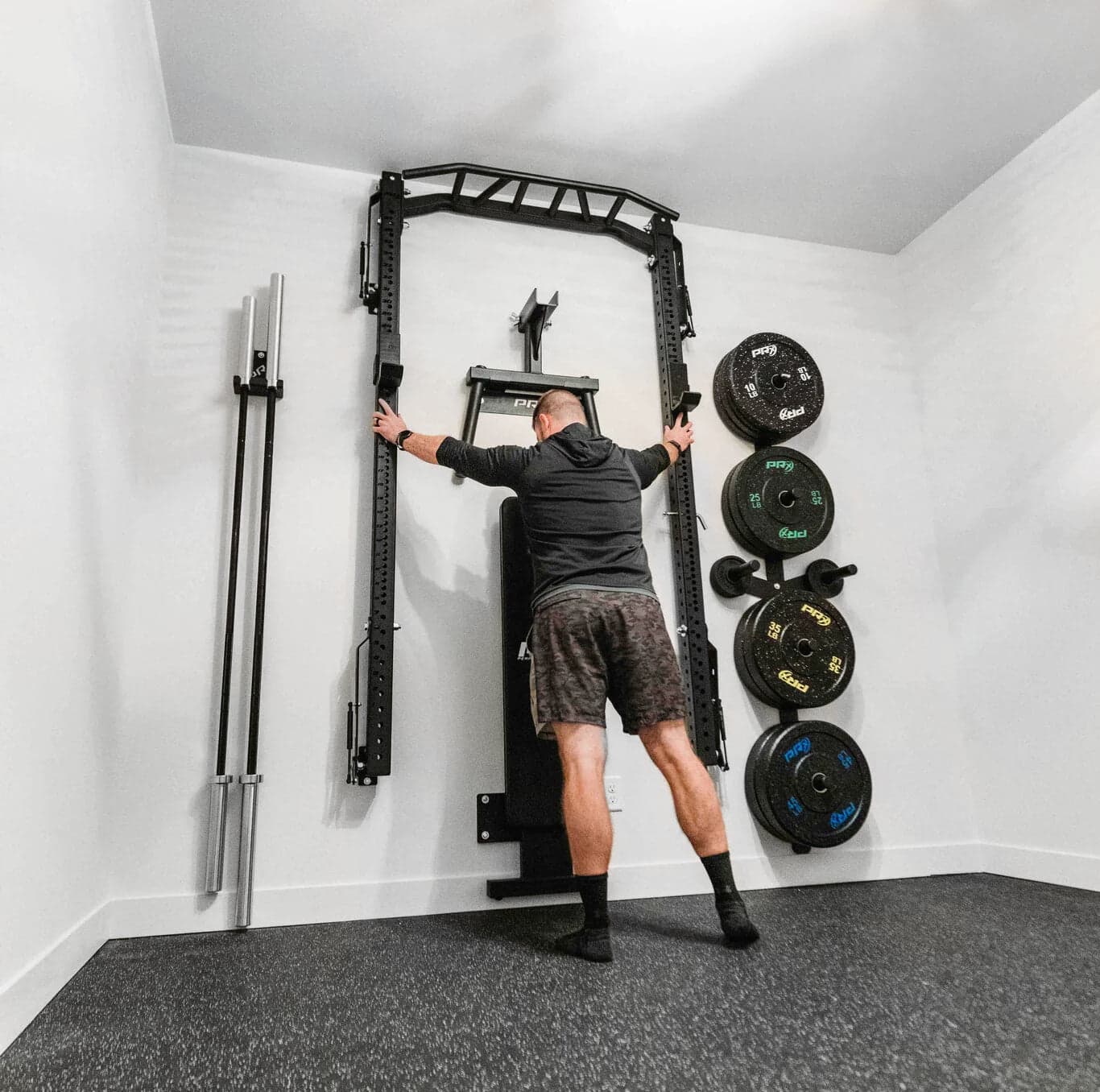
But a rack is never only a rack. To make this path work, the room also has to accept a barbell, plates, collars, floor protection, and somewhere to put the bench. During the workout, the folded-depth number stops being the relevant number. You need the space to unrack, step, press, pull, and load plates without turning every set into furniture negotiation.
This route makes sense for a garage wall, a dedicated spare-room wall, or a basement area where the equipment can fold away but the surrounding zone can still become a lifting area. If you are garage-bound and trying to keep the total footprint disciplined, compare the rack path with a full strength garage gym under 100 square feet or a broader guide to garage workout equipment for small spaces.
Path B: Speediance Gym Monster for guided training without a subscription
The Speediance Gym Monster is listed at $3,199 with a 49-inch length, 28-inch width, 72.8-inch height, 220 pounds of digital resistance, and no subscription requirement.[3] Those details put it in a different buyer profile from the PRx rack. This is not the choice for someone who mainly wants a barbell. It is the choice for someone who wants resistance training, guided programming, and fewer separate objects to manage.
The advantage is behavioral as much as spatial. A smart all-in-one gym can reduce setup decisions: choose the program, adjust the arms or cables, and train. That matters for people who do not want to design every session from scratch or keep a growing collection of attachments, plates, and bars.
The trade-off is feel. Digital resistance and guided movement are not the same experience as loading a barbell, bracing under it, and moving free weight through space. Some people will train more consistently with guidance. Others will resent the machine for not feeling like the lifting they actually wanted to do.
The Tonal 2 warning: wall depth is not workout space
Tonal 2 is the cleanest cautionary example here because the stored number is seductive. It has a 5.25-inch wall depth, but Garage Gym Reviews notes that it requires a 7-by-7-foot open area for use.[1] In a small room, those are completely different promises.
That does not make wall-mounted or smart gyms bad. It means the stored footprint should be treated as only one measurement. Before buying any premium compact machine, tape out both shapes: the stored equipment shape and the human-using-it shape. If the second one blocks the bed, door, closet, desk chair, or walkway, the machine is not compact for your room.
How to adjust a setup without breaking it
These tiers are frameworks, not moral categories. Someone with $1,800 may reasonably buy the mid-range dumbbell-and-bench system, upgrade the dumbbells, and delay cardio. Someone with $2,500 may prefer a smart gym over a rack because the room is shared and the workouts need to start quickly. The point is not to keep every cart pure. The point is to protect the system.
A substitution is safe when it preserves three things: footprint, movement coverage, and compatibility. If you replace the RowErg with a walking pad, you still have cardio, but you change intensity and movement pattern. If you replace adjustable dumbbells with fixed pairs, you may improve feel but lose storage efficiency. If you replace a foldable rack with a standard power rack, you may gain stability or features while giving up the room reset that made the original setup viable.
Room type should also change the decision. A bedroom corner, living-room wall, basement alcove, and garage bay do not behave the same way even if the tape measure says the square footage is similar. If you are still deciding where the gym should live, use a room-type guide for at-home gym equipment before committing to the cart.
Buy the tier that matches your budget, room behavior, and training preference as a whole system. Then change individual pieces only when the replacement keeps the original setup’s footprint, movement coverage, and compatibility intact.
References
- Best Compact Exercise Equipment, Garage Gym Reviews.
- Best Budget Home Gym Equipment, Garage Gym Reviews.
- Best Home Gym Machines, Garage Gym Reviews.
Comments
Join the discussion with an anonymous comment.