
5 Things to Know Before Buying a Tonal Home Gym: The Unvarnished Reality Check
Tonal is an excellent machine, but most buyers should think twice. This article breaks down the five critical factors — real cost, installation barriers, the mandatory subscription, the 250 lb resistance ceiling, and how alternatives have caught up — so you can decide if Tonal is actually right for you.
Introduction: The Tonal Promise vs. The Reality
Tonal has earned its reputation as the sleekest, most technologically advanced smart gym on the market. The Tonal 2 mounts flush against your wall like a minimalist mirror, then transforms into a digital strength-training system that uses electromagnetic resistance, AI-powered coaching, and adaptive weight adjustments. It's an impressive piece of engineering, and for the right buyer, it genuinely delivers a premium training experience in a compact footprint.
But here's the tension that most early-stage shoppers miss: Tonal is an excellent machine that most buyers should still think twice about. The headline price tag is just the starting point. The subscription model, the installation requirements, and the physical limitations of the system create a narrow window of who this machine actually makes sense for. If you're in the early stages of evaluating Tonal — before you start comparing specs against other smart gyms — this article is your unvarnished reality check.
We're not going to rehash every feature or write another detailed review. Instead, we're surfacing the five critical factors that most shoppers discover too late: the real year-one cost, the installation barrier, the mandatory subscription, the resistance ceiling, and the fact that the competitive landscape has shifted. Read these five points first, then decide whether Tonal deserves a spot on your shortlist.
1. The Real Year-One Cost Is ~$5,800, Not $4,295
Tonal's website lists the Tonal 2 at $4,295. That's the number most shoppers anchor on. But the machine doesn't arrive ready to use, and the true first-year outlay is substantially higher. Here's the full breakdown based on confirmed pricing from multiple sources:
| Cost Component | Price | Notes |
|---|---|---|
| Tonal 2 machine | $4,295 | Base unit price from Tonal.com |
| Smart Accessories Bundle | $495 | Required for full functionality (handles, bar, bench, rope, mat) |
| Professional installation | $295 – $550 | Varies by location and wall type |
| 12-month mandatory subscription | $719.40 | $59.95/month × 12 months |
| Estimated year-one total | ~$5,804 | Before sales tax |
| Sales tax (0–10%+ by state) | ~$0 – $580 | Varies; at 8% adds ~$464 |
That ~$5,804 figure assumes you're buying the Tonal 2 new with all accessories and paying for installation at the midpoint of the quoted range. If you add the extended 5-year warranty ($449), you're looking at over $6,200 before tax. For context, that's roughly the same as a full barbell-and-rack home gym setup that will never require a monthly fee.
The per-session cost in year one for a solo user training three times per week works out to about $37 per workout. That number drops significantly in subsequent years (to roughly $5 per session by year three), but the upfront commitment is real. If you're not certain you'll use this machine consistently for multiple years, that year-one number should give you pause.
For a deeper year-by-year breakdown with an interactive calculator, see our Tonal Home Gym Total Cost of Ownership article.
2. Wall Installation Is a Dealbreaker for Renters and Some Homeowners
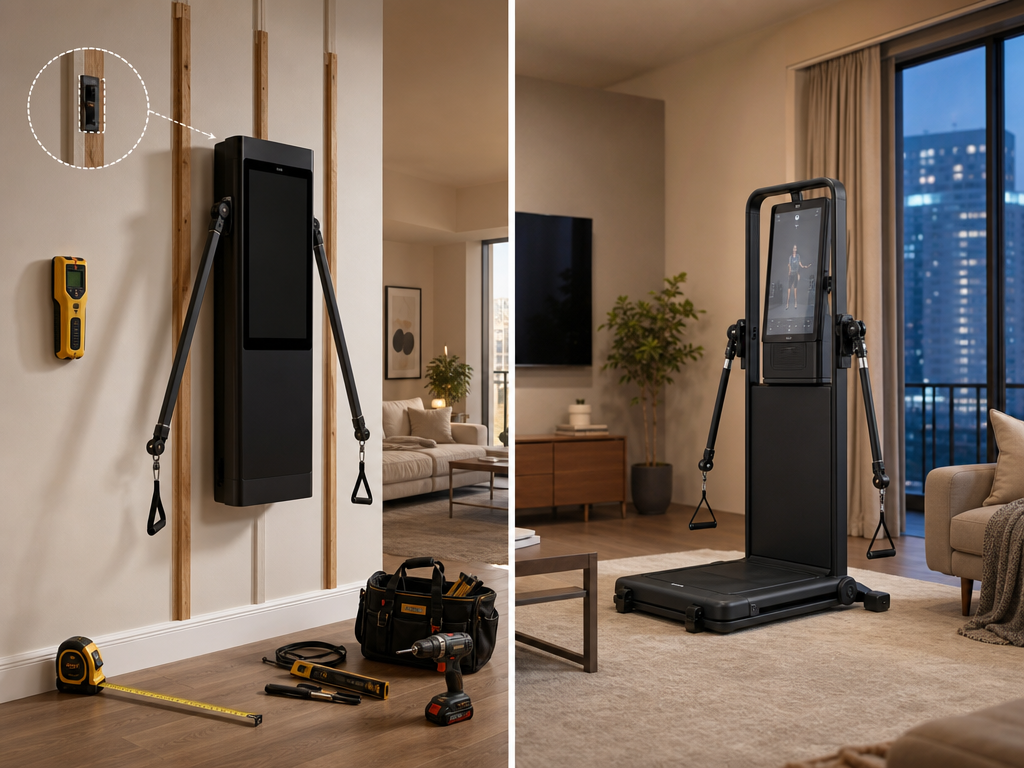
Tonal must be professionally mounted to a load-bearing wall with wood or metal studs spaced 16 to 24 inches apart. This is not a DIY-friendly setup. Tonal requires a certified installer — the company's own network handles this — and the cost ranges from $295 to $550 depending on your location and wall type. The installation process involves cutting into drywall, locating studs, and securely bolting a 150-pound unit to the wall structure.
For renters, this creates a cascade of complications:
- You need landlord permission to drill into walls and mount a permanent fixture.
- When you move, you must uninstall the unit, patch the wall, and pay for reinstallation at your new place — adding hundreds more to the total cost.
- If your apartment has non-standard wall construction — brick, plaster, concrete, or metal studs outside the 16–24 inch range — installation may be impossible or significantly more expensive.
- The machine requires 7 feet by 7 feet of clear floor space and a ceiling height of at least 7 feet 10 inches, plus a grounded electrical outlet within 6 feet.
This is not a minor inconvenience — it's a structural constraint that eliminates Tonal as an option for a significant portion of the home fitness market. If you don't own your home, or if your walls aren't standard wood-frame construction, you need to verify feasibility before you even think about the price tag.
3. The $59.95/Month Subscription Is Mandatory — And the Machine Is Crippled Without It
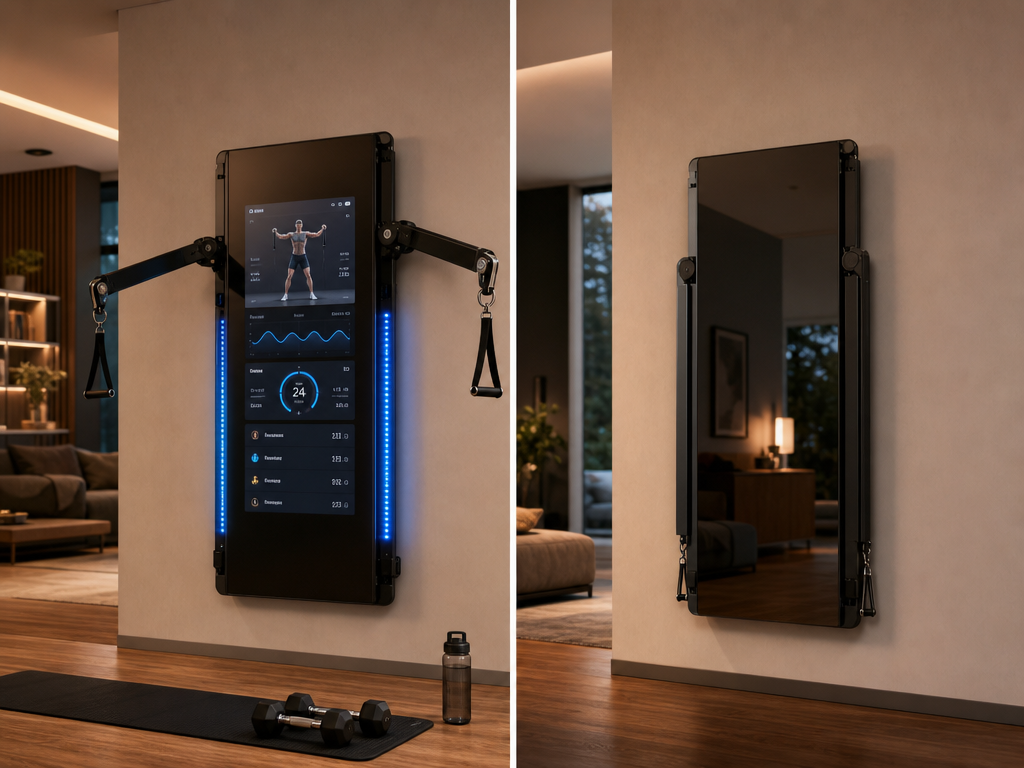
Tonal's $59.95 per month membership is mandatory for the first 12 months. You cannot buy the machine and use it without subscribing. After the first year, you can let the subscription lapse, but here's what you lose:
- All guided workouts and structured programs
- AI-powered coaching and adaptive weight adjustments
- The digital spotter that automatically adds or removes weight between reps
- Form feedback and movement tracking
- Access to the workout library and new content
What remains is a manual cable machine. You can still use the arms and handles to perform exercises, but you lose the entire software ecosystem that makes Tonal a "smart gym" rather than just an expensive cable stack. As one reviewer put it, without the subscription, Tonal becomes "a very expensive basic cable machine."
Over a five-year ownership period, the subscription alone adds $3,597 to the total cost of ownership. That's more than the price of many competing smart gyms. For readers concerned about long-term commitment, our Tonal Home Gym Problems and Reliability article covers what real long-term users say about the subscription model and hardware durability.
4. The 250 lb Resistance Ceiling Is Fine for 90% — But a Hard Limit for Serious Lifters
The Tonal 2 offers up to 250 pounds of electromagnetic resistance, up from 200 pounds on the original Tonal. For the vast majority of home users — especially those new to strength training or focused on unilateral and isolation exercises — this is more than enough. Tonal's digital resistance is smooth, responsive, and can be adjusted in as little as one-pound increments, which is actually superior to traditional weight stacks for fine-tuning load.
But here's the honest limitation: if you're an intermediate-to-advanced lifter who squats, deadlifts, or bench presses with serious weight, 250 pounds will be a ceiling, not a starting point. Consider these compound lift benchmarks:
- A 185-pound male who has been training consistently for 2–3 years can typically squat 250+ pounds within that timeframe.
- Deadlift numbers for the same lifter often exceed 300 pounds.
- Even for upper-body lifts, a 185-pound male at an intermediate level may bench press 185–225 pounds, leaving little room for progression on Tonal.
This isn't a flaw in Tonal's design — it's a trade-off inherent to the form factor. Electromagnetic resistance in a wall-mounted unit cannot match the raw weight capacity of a barbell and plate setup. Tonal excels at what it does: providing a compact, digitally-enhanced training experience for the general fitness population. But if your primary goal is building maximal strength on compound lifts, Tonal will eventually hold you back.
For a comprehensive breakdown of Tonal 2's features, training modes, and who it actually works for, read our Tonal 2 Home Gym Review.
5. The Alternatives Have Caught Up — Speediance and Vitruvian Offer Competitive Experiences at Lower Total Cost
When Tonal launched, it was the only polished all-in-one smart gym with digital resistance and AI coaching. That's no longer true. The competitive landscape has shifted significantly, and two alternatives in particular have closed the gap:
| Feature | Tonal 2 | Speediance Gym Monster 2 | Vitruvian Trainer+ |
|---|---|---|---|
| Machine price (all-in) | ~$5,804 year one | ~$3,689 | ~$2,990 |
| Max resistance | 250 lbs | 220 lbs | 440 lbs (with subscription) |
| Subscription required | Yes — $59.95/mo (12-month min) | No — free lifetime membership included | Optional — $39/mo for full features |
| Wall mounting | Required — professional install | Not required — freestanding | Not required — freestanding |
| Footprint | 7×7 ft wall-mounted | Folds for storage | Compact, floor-based |
The Speediance Gym Monster 2 is the most direct competitor. At roughly $3,689 for the Works Plus Package with free shipping and a free lifetime membership, it undercuts Tonal's year-one cost by more than $2,000. It offers up to 220 pounds of resistance, is freestanding (no wall mounting), and folds for portability. The free lifetime membership includes all features — including a digital spotter — with no monthly fee. Over five years, the cost difference is stark: Tonal 2 at approximately $8,685 versus Speediance at $3,689, according to Innerbody's analysis.
The Vitruvian Trainer+ takes a different approach: it's a floor-based unit with optional subscription, and its maximum resistance of 440 pounds (with subscription) addresses the ceiling issue that limits Tonal for serious lifters. It's also freestanding and more portable.
This isn't to say Tonal is worse — it still has the most polished software, the best form-tracking features (Smart View camera), and the most refined user experience. But the gap has narrowed considerably. If your primary concern is total cost of ownership or avoiding a mandatory subscription, Tonal is no longer the only premium option.
For a detailed head-to-head comparison of all major smart gym systems, see our Smart Home Gym Comparison 2026 and Home Gym System Cost Breakdown articles.
Decision Checklist: Is Tonal Right for You?
Based on the five points above, here's a straightforward decision framework. Answer these questions honestly:
- Can you comfortably afford ~$5,800+ in year one, including installation and the mandatory subscription?
- Do you own your home (or have landlord permission) and have a suitable load-bearing wall with standard stud spacing?
- Are you comfortable with a mandatory $60/month subscription for at least the first year, and likely beyond?
- Is 250 pounds of resistance enough for your current and foreseeable strength goals?
- Have you compared the total cost of Tonal against alternatives like Speediance and Vitruvian?
If you're still unsure which type of home gym equipment fits your specific constraints — space, budget, workout style — our Compact Home Gym Decision Matrix can help you match equipment to your exact situation.
This result comes from one real apartment under the stated conditions — it is a strong signal, not a guarantee your space will measure identically.
Builds this evidence supports
Cable Machine Alternatives That Save Space and Money
Compare the best cable machine alternatives for home gyms – from resistance bands and pulley systems to suspension trainers and compact digital units – and find the right option for your space and budget.
How to Choose a Compact Home Gym That Works for Your Space, Budget, and Noise Tolerance
This article provides a structured decision framework for apartment dwellers and small-space residents to match their specific floor footprint, noise sensitivity, and budget to the most suitable compact home gym strategy — whether that's an all-in-one machine, modular build, smart digital system, or band/bodyweight setup.
The Garage Gym Reality Check: What Equipment Actually Fits in a Single-Car Garage
Most garage gym guides assume a two-car space. This article uses real dimensions, real equipment footprints, and three layout templates to show what fits—and what doesn't—in a single-car garage (10x20 to 12x20 ft).
Spot something off?
If this result didn't match your own space, let us know — floor-damage and noise claims carry real deposit-risk consequences if we get them wrong.