
Smart Home Gym Comparison 2026: Head-to-Head Spec Clash of All-in-One Strength Systems
A structured side-by-side comparison of premium smart strength systems (Tonal 2, Speediance Gym Monster, Tempo Move, Vitruvian Trainer+, AEKE K1) with transparent pricing, subscription burden, max resistance, and a decision matrix by user profile to help buyers choose based on space and experience level.
Introduction: The Smart Strength Market Has Fragmented — Here’s How to Compare
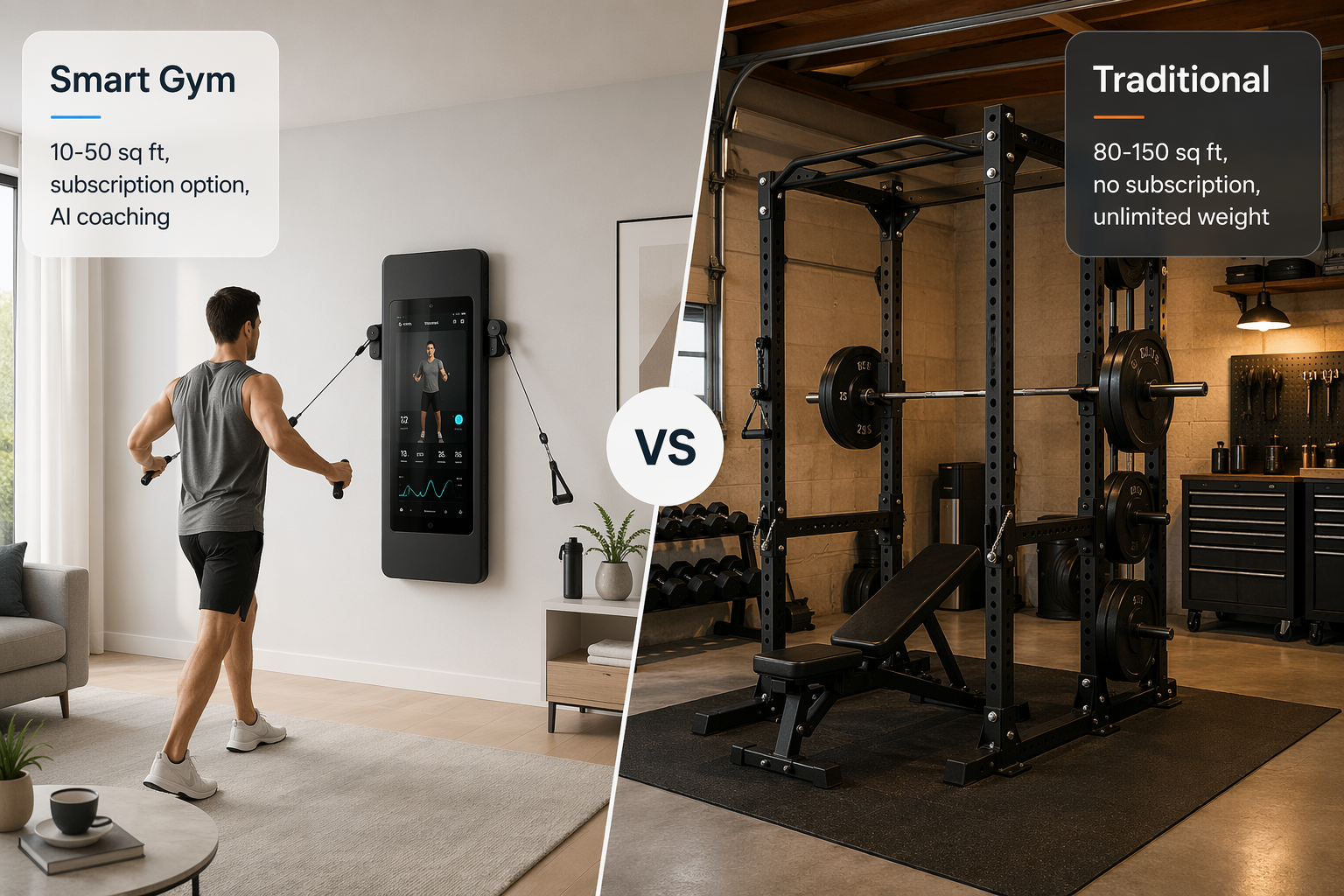
The all-in-one smart home gym market has moved past its novelty phase. In 2026, buyers face a fragmented landscape of digital resistance cable towers, AI-enhanced free-weight platforms, and compact cable hybrids — each with a dramatically different total cost of ownership. A head-to-head spec comparison reveals that the best system depends almost entirely on two variables: the square footage you can dedicate and your training experience level.
This article narrows the field to five premium smart strength systems — Tonal 2, Speediance Gym Monster, Tempo Move, Vitruvian Trainer+, and AEKE K1 — and compares them across price, subscription burden, max resistance, footprint, AI features, warranty, and return policy. If you are evaluating a broader set of machine types, our All-in-One Home Gym Machines Comparison Guide covers single-stack, dual-stack, and power-rod machines alongside smart systems.
Digital Resistance vs. Free Weights vs. Cable Systems: A Quick Category Primer
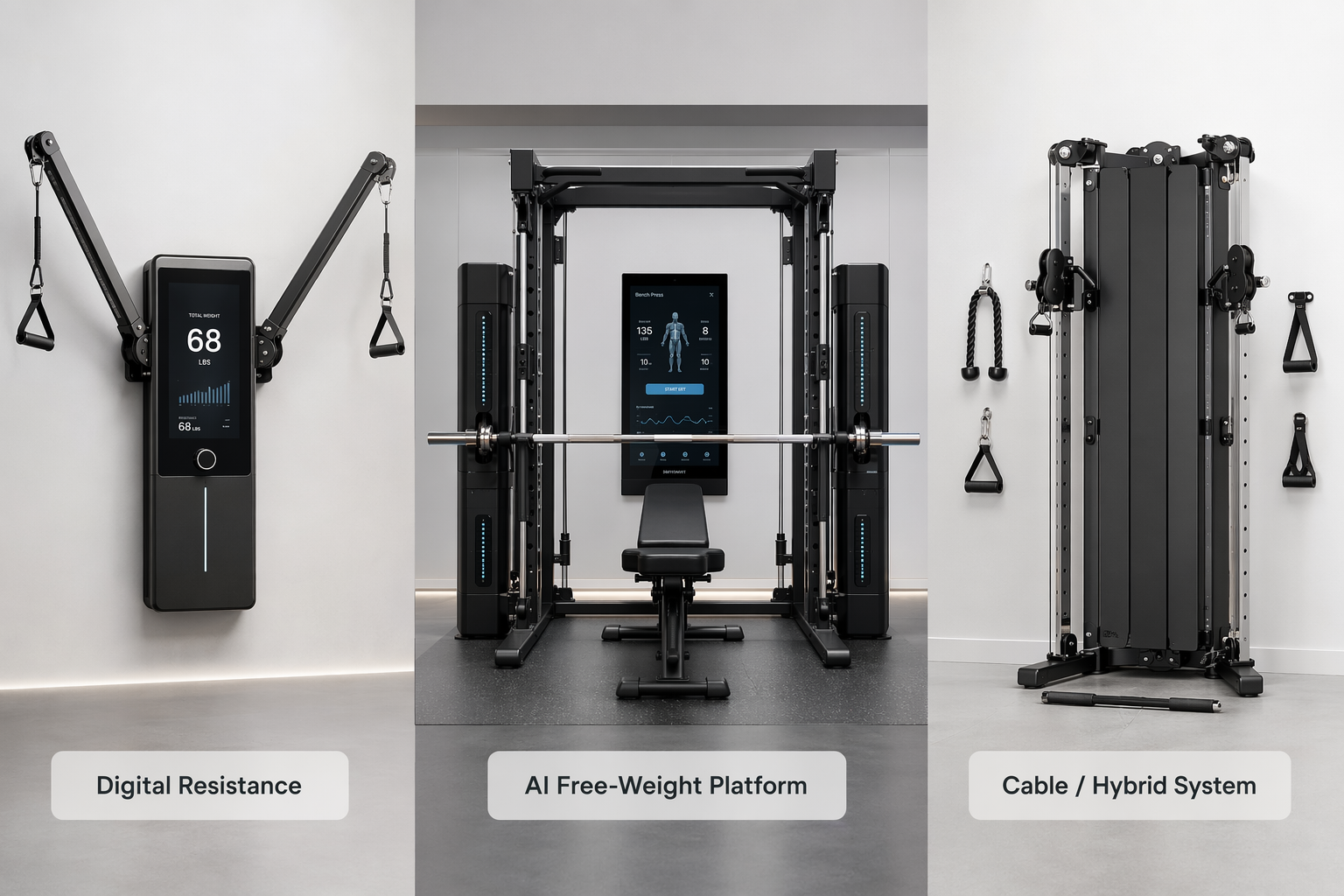
Before diving into the comparison table, it helps to understand the three resistance types powering these machines. Each has distinct tradeoffs for space, safety, and training feel.
- Digital electromagnetic resistance: Systems like Tonal 2, Speediance Gym Monster, and AEKE K1 use electromagnets to create resistance. They produce constant tension through the full range of motion with no momentum or gravity curve, which makes solo training safer and allows for features like eccentric overload and spotter mode. The tradeoff: you are capped at a maximum resistance level (typically 220–250 lbs), and the system requires power.
- AI-enhanced free-weight platforms: Tempo Move uses your own dumbbells and barbells combined with a camera and AI for form correction and rep counting. This approach gives you unlimited weight potential (you supply the plates) but lacks the constant tension and safety features of digital resistance. It also requires more floor space for the weight storage.
- Cable-based hybrid systems: Some machines blend traditional cable stacks with digital tracking. These offer a familiar gym feel but often require more floor space and maintenance than pure digital systems.
For a deeper dive on why digital resistance systems are particularly space-efficient and how they compare to traditional setups, see our guide on Smart Compact Home Gyms vs. Traditional Strength Equipment.
Head-to-Head Spec Comparison: Tonal 2, Speediance Gym Monster, Tempo Move, Vitruvian Trainer+, and AEKE K1
The table below stacks the five systems side by side across the dimensions that matter most for a purchase decision. All data is sourced from manufacturer specs and independent testing as of June 2026.
| Spec | Tonal 2 | Speediance Gym Monster | Tempo Move (Starter) | Vitruvian Trainer+ | AEKE K1 |
|---|---|---|---|---|---|
| Price (USD) | $4,295 ($3,545 sale) | $3,199 | $504 | $2,990 | $2,999 |
| Monthly Subscription | $59.95 | $29 (optional) | $39 | $39 (optional) | $0 |
| Max Resistance | 250 lbs | 220 lbs | 50 lbs (starter) | 220 lbs | 220 lbs |
| Resistance Type | Digital electromagnetic | Digital electromagnetic | Your own free weights | Digital electromagnetic | Digital electromagnetic |
| Footprint (operational) | Wall-mounted, ~24" x 21" | Freestanding, ~30" x 30" | Cabinet, ~24" x 48" | Floor unit, ~28" x 28" | Freestanding, ~32" x 28" |
| Storage Footprint | N/A (wall-mounted) | Folds to ~12" depth | N/A | N/A | Folds to 3.2 sq ft |
| AI Features | Full AI coaching, skeletal tracking, auto spotter | AI form correction, auto weight adjustment | AI form correction via camera | AI auto weight adjustment | AI skeletal tracking, 5 adaptive modes |
| Warranty | 2 years | 2 years machine, 1 year accessories | 3 years cabinet, 1 year parts | 2 years | 2 years |
| Return Period | 30 days | 30 days | 30 days | 30 days | 30 days |
| Installation | Professional mounting required | Freestanding, no drilling | Freestanding, no drilling | Freestanding, no drilling | Freestanding, no drilling |
For a fuller explanation of what each AI coaching tier actually does — from basic rep counting to full skeletal tracking — see our dedicated guide on Smart Home Gym AI Coaching Tiers.
Deep Dives: What Each System Actually Delivers (Pros, Cons, and Who It’s For)
Tonal 2
Tonal 2 remains the benchmark for digital resistance systems. Its 250 lbs max resistance is the highest among the pure digital systems in this comparison, and its full AI coaching suite — including skeletal tracking, auto spotter, and eccentric overload — is the most polished on the market. The wall-mounted design saves floor space but requires professional installation and a stud wall, which rules out many apartment and rental situations.
- Pros: Highest digital resistance (250 lbs); best-in-class AI coaching; compact wall-mounted footprint; smooth, quiet operation.
- Cons: Highest upfront cost ($4,295); mandatory $59.95/month subscription; requires professional wall mounting; 2-year warranty is short for the price point.
- Who it’s for: Serious home gym enthusiasts who own their space, want the most advanced AI coaching, and are comfortable with the subscription commitment. Not ideal for renters or budget-conscious buyers.
Speediance Gym Monster
Speediance Gym Monster strikes a strong balance between capability and cost. At $3,199 with 220 lbs of digital resistance, it undercuts Tonal 2 significantly while offering a freestanding design that requires no drilling. The optional $29/month subscription unlocks AI form correction and auto weight adjustment, but the machine is fully functional without it — a key differentiator.
- Pros: Freestanding, no installation needed; folds to ~12" depth for storage; no mandatory subscription; strong 220 lbs resistance; good value at $3,199.
- Cons: AI features are less polished than Tonal 2; 1-year warranty on accessories is short; max resistance may be limiting for advanced lifters.
- Who it’s for: Home gym buyers who want digital resistance without a mandatory subscription, need a freestanding unit for rental spaces, and want the option to fold it away when not in use.
Tempo Move (Starter Bundle)
Tempo Move takes a fundamentally different approach: it is an AI camera system that tracks your form while you use your own free weights. The starter bundle at $504 is the cheapest entry point into smart strength training, but the 50 lbs starter weight set is very limiting. You will need to invest in additional dumbbells and a barbell to progress, which adds to the total cost and footprint.
- Pros: Lowest upfront cost ($504); uses your own weights so resistance is theoretically unlimited; AI form correction via camera; compact cabinet design.
- Cons: Starter weight set is only 50 lbs; $39/month subscription required for AI features; requires floor space for weight storage; no constant tension or spotter mode.
- Who it’s for: Beginners who already own some free weights and want AI form guidance without committing to a digital resistance system. Less suitable for intermediate or advanced lifters who need heavy loads.
Vitruvian Trainer+
Vitruvian Trainer+ is a floor-based digital resistance unit that sits flat on the ground, making it one of the most discreet options. Its 220 lbs max resistance matches Speediance and AEKE, and the optional $39/month subscription unlocks AI auto weight adjustment. The floor-unit design means you perform exercises lying, sitting, or standing on the unit, which some users find less intuitive than a cable tower.
- Pros: Ultra-discreet floor design; 220 lbs digital resistance; optional subscription; no installation required.
- Cons: Exercise positioning can feel awkward; no folding or wall-mount option; AI features are less advanced than Tonal 2; 2-year warranty.
- Who it’s for: Users who want a completely hidden gym that slides under a bed or couch, and who prioritize discretion over exercise variety.
AEKE K1
AEKE K1 is the newest entrant and the only system in this comparison that offers full functionality with no subscription at all. It provides 4–220 lbs of digital resistance with 1 lb precision, five adaptive resistance modes, AI skeletal tracking via a 43" 4K touchscreen, and folds to just 3.2 sq ft for storage. The manufacturer claims 300+ exercises and 200+ guided workouts, plus support for up to 9 user profiles.
- Pros: No subscription required; folds to 3.2 sq ft; 220 lbs digital resistance with 1 lb precision; large 43" 4K touchscreen; AI skeletal tracking; 9 user profiles.
- Cons: Newer brand with less independent review coverage; AI coaching ecosystem is less mature than Tonal 2; 2-year warranty.
- Who it’s for: Buyers who want a subscription-free digital resistance system with strong AI features, need foldable storage for small spaces, and are comfortable with a newer brand.
For a broader look at space-saving equipment options — including foldable benches, wall-mounted racks, and compact cardio machines — see our Best Space-Saving Home Gym Equipment guide.
5-Year Total Cost Projection: The Subscription Trap vs. No-Fee Systems
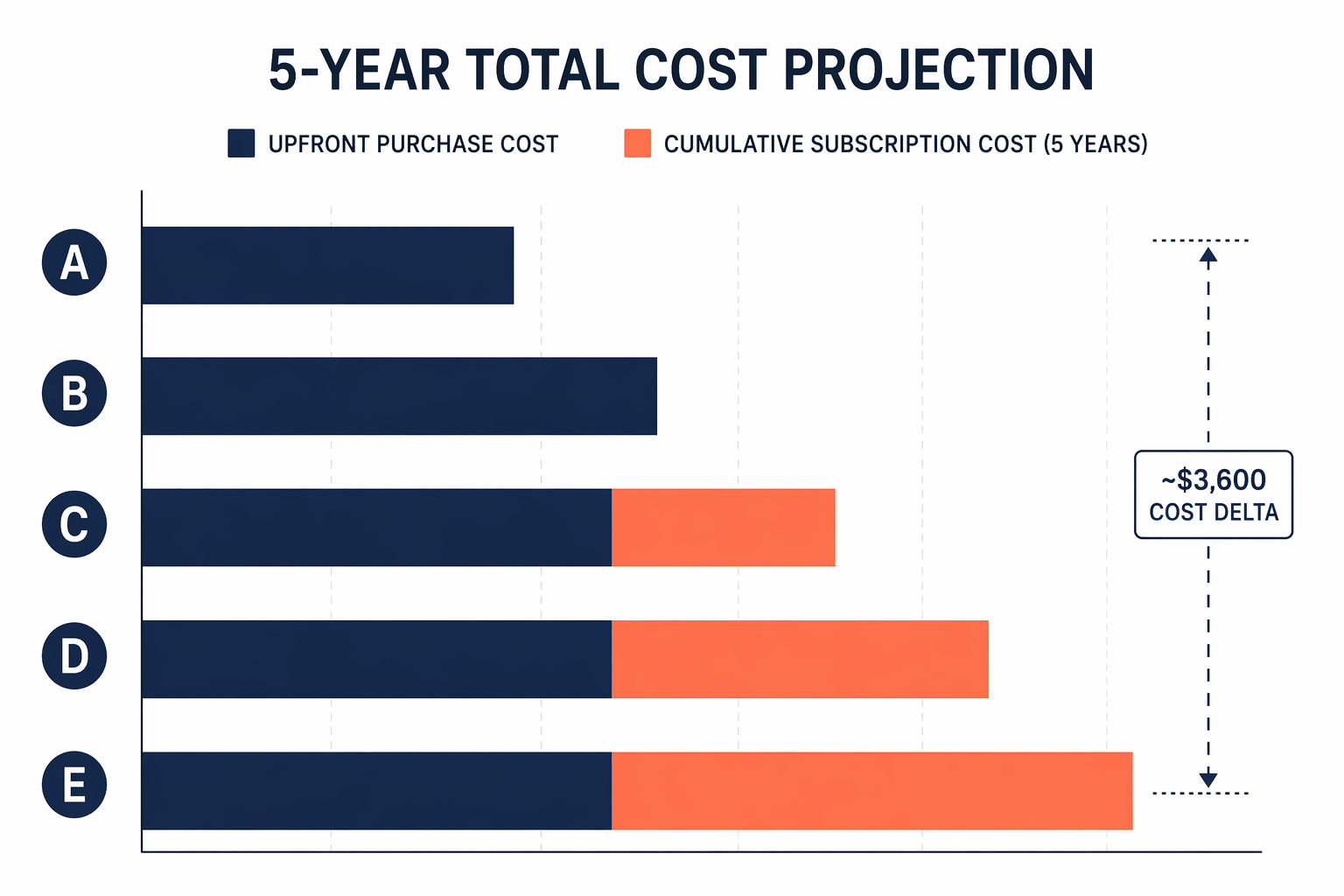
The upfront price tag tells only part of the story. Over five years, the subscription cost delta between mandatory-fee and no-fee systems can exceed $3,600. The table below breaks down the total cost of ownership for each system, assuming the subscription is paid for all five years where applicable.
| System | Upfront Cost | Monthly Subscription | 5-Year Subscription Total | 5-Year Total Cost |
|---|---|---|---|---|
| Tonal 2 | $4,295 | $59.95 (mandatory) | $3,597 | $7,892 |
| Speediance Gym Monster | $3,199 | $29 (optional) | $0 (no sub) or $1,740 | $3,199 or $4,939 |
| Tempo Move (Starter) | $504 | $39 (mandatory for AI) | $2,340 | $2,844 |
| Vitruvian Trainer+ | $2,990 | $39 (optional) | $0 (no sub) or $2,340 | $2,990 or $5,330 |
| AEKE K1 | $2,999 | $0 | $0 | $2,999 |
This projection covers only the systems themselves. For a broader comparison of smart gym total cost of ownership against gym memberships and traditional equipment, see our dedicated Smart Home Gym Total Cost of Ownership article.
Decision Matrix: Which Smart Gym Fits Your Profile?
The right system depends on your specific situation. Use the matrix below to match your profile to the best option.
| User Profile | Best System | Why |
|---|---|---|
| Beginner (new to strength training) | AEKE K1 or Speediance Gym Monster | No mandatory subscription reduces financial commitment; digital resistance is safer for solo training; AI coaching provides form guidance without overwhelming complexity. |
| Apartment dweller / renter | Speediance Gym Monster or AEKE K1 | Freestanding, no drilling required; both fold for storage; Speediance folds to ~12" depth, AEKE to 3.2 sq ft. Tonal 2 requires wall mounting, which many rentals prohibit. |
| Advanced lifter (needs 250+ lbs) | Tonal 2 | Only system with 250 lbs digital resistance. If you need more than that, consider a traditional power rack or the MaxPRO SmartConnect (300 lbs, portable, $749). |
| Family sharing (multiple users) | AEKE K1 | Supports up to 9 user profiles with individual settings. Tonal 2 and Speediance also support multiple profiles but with fewer slots. |
| Budget-conscious buyer | Tempo Move (Starter) or Speediance Gym Monster | Tempo Move at $504 is the cheapest entry point. Speediance at $3,199 offers the best value for digital resistance with no mandatory subscription. |
For apartment dwellers who need additional guidance on noise, mounting constraints, and floor protection, see our Renter's Guide to a Compact Home Gym.
Frequently Asked Questions
- Can I use these systems without a subscription? Yes — Speediance Gym Monster and AEKE K1 offer full functionality without a subscription. Tonal 2 and Tempo Move require a subscription for core features. Vitruvian Trainer+ is functional without a subscription but loses AI features.
- How much space do I really need? Tonal 2 requires a wall mount with about 24" x 21" of wall space plus clearance for cable arms. Speediance and AEKE need roughly 30" x 30" of floor space but fold to under 12" depth. Tempo Move's cabinet is about 24" x 48". Vitruvian Trainer+ is the most discreet at 28" x 28" and slides under furniture.
- Which system has the highest max resistance? Tonal 2 leads at 250 lbs among the premium all-in-one systems. The MaxPRO SmartConnect offers 300 lbs but is a portable unit, not a full all-in-one system. Speediance, Vitruvian, and AEKE all cap at 220 lbs.
- Is AI coaching worth the extra cost? It depends on your experience level. Beginners benefit significantly from AI form correction and auto weight adjustment. Experienced lifters who already know proper form may find the subscription cost hard to justify. See our AI Coaching Tiers guide for a detailed breakdown of what each tier actually delivers.
- How long do these systems typically last? Warranty periods range from 1 year (Tempo Move accessories) to 3 years (Tempo Move cabinet). Tonal 2, Speediance, Vitruvian, and AEKE all offer 2-year warranties on the main unit. For comparison, traditional power racks often carry 10-year to lifetime warranties.
This result comes from one real apartment under the stated conditions — it is a strong signal, not a guarantee your space will measure identically.
Builds this evidence supports
No build currently links to this specific test. Browse all builds with a matching tag.
Spot something off?
If this result didn't match your own space, let us know — floor-damage and noise claims carry real deposit-risk consequences if we get them wrong.