7 Mistakes People Make When Building a Compact Home Gym (And How to Avoid Them)
Avoid costly, space-wasting errors when setting up a compact home gym in an apartment or small room. This guide covers the seven most common mistakes — from mis-measuring ceiling height to overlooking subscription traps — with actionable solutions for each.
- Budget tier
- $1,000–$3,000
- Space type
- apartment
Items included: —
Introduction: Why Compact Home Gym Mistakes Are Different
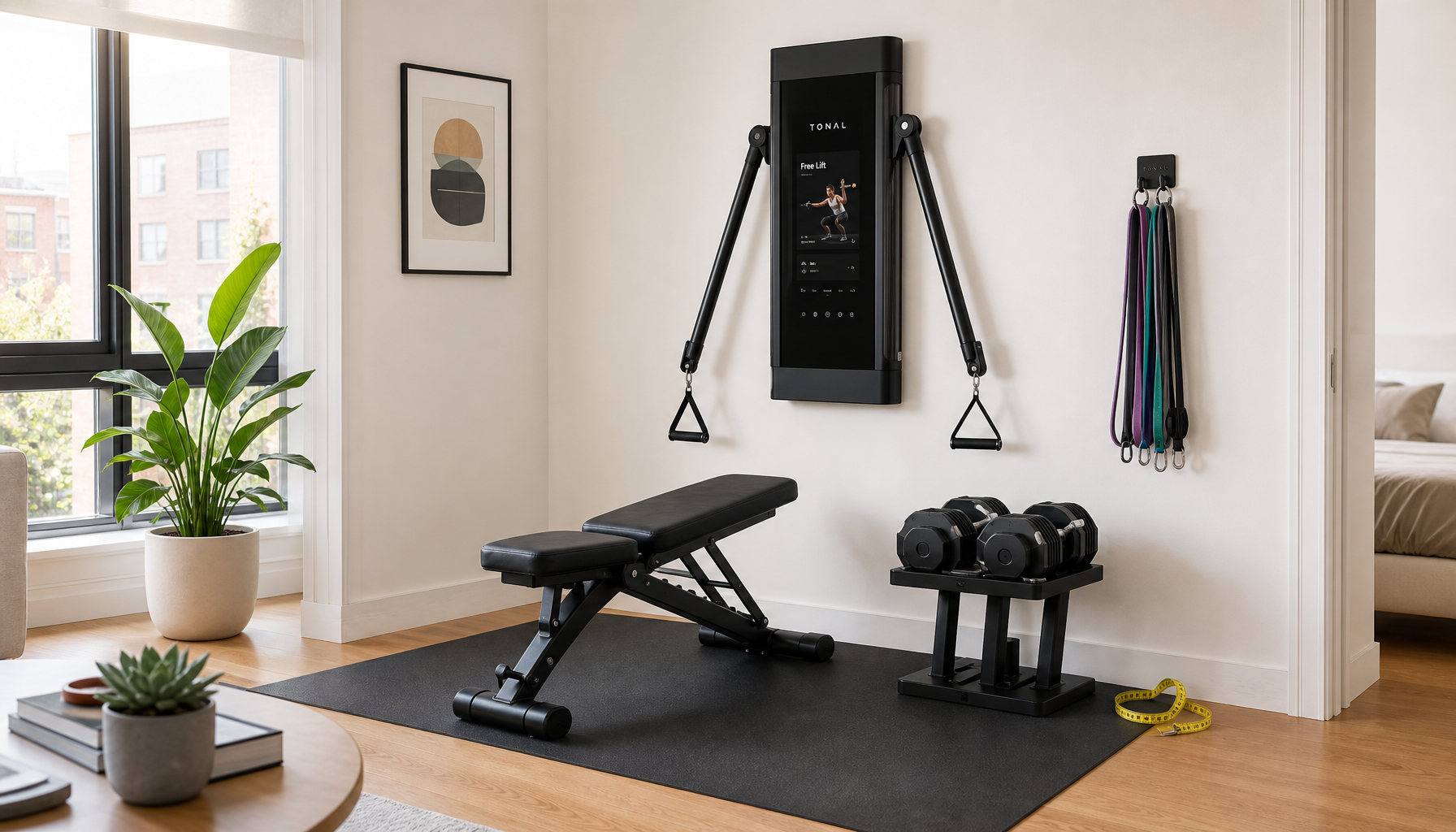
Building a home gym in a compact space — an apartment, a spare room, or a corner of your living area — is a fundamentally different challenge from setting up in a garage or a dedicated basement. The margin for error is razor-thin. A piece of equipment that is six inches too tall for your ceiling, or that requires 37 square feet of floor space you don't have, doesn't just mean a return shipping headache. It means your workout space is unusable.
The most expensive mistakes in compact home gyms are not about choosing the wrong brand or color. They are about mis-measuring usable space, ignoring ceiling height, underestimating clearance needs for exercises, and buying equipment that limits your training progression within 6 to 12 months. Unlike a garage gym where you can often rearrange or add on, a compact setup has hard physical limits. Every cubic foot counts.
Mistake 1: Buying Equipment Before Measuring Your Actual Usable Space
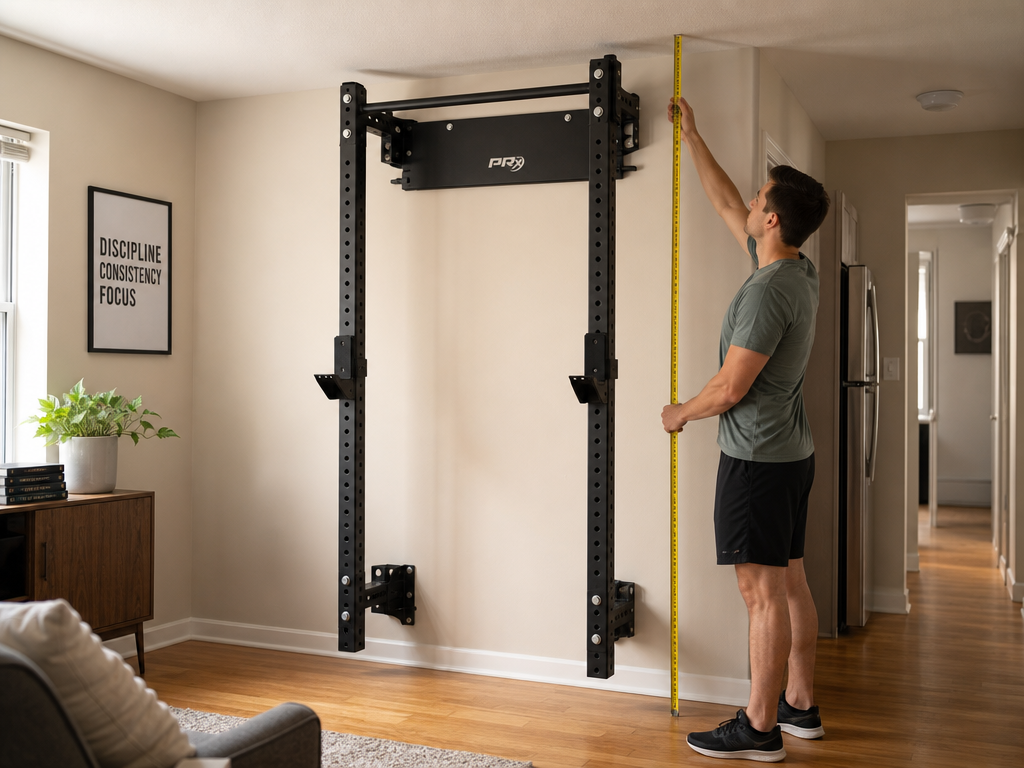
This is the single most common and most costly error. People measure the floor area of a room, see that a machine's footprint fits, and buy it — only to discover that the machine's unfolded height exceeds their ceiling height, or that its cable arms require clearance they don't have.
Ceiling height is the most frequently missed measurement. Standard apartment ceilings are 8 feet (96 inches), but many are lower, especially in basements or older buildings. Consider these real-world examples:
- The PRx Profile PRO Squat Rack, a popular foldable option, comes in 81-inch, 89-inch, and 95-inch height options when unfolded. If you have an 8-foot ceiling (96 inches), the 95-inch version leaves only 1 inch of clearance — not enough for safe use. The 89-inch version is a much safer fit.
- The Tonal 2 smart gym requires 7 feet (84 inches) of vertical clearance for its cable arms to operate correctly. It also needs a 7-foot by 7-foot clear floor space in front of the unit.
- The Bowflex Xtreme 2 SE Home Gym stands 83.25 inches tall and requires a workout area of 150 inches long by 112 inches wide — far more than its 63" x 49" footprint suggests.
Beyond height, you must account for cable arm sweep zones, door clearance for delivery, and the space needed to actually perform exercises. A machine that fits in the corner when folded may block a doorway when in use.
Mistake 2: Choosing a Machine with Resistance You Will Outgrow in Under a Year
Compact machines often compromise on maximum resistance to save space. This is a reasonable trade-off — until it isn't. Many buyers discover six months in that their machine's weight stack or digital resistance cap is no longer challenging, forcing an expensive upgrade or a full replacement.
The Garage Gym Reviews team explicitly warns that "weight stacks under 200 lbs (or digital resistance under 100 lbs per arm) are quickly outgrown by intermediate lifters." This is a critical threshold. Here is how popular compact machines compare:
| Machine | Max Resistance | Resistance Type | Upgradable? | Price |
|---|---|---|---|---|
| Speediance Gym Monster | 220 lbs total (110 lbs per arm) | Digital | No | $3,199 |
| Tonal 2 | 250 lbs total (125 lbs per arm) | Digital | No | $4,295 |
| Bowflex Xtreme 2 SE | 210 lbs (upgradable to 410 lbs) | Power Rod | Yes ($129 upgrade) | $1,499 |
| Major Fitness B17 | 260 lbs per stack (expandable) | Weight Stack | Yes | Varies |
The Bowflex Xtreme 2 SE's upgrade path to 410 lbs is a significant advantage for long-term value, though its Power Rod resistance system "feels more like a resistance band workout than weight training" according to testers. The Speediance Gym Monster and Tonal 2 offer digital resistance that is smooth and quiet, but neither can be upgraded beyond their built-in limits.
Before buying, project your strength goals 12 to 18 months out. If you are a beginner who expects to progress steadily, a machine with 200 lbs total resistance may feel limiting sooner than you think. For a detailed breakdown of how resistance types compare, see our Compact Home Gym Tech Showdown: Digital Resistance vs. Weight Stacks vs. Bands vs. Plate-Loaded.
Mistake 3: Ignoring the Subscription Cost Trap on Smart Gyms
Smart gyms are a natural fit for compact spaces — they pack a lot of functionality into a small footprint. But their subscription costs are often buried in the fine print, and the total cost of ownership over three years can be a shock.
The Tonal 2, for example, costs $4,295 upfront. Its required membership is $49 to $60 per month. Over three years, that adds $1,764 to $2,160 in subscription fees — bringing the total to between $6,059 and $6,455. And that is before the $495 for the smart accessories package (bar, handles, rope).
| Machine | Upfront Cost | Monthly Subscription | 3-Year Subscription Cost | 3-Year Total |
|---|---|---|---|---|
| Tonal 2 | $4,295 | $49–$60 | $1,764–$2,160 | $6,059–$6,455 |
| Speediance Gym Monster | $3,199 | $0 (no subscription required) | $0 | $3,199 |
| Bowflex Xtreme 2 SE | $1,499 | $0 | $0 | $1,499 |
The Speediance Gym Monster, by contrast, requires no subscription for basic use, including access to its online courses and programming. Its upfront cost is $3,199, and its three-year total is exactly that. This difference of $2,860 to $3,256 versus the Tonal 2 is significant — enough to buy a second piece of equipment or fund years of gym membership.
For a full list of product options that balance cost, space, and functionality, see our Compact Home Gym Equipment Guide for Apartments: 9 Best Options Tested for Noise, Footprint, and Portability.
Mistake 4: Buying Standalone Single-Function Equipment Instead of Multi-Use Gear
In a compact space, every piece of equipment must earn its footprint. A dedicated leg press machine, a separate cable crossover station, and a standalone Smith machine might each serve a purpose, but together they consume floor space that most apartments simply do not have.
The obvious solution is an all-in-one machine that combines multiple functions. However, this comes with its own trap: many all-in-ones are deceptively large. The Major Fitness B17, which combines a Smith machine, cables, and a rack, requires over 37 square feet of floor space. The Force USA G6 All-in-One trainer needs a footprint of 72 inches wide by 63 inches deep. For many apartment dwellers, that is more space than they can dedicate permanently.
A smarter approach for compact spaces is to prioritize modular, space-efficient gear:
- Adjustable dumbbells replace an entire rack of fixed-weight dumbbells, saving significant floor and shelf space.
- A folding bench can be stored upright or under a bed when not in use.
- Wall-mounted racks like the PRx Profile PRO fold to just 4 to 9 inches from the wall, freeing up the entire floor area when not in use.
- Digital resistance machines like the Speediance Gym Monster fold to 14.96 inches deep, making them far more practical for shared spaces.
The key question to ask before any purchase is: "Does this piece of equipment do more than one thing, or can it be stored out of the way when not in use?" If the answer to both is no, it may not belong in a compact gym.
Mistake 5: Overlooking Noise and Floor Protection in Apartment Settings
Apartment living adds a layer of constraints that garage gym owners never think about: noise complaints from neighbors, damage to hardwood or tile floors, and vibration transfer through shared floors and walls. Ignoring these can lead to lease violations, angry neighbors, and costly floor repairs.
Here are the key considerations for an apartment-friendly setup:
- Rubber gym mats are non-negotiable. Thick, interlocking mats (at least 3/8-inch thick) protect floors from dropped weights and reduce vibration. For areas where you drop weights from overhead, a dedicated deadlift platform with a thicker rubber layer is recommended.
- Digital resistance machines (Tonal, Speediance) are significantly quieter than weight stacks or plate-loaded systems. The clanking of metal weight plates or the thud of a dropped barbell is far more likely to disturb neighbors than the smooth, motorized resistance of a smart gym.
- Check your lease agreement. Some buildings explicitly prohibit heavy gym equipment, especially in upstairs units. Others may require written approval or additional security deposits.
- Consider the time of day you will work out. Even with mats, dropping weights at 6 AM may not be appreciated by the neighbor below.
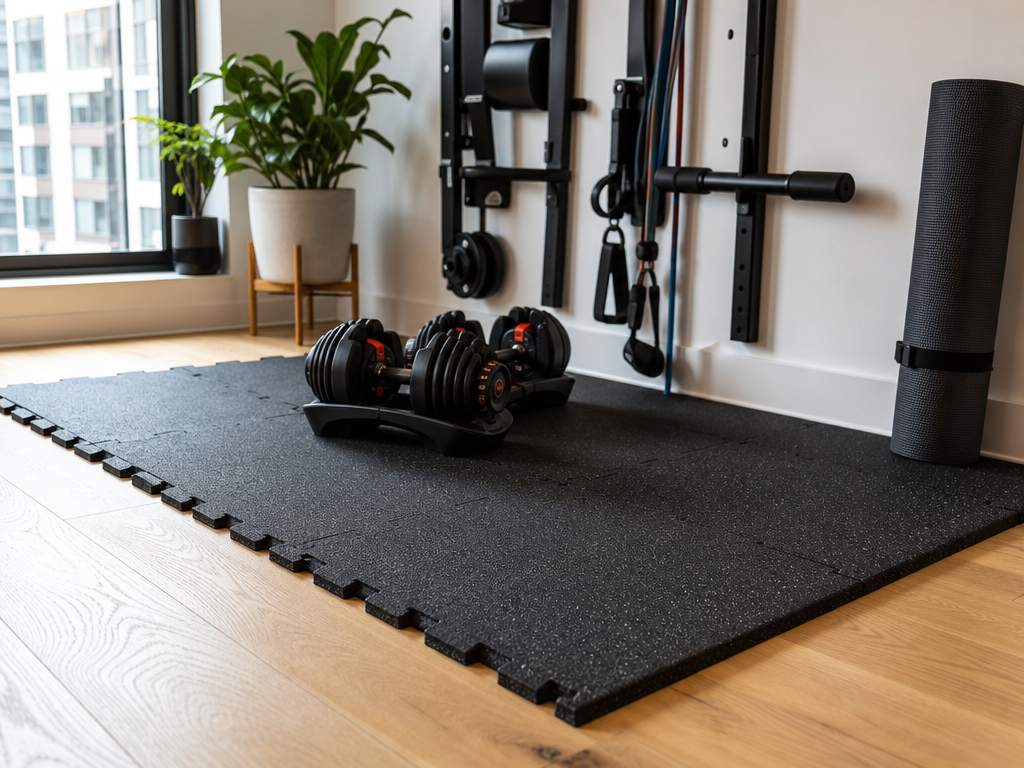
For a deeper dive into solving noise, space, and no-mount constraints in rental apartments, see our Renter's Guide to a Compact Home Gym: Solving Noise, Space, and No-Mount Constraints.
Mistake 6: Skipping the 'Try-Before-You-Buy' Trial Periods and Warranty Fine Print
A compact home gym is a high-consideration purchase. The average cost of a home gym is around $1,855, and many smart gyms cost $3,000 to $4,300. Yet many buyers skip the trial periods and warranty fine print, only to discover issues after the return window has closed.
Here is what to look for before committing:
- Trial periods: Tonal offers a 30-day trial. Use it. Set up the machine, use it for at least a week, and decide if the resistance feel, the subscription content, and the space commitment work for you. If it doesn't fit, return it within the window.
- Warranty coverage: The Bowflex Xtreme 2 SE offers a 7-year machine warranty and a 5-year rod warranty — a strong signal of confidence in the product. Compare this to machines that offer only 1-2 years on digital components or screens, which are the most likely parts to fail.
- Subscription commitments: Some smart gyms require a 12-month subscription commitment even if you return the hardware. Read the terms carefully.
- Floor models and open-box items: These may not carry the same return policy or warranty as new units. If you buy one, confirm the return window and warranty coverage in writing.
For a comprehensive comparison of machine types and their typical warranty structures, see our All-in-One Fitness Machine Types Compared: Single Stack, Dual Stack, Multi-Stack, and Smart Trainers.
Mistake 7: Not Planning for Future Expansion or Reconfiguration
A compact home gym is not a static setup. Your strength will increase, your goals will shift, and your living situation may change. The most successful compact gyms are those designed to evolve.
Here is how to build a gym that grows with you:
- Choose modular systems. Adjustable dumbbells that increase in weight (e.g., from 5 to 50 lbs or more) allow you to progress without buying new dumbbells. Racks with add-on kits (like the PRx Profile PRO's optional bench and accessories) let you expand functionality over time.
- Leave wall space for future additions. If you mount a foldable rack on one wall, keep the opposite wall clear for a future cable attachment, a pull-up bar, or a storage solution.
- Use mobile storage. Rolling carts, wall hooks, and storage racks allow you to reconfigure the space quickly. A gym that doubles as a living room during the day needs gear that can be stowed in minutes.
- Plan for dual-purpose use. A yoga mat that defines the workout zone can be rolled up. A folding bench can be stored in a closet. The space should not look like a gym 24/7 if it serves other functions.
The most adaptable compact gyms are those that can shift from a strength training setup to a cardio zone to a yoga space without requiring a full reconfiguration. Think of your space as a platform, not a fixed installation.
Checklist: How to Avoid Each Mistake Before You Buy
Use this checklist when evaluating any piece of equipment for your compact home gym. Each item corresponds to one of the seven mistakes above.
- Measure ceiling height, clear floor area, and doorway width before opening any product page.
- Project your strength goals 12-18 months out and choose a machine with resistance you won't outgrow.
- Calculate the 3-year total cost of ownership, including any mandatory subscriptions.
- Prefer multi-use gear (adjustable dumbbells, folding benches, wall-mounted racks) over single-function machines.
- Invest in rubber gym mats and check your lease for equipment restrictions.
- Use trial periods, read warranty terms carefully, and confirm return policies before buying.
- Choose modular, storable equipment that allows your gym to evolve with your goals.
Some links on this page are affiliate links — they may earn us a commission at no extra cost to you. Our tier and tests are decided before we ever check which links pay; see our full affiliate disclosure.
Spot something off?
Noise and floor-damage claims carry real deposit-risk consequences if we get them wrong — tell us if your experience with this build didn't match what's above.