
All-in-One Fitness Machine Types Compared: Single Stack, Dual Stack, Multi-Stack, and Smart Trainers
Not all all-in-one machines are the same. This guide breaks down the five structural categories — single stack, dual stack, multi-stack, smart digital, and plate-loaded — so you can match the right type to your space, budget, and training style.
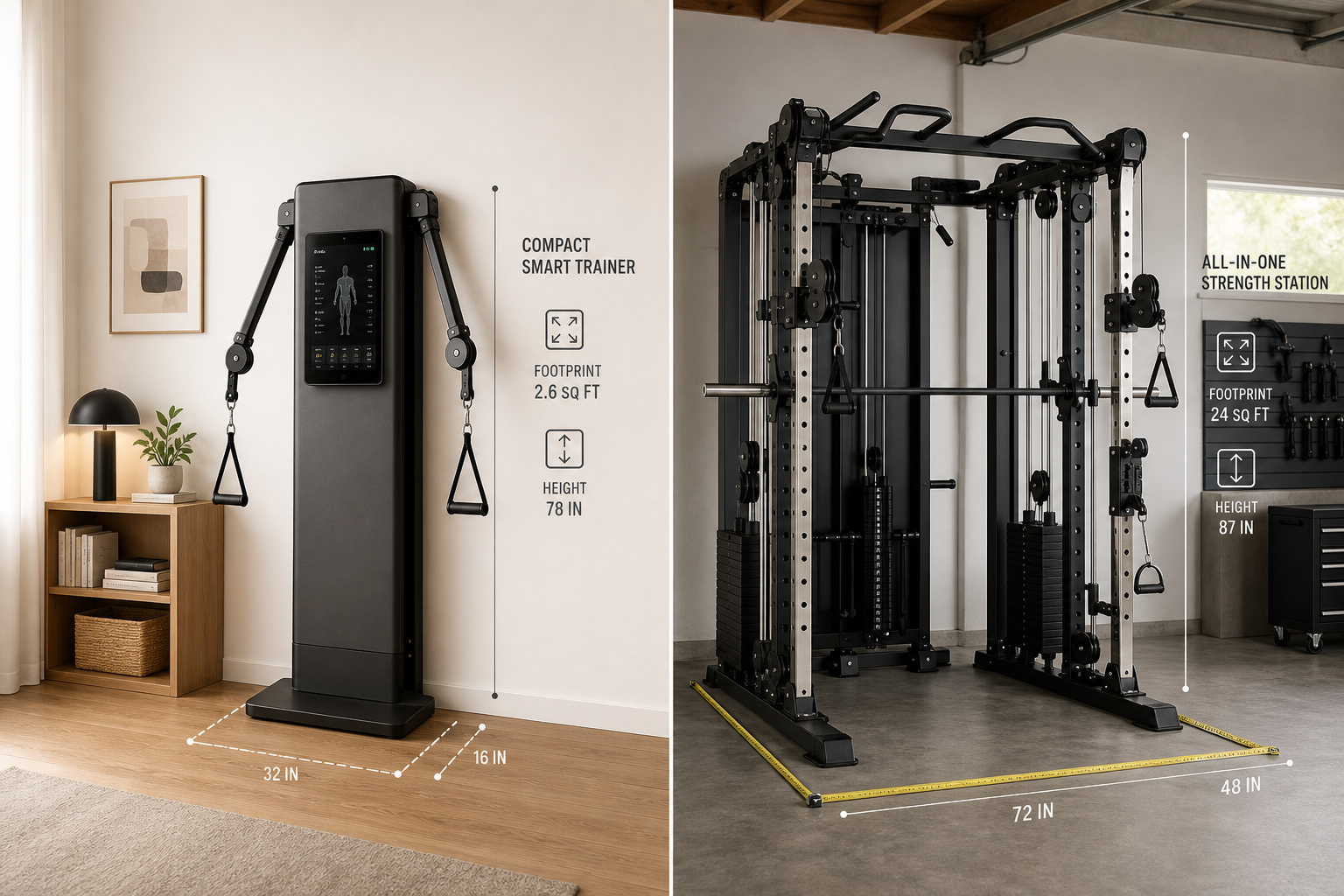
What Counts as an All-in-One Fitness Machine?
An all-in-one fitness machine is a single frame that combines multiple strength-training stations — typically a cable crossover, lat pulldown, low row, Smith machine, chin-up bar, and often a power rack or leg press attachment. The defining characteristic is that one piece of equipment replaces several separate machines or free-weight stations. Single-purpose cardio equipment (treadmills, exercise bikes, rowers) does not qualify, even if it folds or stores compactly.
The category is broad, which is precisely why buyers get stuck. A $400 single-stack unit from a big-box store and a $5,000 multi-stack system from Force USA are both called "all-in-one," but they serve completely different users. To make sense of the landscape, you need to look past the marketing labels and understand the structural architecture underneath.
If you are new to home gym equipment types, the archetype guide provides a broader overview of how all-in-one machines compare to power racks, functional trainers, and smart gyms.
The Five Structural Categories of All-in-One Machines
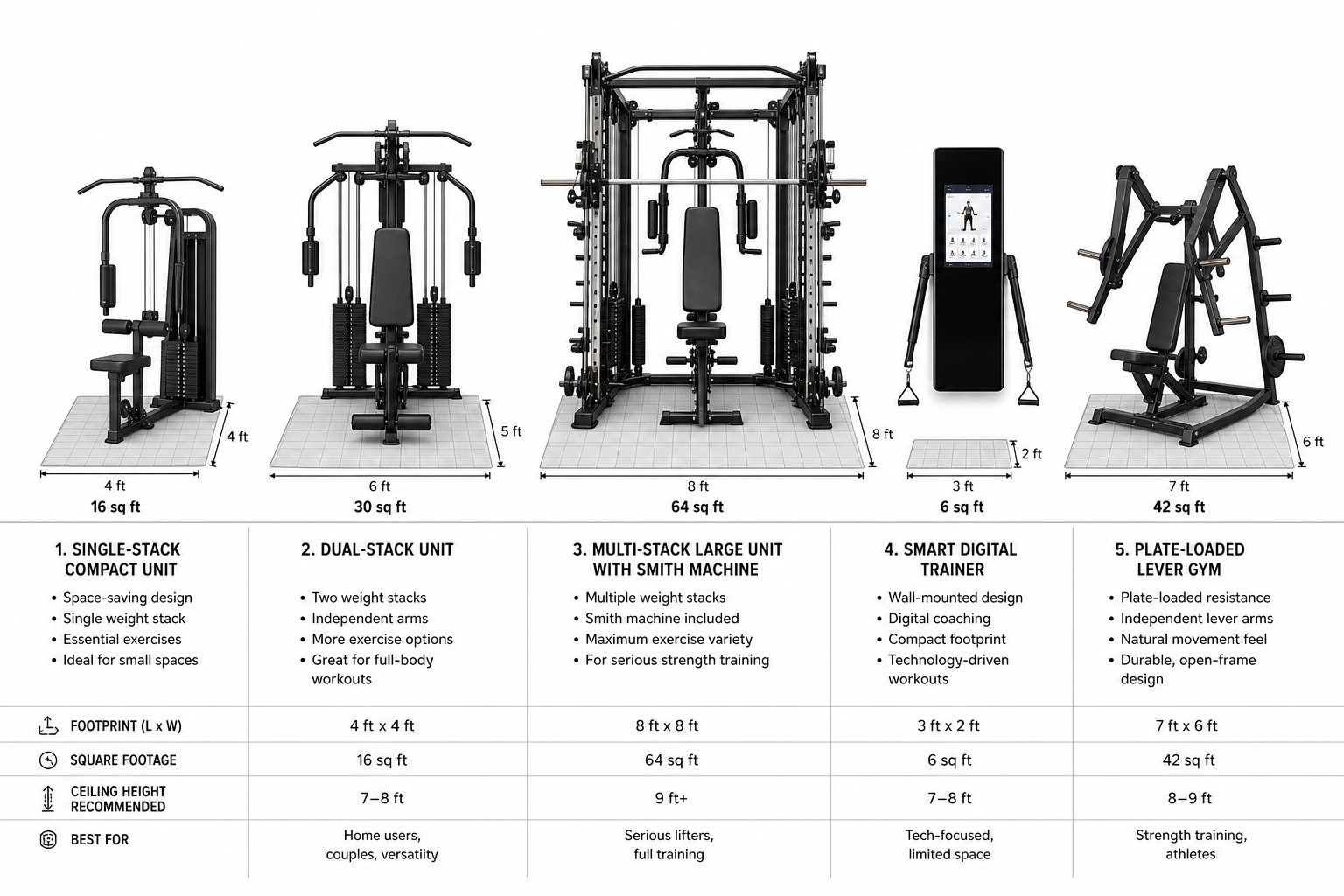
Every all-in-one machine on the market falls into one of five structural categories. The architecture determines the machine's footprint, resistance ceiling, exercise variety, price, and — most importantly — who it is actually built for.
Single-Stack Multi-Gyms
Single-stack machines use one weight stack (typically 160–210 lbs) routed through a single cable system. A single pulley carriage moves up and down, and you attach different handles to perform various exercises. These are the most compact and affordable all-in-one machines, with footprints under 20 sq ft and prices ranging from $400 to $1,800.
Representative models include the Body-Solid G5S, Powerline P2X, and Steelflex MG100B. The Powerline BSG10X ships 90% pre-assembled and can be ready in under 30 minutes — a stark contrast to the multi-stack assembly marathons discussed later.
Who it is for: Solo users who want guided, cable-based training in a small space. Beginners who are not yet moving heavy loads. Anyone on a tight budget who needs a complete strength solution in one box.
Dual-Stack Systems
Dual-stack machines have two independent weight stacks — one on each side — each with its own cable and pulley system. This architecture enables simultaneous bilateral movements (chest flyes, face pulls, woodchoppers) and smoother transitions between exercises because you are not sharing a single cable path.
The Body-Solid G9B is a benchmark dual-stack machine with two independent 210-lb stacks and a built-in leg press. The Major Fitness B17 offers dual stacks expandable up to 260 lbs per side with a switchable cable ratio (1:1 or 2:1). The REP FT-5000 packs dual 224-lb stacks into a 14.5 sq ft footprint. Prices typically range from $1,500 to $3,500.
Who it is for: Intermediate lifters who want independent arm movement and smoother cable transitions. Households where two people may train at different times (or simultaneously on separate stacks). Anyone who finds single-stack machines too restrictive for chest flyes and cable crossovers.
Multi-Stack / Jungle Gym Systems
Multi-stack machines are the largest and most feature-rich category. They combine a power rack, Smith machine, functional trainer, chin-up bar, landmine, lat pulldown, low row, dip handles, and often a leg press or jammer arms — all on a single welded frame. These are essentially light-commercial machines designed for home use.
The Force USA G20 is the current top-tier example: an 11-in-1 machine with a walkthrough frame, dual 289-lb selectorized stacks, 11-gauge steel, Westside hole spacing, and a footprint of 79.5" x 53" (29.2 sq ft). The Body-Solid EXM3000LPS and Pro ClubLine S1000 sit in the same category. Prices range from $2,500 to $8,000.
Who it is for: Serious home gym builders who want a complete strength training solution in one footprint. Lifters who need a Smith machine, power rack, and functional trainer without buying three separate pieces. Users with at least 30 sq ft of dedicated floor space and a high tolerance for assembly.
Smart Digital Trainers
Smart digital trainers replace physical weight stacks with electromagnetic or motorized resistance. They are the newest category and the fastest-growing segment of the all-in-one market, driven by the home fitness market's projected growth from $12.4 billion in 2025 to $19.6 billion by 2035.
The Speediance Gym Monster has a footprint of 49.21" x 28.34" (9.5 sq ft) unfolded and offers up to 220 lbs of digital resistance. The Tonal 2 mounts to the wall (21.5" W x 50.9" H) and provides up to 250 lbs of digital resistance with AI-guided coaching. The Beyond Power Voltra I packs 200 lbs of digital resistance into a 12.8-lb portable unit.
The trade-off is resistance ceiling. Most digital trainers max out at 220–250 lbs total, which is sufficient for the majority of home users but limiting for advanced lifters working heavy compound lifts. The detailed smart gym comparison covers the brand-level differences between Tonal, Speediance, and Vitruvian.
Who it is for: Apartment dwellers who cannot bolt a power rack to the floor. Tech-oriented users who want AI-guided programming and automatic progressive overload. Anyone prioritizing minimal footprint and clean aesthetics over raw resistance capacity.
Plate-Loaded Lever Gyms
Plate-loaded lever gyms use your own weight plates instead of a built-in stack. The frame has weight horns where you load plates, and the resistance is delivered through lever arms or a cable system with a 2:1 ratio (meaning the weight you feel is half of what you load). This architecture keeps the machine simpler and more affordable than stack-based systems.
The Force USA G3 is the most well-known example: a plate-loaded all-in-one with a power rack, Smith machine, and functional trainer base, priced around $1,300–$1,900. It has a 992-lb weight capacity and a footprint of 78" W x 60.5" D x 87" H. The Bells of Steel All-in-One Home Gym starts at $1,300 with a 300-lb cable capacity and 12-gauge steel construction.
Who it is for: Budget-conscious buyers who already own weight plates. Lifters who want the versatility of a multi-station machine without paying for selectorized stacks. Users who plan to upgrade their plate collection over time rather than being locked into a fixed stack weight.
If you are also comparing by resistance mechanism (weight stack vs. plate-loaded vs. digital vs. power rod), the resistance-type comparison guide covers that angle in depth.
Decision Matrix: Which Type Fits Your Profile?
The table below maps the five categories against the decision criteria that matter most for home gym buyers. Identify your profile in the left column, then read across to see which categories match.
| Your Profile | Single-Stack | Dual-Stack | Multi-Stack | Smart Digital | Plate-Loaded |
|---|---|---|---|---|---|
| Budget under $1,500 | Best fit | Possible (entry-level) | No | No | Best fit |
| Budget $1,500–$3,500 | Possible | Best fit | Possible (entry-level) | Possible | Best fit |
| Budget over $3,500 | Overkill | Possible | Best fit | Best fit | Possible |
| Footprint under 15 sq ft | Best fit | Possible | No | Best fit | Possible |
| Footprint 15–25 sq ft | Possible | Best fit | Possible | Possible | Best fit |
| Footprint over 25 sq ft | Possible | Possible | Best fit | Possible | Possible |
| Solo user only | Best fit | Possible | Possible | Best fit | Best fit |
| Multiple users / shared use | No | Best fit | Best fit | Possible | Possible |
| Resistance ceiling under 250 lbs | Best fit | Best fit | Possible | Best fit | Possible |
| Resistance ceiling 250–400 lbs | No | Possible | Best fit | No | Best fit |
| Resistance ceiling over 400 lbs | No | No | Best fit | No | Possible |
| Prefers guided / fixed-path exercises | Best fit | Best fit | Possible | Best fit | Possible |
| Prefers free-weight / open-path training | No | Possible | Best fit | No | Best fit |
Key Specs Comparison: Top Models at a Glance
The following table compares representative models from each category. Use it as a quick-reference scanning surface to narrow your shortlist before diving into individual reviews.
| Model | Category | Footprint | Stack / Resistance | Pulley Ratio | Steel Gauge | Warranty | Price (approx.) | Est. Exercises |
|---|---|---|---|---|---|---|---|---|
| Powerline BSG10X | Single-Stack | ~16 sq ft | 160 lb stack | 2:1 | 14-gauge | Limited lifetime | $700 | 10+ |
| Body-Solid G5S | Single-Stack | ~18 sq ft | 160 lb stack | 2:1 | 12-gauge | Lifetime | $1,200 | 15+ |
| Body-Solid G9B | Dual-Stack | ~22 sq ft | 2 x 210 lb | 2:1 | 12-gauge | Lifetime | $2,500 | 20+ |
| Major Fitness B17 | Dual-Stack | ~20 sq ft | 2 x 260 lb (expandable) | Switchable 1:1 / 2:1 | 12-gauge | Lifetime | $2,800 | 20+ |
| Force USA G20 | Multi-Stack | 29.2 sq ft | 2 x 289 lb | 2:1 | 11-gauge | Lifetime | $4,500 | 50+ |
| Body-Solid EXM3000LPS | Multi-Stack | ~30 sq ft | 2 x 210 lb | 2:1 | 12-gauge | Lifetime | $5,500 | 40+ |
| Speediance Gym Monster | Smart Digital | 9.5 sq ft | 220 lb digital | N/A (digital) | N/A | 1 year | $3,100 | Unlimited (digital) |
| Tonal 2 | Smart Digital | Wall-mounted (21.5" W) | 250 lb digital | N/A (digital) | N/A | 2 years | $4,295 | Unlimited (digital) |
| Force USA G3 | Plate-Loaded | ~25 sq ft | Plate-loaded (992 lb cap.) | 2:1 | Heavy-duty steel | Lifetime | $1,500 | 12+ (upgradable) |
| Bells of Steel All-in-One | Plate-Loaded | ~20 sq ft | Plate-loaded (300 lb cable cap.) | 2:1 | 12-gauge | Lifetime | $1,300 | 15+ |
Two Overlooked Factors That Can Make or Break Your Purchase
Most all-in-one comparisons focus on stack weight, footprint, and price — and then stop. Two additional factors have an outsized impact on long-term satisfaction but rarely appear in the spec sheet.
Assembly Complexity: 30 Minutes vs. 35 Hours
The range in assembly time across all-in-one machines is staggering. The Powerline BSG10X ships 90% pre-assembled and can be ready in under 30 minutes. The Force USA G20, by contrast, takes approximately 35 hours if assembled solo — that is a full work week of building.
This is not a minor inconvenience. A multi-stack machine with 11 stations, dual weight stacks, and a walkthrough frame requires routing cables, aligning pulleys, bolting uprights, and often lifting heavy components into place. If you do not have the time, tools, or patience for a multi-day build, factor in professional assembly costs ($300–$600) or choose a machine from a category with simpler assembly.
Attachment Ecosystem Lock-In: 2x2" vs. 3x3" Uprights
The upright size on your all-in-one machine determines which attachments, J-hooks, safety straps, and accessories are compatible. The two dominant standards are 2x2-inch and 3x3-inch square tubing. They are not interchangeable.
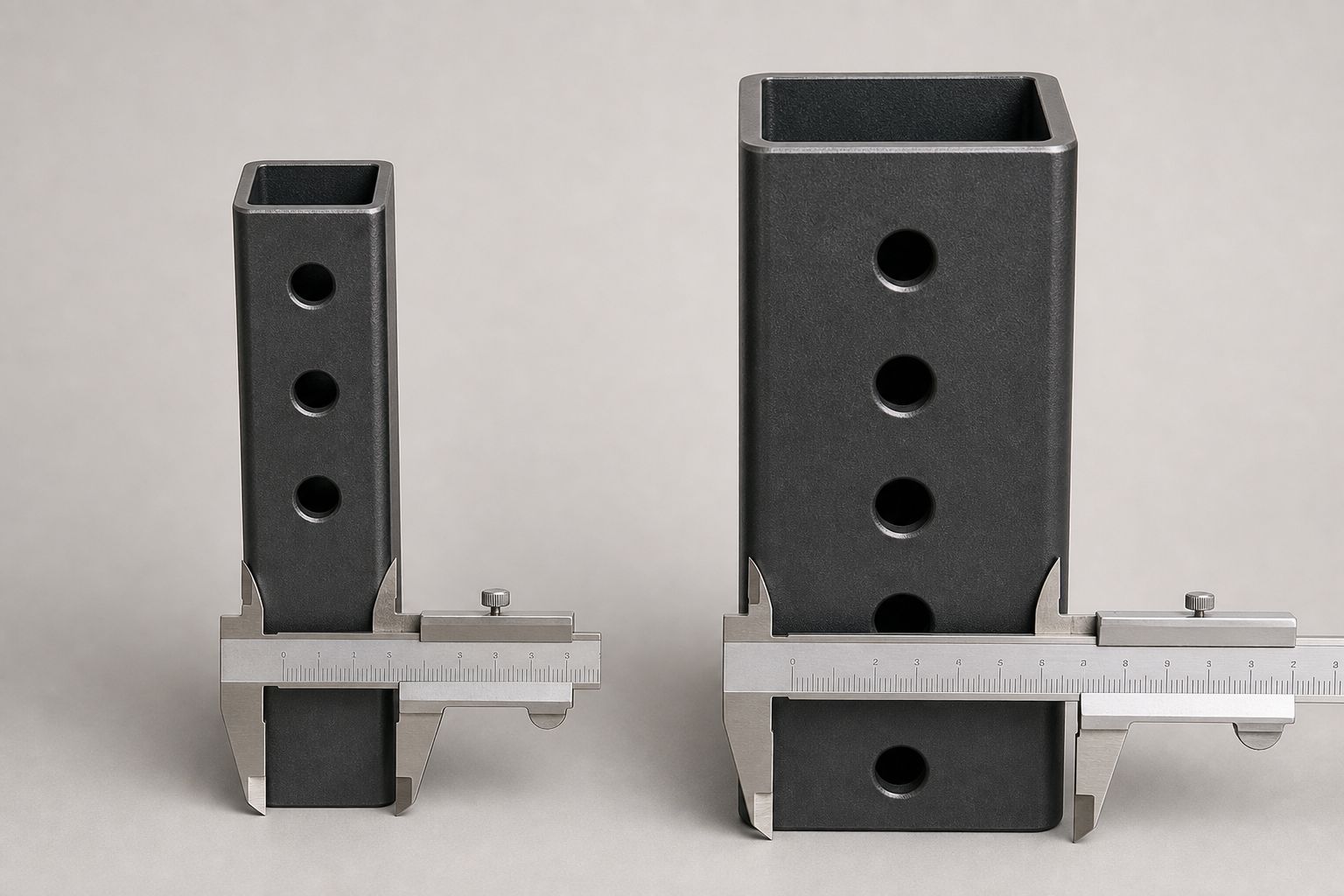
A machine with 2x2-inch uprights (common on budget and mid-range single-stack and dual-stack machines) locks you into a smaller ecosystem of attachments. Most aftermarket accessories — roller J-cups, multi-grip pull-up bars, strap safeties — are designed for 3x3-inch uprights, which have become the de facto standard for serious home gym builders.
The Force USA G20 uses 3x3-inch 11-gauge steel with Westside hole spacing, meaning it accepts the widest range of aftermarket attachments. The Body-Solid G9B uses 2x2-inch 12-gauge steel, which is adequate for its weight stacks but limits future expandability. If you plan to add accessories over time — a landmine, dip handles, jammer arms — check the upright size before you buy.
When an All-in-One Machine Is the Wrong Answer
All-in-one machines are versatile, but they are not universal. There are three scenarios where buying one is likely a mistake.
- You are a free-weight-only lifter. If your training philosophy centers on barbell compounds (squat, deadlift, bench press) with progressive overload measured in 5-lb increments, an all-in-one machine's fixed cable paths and Smith machine will feel restrictive. You are better served by a power rack, barbell, and weight plates.
- You need a resistance ceiling above 300+ lbs for working sets. Most all-in-one machines — even multi-stack systems — top out at 250–300 lbs per side in a 2:1 ratio (meaning you feel 125–150 lbs per arm). If you are squatting or deadlifting well above 300 lbs, the machine's resistance will not keep pace with your strength gains.
- Your household needs simultaneous multi-person training. An all-in-one machine serves one person at a time (or two on a dual-stack system, but sharing the same frame). If two or more people in your household want to train at the same time, separate equipment — even if it takes more floor space — will serve you better.
If any of these scenarios describe you, the all-in-one vs. separate equipment comparison provides a detailed cost and space analysis of going modular.
Buyer Checklist: 5 Steps Before You Commit
Before you click "add to cart," run through this checklist. It will save you from the most common post-purchase regrets.
- Measure your space — including door clearance and ceiling height. A machine that fits on paper may not fit through your door frame or under your ceiling. Measure the machine's assembled footprint, then add 24 inches on all sides for movement clearance. Do not forget to measure door widths and hallway turns if the machine needs to pass through them during delivery.
- Calculate your budget vs. gym membership cost. The average gym membership costs about $65/month. A $2,500 all-in-one machine reaches breakeven in roughly 3.2 years. A $1,300 plate-loaded machine reaches breakeven in about 1.7 years. Factor in delivery fees, assembly costs, and any subscription fees (smart trainers often require $30–$50/month for full functionality).
- Rank your priorities. You cannot maximize space efficiency, resistance ceiling, exercise variety, and budget simultaneously. Decide which two factors matter most and let the others flex. Use the decision matrix above to identify which machine categories match your priority pair.
- Verify assembly requirements. Check whether the machine ships mostly pre-assembled (like the Powerline BSG10X) or requires a multi-day build (like the Force USA G20). If you are not comfortable with assembly, confirm that professional assembly is available in your area and add that cost to your budget.
- Check attachment compatibility. Note the upright size (2x2" vs. 3x3") and verify that the attachments you want — dip handles, landmine, leg press, jammer arms — are available for that specific machine. Aftermarket compatibility is a long-term value factor that is easy to overlook at purchase time.
For a more detailed pre-purchase framework, the compact home gym buyer's guide covers eight questions to answer before buying any home gym equipment.
| Checklist Item | Why It Matters | Action |
|---|---|---|
| Space measurement | Machine may not fit through doors or under ceilings | Measure footprint + 24" clearance; measure door width and ceiling height |
| Budget vs. gym membership | Understand true breakeven timeline | Divide machine cost (incl. delivery/assembly) by $780/year |
| Priority ranking | No machine maximizes all factors | Pick top 2 priorities from: space, resistance, variety, budget |
| Assembly verification | 30 min vs. 35 hours changes your timeline | Search user assembly reports; budget $300–$600 for pro assembly if needed |
| Attachment compatibility | Upright size determines future expandability | Note 2x2" vs. 3x3" uprights; verify desired attachments are available |
This result comes from one real apartment under the stated conditions — it is a strong signal, not a guarantee your space will measure identically.
Builds this evidence supports
Small Treadmill Buying Guide: 7 Critical Specs to Check Before You Buy
A cross-category spec primer for apartment and small-space dwellers comparing walking pads, ultra-compact folding treadmills, and full-size folding treadmills. Learn the concrete thresholds for motor HP, deck length, noise, warranty, and subscription lock-in so you can compare apples to apples.
Compact Home Gym Buyer's Guide: 8 Questions to Answer Before Buying a Single Piece of Gear
Most compact home gym purchases fail not because of bad products, but because buyers skip the constraint-framing step. This guide helps complete beginners with limited space ask the right questions about noise, space, training style, budget, and growth plans before evaluating any gear.
Spot something off?
If this result didn't match your own space, let us know — floor-damage and noise claims carry real deposit-risk consequences if we get them wrong.