
Home gym flooring usually fails in small, boring ways before it fails dramatically: a roll seam starts walking open, a stall mat corner lifts after sled pushes, an interlocking tile field slowly drifts out of square, or a foam tile compresses under equipment it was never meant to support. The material matters, but the installation details decide how long the floor stays put.
If you are still comparing materials, pause here and use How to Choose Home Gym Flooring Based on Your Training, Space, and Budget or Rubber vs. Foam Gym Flooring: Which Material Actually Fits Your Workout and Space? first. If you are building an entire garage gym and the floor is only one piece of the job, The Complete Garage Gym Blueprint: From Empty Space to Fully Functional Setup is the better planning route. If the material is already in the room—or sitting in the driveway—start with the routing below so you do not use the wrong method on the right floor.
First, route yourself to the right installation method
| Material | Use this section if... | The installation detail that usually matters most |
|---|---|---|
| Horse stall mats | You are covering a garage or basement area with heavy 3/4-inch-style recycled rubber mats, often over concrete. | Odor management, heavy-mat handling, clean cutting, and whether concrete-only anchoring is justified. |
| Rubber rolls | You want fewer seams across a larger room and are willing to dry-fit, trim, tape, or glue carefully. | Acclimation, seam control, adhesive choice, and rolling pressure. |
| Interlocking rubber tiles | You want a modular rubber floor that can usually be installed without glue and removed later. | Starting from square chalk lines, leaving the wall gap, and keeping directional grain consistent. |
| Foam tiles | You need a light-duty, renter-friendly surface for bodyweight work, stretching, kids’ zones, or low-impact training. | Free-lay installation, edge restraint, and honest expectations about compression under weight. |
Do not skim that table too quickly. A 100-pound roller belongs in a glue-down rubber roll job, not a foam tile install. A 1/4-inch wall gap is useful for interlocking rubber tiles, not a reason to leave sloppy exposed gaps around every stall mat. Tapcon anchors and steel spacers are a garage-concrete solution, not a second-story spare-bedroom trick.
Prep the room before any material gets trimmed
The cleanest-looking installations usually happen before the first cut. Clear the room, remove anything that hides the wall line, and sweep and vacuum the subfloor until you are no longer moving grit around. Rubber and foam will forgive minor cosmetic flaws underneath; they will not forgive debris that creates a lump at a seam or a pebble that telegraphs through a thinner tile.
On concrete, look for moisture, loose paint, oil residue, crumbling patches, and high spots. A garage slab that sweats in summer or takes water under the door needs attention before flooring traps that moisture. If the garage has temperature swings, poor drainage, or questionable electrical placement around future equipment, work through The Garage Gym Environmental Checklist: Temperature, Moisture, Flooring, and Electrical before committing to adhesive.
On plywood or framed floors, the question changes. You are not just protecting the flooring; you are protecting the structure below it. Check for flex, squeaks, raised fasteners, uneven panels, and transitions into hallways or closets. Avoid concrete-specific anchors upstairs. If you need a no-damage setup over carpet, or you are working in an apartment where sound transfer and removal matter more than permanent seam control, use Home Gym Flooring for Small Spaces and Apartments: A Renter's Decision Guide before taping or gluing anything.
Let rubber relax before you judge the layout
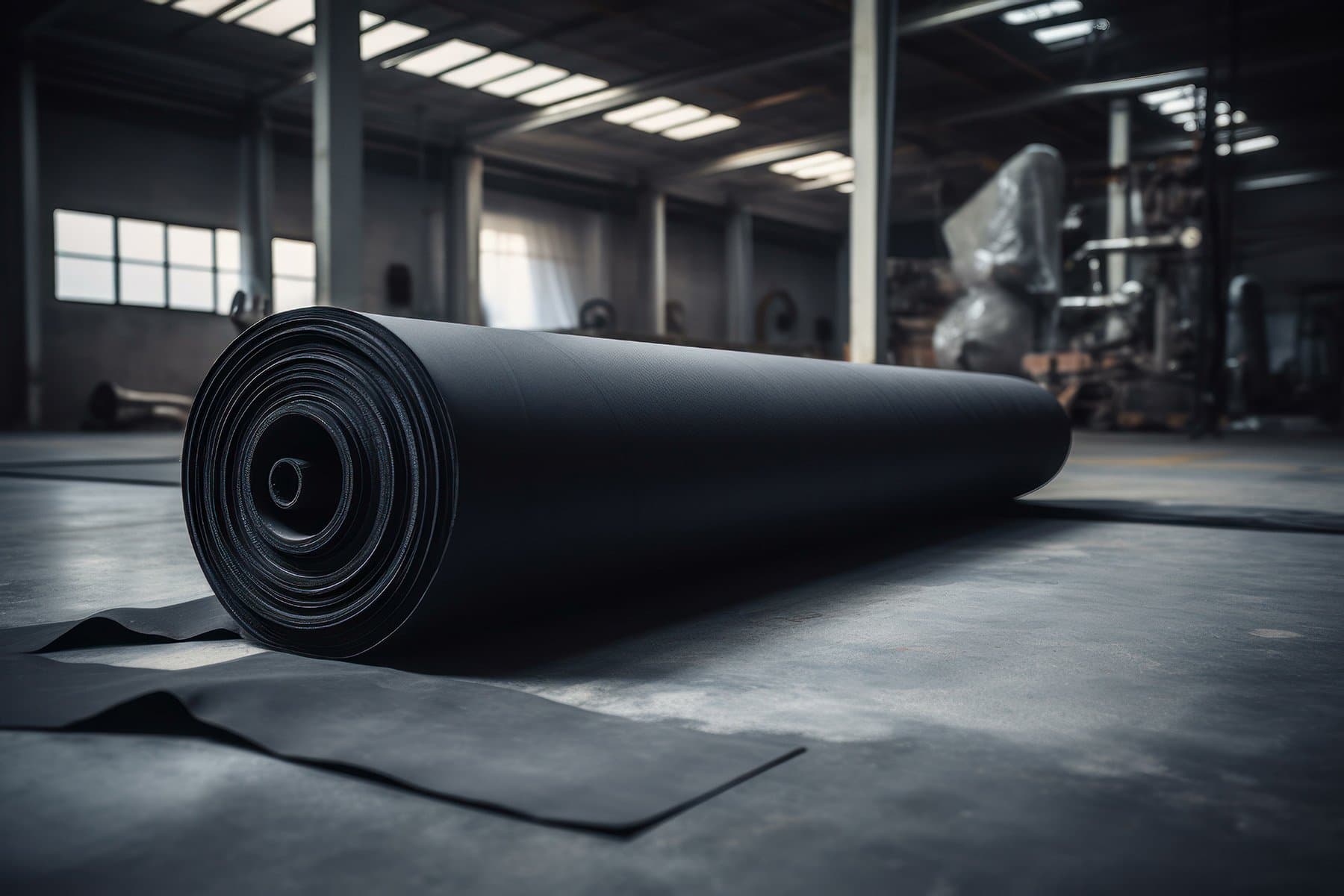
Rubber rolls should be laid flat in the room for 12 to 24 hours before installation, with the space at a minimum of 65°F, so the material can relax before it is cut or adhered.[1] This is not a fussy manufacturer ritual. If you glue a curled roll into place while it is still fighting to return to its shipping shape, the adhesive has to solve a problem that patience would have solved for free.
Stall mats also deserve time, but for a different reason. Recycled-rubber stall mats are known for odor, and one garage-gym method describes a Sunlight, Heat, Air, Time process—often shortened to S.H.A.T.—with 3 or more weeks outdoors to reduce smell before the mats come inside.[2] That advice belongs mainly to recycled-rubber stall mats. Do not assume every virgin-rubber roll or finished interlocking tile needs the same outdoor curing period.
Plan the field, not just the first row
Dry-lay the floor before committing to cuts. Measure the room in more than one place, because garages and basements are rarely perfectly square. Mark posts, steps, door tracks, floor drains, baseboard heaters, and anything else that interrupts a straight wall. The first row can look perfect while the far wall quietly exposes a widening wedge.
For rolls, plan seam direction around traffic and equipment. For tiles, avoid starting from a visibly crooked wall unless you like watching the error multiply across the room. For stall mats, think about where you actually drop, drag, and pivot. A seam directly under a rack foot or deadlift landing zone is an invitation to movement.
Choose free-lay, tape, or glue based on consequences
Adhesive is not a badge of seriousness. It is a trade. GreatMats frames the decision around free-lay, double-sided tape, and full glue-down methods, with the main differences being cost, permanence, and removal difficulty.[3] That is the right way to think about it: not “What is strongest?” but “What does this room need, and what will I regret when I move, flood, remodel, or replace one damaged section?”
| Method | Best fit | What to watch |
|---|---|---|
| Free-lay | Interlocking rubber tiles, foam tiles, some heavy stall mat layouts, and temporary rooms. | Can shift if the material is light, the room has hard lateral movement, or the edges are not restrained. |
| Double-sided tape | Rubber rolls or mats where you want seam control without full permanent glue. | Tape can leave residue and may not hold like adhesive in high-traffic or high-shear zones. |
| Full glue-down | Rubber rolls in larger, high-traffic, commercial-style, or long-term rooms. | Removal is difficult, subfloor condition matters, and mistakes are harder to correct. |
Renters and small-space users should be slow to glue. Garage owners with a dedicated training bay may reasonably tape or glue if the floor sees sled work, rolling benches, repeated foot traffic, or heavy equipment that catches seams. The wrong answer is treating free-lay as a universal cure because it is easy, or treating glue as automatically better because it is permanent.
Install horse stall mats
Stall mats are popular because they are tough and relatively inexpensive compared with many finished gym-floor products. Q2 2026 pricing references place Tractor Supply stall mats around the low-dollar-per-square-foot range, while several dedicated gym flooring options also appear in the low-to-mid dollar-per-square-foot band; those prices can shift seasonally, so treat them as context rather than a quote for your local store.[4][5]
The annoyance with stall mats is not the concept. It is the handling. They are heavy, they can smell, and they do not fine-tune themselves once dropped into a corner. Bring help if you can. Wear gloves. If the mats have been outdoors for odor reduction, let them dry fully before placing them inside.
Stall mat workflow
- Clean the slab or subfloor thoroughly. Remove grit, mud, oil residue, and anything that prevents the mat from sitting flat.
- If the mats are recycled rubber and odor is a concern, air them outdoors before installation. The S.H.A.T. method specifically calls for sunlight, heat, air, and time, with 3 or more weeks outdoors for odor reduction.[2]
- Dry-fit the full mat field before cutting. Place factory edges together where possible.
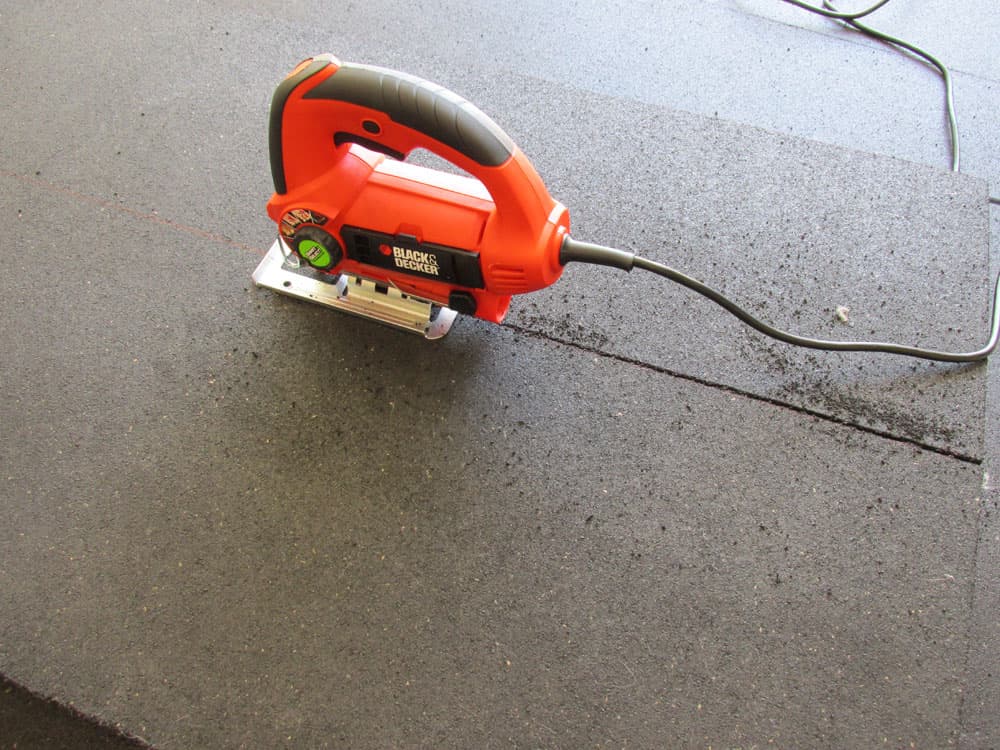
- Cut only after the layout is confirmed. Mark carefully and use multiple shallow passes rather than trying to force one deep cut.
- Push mats tight enough that gaps do not invite debris, but do not buckle them against walls or immovable objects.
- Anchor only when the room and subfloor justify it. Concrete garage anchoring is a different job from a no-damage spare-room installation.
The best stall-mat cutting trick is simple: put a cylinder or similar object under the mat near the cut line so the rubber opens slightly as you score it. DesignBuildLift recommends a sharp utility knife, multiple shallow passes, and using a cylinder underneath to make thick stall mats easier to cut cleanly.[6]
For concrete garage gyms where mats creep under use, Garage-Gyms.com describes using Tapcon concrete anchors with steel spacers to secure stall mats.[2] Keep that method in its lane. It is for concrete slabs. It is not a recommendation to drill through rental floors, plywood subfloors, radiant floors, or upstairs rooms.
Install rubber rolls
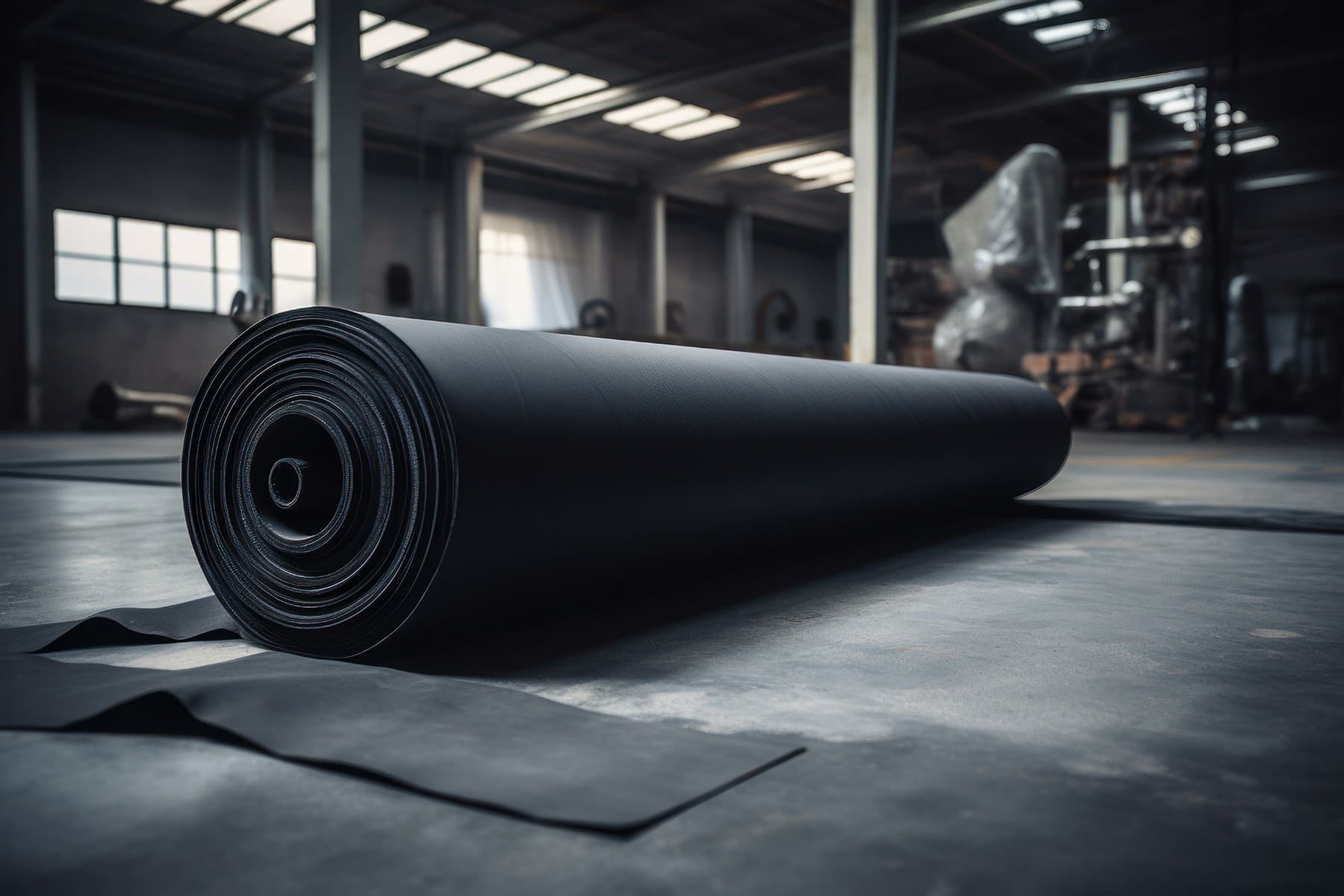
Rubber rolls look clean because they reduce seams, but they punish rushed layout. Before tape or glue comes out, unroll the material, let it relax flat for 12 to 24 hours in a room that is at least 65°F, and dry-fit every run.[1] If the roll has a directional surface texture or visible shade variation, keep the rolls oriented consistently before trimming.
- Start with the longest, straightest wall or the main visual line of the room.
- Roll out the first length and let it settle flat before cutting.
- Dry-fit the next roll tight to the first seam without stretching the rubber.
- Trim perimeter edges after the field is aligned, not before.
- Choose tape or glue only after you see how the material behaves in the room.
For tape-down installations, Living.Fit describes using industrial double-faced carpet tape and an approximately 1/8-inch overlap method before trimming the seam flush.[1] Tape is useful when you want more control than free-lay but still want a less permanent installation than polyurethane adhesive. It is not magic. If a high-traffic roll keeps being pushed sideways by sleds, benches, or repeated pivots, tape may only delay the same seam problem.

For glue-down rubber rolls, Living.Fit specifies polyurethane adhesive, a 1/16-inch notch trowel, a 100-pound roller, and a 24-hour cure period.[1] Those details matter. A random trowel can leave too much or too little adhesive. Skipping the roller can leave weak contact. Training on the floor before the cure window is over can shift material that looked finished the night before.
A practical glue-down sequence looks like this: fold back half the dry-fitted roll without moving its alignment, spread adhesive with the proper notch, lay the rubber back into the adhesive without trapping waves, roll it thoroughly, then repeat on the other half. Wipe adhesive squeeze-out before it cures. Stay off the floor for the cure period the product requires; in the Living.Fit method, that window is 24 hours.[1]
Install interlocking rubber tiles
Interlocking rubber tiles are forgiving in the right ways: modular, removable, and easier to handle than rolls. They are less forgiving when the layout starts crooked. RubberFlooringDirect recommends a center-origin chalk-line layout, a 1/4-inch expansion gap at the walls, rubber mallet seating, and attention to directional grain to avoid visible shading differences.[7]
Snap perpendicular chalk lines through the center of the room rather than trusting the first wall. Lay the first four tiles around the center intersection and check that the field is square before building outward. This feels slower than starting in a corner. It is faster than discovering at the final wall that every tile is slightly rotated.
- Sort tiles by surface direction if the grain or fleck pattern changes with orientation.
- Start at the center chalk-line intersection and work outward in quadrants.
- Seat seams with a rubber mallet rather than kicking tiles into place.
- Leave a 1/4-inch expansion gap at the walls as RubberFlooringDirect advises.[7]
- Cut edge tiles last, after the main field is locked together and checked.
That 1/4-inch gap is not a license to leave the room unfinished. It is usually hidden by baseboard, trim, ramp edging, or the natural shadow line at the wall. What you are avoiding is a tile field jammed so tightly against the perimeter that seasonal movement or installation pressure has nowhere to go.
Install foam tiles
Foam tiles are the easiest material here to install and the easiest to overpromise. Use them for low-impact training, stretching, light movement, and temporary rooms. Be careful with heavy racks, benches, adjustable dumbbell stands, and anything with small feet that concentrates load. Foam can look fine on day one and still compress where the weight lives.
Most foam tile installations should be free-laid. Clean the floor, snap a square reference line if the room is large enough to drift, lock tiles together by hand, and place cut edges along walls. Avoid adhesive unless the product specifically calls for it and you are comfortable with the removal consequences. In renter rooms, no-damage usually matters more than making a light-duty surface behave like permanent rubber.
- Let tiles reach room temperature before installation so they are not stiff from storage.
- Assemble the main field first, then install border strips if the product includes them.
- Keep heavy equipment on furniture pads, plywood load spreaders, or a more appropriate rubber zone if compression would bother you.
- Expect to replace individual tiles over time if the room sees chair legs, metal equipment feet, or frequent twisting movement.
After installation, protect the seams you just worked for
REP Fitness’ installation and maintenance guidance emphasizes keeping gym flooring clean and maintaining it so the surface lasts.[8] That sounds basic until you have seen chalk, grit, salt, and garage debris behave like sandpaper at seams. Sweep or vacuum regularly, damp mop with a compatible cleaner, and avoid soaking seams unless the flooring maker allows it.
Watch the edges during the first few weeks. If a roll seam starts to lift, fix it early instead of letting dust pack underneath. If a stall mat shifts, identify the movement source before adding anchors. If tile corners are not seated, tap them back with a rubber mallet and check whether the field is pinched at the perimeter. Odor from stall mats should continue to fade after proper airing; if it remains strong, ventilation matters more than masking fragrance.
Quick diagnostics when something looks wrong
| Problem | Likely cause | First fix |
|---|---|---|
| Rubber roll seam opening | Material was not relaxed, tape was underpowered, or traffic is pushing the roll sideways. | Clean the seam, re-seat it, and consider stronger tape or glue only if the room justifies the permanence. |
| Stall mat odor lingering | Recycled rubber was brought inside before enough outdoor airing. | Ventilate and, if practical, move mats back outdoors for additional sunlight, heat, air, and time. |
| Tile field drifting crooked | Layout started from an out-of-square wall or tiles were forced instead of aligned. | Pull back enough tiles to re-square from chalk lines; do not keep trimming around a crooked field. |
| Foam dents under equipment | The material is being used beyond its load tolerance. | Move heavy equipment to rubber or spread the load; replacing one foam tile does not solve the cause. |
| Edges curling or lifting | Perimeter pressure, poor cleaning, insufficient adhesive contact, or repeated foot traffic at an exposed edge. | Relieve tight spots, clean underneath, and add proper edging, tape, or adhesive as appropriate. |
If the floor problem is part of a bigger planning issue—wrong material for upstairs noise, a rack placed over a seam, a garage door leaking onto rubber, or a budget shortcut now causing rework—read Home Gym Flooring Mistakes That Cost You Money, Space, and Peace With Your Neighbors. For broader garage planning mistakes beyond flooring, use 7 Garage Gym Mistakes That Cost You Money (And How to Avoid Them).
You are ready to install when you know four things: your material type, your subfloor, your room conditions, and how permanent you are willing to make the floor. If any of those are still fuzzy, do not solve the uncertainty with a utility knife and hope. Go back to the material-selection or renter guidance first. Once those decisions are clear, the installation becomes much less mysterious: clean the surface, let the material behave, lay it out square, cut late, and fasten only as permanently as the room deserves.
References
- How to Install Rubber Gym Flooring: A Step-by-Step Guide, Living.Fit
- Working With & Securing Stall Mats in a Garage Gym, Garage-Gyms.com
- When Should I Use Glue Or Rubber Flooring Adhesive, GreatMats
- Expert-Tested: The Best Home Gym Flooring Options (2026), Garage Gym Reviews
- Best Home Gym Flooring, BarBend
- DIY Gym Flooring: Horse Stall Mats - A Complete Guide, DesignBuildLift
- How to Install Interlocking Rubber Tiles, RubberFlooringDirect
- How to Install and Maintain Gym Flooring, REP Fitness
Comments
Join the discussion with an anonymous comment.