When the AQI ruins the plan
Bad air quality changes the workout problem fast. During exercise, ventilation can rise 10 to 20 times above resting, which pulls more pollution into the lungs, and wildfire smoke is made up of more than 90% PM2.5 or smaller particles that are fine enough to travel deep into the body [1]. In highly polluted air, exercise can even push cardiovascular risk in the wrong direction, so the useful question is not whether you are being disciplined enough. It is whether today should stay outside, get shortened, or move indoors [2].
One thing trips people up here: EPA says indoor air can be 2 to 5 times more polluted than outdoor air, but that is a normal-day, unfiltered baseline. It does not mean a room with filtration during a pollution event is automatically worse than the street outside. On a bad-air day, a filtered room and a typical apartment are not the same situation [4][5].
Use the AQI as the switch
For most healthy adults, AQI gives you a clean yes/no/modify rule. If you have asthma, COPD, or another respiratory condition, move to the indoor version earlier than the general-public guidance, because the threshold should be treated more conservatively [3].
| AQI band | What to do | Practical workout call |
|---|---|---|
| 0-50 (green) | Exercise outdoors as planned [3] | Keep your normal run, walk, ride, or hike. |
| 51-100 (yellow) | Shorter or lighter for sensitive groups [3] | If you are sensitive, trim intensity or duration; others can usually proceed. |
| 101-150 (orange) | Sensitive groups move indoors [3] | This is the first clear switch point for anyone who reacts to pollution. |
| 151-200 (red) | Everyone indoors [3] | Treat outdoor training as the exception, not the default. |
| 201-300+ (purple to maroon) | Indoors, low-intensity only [3] | Keep it easy and avoid hard efforts. |
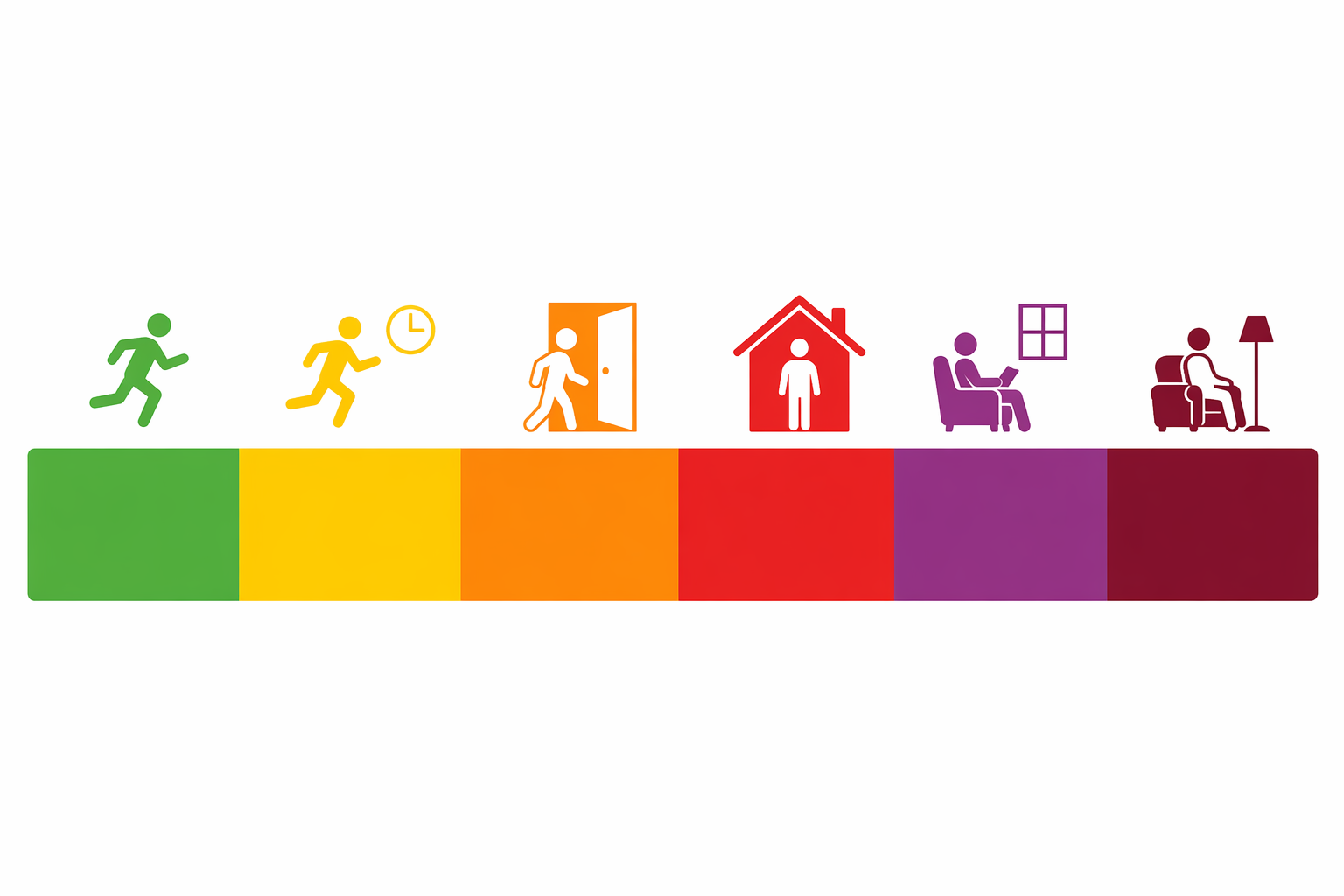
That ladder is the whole decision. You do not need to debate whether the air is "bad enough" in the abstract; you just need to know which band you are in and whether your body belongs in the sensitive group for that day [3].
The apartment fallback
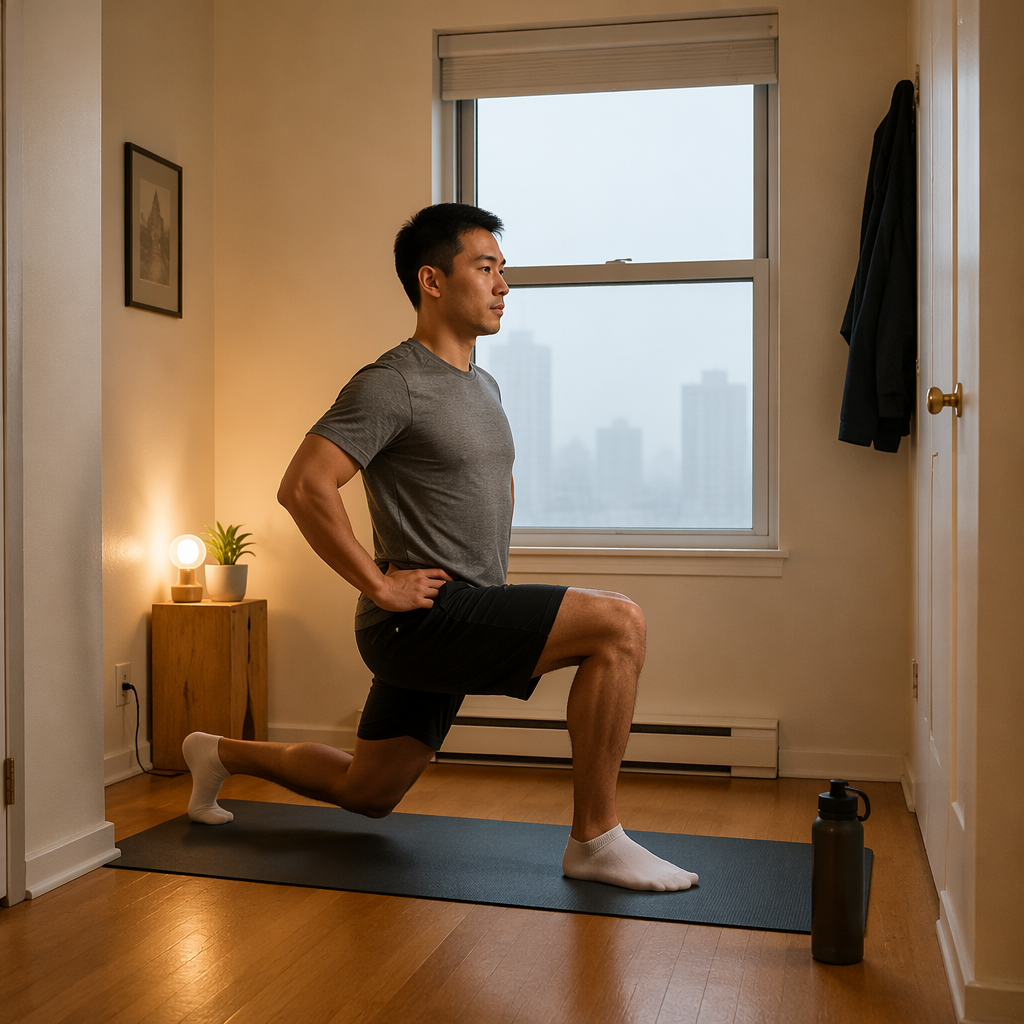
A small apartment is enough. Bodyweight work built around squats, lunges, push-ups, glute bridges, planks, and similar moves can still give you a real training stimulus in about 6 by 6 ft with no equipment [6][7].
- Warm up for 3 minutes with marching in place, arm circles, hip hinges, and easy bodyweight squats.
- Do 3 to 5 rounds of 10 squats, 8 reverse lunges per side, 6 to 15 push-ups, 12 glute bridges, and a 20 to 40 second plank.
- Rest 30 to 45 seconds between rounds, or longer if you are breathing too hard to keep form clean.
- If AQI is in the 201-plus range, cut the session to 2 or 3 rounds and keep every movement easy enough that you can speak in full sentences.
- If you need to keep it quiet, slow the tempo and skip anything jumpy; the point is to preserve the session, not to turn your living room into a gym floor.
If you already own a HEPA purifier, use it as support, not as the reason to ignore the AQI. One study found HEPA filters reduced indoor PM2.5 by 55% during poor outdoor air events, but that result will still vary with room size, filter strength, and how much outside air leaks in [5]. So if the AQI says outdoor exercise should move indoors, use the home routine instead of skipping the session.
References
- Tips from an exercise physiologist on how to stay fit safely when air quality is poor - University of Toronto
- Exercising in bad air quality can lead to negative health effects - CBS News
- Four Things to Know about Air Quality and Exercising Outdoors - American Lung Association
- Improving Indoor Air Quality - EPA
- Indoor HEPA Filters Significantly Reduce Pollution Indoors When Outside Air Is Unhealthy, Study Finds - Intermountain Health
- The Small Space Workout - Nerd Fitness
- Quiet Workouts For Flats, Apartments And Small Spaces - SWEAT
Comments
Join the discussion with an anonymous comment.