
The 7-Minute Workout: Separating Science From Hype — What the Research Actually Says
The 7-minute workout is one of the most popular home fitness protocols ever created, but how much of its reputation is backed by real data? This article reviews the original research, compares it to other HIIT methods, and explains what the workout can and cannot do for your fitness.
Where the 7-Minute Workout Actually Came From
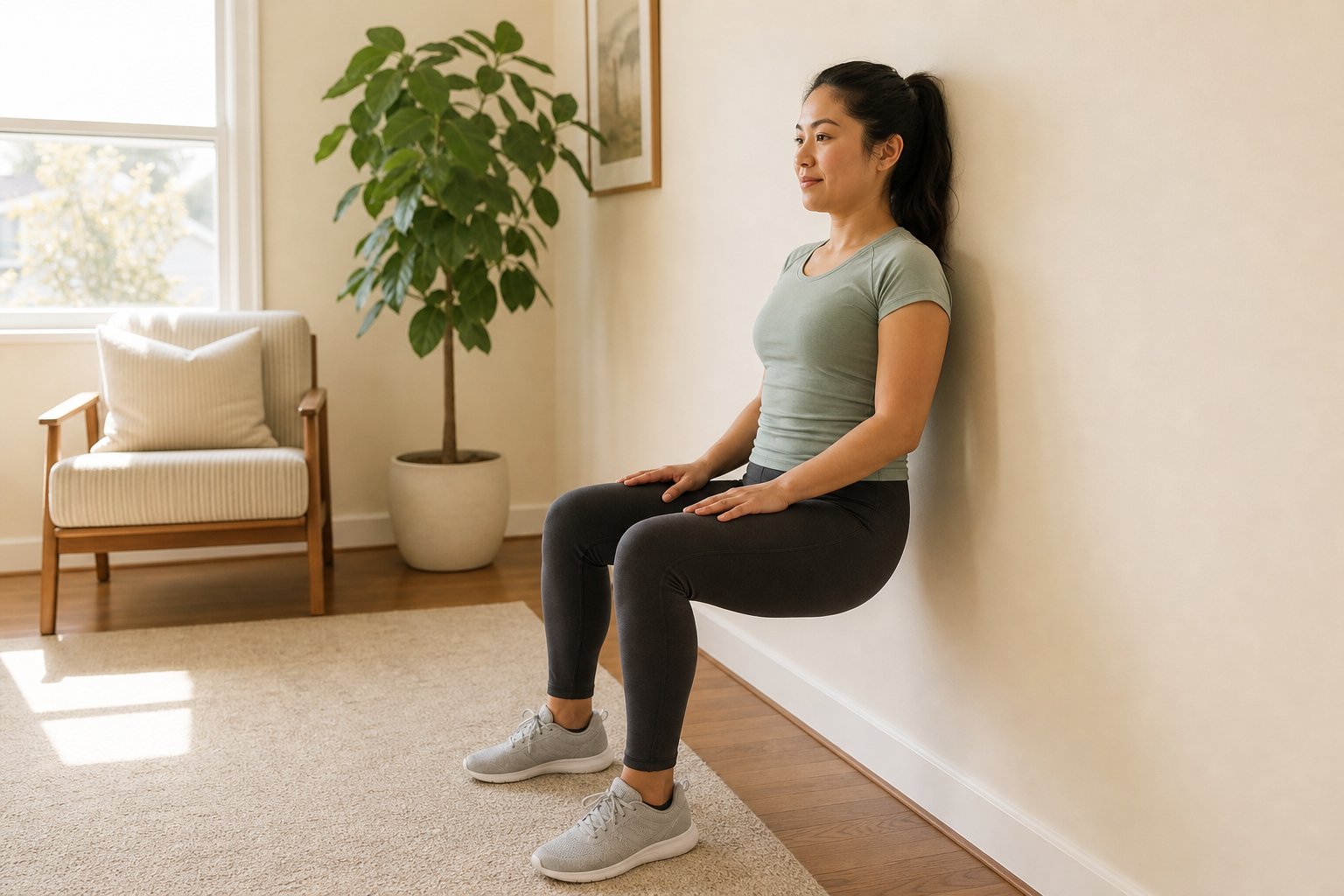
The 7-minute workout wasn't born in a lab study that tested its effects on a group of people. It was a protocol design — a carefully constructed exercise circuit published in the May/June 2013 issue of ACSM's Health & Fitness Journal by exercise physiologists Chris Jordan and Brett Klika. The pair reviewed 18 existing references on high-intensity circuit training (HICT) and squeezed the core principles into a 12-exercise, 7-minute sequence that could be done with nothing more than a wall and a chair.
The goal was to design a time-efficient workout that met the ACSM's guidelines for high-intensity exercise by combining strength, endurance, and aerobic training into a single, repeatable circuit. Each exercise is performed for 30 seconds with 10 seconds of rest between moves, and the original article explicitly states the circuit should be repeated 2 to 3 times for a total of 14 to 21 minutes.
This distinction matters because much of the marketing around the workout — from apps, articles, and social media — treats a single 7-minute round as a complete solution. The original authors were more measured. They acknowledged that the routine may be inferior to create absolute strength and power, specific endurance, and other specific performance variables. That caveat, buried in the original paper, is the key to understanding what this workout can and cannot deliver.
How It Stacks Up Against Cycling HIIT: The 2017 Comparison Study
One of the most direct tests of the 7-minute workout came in 2017, when researchers led by Riegler compared the bodyweight circuit to a time-matched cycling HIIT session in 14 healthy, active adults. The results revealed a clear gap between the two protocols.
| Metric | 7-Minute Bodyweight Circuit | Cycling HIIT (7 min) |
|---|---|---|
| Peak VO₂max | Lower | Higher |
| Peak Heart Rate | Lower | Higher |
| Calorie Expenditure | Lower | Higher |
| RPE (Perceived Exertion) | Lower | Higher |
The bodyweight circuit produced lower peak VO₂max and heart rate compared to cycling HIIT. Participants on the bike also reported higher ratings of perceived exertion (RPE) and burned more calories. This doesn't mean the 7-minute workout is useless — it means it is not a direct substitute for traditional HIIT when the goal is maximizing cardiovascular conditioning in a short window.
A 2020 follow-up study (Armas et al., n=12) added another layer: while the bodyweight circuit produced no significant difference in systolic blood pressure compared to cycling HIIT, it did result in significantly lower diastolic blood pressure immediately post-exercise — about 5 mmHg lower. However, heart rate remained elevated longer after the bodyweight circuit, suggesting a different recovery profile.
What 6 Weeks of Daily 7-Minute Workouts Actually Changed
The most cited evidence for the 7-minute workout's real-world effects comes from a 6-week intervention study involving 29 adults aged 18 to 30 who performed the circuit daily, compared to a control group of 29 who did not. The results are modest but meaningful.
- Waist circumference decreased by an average of 4 cm
- Fat mass decreased
- Slight weight loss occurred — even in participants who were already at a normal weight
- These changes happened without any dietary modifications
A 4 cm reduction in waist circumference over 6 weeks is a real, measurable change. It suggests the workout can contribute to body composition improvements, particularly around abdominal fat. But it is not a dramatic transformation. The weight loss was described as 'slight,' and the study population was young and already within a normal weight range at baseline.
The takeaway: the 7-minute workout can support weight management and reduce waist circumference, especially for people who were previously inactive. But it is not a weight loss miracle. The changes are modest and occur over weeks of daily consistency, not overnight.
Muscle Endurance Gains: The 8-Week Circuit Training Study
If cardiovascular conditioning is not the workout's strongest suit, what about muscle? An 8-week study (n=96) compared groups doing either a 7-minute circuit or a 14-minute circuit and measured changes in muscular endurance and strength.
| Outcome | 7-Minute Group | 14-Minute Group |
|---|---|---|
| Push-up endurance | Significant improvement | Significant improvement |
| Strength gains (men) | Significant | Significant |
| Strength gains (women) | Not significant | Not significant |
Both groups showed significant improvements in muscle endurance, measured by push-up performance. Strength gains, however, were observed only in men. This gender difference is consistent with the fact that men typically have more muscle mass to begin with and may respond more readily to the low-resistance, high-repetition nature of bodyweight circuits.
The key insight: the 7-minute workout is effective for building muscular endurance — the ability to perform repeated contractions over time. It is less effective for building maximal strength, especially in the lower body, where bodyweight alone may not provide enough resistance for significant gains.
Calorie Burn: What 7 Minutes Actually Costs You
One of the most persistent myths about the 7-minute workout is that it torches calories at a rate comparable to longer, more intense sessions. The data tells a more measured story.
Researchers at the University of Wisconsin-La Crosse, in an ACE-funded study, measured calorie burn during a 20-minute bodyweight circuit using a 20:10 work-to-rest ratio. Participants burned an average of 15 calories per minute. Extrapolating to a 7-minute round gives roughly 105 calories. For a single 7-minute circuit, the actual burn is likely between 60 and 80 calories for most people, depending on body weight and effort level.
To put that in perspective: 105 calories is roughly the equivalent of a single banana or a small apple. It is not enough to create a meaningful calorie deficit on its own. The workout's value for weight management comes from its ability to support a consistent exercise habit, not from the calories burned during the 7 minutes themselves.
The Progressive Overload Problem: Why You Eventually Plateau
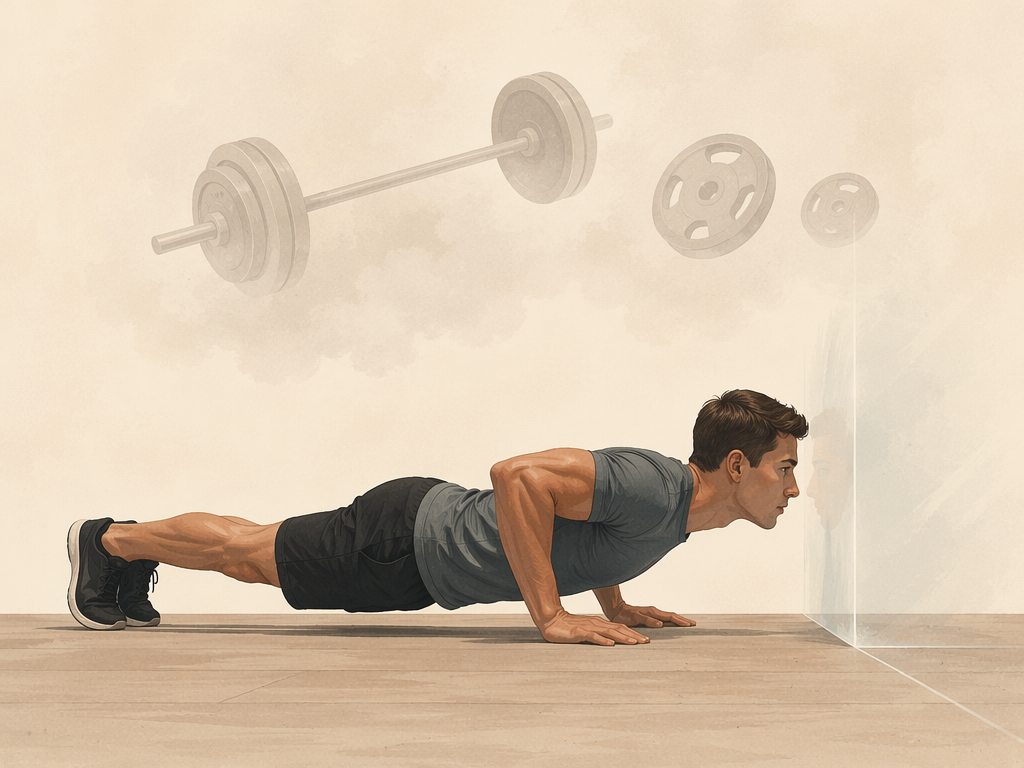
The most significant limitation of the 7-minute workout is not what it does — it's what it cannot do. Progressive overload, the principle of gradually increasing the demands on your muscles to stimulate growth, is difficult to achieve with bodyweight-only exercise. You cannot add more weight to a push-up or a wall sit without external resistance.
The original ACSM authors acknowledged this directly, stating the routine may be inferior to create absolute strength and power, specific endurance, and other specific performance variables. After the initial adaptation period — typically 4 to 8 weeks — most people will stop seeing strength gains from the 7-minute circuit alone.
For readers who want to continue progressing, there are strategies to increase the challenge without adding equipment: slowing down the eccentric phase, adding pauses at the bottom of each rep, or increasing the number of circuits. For a more structured approach to leg strength using bodyweight alone, see our guide on progressive overload for legs at home.
The Bottom Line: A Habit-Builder, Not a Complete Solution

After reviewing the available research, a clear picture emerges. The 7-minute workout is a valid, science-backed protocol for specific purposes — but its reputation has been inflated by media coverage and app marketing.
- It improves muscular endurance, especially in the upper body (push-ups, planks, triceps dips).
- It can modestly support weight management and reduce waist circumference when done daily over several weeks.
- It is an excellent habit-builder for people who are new to exercise or returning after a long break.
- It underperforms cycling HIIT for cardiovascular conditioning (VO₂max, heart rate).
- It cannot build significant strength beyond initial adaptation due to the lack of progressive overload.
- A single 7-minute round is not enough for meaningful calorie expenditure or fitness gains — the creators recommend 2-3 rounds (14-21 minutes).
Exercise physiologist Holly Perkins described it accurately: the 7-minute workout is not a fitness program, it's a tool. Use it as a metabolic finisher, a travel backup, or a starting point for building a consistent exercise habit. For a structured next step, our 4-week beginner home workout plan provides a progressive framework that builds on the same principles. And if you need broader guidance on building a sustainable home fitness habit, our guide to starting working out at home covers the full picture.
What a small equipment investment adds
We don't have a build tagged to this exact tier yet. Browse all builds.
How often should you repeat this?
See our recovery and rest reference for citation-anchored rest-interval guidance.
Spot something off?
Tell us if a movement, tier assumption, or duration didn't match your experience.