
The useful part of Tadej Pogačar’s diet plan for endurance training is not the 6,000 calories. It is the reason those calories existed.
On Stage 18 of the 2025 Tour de France, the Col de la Loze stage, Pogačar’s fueling was reported at about 1,200 grams of carbohydrate, 150 grams of protein, and 66 grams of fat across a 171.5-kilometer day with roughly 5,500 meters of climbing, totaling about 6,000 calories.[1] That is an astonishingly concrete snapshot. It is also a very bad meal plan for someone doing 75 minutes of Zone 2 before work.
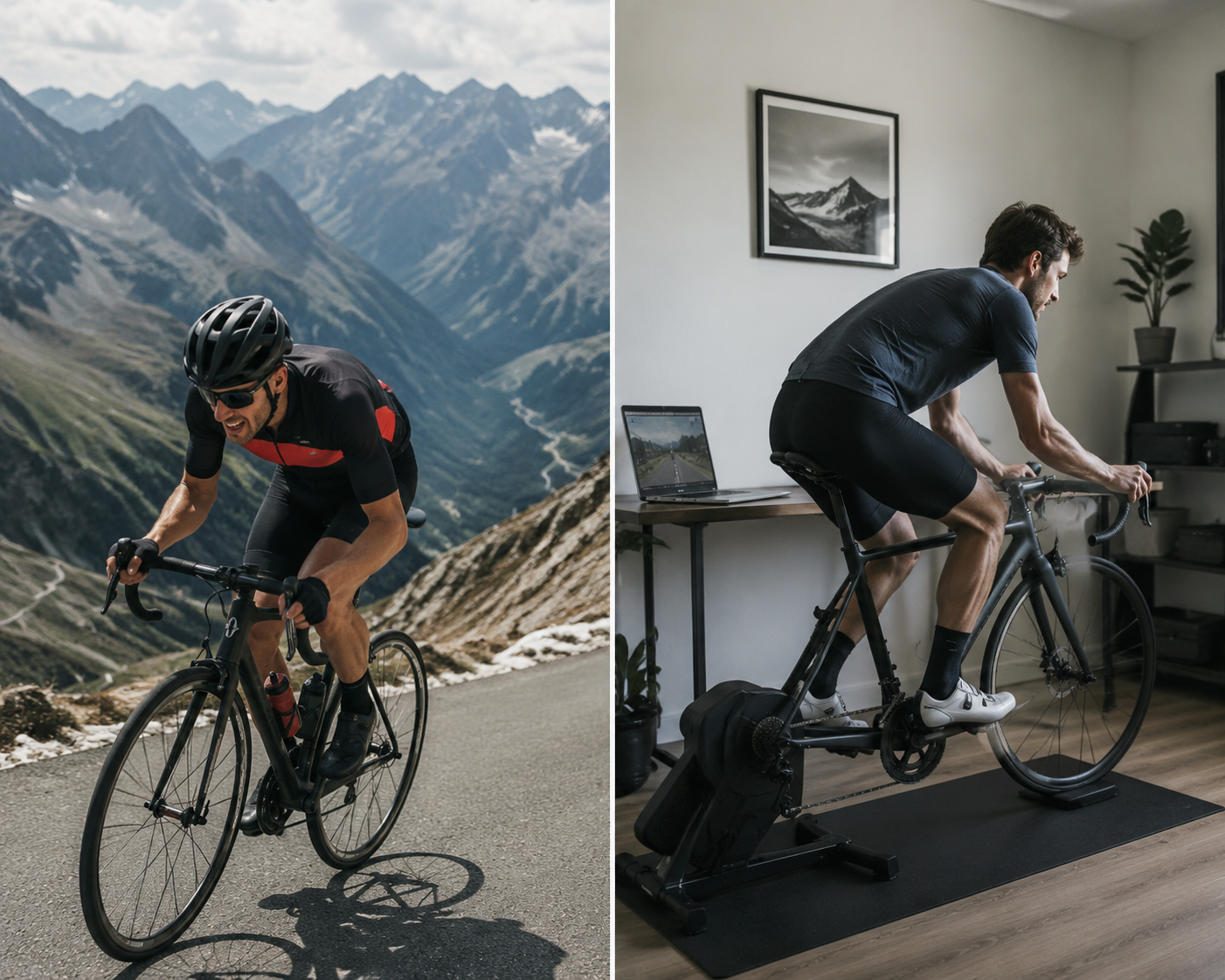
The stage number matters. The distance matters. The climbing matters. So does the fact that this is one sampled extreme race day, not a universal description of how Pogačar eats every day. Strip away that context and the numbers become theater. Keep the context, and they become a clean lesson: intake follows workload.
Gorka Prieto-Bellver, head of nutrition for UAE Team Emirates-XRG, uses the phrase “fuel the work required” to describe the logic. In the same practical vein, he has said amateur riders doing 60- to 90-minute sessions should not be aiming at 120 grams of carbohydrate per hour, and he identifies riding three or more hours without eating as a common amateur mistake.[2]
What Changes When the Ride Is 45–90 Minutes?
A five-hour mountain stage creates a different problem than a smart-trainer session, a treadmill run, or an outdoor endurance ride squeezed between meetings. The pro problem is how to keep carbohydrate coming in fast enough to support repeated high-output work. The home-athlete problem is usually simpler: start the session with enough fuel, avoid unnecessary restriction, and decide whether mid-session carbohydrate is actually needed.
For a 45-minute easy endurance session, many athletes do not need a gel, a bottle mix, and a recovery shake lined up like a race feed zone. If the previous meal was normal and the session is genuinely easy, water may be enough. If the session is early, fasted, or likely to drift harder than planned, a small carbohydrate snack before training is often the more sensible move than trying to perform discipline by under-eating.
Once the session moves into the 60- to 90-minute range, carbohydrate becomes more situational. Prieto-Bellver’s amateur guidance points many riders toward 60–90 grams per hour, while a controlled Zone 2 home-training session may only need 30–60 grams per hour if intensity is steady and the athlete is not trying to replicate race pace.[2][3] The difference is not a contradiction; it is the point of scaling. Duration, intensity, gut tolerance, and what you ate beforehand all change the answer.
| Session | Mid-session carbohydrate target | What that usually looks like |
|---|---|---|
| Up to 45 minutes, easy | Often none needed | Water; optional small pre-session snack if training early or hungry |
| 60–90 minutes, controlled Zone 2 | About 30–60g per hour | Bottle mix, banana, gel, chews, or a simple carbohydrate food |
| Longer session or higher intensity | About 60–90g per hour | Planned fueling from the first hour, not emergency sugar late in the workout |
| Race-pace efforts beyond 90 minutes | About 92–120g per hour in trained, practiced contexts | A practiced mix of multiple carbohydrate sources; not a casual default |
The pro-level range is real, but it belongs to a pro-level context. Reports around Pogačar’s Tour fueling describe very high hourly carbohydrate intakes, including race contexts in the 92–120 grams per hour range.[2] That can be rational for a rider trying to keep producing power deep into mountain stages. It is not automatically rational for an amateur doing aerobic maintenance in the spare room.
Build the Session Around Carbohydrate, Not Around Anxiety
Carbohydrate is where most home endurance athletes either get too casual or too dramatic. Too casual means starting a 90-minute session under-fed, fading, and calling it mental weakness. Too dramatic means treating every Zone 2 ride like a Tour stage and wondering why the numbers do not match the work.
A useful decision flow is short:
- If the session is under 45 minutes and easy, start normally fed and drink water.
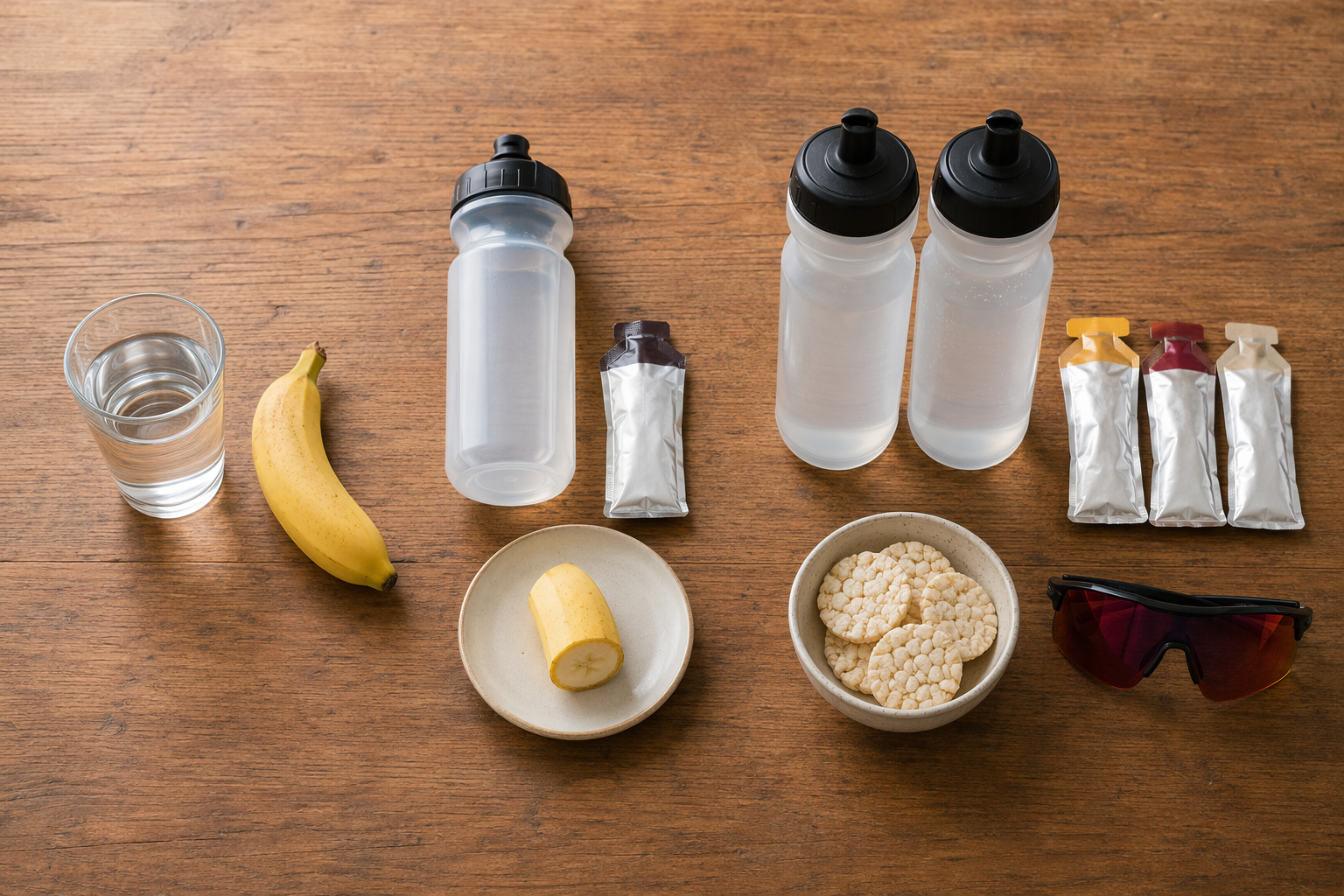
- If the session is 60–90 minutes and steady Zone 2, consider 30–60g carbohydrate per hour.
- If the session is longer, hotter, or includes intervals, move toward 60–90g per hour.
- If the session is race-pace and longer than 90 minutes, only then does the 92–120g per hour conversation become relevant.
- If your stomach rebels, reduce the dose and practice gradually; tolerance is trainable but not instant.
For a 75-minute indoor ride, that might mean one bottle with carbohydrate mix, or a banana and a gel, or another simple combination you can tolerate. The exact food matters less than whether it matches the session. A gel is not morally superior to a banana. A plain bottle is not more disciplined if the workout is long enough that you fade halfway through.
The mistake is treating “fueling” as something that only serious athletes earn. The opposite mistake is importing professional fueling volumes without importing the professional workload. Pogačar’s 1,200 grams of carbohydrate on that sampled stage makes sense because the stage demanded it.[1] The home version is not smaller because the athlete is less worthy; it is smaller because the work is smaller.
Before Training: Start With the Session You Actually Planned
Before a short easy workout, the goal is not to manufacture a special pre-workout ritual. If you ate a normal meal a few hours earlier, you may already be ready. If you train early, feel flat, or know the session will include harder work, add carbohydrate before you start. That can be as ordinary as toast, fruit, cereal, rice, oats, or a sports drink.
The better question is not “What would Pogačar eat?” but “What will keep this session from becoming needlessly compromised?” For 45 minutes easy, the answer may be almost nothing special. For 90 minutes with tempo work, the answer probably includes carbohydrate before and during. The same athlete can make both choices in the same week.
During Training: Use the Lowest Target That Still Supports the Work
There is no prize for taking in the maximum carbohydrate number during a routine endurance workout. There is also no prize for bonking in the name of toughness. The practical target is the lowest intake that lets you complete the planned work well and recover normally enough to train again.
For most 60- to 90-minute home Zone 2 sessions, 30–60 grams per hour is a reasonable starting range. If the session becomes longer or harder, 60–90 grams per hour becomes more relevant. Prieto-Bellver’s amateur guidance points riders toward 60–90 grams per hour for many 60- to 90-minute sessions and warns against long rides without eating, but that guidance still assumes the athlete is matching intake to the work, not chasing a professional ceiling.[2]
A simple way to make this usable: fuel earlier than you think for sessions that need fuel. Waiting until you feel hollow is not a strategy; it is a delay. If carbohydrate is part of the plan, start in the first half of the session rather than treating it as rescue food.
After Training: Protein Matters More Here Than Mid-Ride
Pogačar’s Stage 18 protein number is interesting less because it was 150 grams and more because of when much of it appeared. Reports from that race-day sample state that 120 grams of his 150 grams of protein came after the stage.[1] In other words, protein was doing recovery work. It was not the main fuel keeping the pedals turning on the climb.
For home endurance training, that is the cleaner takeaway. You do not need to obsess over protein during a 60-minute Zone 2 ride. You do need enough total protein across the day, and you need a post-session meal that does not pretend recovery is optional. Sports nutrition guidance cited in pro cycling nutrition discussions places useful daily protein intake for athletes around 1.6–2.2 grams per kilogram per day.[4]
After a 45- to 90-minute endurance session, a normal meal can do the job: a protein source, a carbohydrate source, some color from fruit or vegetables, and enough fat to make the meal satisfying. If the workout was harder, longer, or close to the next session, the carbohydrate portion becomes more important. If it was an easy aerobic ride before breakfast, lunch does not need to become a laboratory project.
| Post-session need | Practical target | Why it matters |
|---|---|---|
| Protein | Work toward 1.6–2.2g/kg/day across meals | Supports repair and adaptation after training |
| Carbohydrate | Scale with session length, intensity, and next workout timing | Replaces the fuel most used during endurance work |
| Fat | Return to normal meals rather than copying a race-day low-fat pattern | Supports energy intake, satisfaction, and ordinary diet quality |
Do Not Turn His Low Race-Day Fat Into Your Diet Rule
The 66 grams of fat in Pogačar’s sampled Stage 18 intake works out to roughly 10 percent of that approximately 6,000-calorie day.[1] That looks extreme because it is extreme. The low percentage was not a general wellness target; it was the mathematical result of enormous carbohydrate and protein demands crowding fat out on a mountain stage.
Prieto-Bellver has described a more normal home-athlete fat target around 1 gram per kilogram of body weight and about 25 percent of calories from fat.[4] That is a much more useful reference point once the athlete is not trying to fuel a 171.5-kilometer Tour stage with 5,500 meters of climbing.
So the lesson is not “eat very low fat.” It is “avoid letting fat displace the carbohydrate you need during very demanding endurance work.” On ordinary training days, fat belongs back in the diet through normal foods: eggs, olive oil, avocado, nuts, dairy, fish, meat, or whatever fits the athlete’s broader eating pattern.
A Home Fueling Template for 45–90 Minute Endurance Sessions
Use this as a starting framework, not a prescription. Body size, sweat rate, gut tolerance, training history, heat, and the next session all change the details.
- 45 minutes easy: Eat normally before the session if timing allows. Use water during. Eat a normal meal afterward.
- 60 minutes steady Zone 2: If well fed, water may still be fine. If early, hungry, or building volume, add a small carbohydrate snack before or a light carb drink during.
- 75–90 minutes Zone 2: Start with 30–60g carbohydrate per hour, especially if the session is not close to a full meal.
- 75–90 minutes with tempo or intervals: Move toward 60–90g carbohydrate per hour and start fueling early.
- After any session: Prioritize a real meal with protein and carbohydrate, then let fat return to its normal role instead of copying a Tour-stage macro split.
If you want one boringly reliable example, it is this: for a 75-minute indoor endurance ride, eat a normal carbohydrate-containing meal beforehand if the timing works, take in roughly 30–60 grams of carbohydrate during the ride if you tend to fade, then eat a meal afterward that includes protein and carbohydrate. That is not glamorous. It is also much closer to the principle behind elite fueling than pretending your Tuesday trainer ride is the Col de la Loze.
The Part of Pogačar’s Diet Worth Copying
There is a small relief in the fact that even at the top of cycling, the story is not pure restriction. Pogačar told Peter Attia in 2024 that he does not restrict his diet too much, and reporting around that interview noted that his off-season weight can reach about 69 kilograms.[5] Cycling Weekly has also presented training lessons from Pogačar in a way that emphasizes consistency and adaptability rather than copying isolated pro details.[6]
That matters because home athletes often turn nutrition into a character test. It does not need to be one. The useful discipline is matching intake to the day: less carbohydrate when the work is short and easy, more when the session is longer or harder, enough protein across the day, and normal dietary fat when you are not in the middle of a Tour de France mountain stage.
Pogačar’s 6,000-calorie race-day intake is useful because it shows what proportional fueling looks like at the far edge of the sport. For home endurance training, proportionality points in the other direction: not under-fueled, not pro-cosplay, just enough food for the work actually being done.
References
- The Pogačar Diet: 3 Surprising Takeaways That Could Help You, Velo.
- An amateur cyclist's summer diet: Top tips from UAE Team Emirates-XRG's nutrition manager, Olympics.com.
- Tour de France 2025: Mountain stage food strategy tips from Tadej Pogacar's team nutritionist, Olympics.com.
- The Nutrition of the Pros — Gorka Prieto-Bellver interview, Enervit.
- Pogacar gives insight into his relationship with food, IDL Pro Cycling.
- 11 ways to train more like Tadej Pogačar, Cycling Weekly.
Comments
Join the discussion with an anonymous comment.