Being cleared by PT is not the same as being ready to play. The shoulder may move well, the hamstring may be quiet, and the elbow may look fine on paper, but baseball asks for repeated force, speed, deceleration, and recovery the clinic does not fully test. This baseball injury comeback routine bridges that gap with a phased plan you can run at home with bands, dumbbells, a wall, and maybe a med ball. Rotator cuff problems account for 45.6% of shoulder injuries in college baseball, and the hip and pelvis can generate 51% to 55% of throwing power, so the arm does not get to do this alone [1].
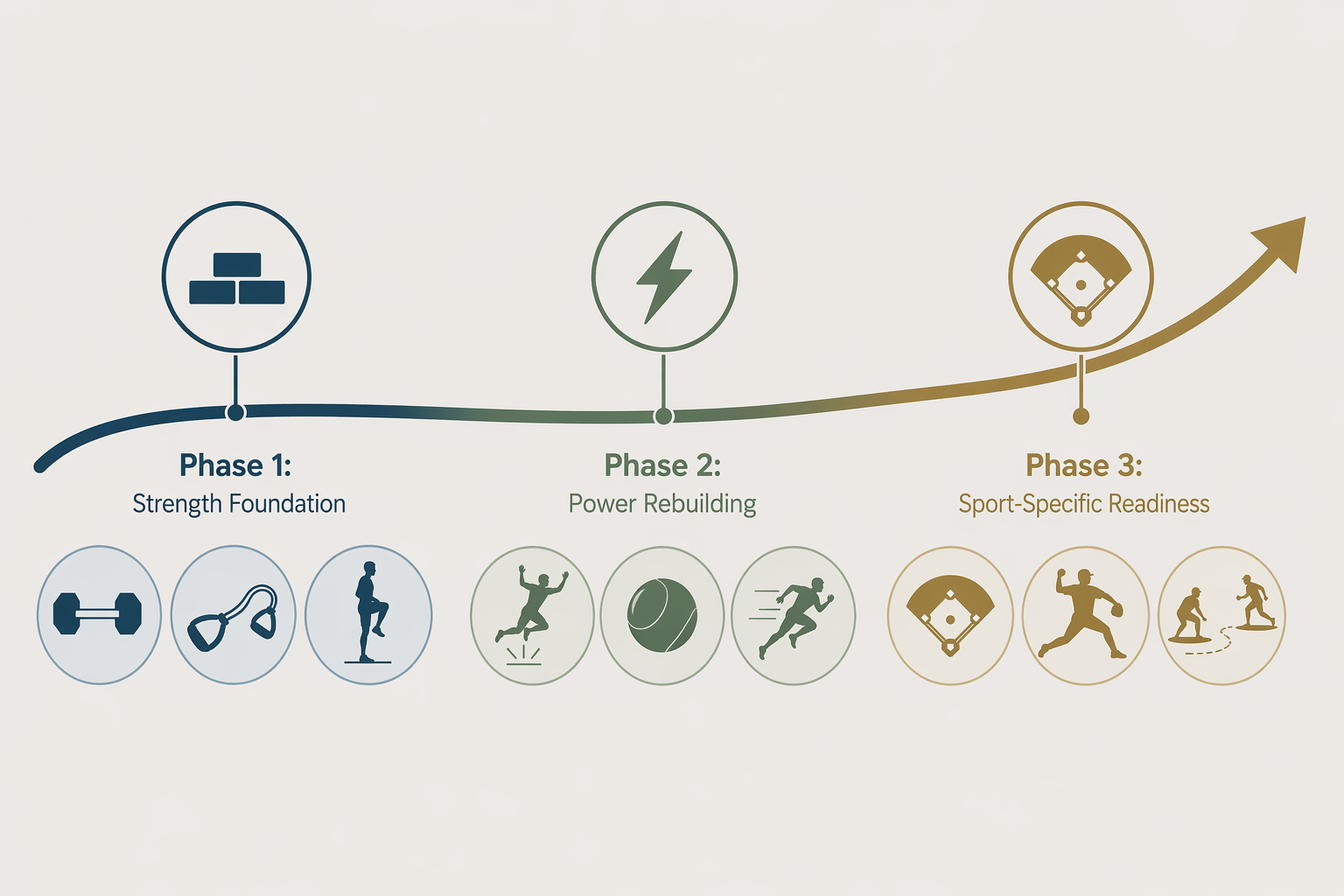
| Phase | Main job | Thrower branch | Hamstring branch | Tommy John branch | Move on when |
|---|---|---|---|---|---|
| Strength Foundation | Rebuild full-body loading, control, and recovery tolerance. | Rebuild scapula, trunk, hips, and easy cuff work instead of chasing arm speed [1][4]. | Restore hinge strength, single-leg control, and eccentric prep [2]. | Start full-body work on the uninjured side as early as 3 to 4 weeks post-op, then build toward the surgical arm by month 3 [3]. | You can load the body and feel normal the next day. |
| Power Rebuilding | Turn strength into faster force. | Add throwing build-up, med ball work, and low-level plyometrics [1][5]. | Use controlled accelerations from 60% to 100% over 4 to 6 weeks after eccentric strength is back [2]. | Keep building the chain before you chase arm speed [4][5]. | Movement stays crisp under faster intent. |
| Sport-Specific Readiness | Prove the body can handle baseball work and fatigue. | Layer mound work, fielding throws, and back-to-back workload tests [1][6]. | Bring back sprinting, cutting, and base running [2][6]. | Match throwing volume and position demands without compensation [4][6]. | You can repeat the work without a flare-up the next day. |
Phase 1: Strength Foundation
This is the least glamorous part of the comeback, and the most important. The goal is not to feel trained; it is to restore load tolerance through the whole chain. For a shoulder or elbow case, that means the trunk, scapula, hips, and legs get real work, because the elbow is not the whole problem and the shoulder is not the only engine [1][4]. Home-based post-rehab conditioning should look like training, not therapy leftovers [5].

- Build each week around one lower-body hinge, one single-leg squat pattern, one push, one pull, and one trunk or carry drill.
- Keep the range of motion clean, then add load slowly. If a rep gets sloppy, the set is over.
- For throwers, add scapular control and cuff work without pretending those drills alone will fix the arm [1][4].
- For hamstring cases, do not save eccentrics for later. The common miss is returning to sprinting before eccentric strength is ready [2].
- For Tommy John patients, early strength work can start on the uninjured side first, then move toward the surgical arm when cleared [3].
A simple Phase 1 week usually means 2 or 3 lower-body sessions, 2 upper-body control sessions, and 2 trunk-focused blocks. The exact exercise choice matters less than the pattern: split squat, single-leg RDL, goblet squat, row, floor press, Pallof press, side plank, suitcase carry, and a small amount of arm care if the injury allows it.
Phase 2: Power Rebuilding
Once the body can handle basic strength without compensation, the job changes from building capacity to expressing it. This is where jumps, skips, med-ball throws, and throwing or sprint progressions belong. For throwers, a structured build from throwing initiation to mound work is commonly laid out over 10 to 16 weeks, which is why Phase 2 is usually a ramp, not a rush [1].
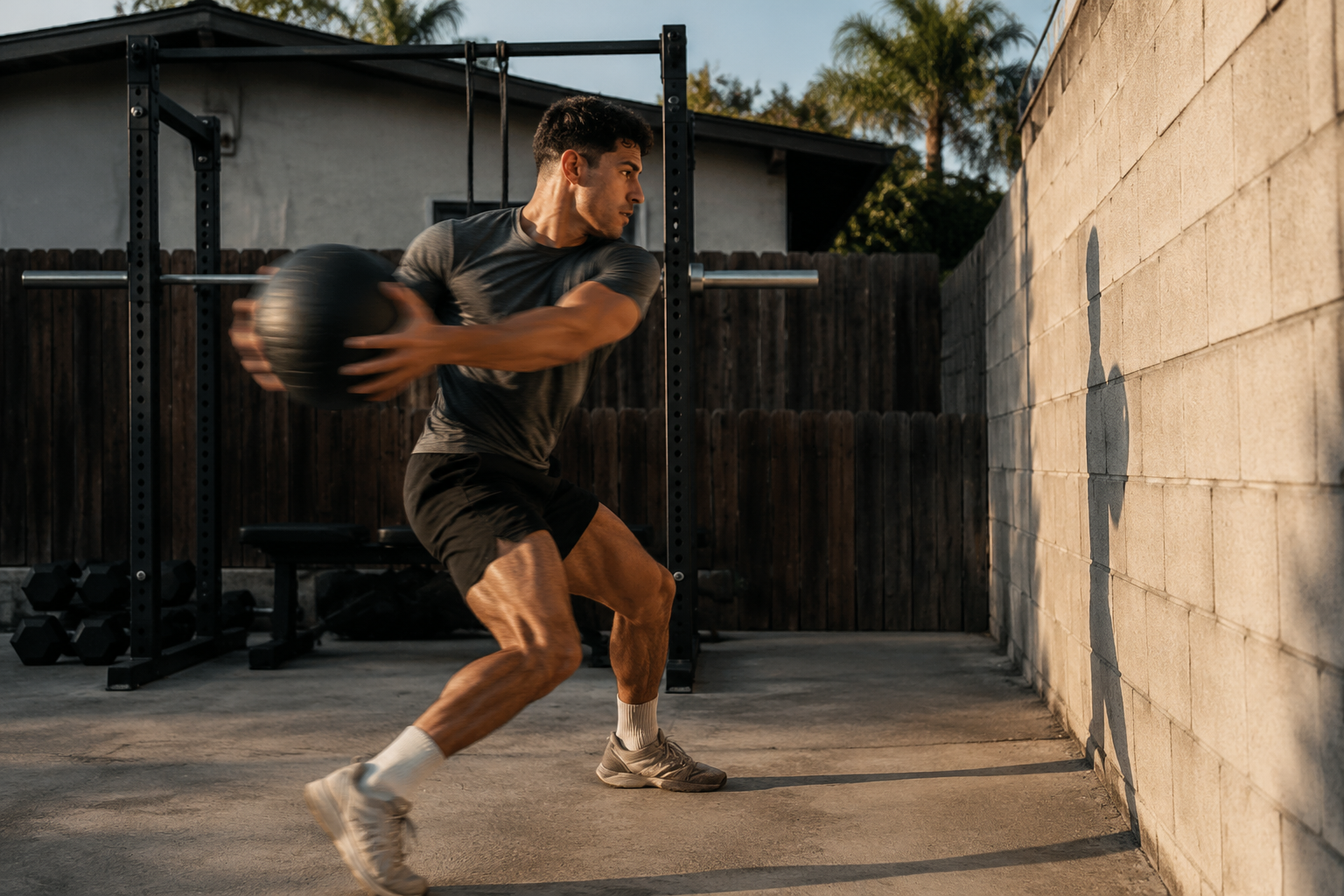
- Use med-ball scoop tosses, rotational throws, and low-volume explosive work before you chase max effort.
- Start plyometrics small: snap-downs, pogo hops, line hops, then simple jumps if the landings stay quiet.
- For a throwing arm, increase distance, volume, and intent in that order instead of jumping straight to mound work [1][5].
- For a hamstring, controlled accelerations matter. A week-by-week run plan may move from 60% to 100% over 4 to 6 weeks, but only after eccentric strength is back in the picture [2].
- For Tommy John work, keep the whole-body lift moving. Do not chase arm speed before the trunk, shoulders, and legs can absorb the force [4][5].
This phase is where players feel tempted to skip ahead because the drills finally look athletic. That is the trap. Power is not just harder work; it is harder work that still lands under control.
Phase 3: Sport-Specific Readiness
The last phase is not about more exercise. It is about proving transfer. The athlete needs to show the same movement quality under baseball speed, fatigue, and sport-specific sequencing. E3 Rehab's return-to-sport framework is useful here because it checks clinical, functional, biomechanical, sport-specific, and psychological readiness instead of just asking whether the athlete can survive one workout [6].
- Throwers: layer in bullpens, mound work, fielding throws, and back-to-back workload tests only as the earlier phases hold up [1][6].
- Hamstring cases: bring back full sprints, cuts, and base-running, then check how the leg feels the next day [2][6].
- Tommy John patients: match throwing volume to position demands and keep mechanics clean when fatigue shows up [4][6].
- If one piece fails, back up a phase instead of adding more volume and hoping it works out.
That is the part most players need to hear plainly: these injuries do not share one clock. A shoulder may live in a 10 to 16 week throwing build, a hamstring may need 4 to 6 weeks of eccentric and sprint progression, and a post-op Tommy John athlete may start strength work as early as 3 to 4 weeks post-op while the surgical arm still waits [1][2][3]. The structure is the same, but the timeline belongs to the tissue.
If the next step cannot be repeated tomorrow, it is not the next step yet.
References
- The Complete Pitcher Shoulder Rehabilitation Protocol — True Sports Physical Therapy
- Hamstring Strain Recovery Timeline: Return to Run & Return to Sport Plan Week by Week — Princeton Sports Medicine
- Strength Training After TJ Surgery — Rockland Peak Performance
- 8 Keys to Tommy John Rehabilitation — Mike Reinold
- Effective Post-Rehab Conditioning Strategies in Baseball — Helix Sports Medicine
- Return to Sport Rehab — E3 Rehab


Comments
Join the discussion with an anonymous comment.