
What's in Caitlin Clark's Full Pregame Warmup Video?
What Caitlin Clark does in her viral full pregame warmup, exercise by exercise: the activation jog, contact balance work, and close-to-logo shot progression, plus where to watch and what's verified vs. reconstructed from footage.
- Equipment tier required
- none
- Duration
- 75 min
- Difficulty
- advanced
- Target area
- full body
- Space footprint needed
- full court
Short answer: Caitlin Clark’s full pregame warmup video shows a game-speed activation routine, not a static stretch session. The verified shape is a non-stop activation jog after she comes out of the tunnel, contact-balance work with Indiana Fever assistant coach Austin Kelly, a shooting progression that moves from closer shots out toward deep range, a brief midcourt stretch, and a rule that she finishes on a made shot. ESPN’s feature and TSN’s syndicated copy confirm the broad routine and key details; ESPN’s video clip is the main watch target. No official exercise-by-exercise list has been published, so the breakdown below separates documented reporting from reconstruction based on visible footage and descriptions. [1][2]
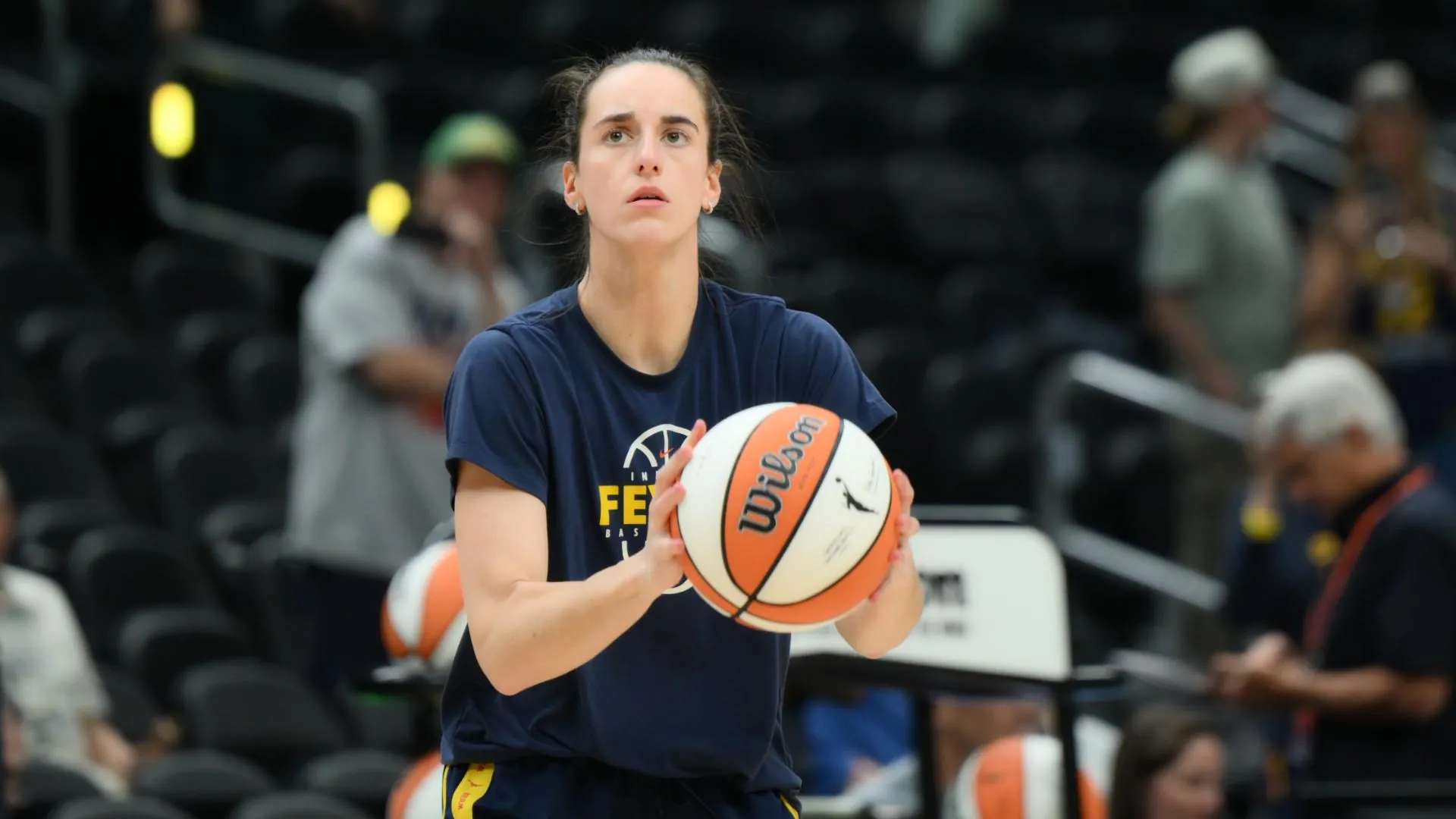
Where to watch the warmup video, and what it actually verifies
The video to start with is ESPN’s clip titled “How Caitlin Clark gets activated before Fever games.” It is the cleanest reference for the viral warmup rhythm: the pace, the coach contact, the shooting range, and the way the whole thing feels more like a live-game rehearsal than a loose pregame stroll. [2]
For the written source, TSN’s syndicated version of Ryan Hockensmith’s ESPN feature is the anchor. It reports that arena doors open around 90 minutes before tip and that Clark typically comes out around 75 minutes before tip, already inside a crowded pregame window that can include autographs, media obligations, music, and the actual basketball work. [1]
| Source layer | What it can support |
|---|---|
| ESPN/TSN feature reporting | The reliable frame: timing, non-stop activation, Austin Kelly’s contact work, Clark’s explanation that much of her work involves contact, the “balanced when unbalanced” idea, autographs, music cue, and ending on a make. [1] |
| ESPN video clip | The visual reference for how the warmup looks: fast, continuous, physical, and shot-heavy rather than a formal mobility checklist. [2] |
| Footage descriptions and social reposts | Useful for reconstructing shot variety such as catch-and-shoot looks, pull-ups, step-backs, and logo-range attempts, but not an official drill list. |
| Separate offseason workout clips | Not the same thing as this pregame routine. The volume-shooting offseason material belongs in a different category. |
That distinction matters because “full pregame warmup” has been used online as if there were a published Clark checklist somewhere: do this many reps, at these spots, in this order. The reporting does not give that. It gives something more useful for normal players, honestly: the structure and intent of a pro warmup under real game conditions.
The reconstructed exercise-by-exercise timeline
Read this as a reconstruction, not a certified Fever training sheet. The order below follows the verified timeline first, then fills in the visible basketball actions where the footage allows a reasonable interpretation.
1. Tunnel emergence into a non-stop activation jog
Clark’s warmup does not begin with her standing at half court and casually pulling a quad. It starts with movement. The ESPN/TSN feature describes her coming out around 75 minutes before tip, after doors open around 90 minutes out, and getting into a fast, non-stop routine. [1]
For a player trying to borrow the idea, this first block is the easiest to misunderstand. The point is not “jog because jogging is magic.” The point is to raise body temperature, switch the nervous system on, and get the first sweat before the sharper basketball work arrives. In a rec gym version, that might mean a few minutes of continuous movement: light jogging, defensive slides, skips, backpedals, and changes of direction. Clark’s version is faster and denser because she is preparing for WNBA game speed.
2. Contact-balance work with Austin Kelly
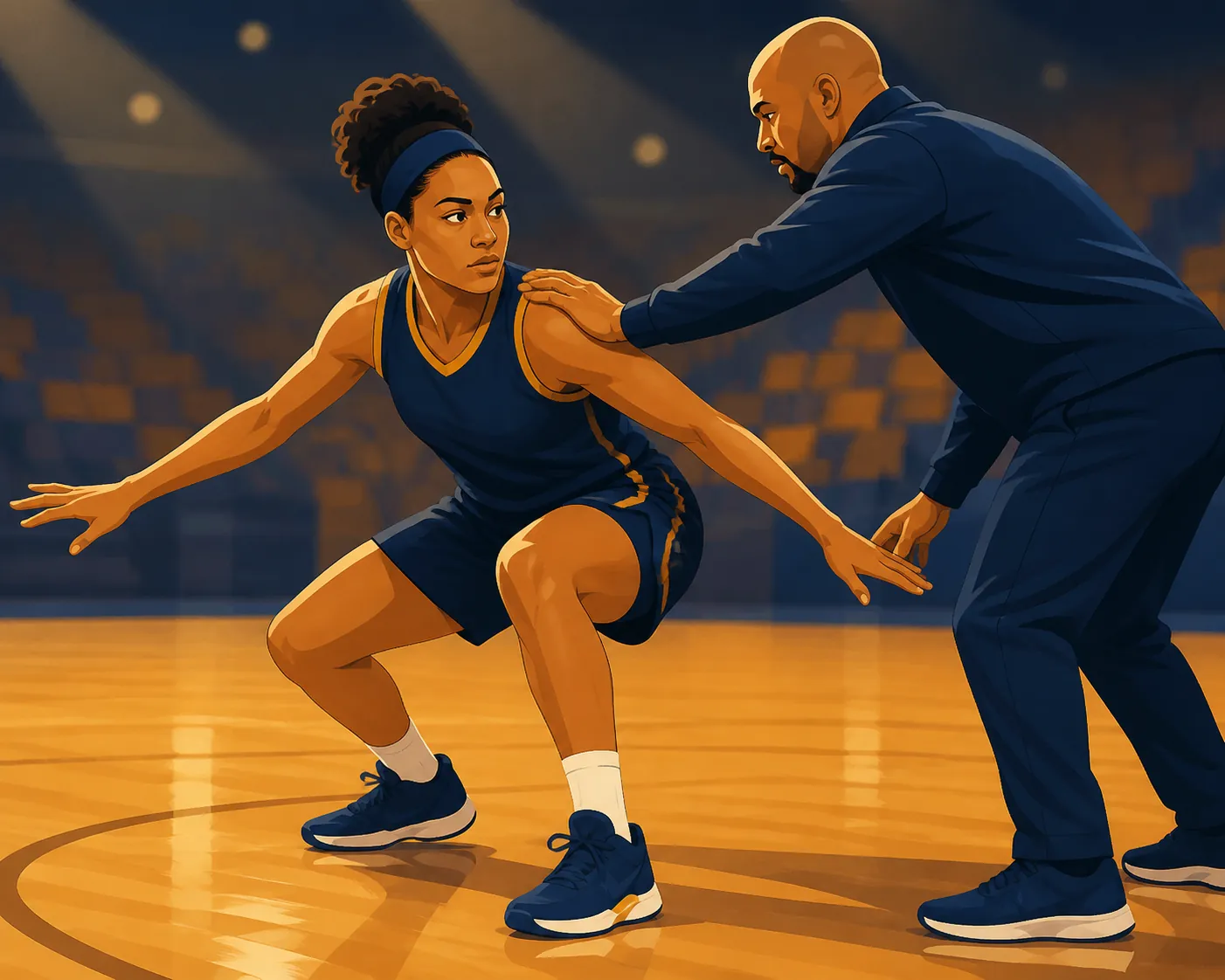
This is the least glamorous part of the clip and probably the most transferable. Fever assistant coach Austin Kelly bodies Clark during the warmup so she has to stay, in the feature’s phrase, “balanced when unbalanced.” Clark is quoted explaining, “A lot of my work... is usually with some sort of contact.” [1]
That line is the key to the whole warmup. Clark is not just rehearsing clean makes in empty air. She is rehearsing the condition under which her shots and passes actually happen: a defender riding her hip, a shoulder bump before the gather, a slight shove as she plants, a body in the way of her straight-line path. Kelly’s job is unglamorous setup work, but it lets the star practice the annoying part of basketball—the part where balance gets stolen before the skill has to show up.
For an amateur player, the safe adaptation is not to have a friend shove you at full speed under a rim. The usable version is controlled contact: a partner gives light forearm or shoulder pressure while you hold a low stance, pivot, catch, gather, or rise into a short shot. The contact should challenge posture without turning the drill into a wrestling match. If your knee caves, your landing gets sloppy, or the contact changes from pressure to collision, the dose is too high.
3. Close-range shooting before the deep stuff
The viral part is always the range. That is understandable; logo shots are the clip-friendly currency of the Clark warmup. But the useful sequence begins closer in. The reconstructed order has her working from short and midrange areas before stretching the floor, which is exactly how most players should think about a shot warmup: find the release, then add distance and speed.
This close-to-far progression keeps the warmup from becoming a contest with gravity before the body is ready. Short makes give the wrist, guide hand, feet, and eyes a chance to sync. Then the player can add sharper footwork, faster catches, and more demanding shot prep. In the ESPN clip, the value is not only that Clark makes shots from far away; it is that the deep shots arrive after her body has already been activated by movement and contact. [2]
4. Shot variety: catch-and-shoot, pull-up, step-back, and logo range
Here is where the evidence line needs to stay bright. The broad shooting progression is supported by the feature and the video. The exact menu—catch-and-shoot threes, pull-ups, step-backs, and logo-range attempts—is best treated as a reconstruction from visible footage and descriptions, not as an official Fever list.
As a basketball sequence, though, the logic is clear. Catch-and-shoot reps rehearse quick alignment. Pull-ups rehearse braking without losing the shot pocket. Step-backs rehearse separation and backward balance. Logo-range shots rehearse Clark’s real offensive gravity: defenders have to care about her before she reaches the usual three-point geography. That does not mean a normal player should spend half a warmup launching from the volleyball line. It means distance should be added only after the closer mechanics still look like the same shot.
A clean amateur version might use the same categories at a smaller scale: five short makes, then a few wing catch-and-shoots, then one-dribble pull-ups, then a controlled step-back from a range you can actually shoot without heaving. The borrowed idea is progression. The pro-specific part is the depth, pace, and volume.
5. Midcourt stretch, then the make-to-leave rule
There is a brief stretch at midcourt in the reported routine, but it is not the center of the warmup. By the time stretching appears, Clark has already moved, absorbed contact, and shot. The routine is closer to activation-with-basketball than stretch-then-play. [1]
The mental finish is cleaner: she wants to end on a make. That detail sounds small until you have watched enough players turn a warmup into a negotiation with themselves. Ending on a make gives the routine a hard stop and a positive last rep. It is not mystical. It is procedural. Miss, reset, make, leave. [1]
The warmup happens inside a crowded pregame window
The routine also has a circus around it. The feature reports one road-game count of 108 autographs, plus the pressure of a news conference and the music cue of Lady Gaga’s “Applause.” Those details are fun, and they help explain why the clip feels like an event before the event, but they are not the training lesson. [1]
The more practical read is that Clark’s basketball work has to survive interruption. Fans are waiting. Staffers are moving. Media is scheduled. The building is filling. The warmup still has to get her from arrival to readiness. That is a different problem from an empty-gym workout where the only task is getting shots up.
Do not confuse this with her separate offseason workouts
Clark’s pregame routine should not be mashed together with every other training clip attached to her name. A separate offseason volume-shooting session is a different kind of workout with a different purpose: building capacity and repetition away from game night. If that is what you were looking for, use our breakdown of Caitlin Clark’s home workout drills without a full court rather than treating the pregame clip as a full shooting prescription.
The same goes for ball-handling and small-space skill work. If you came here hoping to copy handle drills at home, the better fit is Caitlin Clark’s 5 practice drills for a home workout, or a broader no-hoop basketball drill library if you are training in a driveway, hallway, or apartment-friendly space.
What to steal from Caitlin Clark’s pregame warmup
Steal the flow, not the dose. Clark’s version is built for a professional guard with elite range, staff support, and a game coming in less than two hours. A normal player can still borrow the architecture without pretending to be in the Fever layup line.
- Start moving before you start testing your jumper. Use continuous light movement to get warm before harder cuts and shots.
- Add controlled balance pressure. Light partner contact during stance, catches, pivots, and short shots can teach you to stay organized when bumped.
- Progress from close to far. Make the short shot feel clean before adding distance, speed, or off-dribble footwork.
- Treat deep shots as a final layer, not the whole warmup. If range changes your form, move in.
- End on a make. It gives the routine a clear finish and keeps the last rep intentional.
The video is exciting because Clark’s range is absurd and the building knows it. The routine is useful because the sequence is disciplined: activate, absorb contact, shoot progressively, stretch briefly, finish clean. That is the part worth taking to your own court.
References
What a small equipment investment adds
We don't have a build tagged to this exact tier yet. Browse all builds.
How often should you repeat this?
See our recovery and rest reference for citation-anchored rest-interval guidance.
Spot something off?
Tell us if a movement, tier assumption, or duration didn't match your experience.