
How Did John Goodman Actually Lose 200 Pounds?
A fact-check of John Goodman's reported 200-pound weight loss: what's documented, what's inflated, and which parts of his daily-step, low-impact cardio, boxing, and portion-control method you can realistically replicate at home.
- Equipment tier required
- none
- Duration
- 60 min
- Difficulty
- beginner
- Target area
- full body
- Space footprint needed
- small
- Noise level
- low
The short answer is: John Goodman’s 200-pound weight loss is plausible as a media-reported arc, but it is not a publicly verified medical record. The better-documented part is less flashy and more useful: he moved a lot, ate less without making the diet sound mystical, used low-impact cardio, boxed because he liked it, and stopped treating weight loss as a three-month punishment followed by a reward binge.
That distinction matters because “John Goodman 200 pound weight loss home workout” has become the kind of search phrase that attracts recycled celebrity summaries. Some are harmless. Some quietly turn a long, uneven process into a secret routine. The public record does not support that neat version.
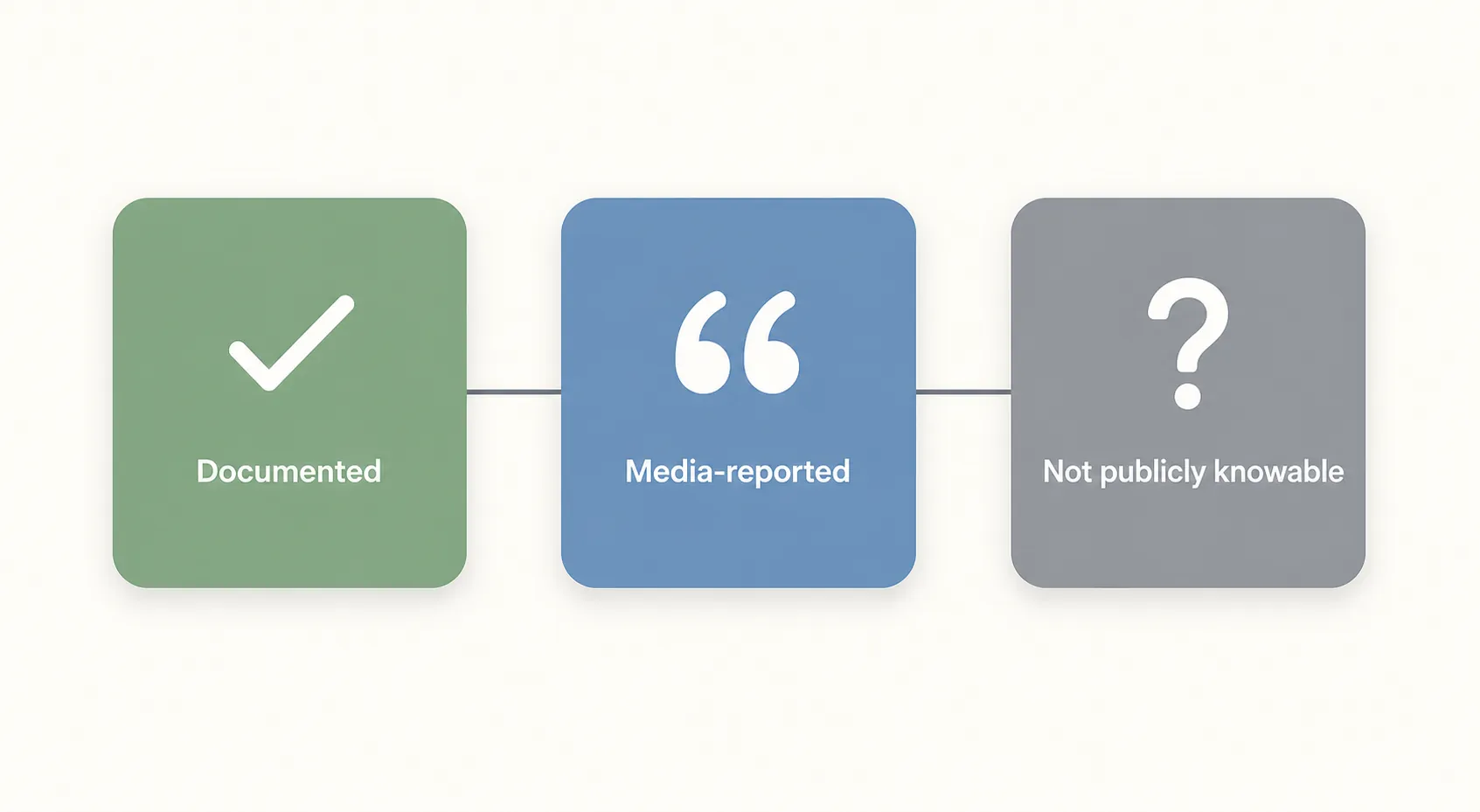
First, audit the 200-pound claim
The firmest early milestone is not 200 pounds. In 2010, People reported that Goodman had lost more than 100 pounds after years of weight fluctuation.[1] That is the cleanest dated public marker: a mainstream outlet, a specific year, and a weight-loss amount that was being reported at the time rather than backfilled into a later transformation story.
The most revealing source is Goodman himself. In a 2016 ABC News interview, he described the old cycle this way: “I would take three months out, lose 60 or 70 pounds, and then reward myself with a 6-pack of Bud or whatever and just go back to my old habits.” He added, “This time I wanted to do it slowly. Move, exercise.”[2] That quote does more work than another dramatic red-carpet photo. It tells us the earlier method failed because it was temporary, and that the later attempt was deliberately slower.
The 200-pound figure comes later in the public chain. TODAY reported in 2023, while covering Goodman’s Rolling Stone interview, that he had lost 200 pounds.[3] A later New York Post recap put his high weight at about 392 pounds and tied the broader story to the “pushing 400” framing that has followed him for years.[4] Those reports make the number believable as a lifetime high-to-lower-weight arc. They do not make it independently verified in the way a medical chart, DEXA history, or clinician-published case report would.
| Claim | What the public sources support | How to treat it |
|---|---|---|
| He had lost more than 100 pounds by 2010. | People reported a 100-plus-pound loss in August 2010. | Documented media milestone. |
| He lost 200 pounds. | TODAY relayed the 200-pound figure from his 2023 Rolling Stone coverage; later outlets repeated the broader arc. | Media-reported, plausible, not a public medical verification. |
| He followed one clean, uninterrupted transformation. | His own 2016 quote describes prior yo-yo dieting; later coverage includes renewed struggle. | Not supported. |
| There is an exact John Goodman machine routine to copy. | Public sources mention treadmill, elliptical, steps, boxing, and portion control, but not a complete device-by-device prescription. | Too specific for the record. |
There is also an access caveat worth saying plainly. The Rolling Stone interview is central to the recent wave of coverage, but the usable quotes here are verified through secondary reporting from outlets such as TODAY and AARP rather than treated as if a full primary transcript were available for every detail. That is not a scandal. It is just the difference between a sourced claim and a polished retelling.
The method is better documented than the headline
The clearest account of the working method comes from trainer Mackie Shilstone. In a 2015 New York Post report, Shilstone described Goodman building toward 10,000 to 12,000 steps a day, using treadmill and elliptical work, training six days a week, eating in a Mediterranean-style pattern, and relying on portion control.[5] That is not a celebrity detox. It is a calorie deficit made survivable by repeated movement and less chaotic eating.
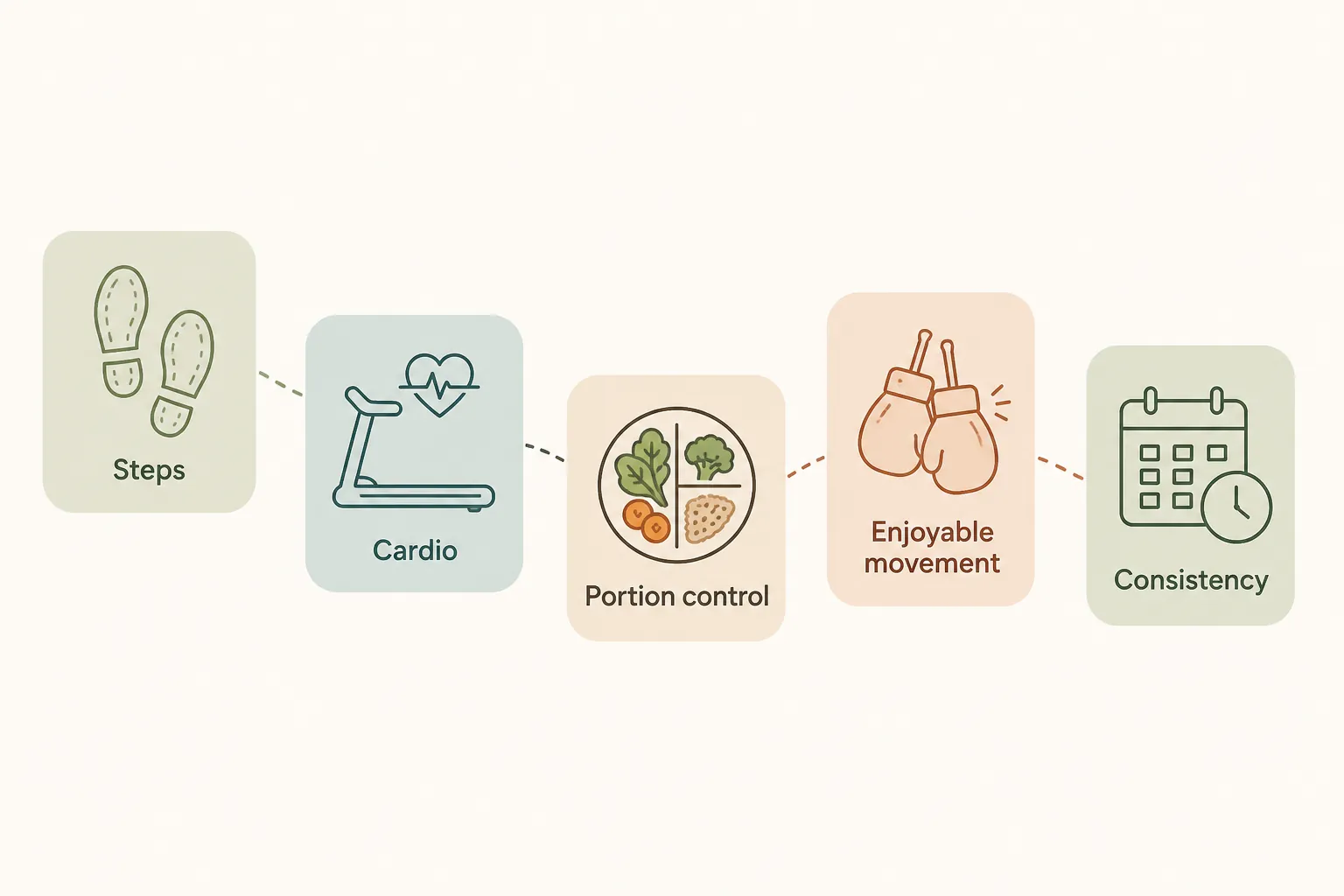
The important part for a home exerciser is not that Goodman used a treadmill or an elliptical. It is that the movement was countable, repeatable, and low enough impact to do often. A person walking laps in a hallway, using a compact treadmill, splitting steps across errands, or doing joint-friendly indoor walking is closer to the documented method than someone copying a hard boxing circuit twice and quitting.
The step target also lines up with mainstream weight-management evidence, as long as it is not sold as magic. KU Medical Center’s summary of John Jakicic’s JAMA-derived work notes that progressing toward 10,000 steps per day, when paired with a modest reduction in calorie intake, has been shown to enhance long-term weight loss and help prevent regain.[6] The calorie piece is not optional in that sentence. Steps help most when they sit inside an eating pattern that stops consistently overshooting energy needs.
Steps: useful because they lower the daily barrier
A 10,000-to-12,000-step target is demanding for many people, especially at a higher body weight, but it is still easier to scale than a complex gym program. It can be split into small walks. It does not require a class time. It gives the person doing it a simple feedback loop: today’s movement either happened or it did not.
For home use, the better question is not “Can I immediately match John Goodman’s reported steps?” It is “Can I raise my normal step count without making my knees, feet, back, or schedule revolt?” A lower starting point that actually gets repeated is more faithful to the evidence than a borrowed celebrity number that burns out in a week. If walking is the part you want to build, FitAtHome’s walking pieces on digestion and metabolism and accessible trail walking are better continuations than another celebrity slideshow.
Low-impact cardio: not glamorous, which is the point
The treadmill and elliptical details in Shilstone’s account are useful because they show the training was built around repeatable aerobic work, not maximal punishment.[5] Public sources do not document the exact machine models, incline settings, resistance levels, or calorie burns. Once an article starts pretending those details are known, it has usually left the evidence and entered content manufacturing.
CDC and ACSM physical-activity guidance both support regular aerobic activity as a baseline health behavior, with intensity and volume scaled to the person rather than treated as a one-size routine.[7][8] That is the relevant match here. Goodman’s public method points toward frequent moderate movement that can be repeated for years. It does not point toward a special fat-burning zone on a specific console.
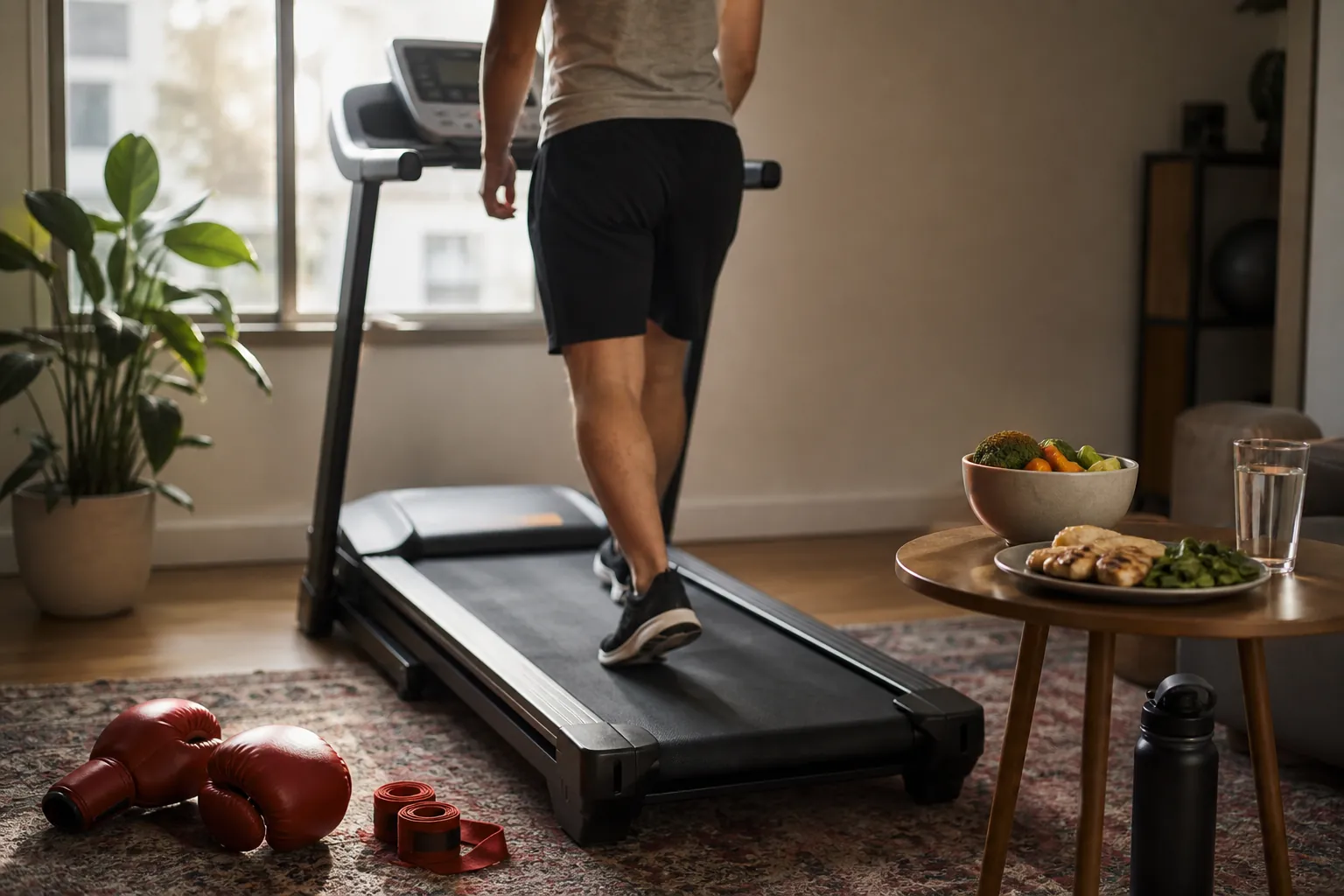
At home, that can mean treadmill walking, an under-desk walking pad, a stationary bike, a low step, marching intervals, or gentle elliptical work if you own one. The machine is less important than the repeatability. If joint pain, deconditioning, medication-related weight loss, or a long layoff changes what “repeatable” means, a joint-friendly home protocol is a safer place to borrow from than a celebrity recap.
Portion control did more work than the phrase gets credit for
Shilstone’s description included Mediterranean-style eating and portion control.[5] That is a broad public account, not a meal plan. There is no verified daily calorie target in the sources, no public macro split, and no evidence that Goodman’s exact food intake should be copied by a smaller, younger, older, more active, less active, or medically different person.
Still, the direction is clear enough to be useful. Portion control is the bridge between “I’m walking more” and “my body has a reason to use stored energy.” A Mediterranean-style pattern can make that easier because meals tend to be built around recognizable foods rather than constant novelty: vegetables, lean or minimally processed proteins, beans or whole grains, fruit, olive oil, and reasonable portions. The public claim supports the pattern, not a rigid John Goodman diet template.
Boxing mattered because he would actually do it
Boxing is the part of the story most likely to get over-polished because it looks better on camera than step counting. In the 2023 Rolling Stone coverage, later relayed by TODAY and AARP, Goodman described “hitting the mitts, hitting the bags, learning footwork,” and referenced sessions of “an hour, hour and a half.”[9][10] That tells us boxing was part of the routine and that he found something engaging in the skill work.
It does not prove that everyone should start boxing for weight loss. Bag work can be shoulder-heavy. Footwork can irritate knees or ankles if ramped too fast. Mitt work requires another person. For a home exerciser, the transferable piece is “choose one conditioning activity you enjoy enough to repeat,” not “buy gloves and copy a celebrity session length.”
If boxing appeals to you, the home version can be shadowboxing, light bag rounds, footwork drills, or non-contact intervals with plenty of rest. If it does not appeal to you, dance cardio, cycling, step-ups, rowing, or brisk walking can serve the same role. Enjoyment is not decoration here. It is one of the ways consistency survives.
The slow timeline is not a side note
Goodman’s 2016 quote is the hinge of the whole story because it rejects the crash-loss pattern he had already lived through. Losing 60 or 70 pounds quickly, then returning to old habits, is not mysterious failure. It is a predictable outcome when the method is treated as a temporary interruption rather than a new default.[2]
CDC guidance says people who lose weight gradually and steadily, at about 1 to 2 pounds per week, are more likely to keep it off than people who lose weight quickly.[11] That does not mean every person’s scale should move neatly every week. It means Goodman’s stated desire to do it slowly is much closer to mainstream weight-management guidance than the makeover framing around him.
The messy later admission also belongs in the record. In 2023, Goodman said, “I’ve just let everything go,” while talking about exercise disruption.[3] A glow-up article treats that like a crack in the statue. It reads more like credibility. Long-term weight management often includes drift, restart, and maintenance work that is far less photogenic than the initial drop.
What a normal person can copy at home
Copy the structure, not the celebrity. Goodman’s public method can be translated into a home routine without pretending you know his exact treadmill settings, boxing rounds, or daily menu.
| Documented pillar | Home translation | What not to pretend |
|---|---|---|
| 10,000–12,000 daily steps | Build walking volume gradually through indoor walks, treadmill sessions, errands, or short walking breaks. | That everyone should start at the same target. |
| Treadmill and elliptical cardio | Use low-impact aerobic work you can repeat most days. | That one machine model or calorie-burn number explains the result. |
| Portion control and Mediterranean-style eating | Use satisfying meals and smaller portions to create a modest calorie reduction. | That his exact calories or macros are public. |
| Boxing and mitt/bag work | Choose an enjoyable conditioning activity: boxing if appropriate, another option if not. | That boxing itself is the magic ingredient. |
| Slow consistency after yo-yo dieting | Treat the plan as a default routine, not a temporary punishment block. | That the transformation was clean and uninterrupted. |
For the actual week-by-week setup, use the companion guide: Follow John Goodman’s Weight Loss Workout Plan at Home. This article is the fact-check; that one is the practical build.
The same dated-claims approach is useful for other celebrity fitness stories too. The Chrissy Metz diet and workout fact-check follows a similar rule: separate what someone actually said, what outlets repeated, and what the internet invented to make the story easier to sell.
So, did John Goodman actually lose 200 pounds? Public reporting supports that as a plausible headline number, especially when viewed across his reported lifetime high and later weight-loss coverage. But the part worth trusting most is not the round number. It is the boring, repeatable machinery underneath it: walking volume, low-impact cardio, portion-aware eating, enjoyable movement, and the decision to go slower than the old crash-and-regain cycle allowed.
References
- John Goodman Shows Off 100-Lb. Weight Loss, People, August 5, 2010.
- John Goodman Opens Up About His Weight Loss, ABC News, March 11, 2016.
- John Goodman says he’s lost 200 pounds — and reveals the workout he loves, TODAY, June 21, 2023.
- John Goodman’s 200-pound weight loss: how the actor transformed his health, New York Post, July 14, 2025.
- John Goodman’s trainer reveals the secret to the star’s slimdown, New York Post, November 10, 2015.
- Walking 10,000 steps a day is still good advice — but there’s more to the story, University of Kansas Medical Center.
- Physical Activity Basics, Centers for Disease Control and Prevention.
- ACSM Issues New Recommendations on Quantity and Quality of Exercise, American College of Sports Medicine.
- John Goodman reveals the workout that helped him lose 200 pounds, TODAY, July 18, 2025.
- How John Goodman Lost 200 Pounds and Kept It Off, AARP, July 16, 2025.
- Losing Weight, Centers for Disease Control and Prevention.
What a small equipment investment adds
We don't have a build tagged to this exact tier yet. Browse all builds.
How often should you repeat this?
See our recovery and rest reference for citation-anchored rest-interval guidance.
Spot something off?
Tell us if a movement, tier assumption, or duration didn't match your experience.