
The useful thing about Kristen Bell’s kale salad is not that it is a celebrity lunch. It is that it behaves like an actual lunch after a workout: grilled chicken, avocado, Parmesan, pepitas, sturdy greens, and a sharp Dijon-tamari-rice vinegar dressing instead of a bowl of leaves that asks you to be hungry again in an hour.
The recipe is chef Jackson Kalb’s Jemma Hollywood kale salad, published by Allrecipes in March 2026 after Bell said she ordered it “almost every day for the last six weeks” while filming Nobody Wants This Season 2.[1] That kind of repetition is the part worth noticing. A lunch that survives six weeks of workdays has already passed a more practical test than most “healthy lunch” ideas ever face.
:max_bytes(150000):strip_icc()/KaleSalad-OspiVenice-a1b2fdbb456b4471ad7141c90c139715.jpeg)
For someone training at home most days, the appeal is straightforward. This is a make-ahead salad with enough protein and fat to count as a post-workout entree, not a side dish dressed up with a famous name. The claims still need to stay modest: the protein, calorie, and fat ranges are ingredient-based estimates, not lab-tested nutrition data, and they will shift with the size of the chicken breast, the amount of Parmesan, the avocado, and how much dressing actually lands in the bowl.
What Is Actually In Kristen Bell’s Kale Salad
The Allrecipes version starts with grilled chicken and a base of curly kale and shredded green cabbage. The kale is massaged with dressing, then combined with sliced avocado, serrano pepper, cilantro, green onion, salted roasted pepitas, and Parmesan. The dressing uses Dijon mustard, tamari, rice vinegar, serrano, and vegetable oil; the published recipe makes about three-quarters of a cup, uses about one-quarter cup for the salad, and leaves about one-half cup for later.[1]
| Ingredient group | Why it matters for a home-training lunch |
|---|---|
| Grilled chicken and Parmesan | The main protein sources; together they put the entree in an estimated 35–40 gram protein range, depending on portions. |
| Kale and green cabbage | Sturdy greens that keep their structure better than delicate lettuces, especially after dressing. |
| Avocado, dressing oil, and pepitas | Fat sources that make the salad more filling and help it eat like a meal. |
| Serrano, cilantro, green onion, Dijon, tamari, and rice vinegar | High-impact flavor ingredients that keep repeated lunches from tasting flat. |
That ingredient list is doing more work than it first appears to. Chicken gives the salad its center. Parmesan adds salt, fat, and more protein. Avocado and oil keep it from feeling like punishment food. Pepitas bring crunch that still makes sense with cabbage and kale. The serrano and vinegar cut through the richness so the bowl does not become heavy in the middle of a workday.
The estimated macro picture is why this recipe belongs in a fitness conversation at all. With chicken and Parmesan, the salad can land around 35–40 grams of protein. With avocado and dressing oil, it easily moves past 20 grams of fat. As an entree serving, it can sit roughly in the 600–700 calorie range. Those are approximate ranges, but they describe the right kind of lunch for someone who has lifted, cycled, done intervals, or stacked several short home-training sessions into the day.
The Texture Is Part Of The System
Raw kale can be the reason people abandon kale salads. It can be stiff, loud, and weirdly laborious to chew. In this recipe, the kale is massaged with dressing before the rest of the salad comes together, a step Allrecipes notes helps break it down and make it more digestible.[1] That is not a wellness flourish; it is basic lunch engineering.
Massaged kale also behaves differently in the fridge. It does not collapse the way tender greens do after a few hours in dressing. Shredded green cabbage adds even more structure, so the base can hold up for about 3–4 days refrigerated, while the dressing can keep for about a week. For a person trying to train consistently at home, that matters more than whether a salad looks especially virtuous on day one.
The practical move is to prep the greens and dressing separately from the softest and crunchiest add-ins. Kale and cabbage can be washed, chopped, and stored. Dressing can be made ahead. Chicken can be grilled or cooked in a batch. Avocado is better sliced when serving, and pepitas are best kept dry until the end. That small separation keeps the salad from becoming a soggy container of good intentions by Wednesday.
Why The Chicken Does Not Feel Random
Bell’s current version of this lunch makes more sense when placed against her recent training shift. After about 30 years as a vegetarian, she reintroduced meat in 2022 because she wanted more protein to support strength training, according to Business Insider.[2] That timeline matters. The grilled chicken is not just an easy restaurant add-on; it fits a stated change in how she was eating around training.
Women’s Health UK also reported in March 2026 that Bell moved from Pilates toward heavy lifting at 44 and described the result as “the best body I’ve ever had.”[3] The useful takeaway is not that everyone should copy her workouts or her lunch. It is that a person lifting heavier usually has to stop treating protein as an afterthought.
For home exercisers, that can be the missing link between a workout routine that exists and a recovery routine that actually supports it. A 30–60 minute session does not require a theatrical nutrition plan. But if lunch is consistently too light, the afternoon often becomes a scavenger hunt: coffee, crackers, bites of leftovers, then a dinner that has to make up for the whole day. A substantial salad like this interrupts that pattern without asking for a second cooking project.
It Fits The Kind Of Training That Happens Between Other Things
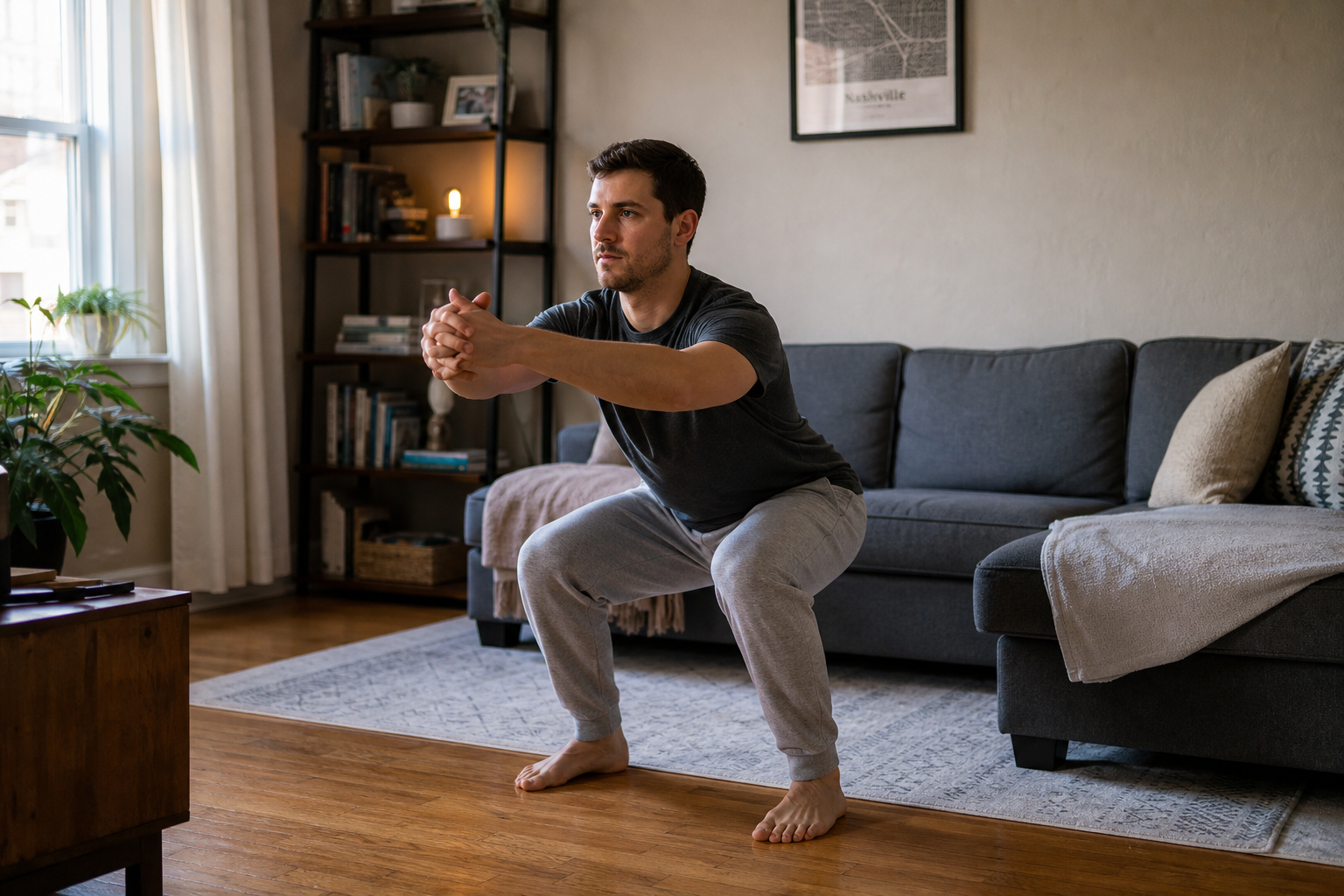
Bell’s exercise routine, as described by Business Insider, is not built only around perfect gym blocks. She has said she does 24 squats nightly at 9 p.m. when letting the dogs out, keeps 10–15 pound dumbbells under furniture for bicep curls while cooking, and does 15 minutes of uphill cycling on her daughter’s bike.[2] Those details are almost too ordinary, which is why they are useful.
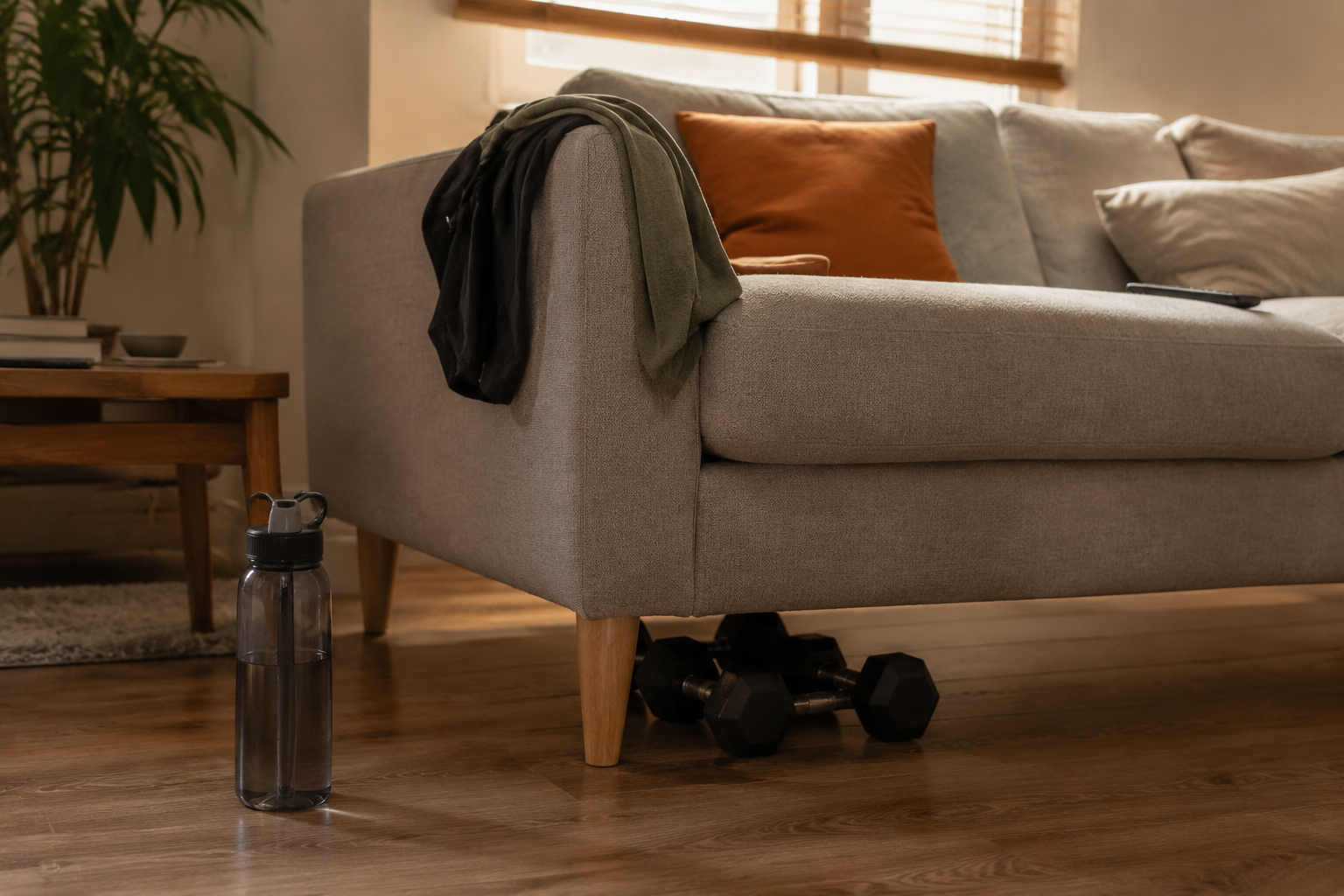
This is the context where a repeatable lunch earns its keep. If exercise is threaded through dogs, cooking, kids, work, and whatever else is happening at home, lunch cannot depend on a fresh burst of motivation every day. It has to be waiting, or nearly waiting. The salad’s sturdy base, cooked protein, and make-ahead dressing match that kind of life better than a delicate bowl that needs to be assembled like a restaurant plate.
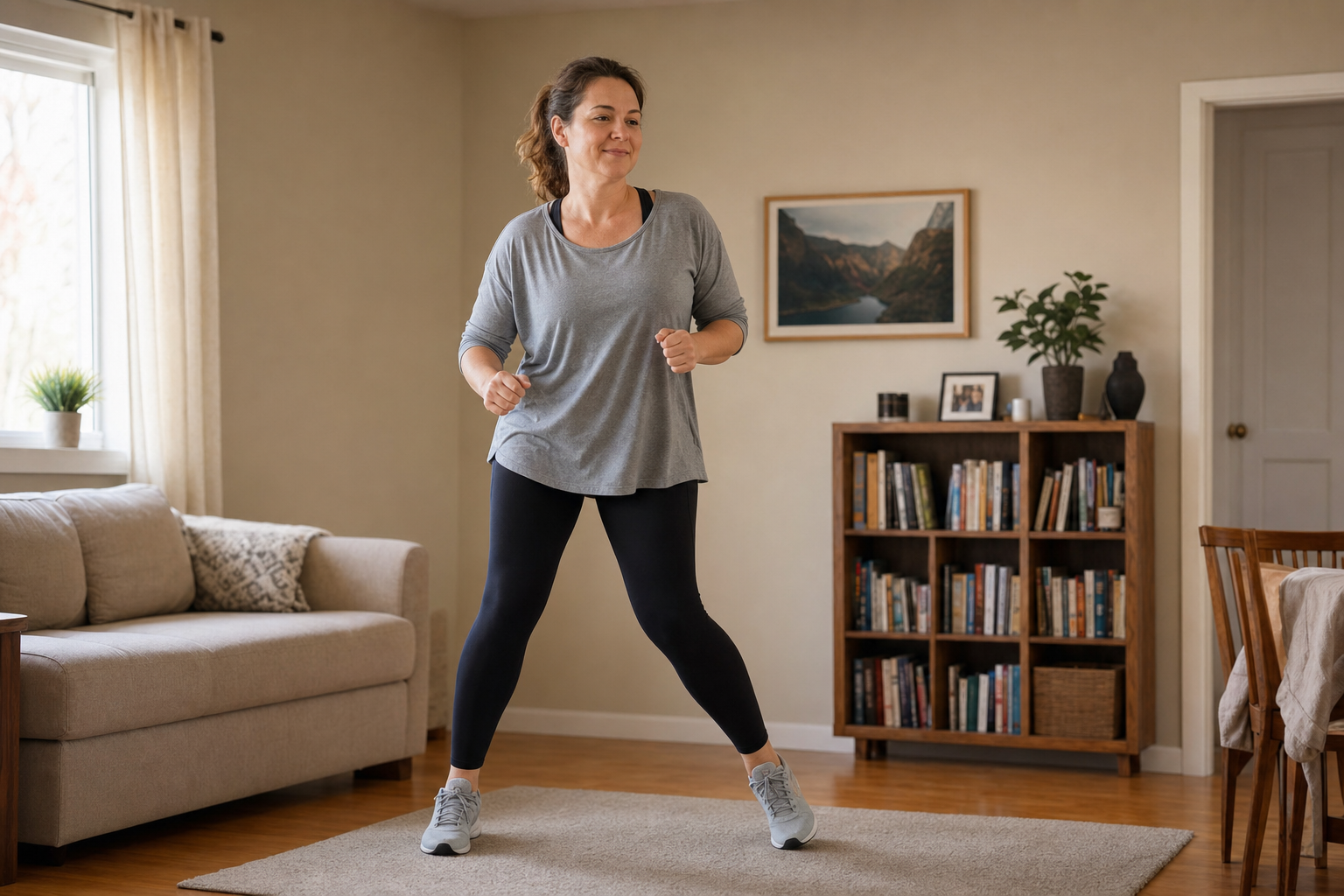
The broader “exercise snacking” idea has also become part of the 2026 wellness conversation. Forbes named snack-sized workouts among the year’s top wellness trends and reported more than 122 million views across TikTok, YouTube, and Instagram for related content.[4] That figure shows attention, not proof that every short workout method is effective. Still, it helps explain why Bell’s small-session habits resonate: many people are trying to make movement fit into real schedules instead of waiting for ideal ones.
How To Make It Work As Meal Prep
The recipe can be copied directly from Allrecipes, but the prep logic is the part to protect if you are adapting it. Keep the structure: sturdy greens, real protein, one creamy element, one crunchy element, salty cheese, and a high-acid dressing. Change too many of those at once and it becomes a different lunch.
- Prep the kale and cabbage first, because they are the ingredients most responsible for storage life.
- Massage the kale with some dressing before serving so it softens instead of fighting back.
- Cook enough chicken for several lunches if you want the salad to function after weekday workouts.
- Add avocado close to serving time so the salad still tastes fresh.
- Hold pepitas until the end if crunch is one of the reasons you will actually eat it again.
The dressing is worth making as written before changing it. Dijon gives it body, tamari gives it savoriness, rice vinegar keeps it bright, serrano adds heat, and oil carries the whole thing. A thin, timid dressing would not do the same job against kale, cabbage, chicken, avocado, seeds, and cheese.
If the full salad feels too large after a lighter training day, the easiest adjustment is portion size, not stripping out the ingredients that make it useful. Less chicken lowers protein quickly. No avocado and no dressing oil can make it less satisfying. Removing pepitas takes away texture. A smaller serving with the same architecture usually works better than turning it into a pile of greens and wondering why it does not hold you.
The Health Claims Should Stay In Their Lane
There are reasonable ingredient-level reasons this salad feels recovery-friendly. Kale brings micronutrients. Serrano adds heat. Vinegar may help moderate blood sugar response when used with a meal. But those points do not turn the salad into a treatment, a performance enhancer, or a guarantee of better training results. The stronger claim is also the more honest one: it is a balanced, filling lunch that makes protein, fat, fiber, acid, and texture easier to repeat.
Bell’s broader eating philosophy also keeps the recipe from needing to carry too much symbolism. She has described her approach as roughly “85 percent” healthy and thoughtful, according to Business Insider’s coverage of her habits.[2] That is the right frame for this kind of lunch. It is not a declaration that every meal has to be optimized. It is one reliable anchor meal in a week that still has snacks, dinners, family food, leftovers, and convenience.
The Jemma Hollywood kale salad is worth copying because it solves a specific problem for people who train at home: how to get a substantial, protein-forward, make-ahead lunch that still tastes good after repeated workouts and repeated weekdays. That is enough. It does not need to promise transformation to be useful.
References
- I Tried the Lunch Kristen Bell Ate 'Almost Every Day' for 6 Weeks—It Lives up to the Hype, Allrecipes, March 2026.
- How Kristen Bell spends her 5 to 9 — from exercise snacking to microwave dinners, Business Insider, February 2025.
- At 45, Kristen Bell says doing this workout three times a week made her 'physically strong' for the first time, Women's Health UK, March 2026.
- 5 Reasons 'Snack-Sized Workouts' Are The Hottest 2026 Wellness Hit, Forbes, April 2026.
Comments
Join the discussion with an anonymous comment.