The part of the RJ Harris training story that sticks is not the final number, though the final number is hard to miss. Harris, a WHP 580 radio host in Harrisburg, Pennsylvania, went from 400 pounds to 185 pounds, from size 58 pants to size 34, at 5 feet 8 inches tall.[1] The quieter detail is where the change started: not in a gym, not with a trainer, and not after clearing his calendar.
It started after a flood damaged his home in 2010. Sorting through waterlogged boxes, Harris found a photo from a trip to Italy and did not recognize the man in it. His own description of the moment was blunt: “I’m going to die.”[1] That is a frightening sentence, but it is not a fitness plan. The plan came later, and it was much more ordinary than the transformation headline suggests.
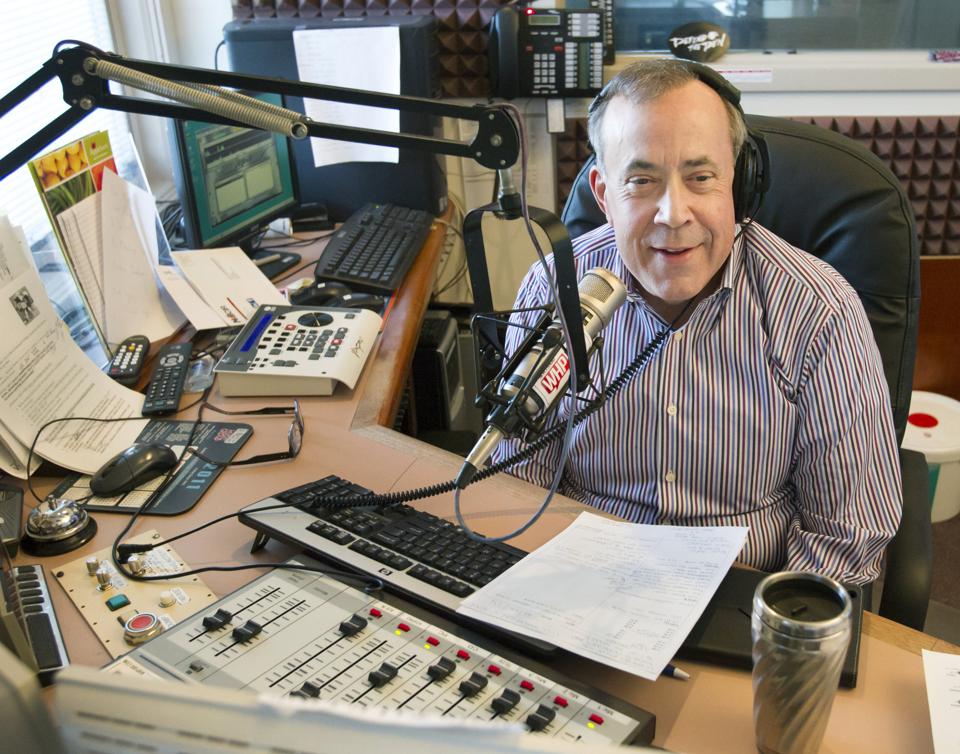
Harris was 59 when PennLive profiled his weight loss in 2014. His morning show began at 3:30 AM and ran until noon, the kind of schedule that makes “I’ll work out after work” sound naive before the day even starts.[1] Yet he lost 215 pounds using equipment he kept at home and at the office: dumbbells, a stepper, a treadmill, an elliptical, and a stationary bike.[1]
For a reader trying to train at home, that is the useful contradiction. The result was extreme. The setup was not.
The first 85 pounds came off before exercise
The most practical lesson in Harris’ story may be the part that sounds least like a workout story: he lost his first 85 pounds through diet alone, before adding formal exercise.[1] That matters because many severely overweight beginners are not deciding between a perfect gym program and a home program. They are deciding whether their knees, schedule, fatigue, embarrassment, or medical worries make the whole project impossible.
Harris’ first phase reduced the load before it increased the demand. PennLive reported that he cut calories and lost weight at about 2 pounds per week, with the full loss taking roughly 18 to 24 months.[1] That pace is not flashy, but it gives the body and the routine time to adjust. It also separates weight loss from the common beginner mistake of trying to solve everything with exercise before food intake is under control.
This is not a claim that exercise was unimportant. It became a major part of his maintenance and conditioning. But the order matters. If someone at 300 or 350 pounds cannot yet imagine daily workouts, Harris’ example gives them a smaller first assignment: reduce calories consistently, measure progress, and let the first pounds come off without pretending they need to train like an athlete on day one.
His follow-up advice was similarly unglamorous. He emphasized accountability, logging, and regular weigh-ins rather than secret foods or special equipment.[2] Those habits are easy to underappreciate because they do not photograph well. They are also the habits that keep a bad week from quietly becoming a bad season.
The equipment was basic because it had to be nearby
Harris did not build his routine around a commercial gym. He used dumbbells, a stepper, a treadmill, an elliptical, and a stationary bike at home and at work.[1] The point is not that every home needs all five. The point is that his equipment was close enough to use when small openings appeared.
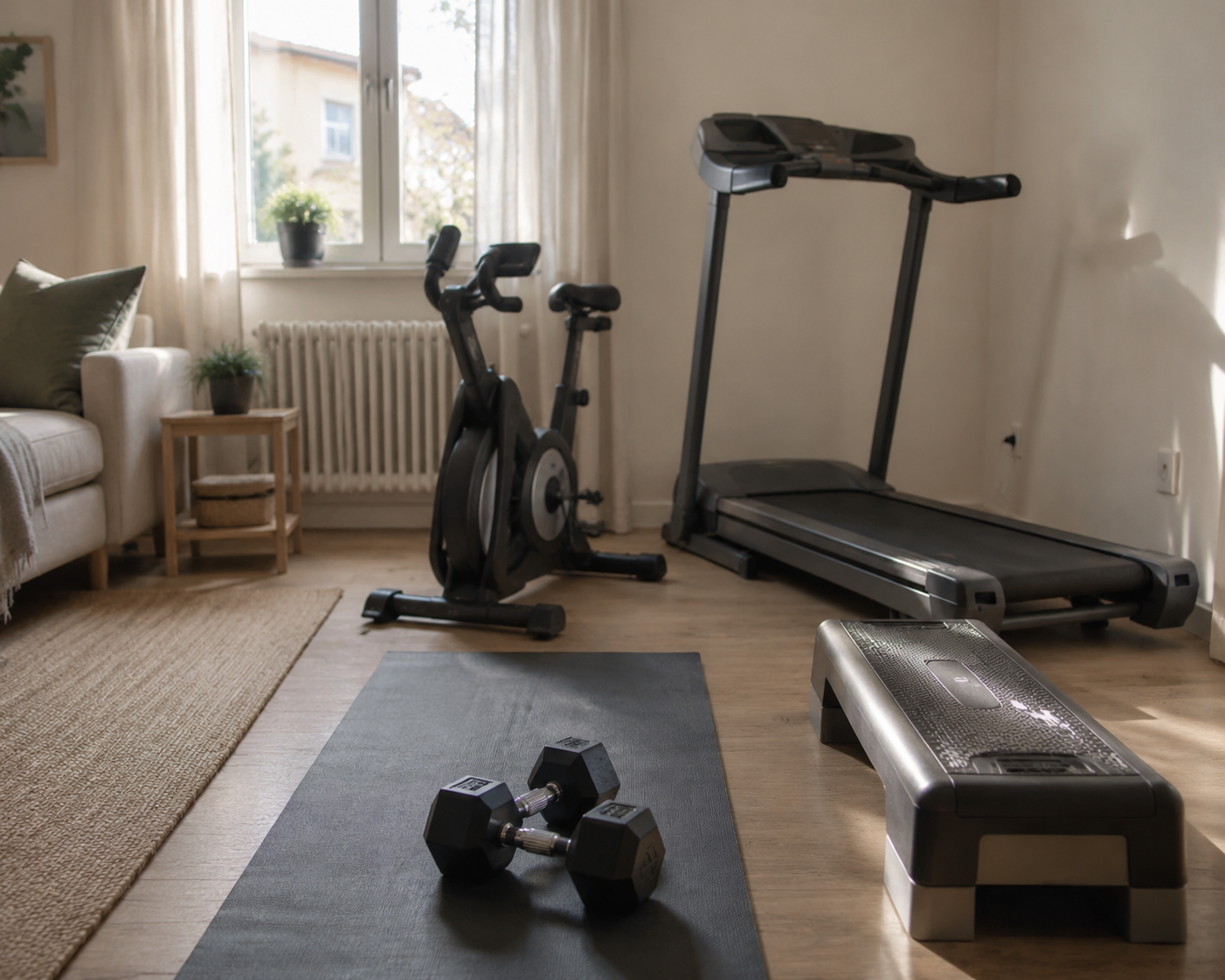
That is a better standard for home fitness than asking whether a setup looks complete. A pair of dumbbells that sits where you actually pass it is more valuable than a larger machine that becomes a laundry rack. A stepper near a desk can beat a perfect cardio plan that requires a drive across town. If you are building from scratch, a modest small-space home gym should earn its floor space by removing friction, not by imitating a health club.
| Tool Harris used | What it solved |
|---|---|
| Dumbbells | Strength work without leaving the office or home |
| Stepper | Short bursts during commercial breaks |
| Treadmill | Simple indoor walking or cardio access |
| Elliptical | Another low-friction cardio option |
| Stationary bike | Seated cardio when that fit the day better |
There is no need to turn that list into a shopping mandate. The sources do not say the treadmill was more important than the bike, or that the elliptical unlocked the whole process. What they show is availability. Harris surrounded himself with simple options so that a difficult schedule did not get the final vote.
How 20 to 30 minutes became enough
After the diet-only phase, Harris added short workouts. PennLive described sessions of 20 to 30 minutes, done 5 to 6 days per week, using supersets and short rest between sets.[1] That structure is important because it explains how a man with a 3:30 AM start time trained at all.
A superset simply means pairing exercises so that the next movement starts before the workout has dissolved into standing around. The sources do not provide Harris’ exact exercise menu, so it would be dishonest to invent one. But the method is clear enough: compress the work, keep rest short, and use the equipment already within reach.
That kind of density changes the meaning of a short session. Twenty minutes with long phone breaks is barely a warm-up. Twenty minutes with planned pairings, short rests, and no commute can become real training. For beginners who need a starting point rather than a heroic template, a 20-minute home workout is often the right scale: long enough to matter, short enough to repeat.
Harris also used the odd geometry of radio work. He lifted dumbbells during newscasts and used a stepper during commercial breaks.[1] Most jobs do not have that exact rhythm, but many have fragments: the 12 minutes before a shower, the quiet stretch before dinner, the dead time while a meeting runs late, the window after children are in bed but before the house fully shuts down.
The practical lesson is not to copy the radio booth. It is to stop treating a workout as something that only counts if it arrives in a clean, uninterrupted hour.
What a compressed home session can borrow from his method
- Keep the session short enough that it can survive a bad day.
- Choose equipment that is already in the room, not equipment that requires a trip.
- Pair movements or alternate strength and cardio so rest periods do not swallow the session.
- Repeat the same basic format often enough to remove decision-making.
- Use cardio machines as options, not obligations; walking, stepping, cycling, or elliptical work can all fill the same time slot.
A beginner does not need to own every machine Harris used. If cardio is the immediate need, a simple progression on a bike, treadmill, stepper, or elliptical can be enough to establish the habit before the setup grows. The same logic applies to a cardio progression plan: start with repeatable work, then add time or intensity only after the first layer is stable.
Accountability kept the routine from becoming a memory
The least cinematic part of Harris’ routine may be the part that mattered most after the weight came off: weekly accountability. In his tips article, he urged people to weigh in consistently, track what they eat, and avoid letting small slips become abandonment.[2] This is maintenance work, not makeover work.
That distinction matters for midlife adults because the calendar is rarely calm for long. Work travel, caregiving, sleep problems, injuries, holidays, and medical appointments all test the routine. A weekly weigh-in is not morally superior to any other tracking method, but it creates a review point. Someone has to notice when the trend changes.
Harris’ reported health turnaround adds weight to the story, but it needs careful framing. PennLive reported that his atrial fibrillation, which had not been responding to medication, resolved after the weight loss and that he no longer needed medication.[1] That is Harris’ reported outcome, not a promise that weight loss resolves heart conditions for everyone. Anyone dealing with atrial fibrillation, medication changes, or major weight loss should make those decisions with a clinician.
What this story proves, and what it does not
The RJ Harris training story is easy to flatten into a miracle headline: 400 to 185. But the usable version is a sequence. First, he reduced calories and lost 85 pounds without exercise. Then he added short home and office workouts. Then he made those workouts dense with supersets and short rests. Then he kept checking in with the scale and the routine.[1][2]
It does not prove that every person can lose 215 pounds, or that every person should aim for Harris’ exact body weight. It does not prove that home equipment is automatically safer or better than a gym. It does not give us a complete exercise list, and it should not be treated as a medical protocol.
It does prove something narrower and more useful: a brutal schedule, middle age, and no gym membership do not end the conversation. Harris did not wait for a perfect training block. He reduced food intake, put simple equipment where he could reach it, trained in 20- to 30-minute windows, used scraps of the workday, and kept himself accountable long after the first burst of urgency had passed.
References
- Radio's R.J. Harris drops 215 pounds: 'I was addicted to food', PennLive, February 2014.
- Down 215 pounds, radio's R.J. Harris offers 9 tips for losing weight, PennLive, February 2014.
Comments
Join the discussion with an anonymous comment.