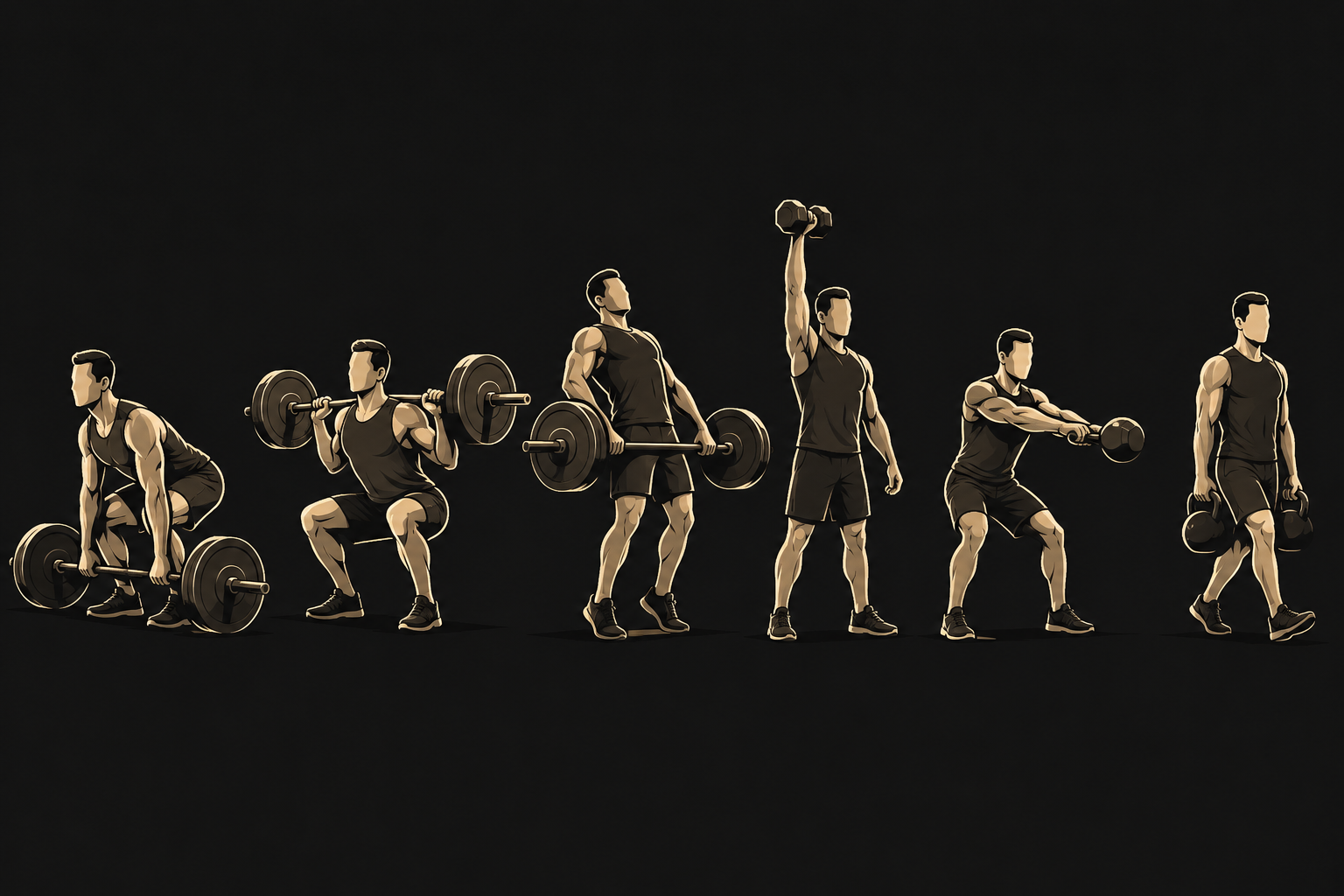
The most useful heavyweight UFC training tips are usually the least theatrical. One UFC Performance Institute example built by EXOS is not a movie montage of sprawls, shadowboxing with dumbbells, and burpees until the room spins. It is built around clean pulls, squats, deadlifts, one-arm dumbbell presses, kettlebell swings, and farmer carries across three compound-focused sessions per week, with 60–90 seconds between lead-exercise sets and 2–3 minutes between circuits.[1]
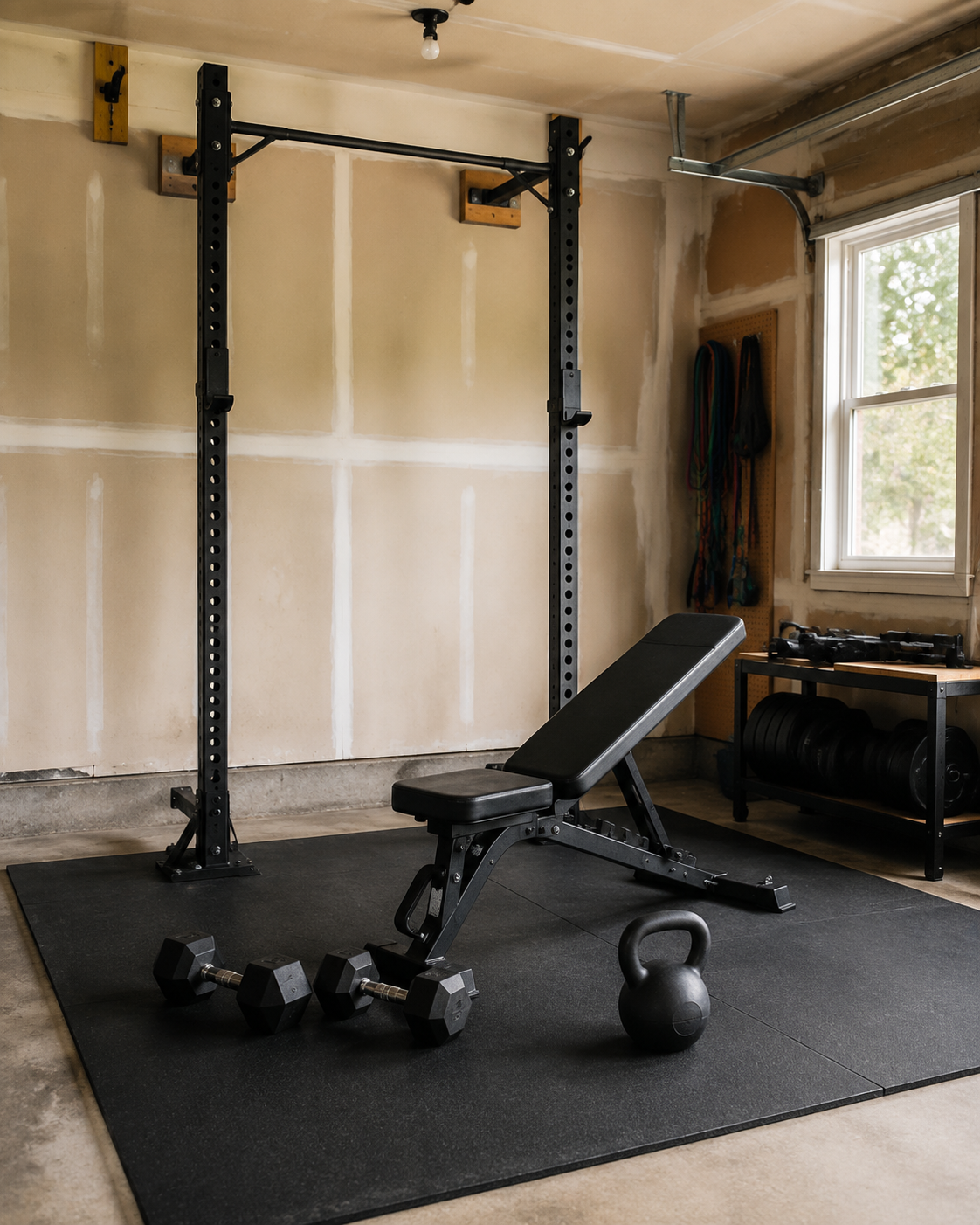
That should be good news if your “facility” is a garage bay, a pull-up bar, a bench, a few dumbbells, and a kettlebell that always seems to be in the way. The elite version has better coaching, better recovery monitoring, and fighters who are also doing skill work you are not seeing. But the strength menu itself is not exotic. It is simple enough to copy, hard enough to expose weak links, and honest enough that a bigger recreational lifter can use it without pretending the garage is an octagon.
What You Can Actually Steal From UFC Heavyweight Training
A home-gym athlete should separate the useful principles from the professional camp demands. You can steal the movement priorities: hinge hard, squat, press one arm at a time, carry heavy things, swing or jump for power, and learn to control your own bodyweight. You should not steal the total workload of a fighter in camp, because that workload sits on top of coaching, sparring, technical drilling, soft-tissue work, nutrition support, and years of adaptation.
Brett Bartholomew’s line in the UFC.com piece is the right guardrail: “We aren't trying to replicate the demands of the octagon in the weight room.” He also says “rest is a weapon,” which matters more than most home lifters want to admit when they are trying to train hard three, four, or six days in a row.[1]
The weight room is where you build the engine and armor. The cage, mat, bag, pads, and coach are where fighting skill is trained. Mixing those jobs usually creates noisy conditioning that makes you tired without giving you a stronger pull, a cleaner hinge, a better brace, or shoulders that tolerate next month’s training.
| Elite movement | Home-gym version | What it trains |
|---|---|---|
| Clean pull | Dumbbell high pull, kettlebell high pull, or jump shrug | Explosive hip extension without needing a full Olympic lifting setup |
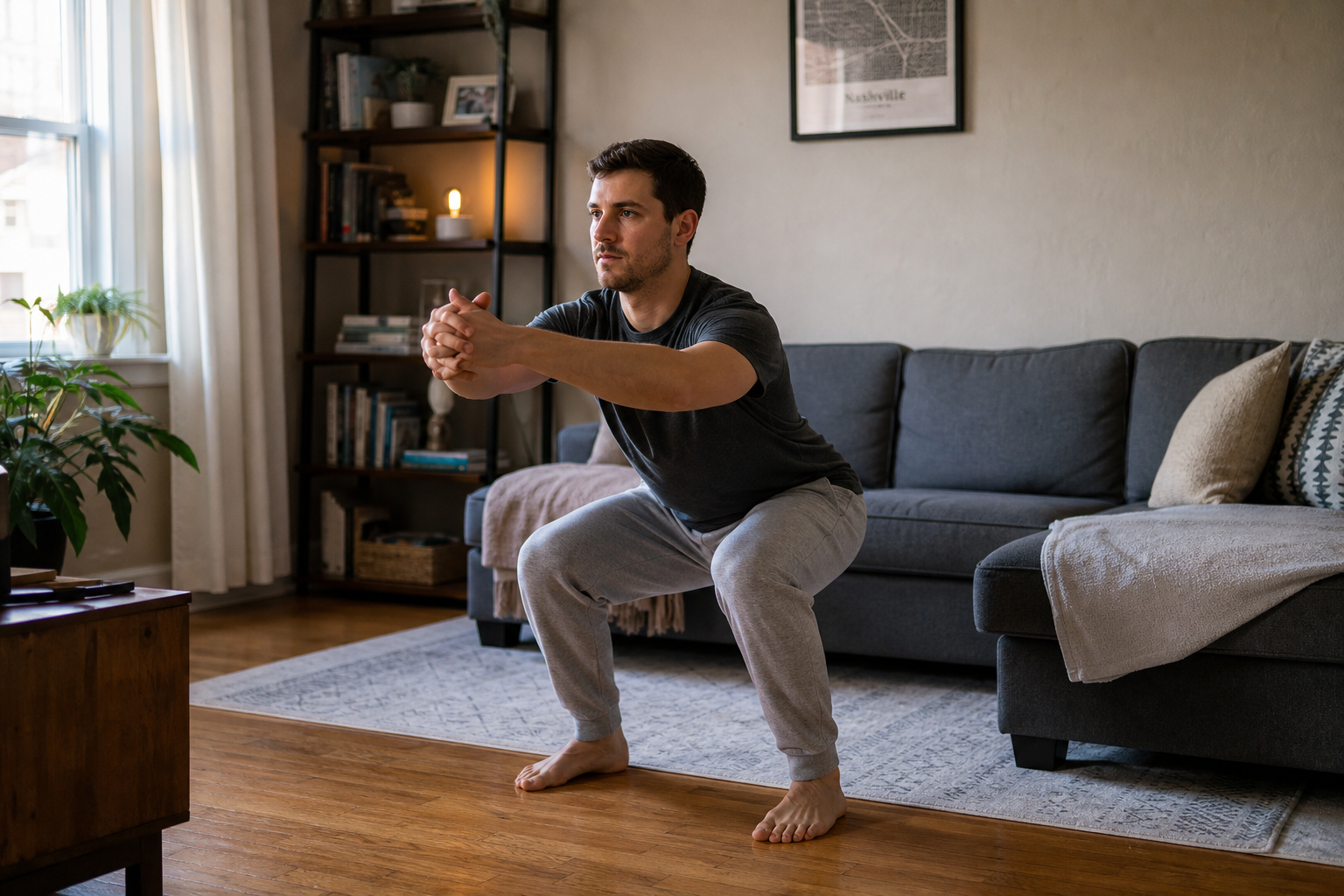
| Squat | Goblet squat, front squat, box squat, split squat | Leg strength, trunk stiffness, and positions a bigger athlete can recover from |
| Deadlift | Trap-bar deadlift, dumbbell Romanian deadlift, kettlebell deadlift | Posterior-chain strength and bracing |
| One-arm dumbbell press | Standing one-arm press or half-kneeling one-arm press | Shoulder strength with trunk control |
| Kettlebell swing | Two-hand swing or dumbbell swing | Hip snap, power endurance, and conditioning |
| Farmer carry | Dumbbell carry, suitcase carry, or kettlebell carry | Grip, trunk stiffness, breathing under load |
The Three-Day Structure Is the Point
The EXOS template matters because it gives the week a shape. Three sessions is not a compromise for people who lack discipline. For a large athlete who wants to train hard, it is often what keeps the work repeatable. You get enough frequency to practice the main patterns, enough space to recover, and enough pressure in each session to make 45–60 minutes count.
The rest periods are not filler. In the UFC.com example, the lead strength exercise gets 60–90 seconds between sets, while circuit work gets 2–3 minutes between rounds.[1] That is a useful correction for garage training, where people often turn every lift into conditioning by accident. A heavy hinge or squat needs enough rest that the next set still looks like strength work. A carry-and-swing circuit needs enough rest that the second round does not become a sloppy back exercise.
For an intermediate home lifter, the week can be arranged like this:
| Day | Main emphasis | Lead exercise | Secondary work | Finish |
|---|---|---|---|---|
| Day 1 | Hinge strength and carries | Deadlift variation | One-arm press, pull-up or row | Farmer carry |
| Day 2 | Squat strength and bodyweight control | Squat variation | Dips or push-ups, split squat | Swing or squat jump |
| Day 3 | Power and mixed strength | Clean-pull variation | Romanian deadlift, one-arm press, chin-up or row | Swing-carry circuit |
Keep at least one day between sessions when possible. Monday, Wednesday, Friday works. Tuesday, Thursday, Saturday works. The exact calendar matters less than avoiding the trap of stacking three hard sessions on tired joints and calling it toughness.
Bodyweight Mastery Hits Different at 265 Pounds
Tom Aspinall’s favorite-moves list is a useful reality check. Men’s Health UK lists him at 6-foot-5 and 265 pounds, and the exercises he highlights include pull-ups, dips, press-ups, and squat jumps. His explanation for pull-ups is blunt: “if you can pull your own bodyweight, you should be able to pull someone else's body.”[2]
That is a different standard than chasing a bigger machine stack. A 265-pound athlete doing clean pull-ups is moving a serious load before adding a belt, chain, or weighted vest. For bigger home-gym lifters, this is where ego needs to get practical. A strict pull-up, controlled dip, crisp push-up, and repeatable squat jump will tell you plenty about strength-to-weight ratio, shoulder tolerance, trunk stiffness, and whether your conditioning survives your own mass.
Scale the bodyweight work without watering it down. If pull-ups are not there yet, use slow negatives, band assistance, or inverted rows. If dips bother the front of the shoulder or elbow, use close-grip push-ups, feet-elevated push-ups, or a dumbbell floor press. If squat jumps beat up your knees, use low box jumps, broad jumps, or fast goblet squats with a light load. The goal is not to imitate Aspinall’s exact ability; it is to keep the same standard of control.
- Pulling standard: full hang or controlled bottom position, no panic kicking, chin clearly over the bar or a consistent assisted equivalent.
- Dipping standard: shoulders stay organized, elbows track cleanly, range of motion is earned rather than forced.
- Push-up standard: ribs down, hips do not sag, the last rep looks related to the first rep.
- Jump standard: land quietly, reset between reps, stop before the knees and low back start absorbing sloppy landings.
Ngannou’s Garage Volume Is a Lesson, Not a Prescription
Francis Ngannou’s published garage workout is the kind of thing that gets shared because it looks brutal on paper: 4 sets of 30 clap push-ups, 4 sets of 30 decline push-ups, 4 sets of 30 dips, 4 sets of 30 narrow push-ups, plus burpees.[3] It is impressive work capacity. It is also not a sensible default routine for a 220-pound lifter with cranky elbows and a job the next morning.
The principle worth taking is repeated force production under fatigue. The mistake would be copying all the volume because a famous heavyweight did it. High-rep push-up and dip variations can build muscular endurance, but they also concentrate stress in the wrists, elbows, shoulders, and anterior chest. If your pressing mechanics are already rough, 120 reps per variation does not make them cleaner.
A home-gym version can be much smaller: two to four rounds of push-ups, rows or band pulls, swings, and carries. You should finish breathing hard, not wondering whether tomorrow’s elbows are going to negotiate with you.
Where Westside and Fight-Camp Phases Fit
Westside Barbell’s MMA strength-and-conditioning article gives a different strength-system contrast: a three-day split built around Max Effort Lower, Max Effort Upper, and a Combined Dynamic Effort day. The example parameters include a safety-squat-bar box squat, speed deadlifts at 60%, and speed bench at 45% plus bands.[4] That is useful if you already understand bar speed, accommodating resistance, and max-effort rotation. It is less useful if your home setup is a bench, dumbbells, and a doorway pull-up bar.
The shared idea is still valuable: heavy work and fast work both belong in the week. You do not need specialty bars to express that. A heavy goblet squat followed later in the week by squat jumps, or a deadlift day followed by lighter swings and carries, gives a home athlete the same broad training direction without pretending to run a full conjugate system.
Phil Daru’s camp structure adds another useful reminder: training emphasis changes over time. In the GC Performance Training roundtable, his phases move from hypertrophy and joint integrity, to a strength block at 85–90% of one-rep max, to a sport-specific phase.[5] A recreational lifter does not need to copy a fight camp calendar, but the principle is sound: do not max everything, condition everything, and chase power all at once for months.
A Simple Three-Day Home Gym Routine
This routine is written for an intermediate, bigger home-gym athlete with 45–60 minutes, three days per week. Use a load that leaves one or two clean reps in reserve on strength work. If a movement hurts in the joint rather than challenging the muscle, swap it before you try to tough it out.
Day 1: Hinge Strength, Press, Pull, Carry
| Exercise | Sets x reps | Rest | Notes |
|---|---|---|---|
| Deadlift, kettlebell deadlift, or dumbbell Romanian deadlift | 4 x 4–6 | 60–90 sec | Make this the strongest, cleanest lift of the day. |
| One-arm dumbbell press | 3 x 6–8 per side | 60 sec | Stand tall or use half-kneeling if your low back takes over. |
| Pull-up, assisted pull-up, or one-arm dumbbell row | 3 x 5–10 | 60 sec | Match the variation to clean reps, not wishful thinking. |
| Farmer carry | 4 carries of 20–40 steps | 60–90 sec | Walk like the weights are heavy but your posture is heavier. |
| Optional easy bike, walk, or jump rope | 5–8 min | Easy | Leave fresher than you want to. |
Day 2: Squat Strength and Bodyweight Control
| Exercise | Sets x reps | Rest | Notes |
|---|---|---|---|
| Goblet squat, box squat, front squat, or split squat | 4 x 5–8 | 60–90 sec | Pick the squat your hips, knees, and setup can repeat. |
| Dip, push-up, or dumbbell floor press | 3 x 6–12 | 60 sec | Use dips only if shoulders and elbows tolerate them. |
| Inverted row, pull-up variation, or band row | 3 x 8–12 | 60 sec | Do not let pressing volume outrun pulling volume. |
| Squat jump, low box jump, or fast light goblet squat | 5 x 3 | 45–60 sec | Every rep should land cleanly; stop before fatigue changes the landing. |
| Suitcase carry | 3 carries per side | 60 sec | Resist leaning; this is trunk work with consequences. |
Day 3: Power Pull and Conditioning Circuit
| Exercise | Sets x reps | Rest | Notes |
|---|---|---|---|
| Dumbbell high pull, kettlebell high pull, or jump shrug | 5 x 3–5 | 60–90 sec | Explode through the hips; do not turn it into an upright row. |
| Romanian deadlift or hip thrust | 3 x 6–10 | 60 sec | Moderate load, clean hinge, no grinding. |
| One-arm dumbbell press or push press | 3 x 5–8 per side | 60 sec | Use a small leg drive only if you can control the lockout. |
| Chin-up, assisted chin-up, or row | 3 x 5–10 | 60 sec | Keep the pull honest after pressing. |
| Swing-carry circuit | 3–5 rounds | 2–3 min between rounds | 10–15 swings, 20–40 steps farmer carry, 6–10 push-ups. |
The circuit rest is deliberately longer than most people expect. If you rest 20 seconds and stagger into the next round, you are mostly practicing survival. With 2–3 minutes, you can swing hard, carry tall, and keep the push-ups from turning into a neck-and-shoulder shrug contest.
How to Progress Without Turning It Into a Circus
Run the routine for four to six weeks before changing the exercises. Add weight when all sets land with clean form. Add reps when the next available dumbbell jump is too large. Add a round to the final circuit only if your main lifts are not sliding backward and your joints feel normal the next day.
- If strength is the priority, add load to the first lift of each day before adding conditioning volume.
- If bodyweight control is the weak link, keep the same pull-up, dip, or push-up variation until the reps look boring.
- If conditioning is poor, shorten the work slightly before you shorten the rest; quality still matters.
- If elbows or shoulders get irritated, reduce dip and push-up volume first, then add more rowing or carries.
- If the low back stays tired, swap one hinge for a split squat or sled-style substitute if your setup allows it.
A bigger athlete does not need six random hard sessions to feel like the training is serious. Three well-built sessions can give you heavy work, fast work, bodyweight practice, and conditioning without emptying the tank so badly that the next workout starts in debt.
The Honest Version of Heavyweight UFC Training at Home
Doing this routine will not make a home trainee a UFC heavyweight. It does not replace wrestling, striking, grappling, sparring, coaching, or the hard skill work that defines the sport. The available sources here are mostly coaching articles and media interviews, not heavyweight-specific clinical research, so the smarter claim is narrower: these are recurring strength-and-conditioning principles used around elite fighters, and they transfer well to a simple home gym when scaled honestly.
That is still plenty. Compound lifts first. Bodyweight control treated as strength, not warm-up fluff. Power work kept crisp. Carries used for grip, trunk, and breathing. Conditioning built from movements you can perform cleanly. Enough rest to make the next session possible. That foundation is not flashy, which is exactly why it works in a garage.
References
- Elite UFC Training Made Simple, UFC.com
- 5 Exercises: UFC Fighter Tom Aspinall's Five Favourite Moves, Men's Health UK
- UFC Heavyweight Champion Francis Ngannou's Workout Will Wreck You, Men's Health UK, 2021
- MMA Strength and Conditioning: Building the Ultimate Fighter, Westside Barbell
- GC Performance Training expert roundtable, GC Performance Training
Comments
Join the discussion with an anonymous comment.