
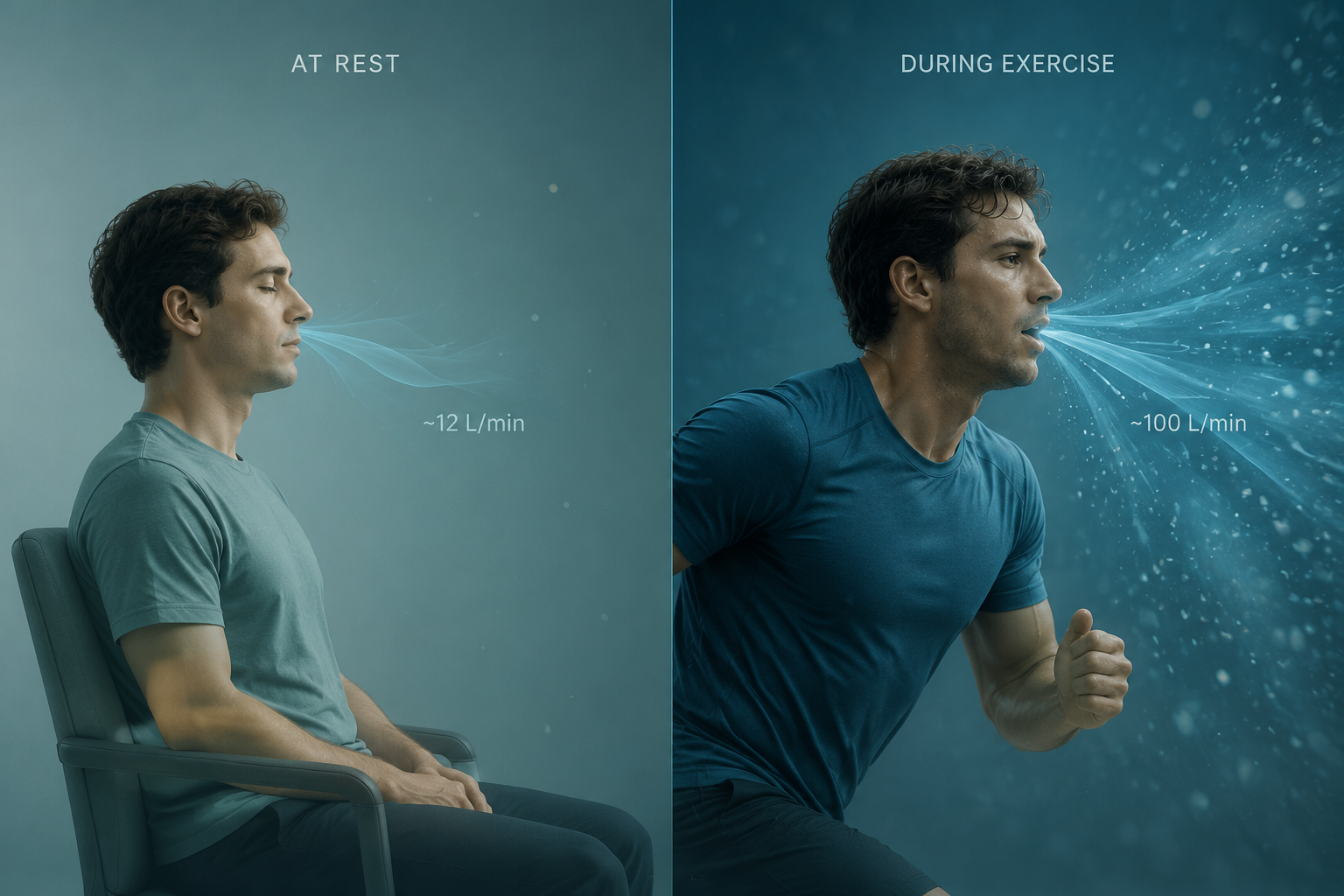
Once smoke or pollution has pushed your workout indoors, the real question is not whether the room feels comfortable. It is whether that room is clean enough to breathe hard in. At rest, ventilation is roughly 12 L/min; during moderate exercise it can rise to about 100 L/min, which means a workout can pull far more fine particles into the lungs than sitting on the couch in the same room would.[1]
That is why “just work out inside” is only half the advice. Indoor exercise during poor air quality can be safer than going outside, but only when the indoor air is actively managed: windows closed, leaks reduced, HVAC set correctly, filtration running, and no new particle sources added right before you train.
The indoor room has to earn your trust
A sealed, filtered room can be meaningfully better than outside. Colorado State University notes that well-sealed indoor spaces with air conditioning on recirculation can have AQI levels less than half the outdoor value during wildfire smoke events.[1] That is the promise worth working toward.
It is not a guarantee. A leaky apartment, an open window, a kitchen burner, a cheap undersized purifier, or an HVAC system pulling outdoor air can erase much of that advantage. The goal is not to create a perfect clean room. The goal is to make one workout space measurably cleaner than the air you are avoiding.
| Before you train | What to do |
|---|---|
| Check outdoor air | Look at AQI and, when available, PM2.5 rather than relying on smell or visibility. |
| Choose one room | Use the smallest practical room you can close off, seal reasonably well, and filter. |
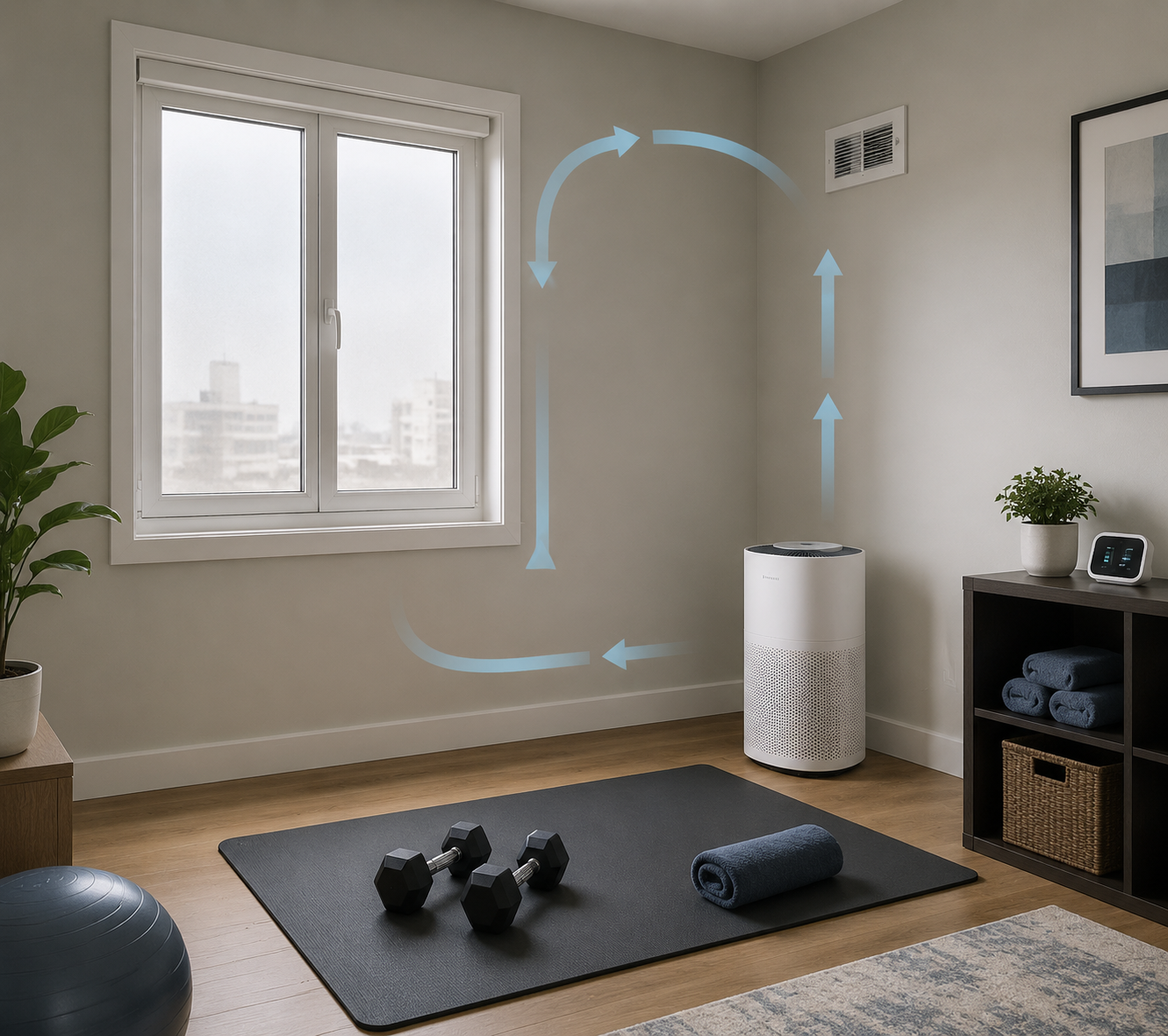
| Control airflow | Close windows and doors, reduce obvious drafts, and set HVAC to recirculate when possible. |
| Filter the room | Run a properly sized HEPA purifier before and during the workout. |
| Stop adding particles | Skip candles, incense, vacuuming, frying, gas-stove use, and harsh cleaning sprays near workout time. |
| Adjust the session | Favor strength, mobility, yoga, cycling, or low-impact intervals over long high-ventilation efforts. |
| Verify when possible | Use a portable PM2.5 monitor to confirm the room is improving, not just feeling better. |
Start with the room, not the routine
A small, closable room is easier to protect than an open-plan living area. If you have a spare bedroom, office corner, or part of a studio apartment that can be isolated with a door, that is usually a better smoke-season training zone than the biggest room in the home. Readers building around tight square footage can use a compact layout like a home gym in under 50 square feet because smaller spaces are often easier to seal and filter.
Close the windows before the room gets smoky, not after you smell smoke indoors. If there are obvious gaps around a window or door, temporary weatherstripping, a door draft stopper, or even a rolled towel can help reduce the amount of outdoor air entering the room. This is especially useful in rentals where you cannot modify the HVAC system or replace windows.
The room should also be boring. No candles. No incense. No “quick vacuum” right before training. No strong spray cleaners. If the workout area shares air with a kitchen, avoid frying or using a gas stove before the session. Poor outdoor air is already the problem; adding indoor particles is the easiest own goal to avoid.
Use HVAC recirculation carefully
If your system allows it, set air conditioning or central air to recirculate rather than draw in outdoor air. Recirculation is one reason sealed indoor spaces can show much lower AQI than outdoors during smoke events.[1] The setting matters because a workout room is not protected if the system keeps feeding it polluted outside air.
Filter upgrades can help, but only if the system can handle them. A MERV-13 or better HVAC filter is commonly recommended for capturing fine particles, yet some older systems are not designed for higher-resistance filters. If you rent, share a building system, or cannot change the filter, do not treat HVAC as your only layer. Use a room purifier in the space where you actually train.
Buy filtration by room size, not vibes
For a workout room, the purifier decision should start with CADR: clean air delivery rate. CADR tells you how much filtered air the unit can deliver, and it has to match the room you are asking it to clean. A purifier that is adequate for a tiny bedroom may be underpowered in a living room, especially once you are breathing heavily for 30 or 40 minutes.
Look for a true HEPA purifier sized for the room, then run it long enough to change the air before the workout starts. If the air is already bad, turning on the purifier at the first warm-up set is late. In a small room, I would rather have a properly sized unit running on a tolerable fan speed for a longer period than an undersized unit roaring in the corner while the indoor PM2.5 stays high.
Be cautious with “washable,” “permanent,” or ionizing devices marketed as low-maintenance alternatives. The practical question is whether the device removes fine particles from the room air without creating other indoor air problems. The NIH/PMC review notes that home air filtration systems have been shown in clinical trials to prevent endothelial dysfunction and blood pressure increases caused by PM2.5 exposure, but that evidence supports real filtration, not every gadget sold for “fresh air.”[2]
- Match CADR to the actual workout room, not the whole apartment unless you are filtering the whole apartment.
- Choose true HEPA filtration for smoke-related PM2.5 when possible.
- Place the purifier where air can move freely through it, not wedged behind a rack, curtain, couch, or pile of shoes.
- Run it before and during the workout, then keep it running afterward if outdoor air remains poor.
- Replace filters on schedule; a neglected purifier is not the same thing as clean air.
For apartment dwellers, compact equipment and filtration should be planned together. A folding mat, adjustable dumbbells, resistance bands, or a small bike can keep the workout inside the room your purifier can actually handle. If you are still choosing gear, a constraint-first guide to compact home exercise equipment is more useful here than buying the largest machine that fits through the door.
Check the air you are actually breathing
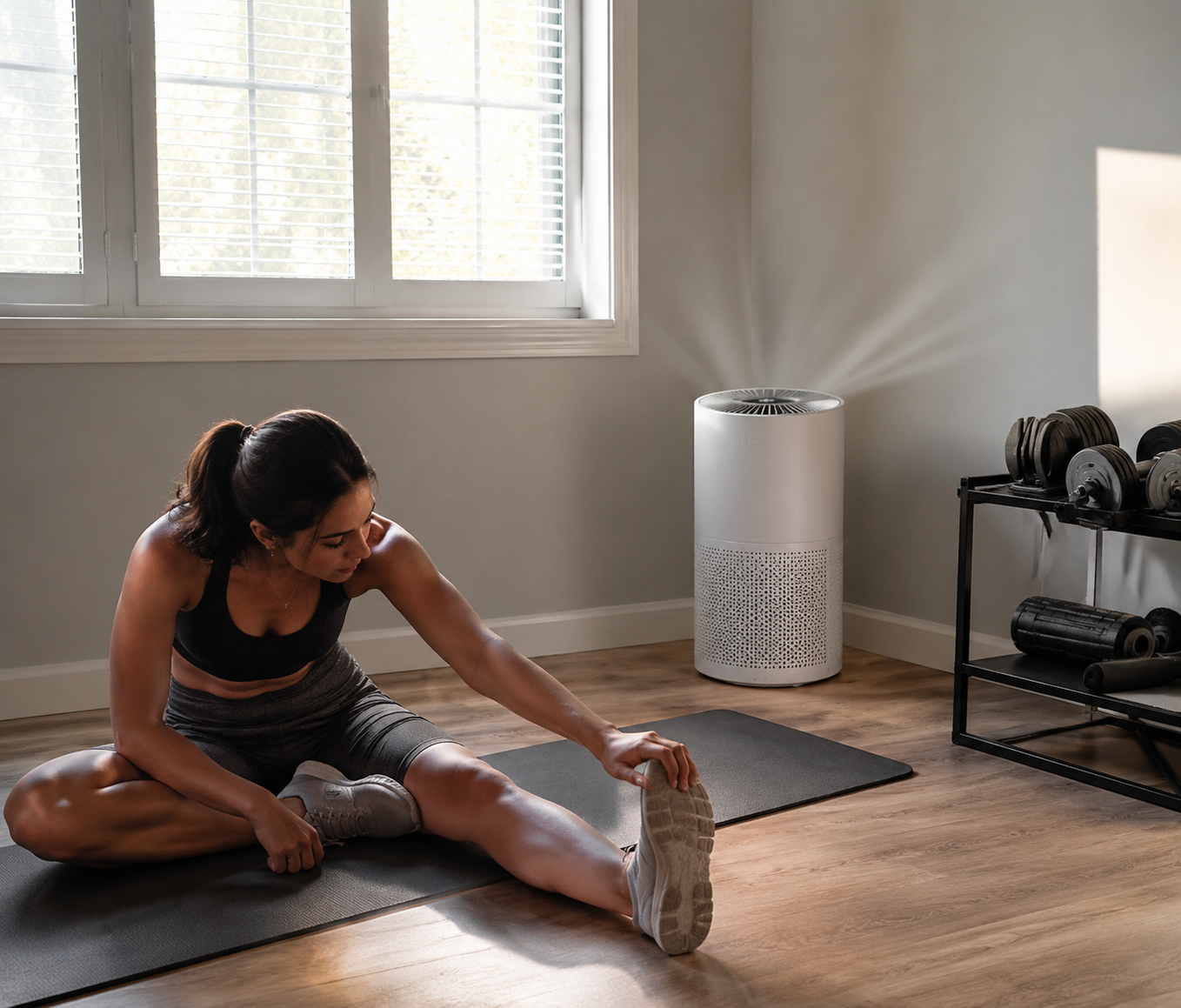
Outdoor AQI tells you whether the run should move indoors. It does not tell you whether your bedroom gym is clean enough. A portable PM2.5 monitor is not mandatory, but it is the most direct way to find out whether your setup works.
The monitor is especially useful during the first few smoke days of the season. You may discover that one room improves quickly with the purifier running, while another stays high because of a drafty window or shared hallway air. You may also catch indoor spikes from cooking, cleaning, or vacuuming that would otherwise be invisible until you start coughing halfway through a circuit.
If the monitor shows indoor PM2.5 falling and staying lower than outdoors, the room is doing its job. If it does not improve, treat that as information, not a challenge. Shorten the session, make it easier, move to a better room, or rest.
Pick workouts by breathing demand
Convenience is not the main reason to switch from an outdoor run to indoor strength, yoga, or cycling. Pulmonary demand is. The harder and longer you breathe, the more air you move through your lungs. During poor air quality, the safest indoor workout is usually the one that preserves movement while avoiding unnecessary ventilation.
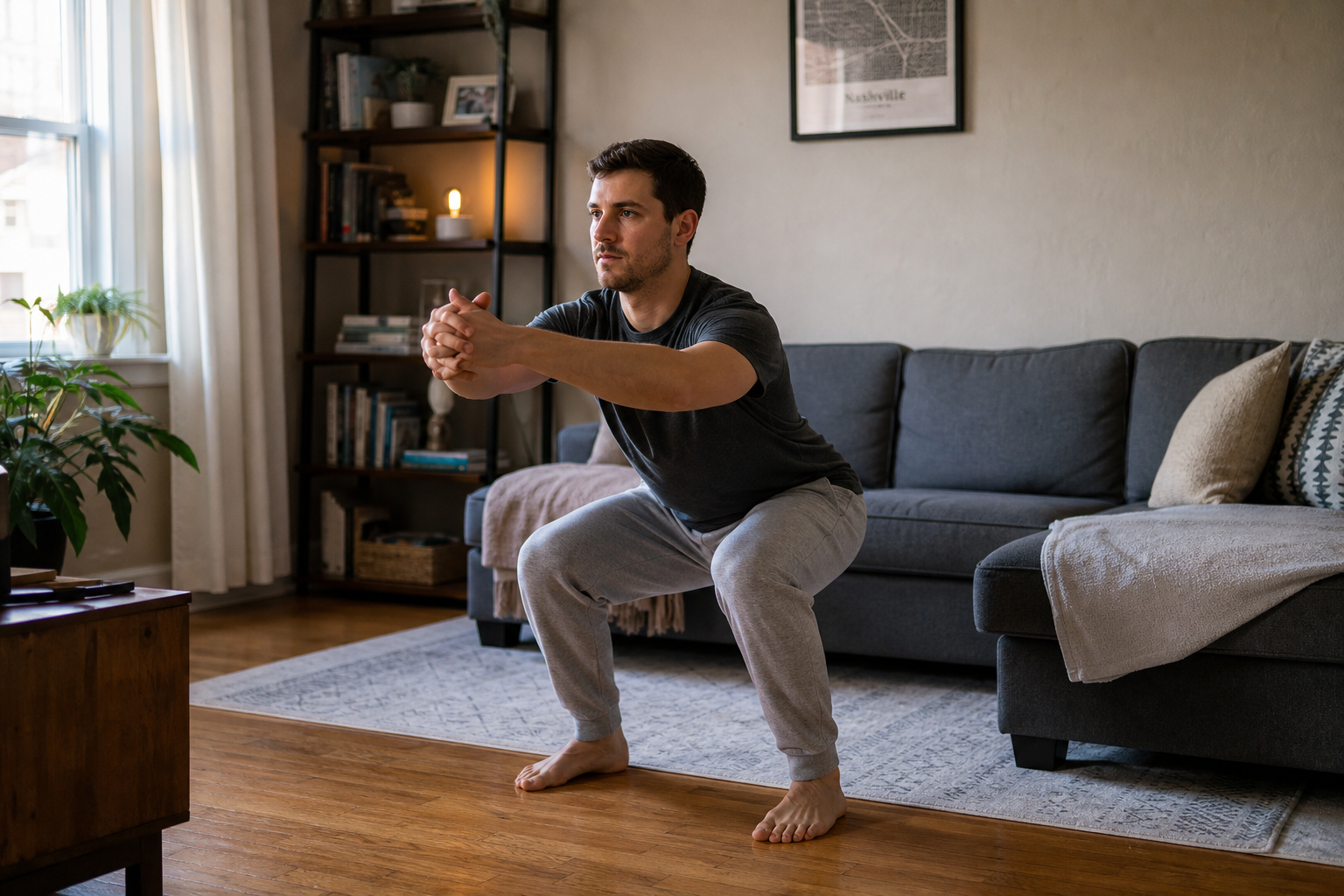
Good options include bodyweight strength circuits, dumbbell training, mobility work, yoga, Pilates-style floor work, easy stationary cycling, and low-impact intervals. If wildfire smoke canceled your run and you want a ready-made substitute, use a smoke-event routine such as this indoor workout for wildfire smoke days instead of trying to recreate the outdoor session at the same intensity.
| Workout choice | How to make it safer during poor air quality |
|---|---|
| Strength training | Use longer rests, controlled reps, and moderate loads instead of breathless density work. |
| Yoga or mobility | Keep the room filtered and avoid hot, humid, or incense-heavy setups. |
| Stationary cycling | Stay conversational rather than turning the ride into a threshold test. |
| Bodyweight circuits | Choose low-impact moves and extend rest if breathing feels sharp or irritated. |
| HIIT | Use sparingly, keep it low-impact, and stop if symptoms appear. |
| Apartment routines | Favor quiet, no-jumping formats that do not require opening windows for cooling. |
The tempting mistake is to keep the same training plan and only change the location. A smoky 60-minute run does not need to become 60 minutes of burpees in a closed bedroom. It can become 30 minutes of strength and mobility, or an easy spin with nasal breathing, or a quiet circuit that leaves you better than when you started.
Apartment-friendly formats matter here because sealed rooms can get warm and stuffy. If jumping makes you want to open a window, choose a quieter pattern from a no-jumping HIIT routine for small apartments or a small-space muscle-building plan. The best smoke-day routine is the one you can do with the room closed and the purifier running.
About short intense workouts
You may see advice that shorter, more intense efforts could be better than longer, easier efforts because they reduce total exposure time. That idea is plausible, and it has been discussed from research involving diesel exhaust, but it should not be treated as settled wildfire-smoke guidance. Wildfire smoke is a complex mixture, and a brutally hard indoor interval session can drive breathing rate up fast.
For most home exercisers, the safer compromise is shorter and moderate, not shorter and reckless. Keep the session useful, cut the volume, and avoid chasing personal records when the air outside is bad enough to move you indoors.
Masks are a backup, not the main plan
An N95 respirator can filter PM2.5 effectively when it fits well, but exercising in one is uncomfortable for many people and may raise perceived effort and slightly increase heart rate.[3][4] Cloth and surgical masks should not be counted on for meaningful PM2.5 protection during smoke or fine-particle pollution events.[3][4]
If the only way a workout feels safe is to wear an N95 indoors, pause and ask why the room is still that bad. The first fix should usually be filtration, sealing, recirculation, and workout reduction. A mask can be useful for necessary movement or brief exposure, but it should not be the excuse for a hard session in a room you know is polluted.
When to downgrade or skip the workout
The American Lung Association and ACSM both advise paying attention to air quality and modifying outdoor exercise when pollution levels are unhealthy, especially for people with asthma, cardiovascular disease, lung disease, older adults, children, and others who are more sensitive to pollution.[3][4] Indoors does not cancel that risk; it only gives you more controls.
Stop or downgrade the workout if you notice coughing, wheezing, chest tightness, unusual shortness of breath, dizziness, headache, throat burning, or symptoms that feel out of proportion to the effort. Beginners should be especially conservative because it is harder to tell the difference between normal exertion and air-related irritation when exercise itself is still new.
- If indoor PM2.5 is controlled, the room is closed and filtered, and you feel normal, choose a lower-pollution indoor session.
- If the room is improving but still questionable, cut intensity and duration.
- If the room cannot be made cleaner, move only lightly or rest.
- If symptoms appear, stop the session rather than trying to breathe through it.
That is the practical answer to how to work out safely in poor air quality: make one room cleaner, prove it when you can, and choose a session that respects the air you have. Training can wait a day. Lungs do not get stronger from preventable smoke exposure.
References
- Is it safe to exercise outside when there is wildfire smoke in the air? — Colorado State University
- Physical Activity in Polluted Air — Net Benefit or Harm to Cardiovascular Health? — NIH/PMC
- Four Things to Know about Air Quality and Exercising Outdoors — American Lung Association
- Air Quality and Outdoor Exercise — ACSM
Comments
Join the discussion with an anonymous comment.