
What Is Cozy Cardio? (And Why It Went Viral)
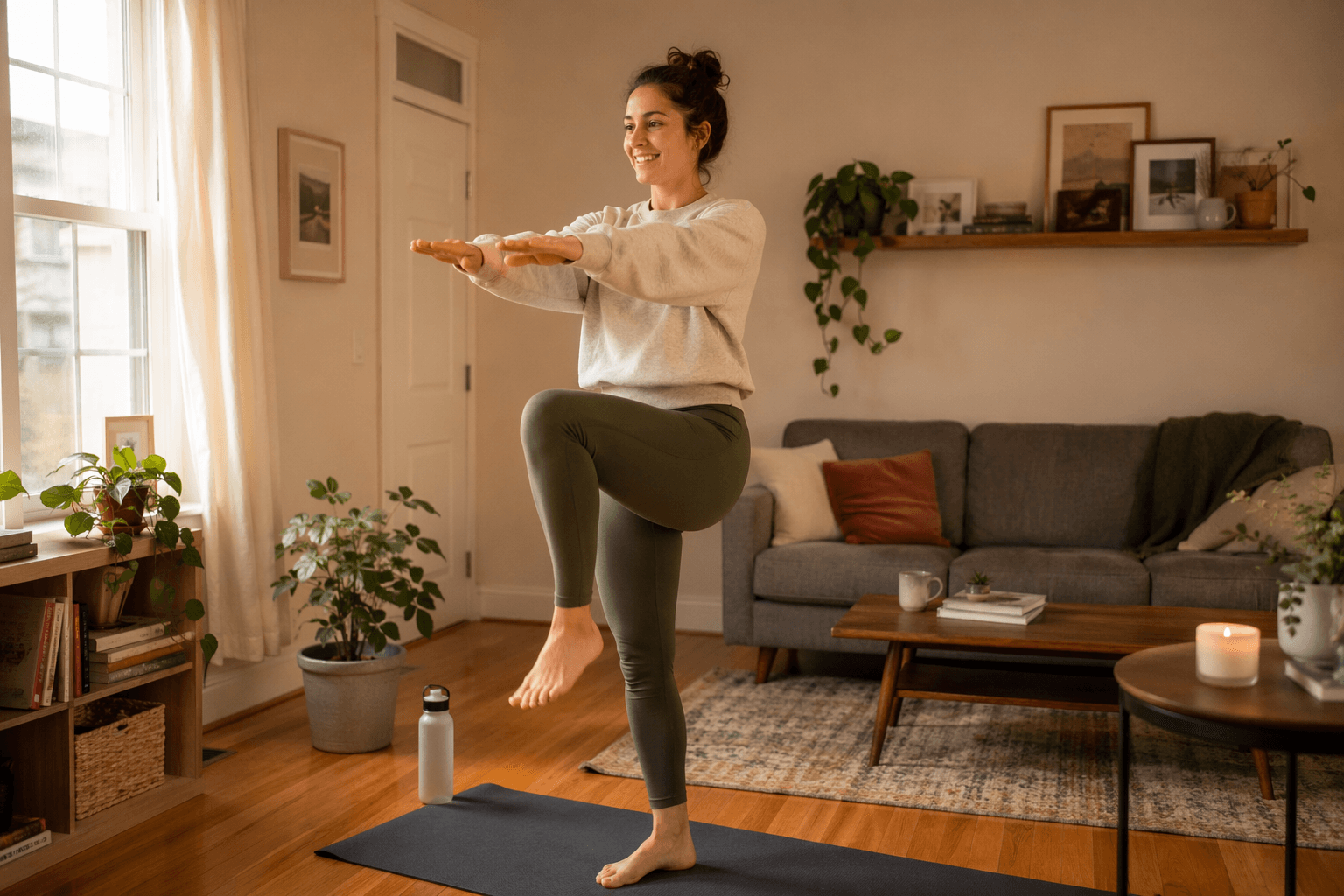
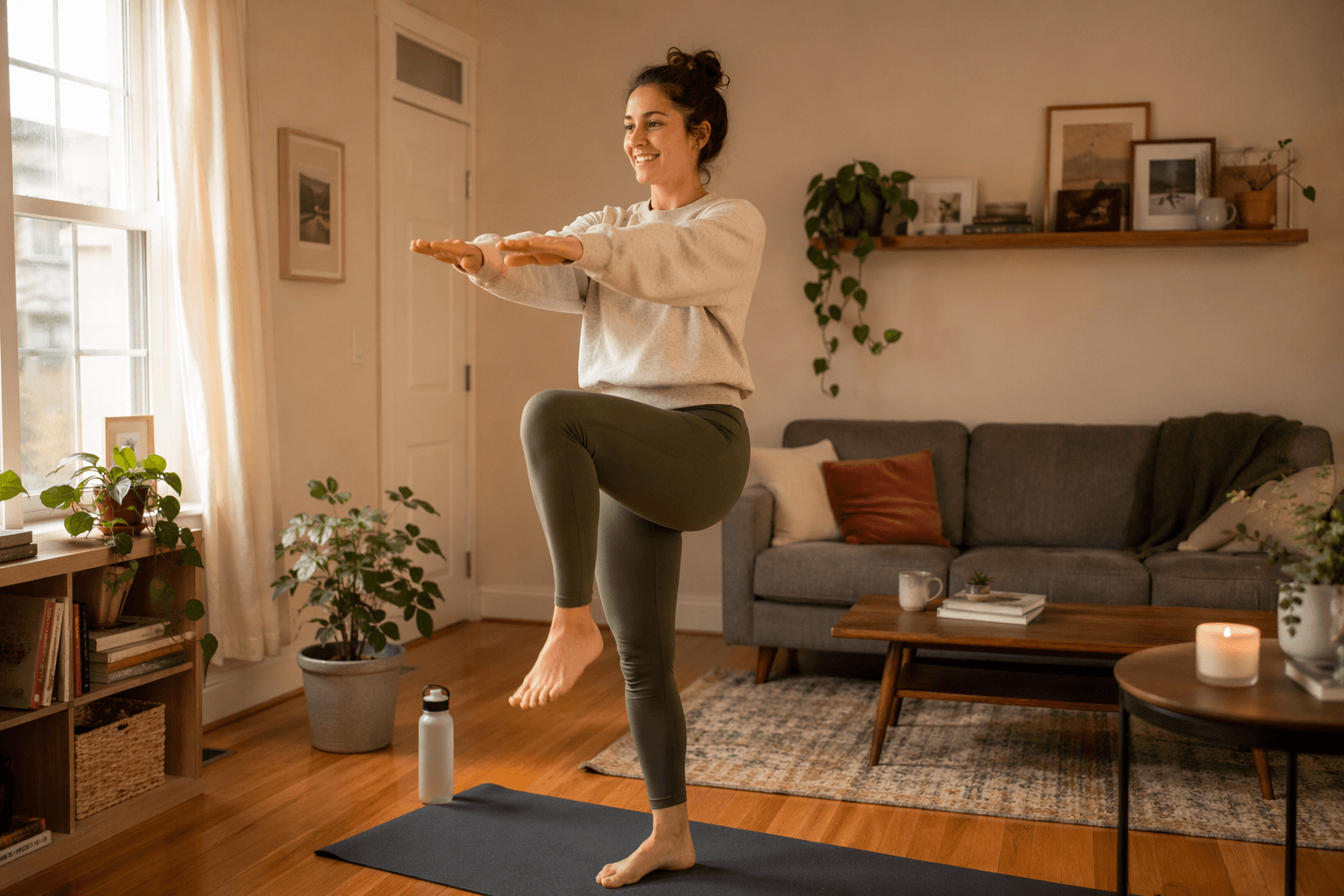
Cozy cardio is exactly what it sounds like: gentle cardiovascular exercise performed in a deliberately comfortable, low-stakes environment. Instead of blasting motivational music in a cold room, you might light a candle, put on a favorite show, wear your softest socks, and walk on a pad or do simple bodyweight movements at your own pace. The goal is not to max out your heart rate — it is to move your body in a way that feels good enough to repeat tomorrow.
The trend was popularized by TikTok creator Hope Zuckerbrow, whose videos show her walking on a treadmill at a gentle pace for 40 minutes while watching a rom-com, surrounded by candles, an iced coffee, and fairy lights. The format resonated immediately — not because it was innovative in a physiological sense, but because it solved a psychological problem that millions of people face: the feeling that exercise has to be hard, sweaty, and unpleasant to "count."
Cozy cardio reframes movement as something you do with yourself, not to yourself. It is not a replacement for structured training programs or high-intensity intervals — it is an entry point for people who have not yet found a way to make movement a regular part of their lives.
Why Cozy Cardio Works: Lowering the Barrier to Exercise
The biggest obstacle to starting an exercise habit is rarely a lack of knowledge about what to do. It is the psychological barrier — the internal voice that says a workout must be intense to be worthwhile, or that you need special equipment, or that you have to feel uncomfortable to make progress.
Cozy cardio dismantles that barrier by removing the "no pain, no gain" premise entirely. As physical therapist Eliza Flynn explained in an interview with Healthline, cozy cardio "removes the idea of 'no pain, no gain' and makes fitness more accessible, allowing you to build sustainable health habits." When the pressure to perform at a high intensity is gone, the only thing left is the simple act of moving — and that is something almost anyone can do.
Jonathan Morales, DPT, senior physical therapist at University Hospitals, reinforces this point. He notes that the slower pace and lower intensity of cozy cardio "allow for more control and less impact on sensitive areas," which makes it ideal for people who have been inactive for a while or who are managing chronic conditions. When movement stops feeling risky, it becomes easier to start.
The Science: Why Consistency Beats Intensity for Beginners
The fitness industry has spent decades selling intensity. But the evidence consistently points in a different direction: for the vast majority of people, consistency is the single most important factor in long-term health outcomes.
The American Heart Association reports that only about one in five adults gets enough exercise to maintain good health. The AHA recommends at least 150 minutes per week of moderate-intensity aerobic activity — a target that can be met with brisk walking, dancing, or any activity that raises your heart rate modestly. For additional health benefits, they suggest aiming for 300 minutes per week. Critically, the AHA also states that any amount of movement is better than none, and that short bouts of 5–10 minutes throughout the day count toward your weekly goal.
The CDC echoes this message, noting that even 10 additional minutes of moderate-to-vigorous activity per day can make a meaningful difference in health outcomes. For adults, meeting the 150-minute threshold reduces the risk of heart disease and stroke.
Where cozy cardio fits in is by making that 150-minute target feel achievable. Instead of trying to squeeze in three punishing 50-minute sessions, you can spread gentle movement across the week in a way that feels natural and sustainable.
| Approach | Typical Weekly Volume | Consistency Rate (Estimated) | Best For |
|---|---|---|---|
| High-intensity (e.g., HIIT, running) | 75 min vigorous | Low for beginners; high dropout | Experienced exercisers with established habits |
| Moderate-intensity (e.g., brisk walking, cycling) | 150 min moderate | Moderate; achievable with planning | Most adults; aligns with AHA guidelines |
| Cozy cardio (gentle walking, dancing, low-impact circuits) | 20–40 min per session, 3–5x/week | High for beginners; low barrier to start | New exercisers, those with exercise anxiety, injury recovery |
Research from University Hospitals adds another layer: studies suggest that women may benefit more from longer, lower-intensity workouts than from high-intensity sessions. This is particularly relevant given that the cozy cardio demographic skews female, though the approach works for anyone who prefers a gentler start.
How to Set Up Your Cozy Cardio Space
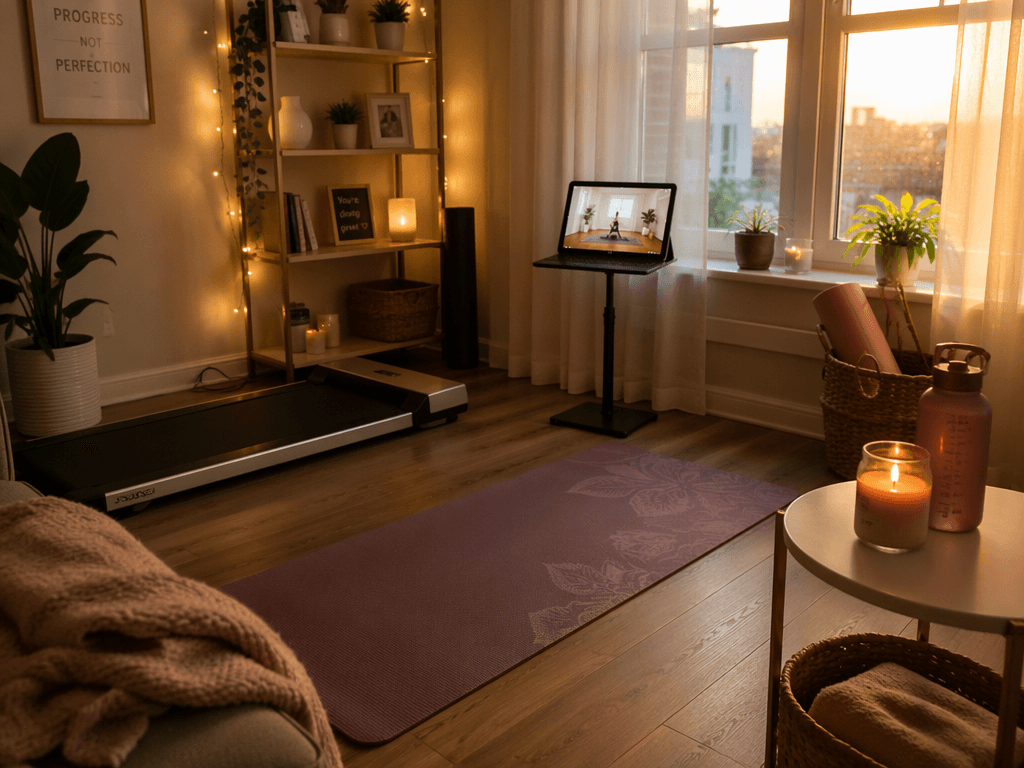
You do not need a dedicated home gym or expensive equipment to create a cozy cardio environment. The entire philosophy is built around making movement feel inviting, so the setup should prioritize comfort and atmosphere over performance.
- A yoga mat or soft flooring surface. This defines your space and provides cushioning for standing movements. If you are setting up in an apartment, a mat also helps dampen sound. For more on flooring options, see our complete guide to home gym flooring for small spaces.
- Soft lighting. A candle, a salt lamp, or a strand of fairy lights can transform a corner of your living room into a calming space. The visual cue signals to your brain that this is a low-pressure activity, not a high-stakes workout.
- Entertainment. A tablet or phone stand so you can watch a show, listen to a podcast, or follow a gentle movement video. The distraction is not a weakness — it is a feature. When your mind is engaged elsewhere, the movement feels effortless.
- Comfortable clothing. Wear what makes you feel at ease. Fuzzy socks, loose sweatpants, a soft hoodie — there is no dress code for moving in your own home.
- Optional: a walking pad. A compact walking pad is the most common piece of equipment associated with cozy cardio, but it is entirely optional. If you enjoy walking and have the budget and space, a walking pad allows you to walk at a slow, steady pace while watching a show. If you do not have one, you can walk in place, march, or do gentle bodyweight movements. For those considering a purchase, our walking pad comparison guide covers compact and folding options for small spaces.
Cozy Cardio Workout Options: Gentle Movement That Counts
The movement itself does not need to be complicated. The AHA classifies moderate-intensity activities as those that raise your heart rate and make you breathe faster, but still allow you to hold a conversation. All of the following options fit that description when performed at a comfortable pace.
- Incline walking (on a walking pad or in place). Walking at a slow, steady pace — even 1.5 to 2.5 miles per hour — is a legitimate moderate-intensity activity. If you do not have a walking pad, march in place with a slight lean forward to engage your glutes and core.
- Gentle dancing. Put on music you love and move however feels natural. There is no choreography to learn. The goal is to keep your body in motion — swaying, stepping side to side, raising your arms — for the duration of a few songs.
- Low-impact full-body circuits. Combine standing marches, slow arm reaches, gentle step touches, and torso twists. Perform each movement for 30–60 seconds, then repeat the circuit. No jumping, no burpees, no explosive movements.
- Chair cardio. Seated marches, seated arm circles, and gentle torso rotations are excellent options for anyone with mobility limitations or balance concerns. Chair cardio can be surprisingly effective at raising your heart rate.
- Yoga stretches and slow flow. A gentle yoga sequence that links breath with movement — cat-cow, child's pose, downward dog, standing forward fold — keeps the body active without demanding cardiovascular intensity.
If you prefer guided sessions, many free apps and YouTube channels offer low-impact, beginner-friendly routines. Our guide to workout apps for beginners can help you decide whether a free platform or a paid subscription is the right fit for your needs.
Who Benefits Most From Cozy Cardio
While cozy cardio can work for anyone who wants a gentler approach to movement, certain groups may find it particularly valuable.
- Perimenopausal and menopausal women. As estrogen levels decline, the risk of osteoporosis and fractures increases. University Hospitals notes that high-impact activities become riskier for this population, making low-impact options like cozy cardio a safer choice for maintaining cardiovascular health without compromising bone or joint integrity.
- People managing chronic pain or recovering from injury. The controlled, low-impact nature of cozy cardio helps prevent strains, sprains, and overuse injuries. Jonathan Morales, DPT, specifically highlights this benefit, noting that the slower pace allows for better form and less stress on sensitive areas.
- Individuals with exercise anxiety. For people who feel self-conscious in gyms or who associate exercise with discomfort, cozy cardio removes the social and psychological pressure. There is no one watching, no performance to measure, and no standard to meet.
- Absolute beginners. If you have never established a regular exercise habit, starting with cozy cardio gives you the chance to build the routine first and worry about intensity later. The habit itself is the victory.
When and How to Level Up
Cozy cardio is not a ceiling — it is a foundation. At some point, you may find that your body is ready for more challenge. This is not a signal that cozy cardio has "failed" or that you need to abandon it. It is simply a sign that your fitness has improved, and you have options.
Here are a few natural progressions that maintain the cozy, low-pressure spirit while gently increasing the demand on your body:
- Increase duration. If you have been doing 20-minute sessions, try extending to 30 or 40 minutes. The AHA notes that 300 minutes per week of moderate activity provides additional health benefits beyond the 150-minute baseline.
- Add resistance bands. Light resistance bands can be incorporated into your low-impact circuits without breaking the cozy vibe. Banded side steps, seated rows, and glute bridges add strength work without requiring heavy equipment.
- Try a structured training plan. Once you have built the habit of regular movement, you may enjoy following a multi-week program that gradually increases in difficulty. Our small-space home gym decision guide can help you think through what equipment, if any, you might want to add as your practice evolves.
- Mix in one higher-intensity session per week. If you feel curious about what a slightly harder workout feels like, try replacing one cozy session with a brisk walk outdoors or a beginner-friendly HIIT video. If it does not feel good, go back to cozy cardio. The choice is yours.
Sample Cozy Cardio Week Plan
This sample week plan is designed to show how cozy cardio can fit into a real schedule. Each session is 20–30 minutes. Adjust the duration up or down based on how you feel. The only rule is to move in a way that feels good.
| Day | Activity | Duration | Notes |
|---|---|---|---|
| Monday | Incline walking (on pad or in place) + gentle arm circles | 25 min | Watch a show or listen to a podcast. Keep pace conversational. |
| Tuesday | Gentle dancing to a playlist of favorite songs | 20 min | No structure needed. Move freely. Take breaks if you want. |
| Wednesday | Low-impact circuit: marches, step touches, arm reaches, torso twists | 25 min | Repeat each move for 45 seconds with 15 seconds rest between. |
| Thursday | Rest day with gentle stretching or foam rolling | 10–15 min | Focus on breath and mobility. No cardio required. |
| Friday | Chair cardio: seated marches, arm circles, torso rotations | 20 min | Great option if energy is low or you want a seated session. |
| Saturday | Yoga flow or slow stretching | 25 min | Link breath with movement. Hold each pose for several breaths. |
| Sunday | Incline walking or gentle dancing (choose what feels best) | 20–30 min | End the week with whatever movement feels most enjoyable. |
This plan totals roughly 2.5 to 3 hours of movement across the week — comfortably within the AHA's 150-minute recommendation. If you miss a day, do not worry. The point is not perfection; it is showing up when you can, in a way that feels sustainable.
Comments
Join the discussion with an anonymous comment.