
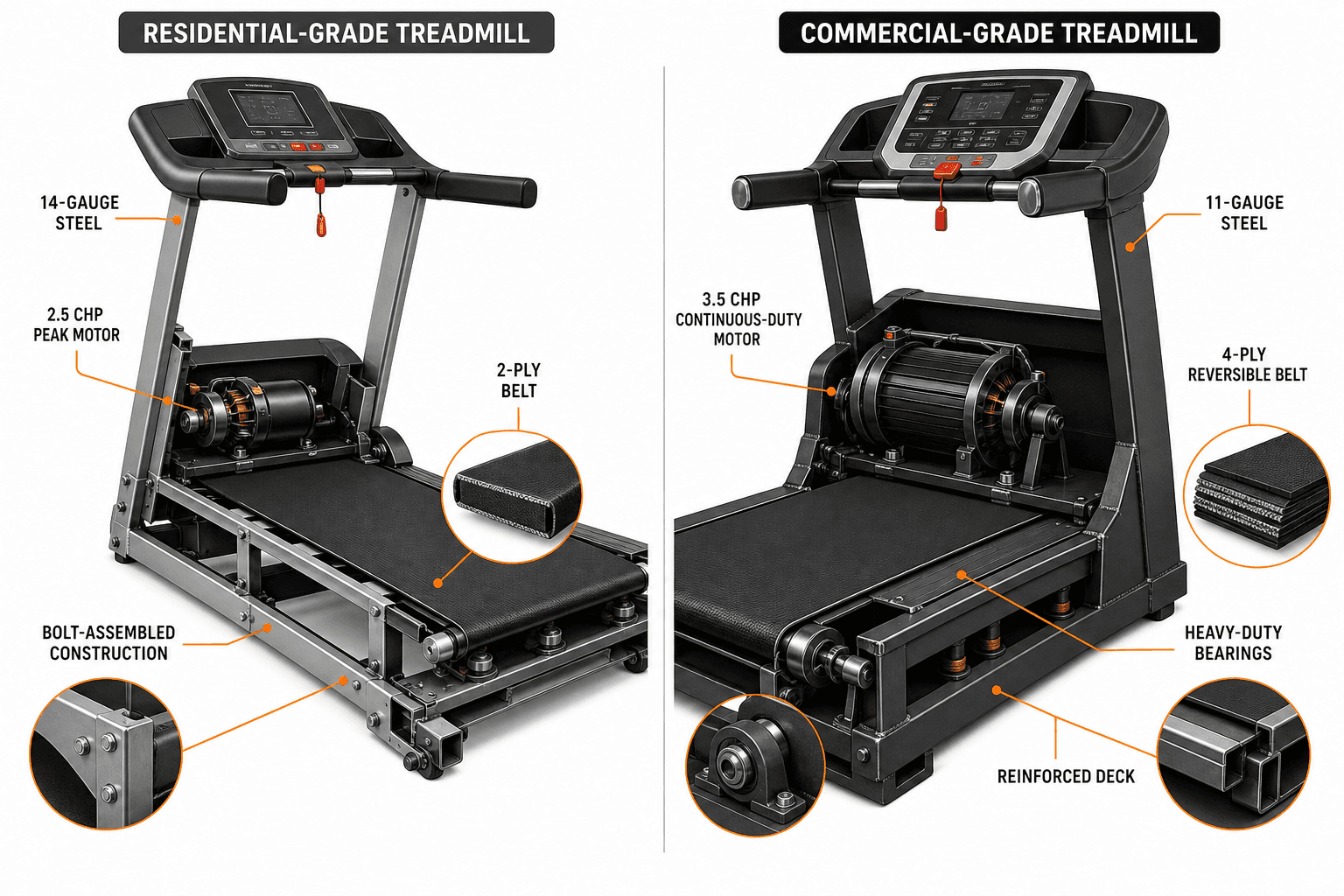
The 2026 Price Landscape: Why New Commercial Gear Costs 35-45% More Than Two Years Ago
If you have priced a new commercial-grade treadmill or a Hammer Strength rack recently, you already know the sticker shock is real. According to market observations from CTX Home Gyms, commercial gym equipment prices have surged 35-45% since 2024. A basic machine from a premium brand like Hammer Strength or Cybex that might have run $5,500 to $10,000 two years ago now lands between $8,000 and $15,000. That is not inflation — that is a structural shift in manufacturing costs.
Three forces are driving this:
- Steel prices are up roughly 40% since 2022. Commercial frames use 11- to 14-gauge steel — significantly more material per unit than residential equipment — so every percentage point increase in steel cost hits commercial gear harder.
- Electronic components for digital displays, consoles, and control boards have risen about 50% over the same period. A single console assembly on a commercial treadmill can account for $1,200 to $2,000 of the total build cost.
- Labor shortages in manufacturing and logistics continue to push assembly and freight costs upward, with no sign of reversal before 2028 at the earliest.
The practical consequence for home gym buyers is straightforward: if you want commercial-grade build quality and durability, buying new in 2026 means paying a premium that is unlikely to come down for at least two more years. That is why the secondary market — remanufactured equipment, auction lots, and private sales — has become the primary path for serious home gym builders who refuse to compromise on quality.
The Oversupply Side: Why Quality Used Commercial Equipment Is Flooding the Market
The same forces that made new equipment expensive have created a countervailing opportunity on the used side. Post-pandemic gym closures, corporate wellness program downsizing, and facility liquidations are pushing well-maintained commercial equipment onto the secondary market at a pace not seen in years. Hotels, apartment complexes, and corporate fitness centers that invested heavily in 2020-2022 are now upgrading, downsizing, or shuttering their facilities entirely.
This creates a supply-demand inversion that favors the buyer:
- Gym liquidations from 24-hour fitness chains and boutique studios release entire facility lots — often including treadmills, ellipticals, cable towers, and plate-loaded strength machines — into the resale pipeline.
- Corporate wellness departments are trimming budgets, selling off equipment that is only 2-4 years old and has been maintained on regular service schedules.
- Remanufacturing dealers are buying these lots, replacing wear items (belts, decks, cables, upholstery), and reselling them at 40-60% below new retail — often with a warranty.
The window is not permanent. As the liquidation wave passes and new equipment prices stabilize, the supply of quality used gear will tighten. Buyers who act in 2026 have access to a selection and pricing environment that may not repeat.
What You'll Actually Pay: Discount Ranges by Purchase Type
Not all used equipment is priced the same, and the discount you get depends heavily on the channel you choose. The table below breaks down typical pricing for the three main ways to buy used commercial gear in 2026.
| Purchase Type | Typical Discount vs. New Retail | What's Included | Best For |
|---|---|---|---|
| Remanufactured (dealer-refurbished) | 40-60% off | New belts, decks, cables, upholstery; warranty (typically 1-3 years); cosmetic refinishing | Buyers who want near-new performance without the new price; those who lack time or expertise for DIY inspection |
| Direct auction / liquidation | 50-70% off | As-is condition; no warranty; buyer responsible for pickup and transport; no wear-item replacement | Experienced buyers comfortable with full inspection; those willing to replace belts, cables, or decks themselves |
| Private sale (Facebook Marketplace, Craigslist, etc.) | Varies widely (30-60% off typical) | As-is; no warranty; seller may or may not have service history; condition varies dramatically | Local buyers who can inspect in person; those looking for a specific model from a motivated seller |

Comments
Join the discussion with an anonymous comment.